The single deciding factor between a 2.4GHz wireless headset and a Bluetooth headset is whether your priority is ultra-low audio latency for responsive playback or universal, dongle-free mobility across multiple daily devices. A 2.4GHz wireless setup utilizes a dedicated USB radio transmitter to stream audio with virtually imperceptible delay, making it the preferred standard for competitive gaming and critical desktop media. In contrast, standard Bluetooth establishes a direct software handshake with phones, laptops, and tablets without occupying a physical USB slot, prioritizing portable convenience and multi-device workflow over raw transmission speed.
Gamers and high-precision media creators who need instantaneous sound synchronization should pick a 2.4GHz wireless headset. Mobile professionals, office communicators, and multi-taskers managing calls across phones and laptops should select a Bluetooth headset.

2.4GHz Wireless vs Bluetooth Headset at a Glance
| Attribute | 2.4GHz Wireless Headsets | Bluetooth Headsets |
|---|---|---|
| Primary Transmission Method | Proprietary 2.4GHz RF via USB adapter | Standard Bluetooth (5.1, 5.3) protocol |
| Latency Performance | Near-zero transmission delay | Noticeable latency depending on codec and device |
| Transmitter Hardware | Requires dedicated USB dongle | Integrated antenna; no external dongle needed |
| Multi-Device Connection | Single host via USB (some models offer hybrid modes) | Native dual-device pairing and fast switching |
| Single-Charge Battery Life | Up to 70 hours (Gvyugke Captain 780) | 18 to 65 hours depending on form factor |
| Case Charging Support | Not listed | Available on earpiece models (up to 72 hours total) |
| Microphone Noise Cancellation | Standard rotating noise-canceling mic | AI-based environmental noise reduction (up to 96%) |
| Typical Wireless Range | 10 meters (33 feet) | 10 to 15 meters (up to 49 feet) |
| Best For | Fast-paced gaming and low-latency desktop media | Business calls, remote work, and multi-device commuting |
Transmission Latency and Audio Connection Speed
Latency represents the delay between an audio signal leaving your computer or console and reaching your ears. In real-time environments like competitive esports or rhythm-based titles, even a minor delay of 100 milliseconds breaks spatial immersion and compromises player reaction times. Dedicated 2.4GHz RF connections excel here because they bypass standard operating system Bluetooth compression protocols. By employing a dedicated USB transceiver that maintains an exclusive pipeline to the headset, 2.4GHz architecture delivers immediate acoustic feedback that keeps gameplay sound effects and positional audio perfectly synced with on-screen visual frames.
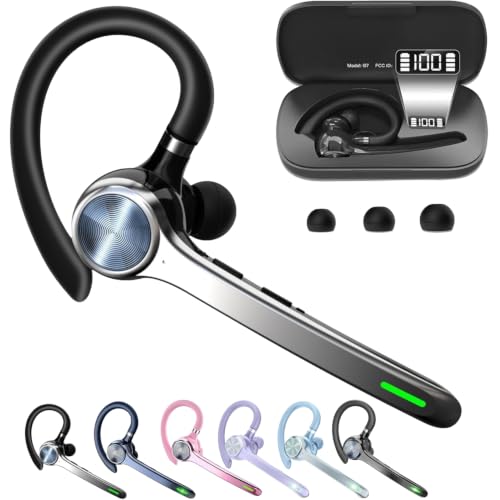
Standard Bluetooth audio systems, by contrast, rely on general-purpose software stacks and compression codecs that must navigate operating system scheduling. A HEIBAS G7 running on Bluetooth 5.1 offers an efficient connection for vocal conversations, but the wireless handshaking introduced by Bluetooth makes it less suitable for split-second gaming reactions. For users exploring gaming audio options, comparisons like the steelseries arctis nova pro wireless vs logitech g pro x 2 illustrate how high-performance gaming hardware emphasizes uncompressed latency over Bluetooth convenience. Dedicated wireless models such as the Gvyugke Captain 780 combine 2.4GHz USB operation with secondary Bluetooth 5.3 and wired 3.5mm options, allowing users to switch to the low-lag RF pipeline whenever gaming performance demands it.
Edge: 2.4GHz wireless, because its dedicated USB radio frequency transceiver eliminates the noticeable transmission delay inherent to standard Bluetooth connections.
Device Compatibility and Multi-Host Pairing
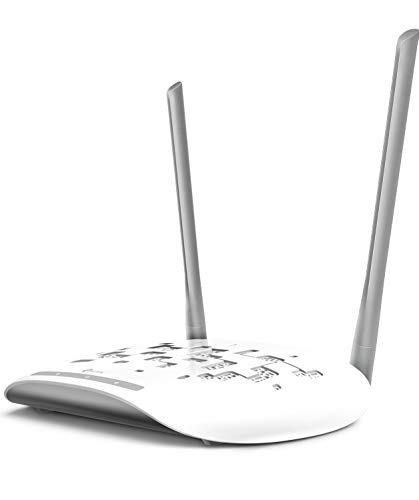
How a headset connects to your hardware dictates how easily it integrates into your everyday routine. A 2.4GHz headset relies on physical USB connectivity. While this provides immediate plug-and-play functionality on platforms like PC, PlayStation 4, PlayStation 5, and docked Nintendo Switch consoles, it requires an open USB-A or USB-C port. Devices lacking traditional USB ports, such as smartphones or slim tablets, cannot connect to an RF dongle without specialized adapters. When managing wireless audio in homes with busy networking setups, dedicated 2.4GHz transmission operates independently of local network routing, although hardware like the TP-Link TL-WA801N demonstrates how common the 2.4GHz frequency band is across modern households.
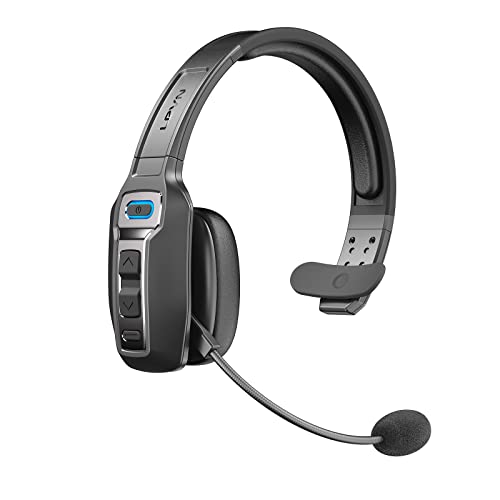
Bluetooth headsets stand out when convenience and multi-device interoperability take priority. Because Bluetooth functionality is built natively into almost all modern smartphones, tablets, laptops, and smart displays, pairing requires no dongles to misplace or occupy valuable ports. The LEVN LE-HS012 Basic takes full advantage of this framework by offering dual-device pairing, enabling workers to connect to their office computer and smartphone simultaneously. If an incoming call rings on your phone while you are attending a desktop video conference, you can pivot audio streams with a single button press. Similar multi-device scenarios are examined in our steelseries arctis nova 7 vs hyperx cloud ii evaluation, demonstrating why office professionals value flexible device transitions.
Edge: Bluetooth headset, thanks to dongle-free universal hardware compatibility and effortless multi-device switching between phones and computers.
Battery Life and Power Management
Power consumption differs significantly between full-sized circumaural headsets and specialized hands-free calling gear. Large 2.4GHz gaming headsets carry larger physical frames capable of housing substantial internal cells. The Gvyugke Captain 780 features a 1200mAh battery that delivers up to 70 hours of continuous playtime from a single two-hour charge. Furthermore, its rapid-charging circuitry delivers 2 hours of functional playback from a quick five-minute charge, preventing prolonged downtime during extended entertainment sessions. Long-running endurance profiles are a major focus for desktop users, as seen in our hyperx cloud alpha wireless vs razer blackshark v2 pro breakdown.
Bluetooth business headsets optimize their battery systems around portability and daily office cycles. The HEIBAS G7 earpiece houses an internal battery providing 18 to 23 hours of continuous talk time, but pairs with a 500mAh portable charging case equipped with a smart digital display. When docked between calls, the case restores the headset for nearly 72 hours of total run time. For on-ear designs, the LEVN LE-HS012 Basic integrates a 400mAh battery that provides 65 hours of continuous operation on a single two-hour charge. Both platforms provide sufficient power for multiple days of heavy use, though they deliver it through distinct form factors.
Edge: Tie, as 2.4GHz headsets supply immense single-charge battery capacity in large frames, while Bluetooth models provide equivalent overall endurance through power-efficient chipsets and mobile charging cases.
Microphone Performance and Noise Handling
Microphone engineering reflects the differing target environments of these two wireless technologies. A 2.4GHz gaming headset prioritizes uncompressed voice communication with zero lag, ensuring team members coordinate plays without conversational delay. The Gvyugke Captain 780 utilizes a rotating noise-canceling boom microphone designed to filter out immediate mechanical keyboard tapping and nearby fan noise while focusing on vocal clarity for in-game lobbies. Discussions around vocal fidelity and microphone balancing can also be found in our look at the steelseries arctis nova 5 vs hyperx cloud alpha wireless.
Bluetooth communication gear focuses extensively on filtering harsh ambient background noise in bustling work environments. The LEVN LE-HS012 Basic incorporates an adaptive environmental noise-canceling chipset engineered to suppress up to 96% of interfering background sound, making it suitable for call centers, driving environments, or shared home offices. It also includes a 270-degree rotatable microphone boom that works on either ear and features a dedicated hardware mute button at the base. The HEIBAS G7 similarly places an independent mute button directly on the earpiece body for quick muting during cellular phone calls. These integrated hardware controls provide corporate users with straightforward privacy management.
Edge: Bluetooth headset, because of dedicated AI-powered background noise suppression and hardware mute controls designed specifically for professional communication.
Wireless Operating Range and Environmental Stability
Wireless range determines how freely you can move away from your primary workstation without dropping an active call or losing audio fidelity. Both technologies broadcast on the globally shared 2.4GHz radio band, meaning they must navigate signal contention from Wi-Fi routers, smart home appliances, and other wireless peripherals. Headsets operating on standard Bluetooth specifications, like the HEIBAS G7, maintain a reliable working range of roughly 10 meters (33 feet). However, models equipped with enhanced long-range Bluetooth radios, such as the LEVN LE-HS012 Basic, stretch that coverage up to 49 feet (15 meters), allowing users to step away from their desk to grab files or water without interrupting a meeting.
Dedicated 2.4GHz gaming headsets like the Gvyugke Captain 780 typically list an operating boundary of 10 meters (33 feet). While RF transmitters maintain high-bandwidth data transfer rates over this distance, their primary objective is zero packet drops rather than extreme distance. If you wander through multiple drywall or concrete barriers, the uncompressed RF stream may drop sooner than an adaptable Bluetooth signal that dynamically downsamples bitrate to preserve the connection. For readers comparing real-world range across gaming headsets, our steelseries arctis nova 5 vs hyperx cloud ii article highlights how wireless stability behaves across home environments.
Edge: Bluetooth headset, which provides greater freedom of movement with extended coverage up to 49 feet on high-output models.
Pros and Cons
2.4GHz Wireless

Pros
- Near-zero audio transmission latency
- Up to 70-hour single-charge battery
- Large 50mm surround sound drivers
- Hybrid 2.4GHz, Bluetooth, and wired connections
Cons
- Requires open USB port for dongle
- Larger and heavier over-ear form factor
View Gvyugke 2.4GHz Wireless Gaming Headsets on Amazon
Bluetooth Headset

Pros
- Seamless dual-device simultaneous connection
- Advanced 96% environmental noise cancellation
- Up to 49-foot working wireless range
- Compact and lightweight design with charging case
Cons
- Noticeable latency during fast-paced gaming
- Single-ear designs lack full stereo immersion
View HEIBAS Bluetooth Headset Wireless Earpiece on Amazon
Who Should Buy Each One
Choose the 2.4GHz Wireless Headset If
- You play competitive multiplayer games on PC, PS5, PS4, or Switch where audio delay hurts reaction time.
- You want an immersive audio experience powered by large 50mm dynamic drivers and full-cup protein leather ear cushions.
- You have an open USB port to accommodate an external RF transmitter without dealing with Bluetooth pairing menus.
- You want the security of hybrid backup connections, including Bluetooth 5.3 and a traditional 3.5mm wired audio jack.
Choose the Bluetooth Headset If
- You need to connect to smartphones, laptops, and tablets without plugging in external USB dongles.
- You take calls across two devices simultaneously and rely on fast one-click switching between your phone and computer.
- You work in noisy home or commercial environments where 96% environmental noise canceling improves voice clarity.
- You prefer a lightweight, compact design with physical mute switches for day-long voice calls and remote conferences.
Final Verdict
For gamers, streamers, and desktop media enthusiasts, a 2.4GHz wireless headset is the clear recommendation. The instantaneous audio response enabled by a dedicated USB transceiver cannot be matched by standard Bluetooth protocols. With models like the Gvyugke Captain 780 offering 50mm audio drivers, up to 70 hours of battery life, quick-charging capabilities, and secondary Bluetooth 5.3 support, 2.4GHz hardware provides the ultimate combination of high-fidelity immersion and lag-free competitive performance.
On the other hand, if your primary headset usage revolves around remote work, mobile communication, truck driving, or conference calling, a dedicated Bluetooth headset is the smarter investment. Units like the LEVN LE-HS012 Basic and HEIBAS G7 eliminate the hassle of managing USB adapters while delivering long operating range, multi-device pairing, convenient charging cases, and advanced noise filtering. Choose the protocol that aligns with your primary activity: 2.4GHz for speed and gaming precision, or Bluetooth for cross-device flexibility and professional calls.
FAQ
Can I use a 2.4GHz wireless headset with my smartphone?
Standard 2.4GHz wireless headsets require an external USB transceiver to establish a connection, which cannot connect to most smartphones without a separate USB-A to USB-C adapter. However, hybrid gaming headsets like the Gvyugke Captain 780 feature dual connectivity, offering both 2.4GHz USB wireless for consoles and computers alongside integrated Bluetooth 5.3 for direct pairing with mobile phones.
Why is 2.4GHz wireless better than Bluetooth for gaming?
A 2.4GHz wireless connection uses an exclusive radio frequency transmitter that bypasses standard operating system Bluetooth compression pipelines. This dedicated bandwidth reduces latency to imperceptible levels, ensuring game audio such as footsteps, gunshots, and voice chat syncs instantaneously with on-screen frames.
Can Bluetooth headsets connect to two devices at the same time?
Yes, many Bluetooth headsets engineered for work support multipoint dual pairing. The LEVN LE-HS012 Basic and HEIBAS G7 allow you to maintain simultaneous links to a computer and a mobile phone, enabling you to take video conferences on your PC and quickly answer incoming calls from your phone without manually reconnecting.
Does 2.4GHz wireless audio suffer from Wi-Fi interference?
Because both Wi-Fi routers and 2.4GHz wireless headsets broadcast within the 2.4GHz ISM radio frequency band, heavy localized Wi-Fi activity can occasionally cause interference. Modern 2.4GHz headsets utilize frequency-hopping technology to steer clear of congested Wi-Fi channels, ensuring a clean and uninterrupted audio stream under standard operating conditions.
How does the microphone mute button function on Bluetooth headsets?
On specialized Bluetooth communication headsets, physical mute buttons are positioned directly on the headset body or boom arm for instant access. The HEIBAS G7 includes an individual mute button designed specifically for cell phone calls, while the LEVN LE-HS012 Basic features a button at the base of the microphone that toggles privacy during cellular or conference calls.
Which headset type offers better overall battery life?
Both headset types deliver exceptional battery life tailored to their specific use cases. Circumaural 2.4GHz gaming headsets like the Gvyugke Captain 780 provide up to 70 hours of single-charge runtime due to large internal batteries, while compact Bluetooth earpieces like the HEIBAS G7 provide 18 to 23 hours per charge and extend up to roughly 72 hours via an included charging case.