The choice between an open-frame engine generator and a portable power station comes down to whether you prioritize continuous raw wattage through fuel combustion or instant, silent energy storage that can safely operate inside your home. Engine-driven inverters burn fuel to supply high running power for energy-intensive appliances, whereas lithium-based battery units store electricity from electrical outlets or photovoltaic panels to power devices without fumes, noise, or fluid maintenance.
Buyers needing heavy-duty electrical output for high-draw machinery or prolonged grid outages should choose the Champion 100519, while those who want zero emissions, indoor placement, and renewable recharging should select the EcoFlow Delta 2.


Champion 100519 vs EcoFlow Delta 2 at a Glance
| Feature | Champion 100519 | EcoFlow Delta 2 |
|---|---|---|
| Power Architecture | Open frame quiet fuel inverter | Electric LiFePO4 battery station |
| Running Output Wattage | 5000 watts | 2048 watts |
| Starting Peak Wattage | 6250 watts | 3400 watts |
| Engine Size or Energy Capacity | 301cc 4-stroke engine | 2048Wh base (expandable to 6144Wh) |
| Output Outlets | Not listed | 6 AC outlets |
| Operating Sound and Emissions | Exhaust emissions; requires outdoor clearance | Zero emissions; completely silent operation |
| Chemistry and Lifecycle | Not listed | LFP battery with 3000+ cycles to 80% |
| Dimensions | Not listed | 11″L x 9″W x 18″H |
| Weight | Not listed | 42 pounds |
| Best For | Job sites, heavy loads, and high-wattage emergencies | Indoor backup, RV travel, and quiet outdoor use |
Continuous Power and Surge Capacity
Running wattage determines the total continuous electrical demand a generator can handle at one time, while starting wattage covers the initial surge required by inductive loads such as air conditioners, well pumps, and power saws. When evaluating a heavy load profile, looking closely at the Champion 100519 wattage output reveals substantial capability: it produces 5000 running watts and up to 6250 starting watts from its 301cc engine. This capacity allows users to run multiple high-draw household appliances or jobsite machinery simultaneously without tripping an overload circuit.
In contrast, the EcoFlow Delta 2 is rated for an output wattage of 2048 watts with a starting surge limit of 3400 watts. While 2048 watts is ample for domestic electronics, kitchen equipment, power tools, and portable refrigeration, it cannot support multiple heavy-duty heating elements, large compressors, or hardwired home transfer panels at once. Readers exploring our champion 100519 vs jackery explorer 1000 v2 comparison will notice a similar pattern where combustion generators easily outmuscle portable battery stations on raw electrical throughput.
The gap between 5000 watts and 2048 watts defines what you can plug in concurrently. If your workflow involves running heavy equipment alongside baseline lighting, the engine-driven unit supplies more than double the sustained output. The battery system requires careful load management to stay beneath its 2048-watt ceiling, though its 3400-watt starting capability successfully handles the startup spikes of individual power tools and small cooling units.
Edge: Champion 100519 delivers more than double the running output and an extra 2850 watts of starting surge power for heavy-duty appliances.
Energy Supply and Runtime Sustainability
The runtime of any backup system depends entirely on how it replenishes its spent power. The 100519 operates through a mechanical combustion cycle powered by a 301cc engine using a dedicated Huayi carburetor assembly. So long as you have fresh fuel, clean fuel lines, and a functional carburetor, the machine can generate continuous 120-volt power around the clock. Prolonged power outages lasting several days present little problem if you maintain a steady fuel supply and observe regular engine oil check intervals.
Energy delivery functions entirely differently on the battery side. The EcoFlow Delta 2 battery capacity sits at a base 2048 watt-hours, utilizing an expandable architecture that scales from 2kWh up to 6kWh (6144Wh) when pairing up to two extra battery modules. EcoFlow Delta 2 solar charging provides clean off-grid replenishment through compatible solar panels, and the system can also recharge from household grid power. When examining how combustion platforms maintain sustained output during prolonged outages, as seen in our westinghouse wgen9500df vs champion 100519 evaluation, mechanical fuel supply remains the most immediate path to uninterrupted power during daylight or dark.
The core trade-off centers on fuel dependency versus recharging cycles. The battery station gives you stored kilowatt-hours that discharge instantly, but once exhausted, recharging depends on electrical grid availability or clear sunlight for solar panels. The 100519 never forces you to wait hours for a battery cell to absorb charge, provided you have liquid fuel stored safely on site.
Edge: Champion 100519 wins for sustained multi-day emergency scenarios where liquid fuel provides uninterrupted, immediate power delivery.
Indoor Safety and Operating Environment
Operating environment is often the single factor that eliminates combustion generators from consideration. The 100519 produces internal combustion exhaust that contains deadly carbon monoxide fumes, meaning it must be operated outdoors in a well-ventilated space far from doors, windows, and soffits. Even with an open-frame quiet inverter design, an internal combustion engine produces mechanical vibrations and audible exhaust noise that makes close-proximity placement impractical.
Because the Delta 2 is an electric, chemical-storage unit, it produces zero exhaust emissions and operates in near-total silence. This allows users to place the unit directly on a kitchen counter, beside a bed to run medical equipment, or inside an enclosed tent without hazard. When homeowners evaluate whether to choose the Champion 100519 or EcoFlow Delta 2 for home backup, apartment dwellers or those without open exterior yards are strictly limited to emission-free battery storage. Similar noise and placement issues are explored in our honda eu2200i vs champion 100519 review.
The ability to operate inside living spaces transforms convenience during severe weather. Running power cords through cracked windows in snowstorms or heavy rain is unnecessary with the battery station. You simply keep the unit inside, plug in your devices, and monitor your remaining capacity in total silence.
Edge: EcoFlow Delta 2 provides completely emission-free, silent operation that is 100% safe for indoor rooms, apartments, and tents.
Portability, Form Factor, and Outlet Layout
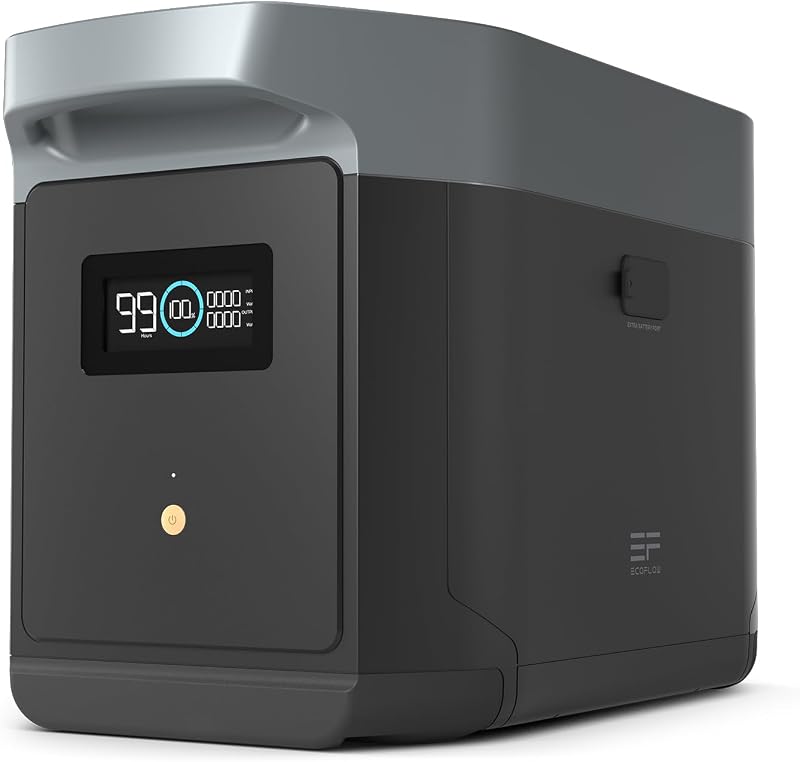
Transporting a power unit between your garage, vehicle, or job site requires assessing physical bulk and built-in connection points. The Delta 2 features a contained footprint measuring 11 inches long, 9 inches wide, and 18 inches high, with a total weight of 42 pounds. EF ECOFLOW equips this model with 6 integrated AC power outlets, giving you ample room to plug in multiple electronic devices and small appliances simultaneously without relying on power strips. When assessing the Champion 100519 or EcoFlow Delta 2 for camping, the battery station fits neatly into trunk spaces and footwells.
On the engine side, the manufacturer listing for the 100519 does not specify exact chassis dimensions, unit dry weight, or specific outlet numbers. However, open-frame generators housing a 301cc engine block and structural tubular steel frame inherently carry substantial physical mass. Moving an open-frame unit around uneven terrain or lifting it into a truck bed generally demands significant physical effort, as documented across our champion 100519 vs duromax xp13000eh breakdown.
Having 6 integrated AC outlets directly on the Delta 2 simplifies everyday use. You can plug in a laptop, phone charger, television, portable cooler, and lamp without searching for splitters. While the 100519 provides higher wattage, its open-frame layout is built around job site utility rather than compact, grab-and-go portability.
Edge: EcoFlow Delta 2 offers an exact 42-pound weight, compact dimensions, and six built-in AC outlets for effortless transport.
Maintenance Requirements and Equipment Longevity
Routine maintenance requirements separate mechanical generators from solid-state power stations. A thorough Champion 100519 review reveals that keeping an internal combustion inverter operational requires ongoing mechanical care. The 301cc engine utilizes a Huayi carburetor assembly (part number 16100-Z0C0210-00M0), an F6RTC spark plug, fuel lines, clamps, and intake gaskets. To prevent hard starting and surging, you must inspect gaskets, clean varnish from carburetor jets, drain stale fuel before storage, and change engine oil regularly.
By contrast, any detailed EcoFlow Delta 2 review highlights the complete absence of fluids, filters, and ignition wear parts. The unit uses durable LFP (lithium iron phosphate) battery chemistry engineered for 3000+ full charging cycles before degrading to 80% of its initial capacity. The manufacturer rates this chemistry for 10 years of daily use. For buyers wondering is EcoFlow Delta 2 worth it, avoiding oil changes, carburetor rebuilds, and spark plug adjustments represents massive long-term time savings. Similar engine upkeep challenges are detailed in our generac gp3300i vs champion 100519 comparison.
Long-term reliability on an engine generator depends on how well you manage fuel freshness and mechanical wear. If left sitting with untreated fuel, carburetor passages clog and straight fuel inlet tubes can become compromised. The battery station requires only occasional top-off charging to remain ready for deployment in a closet or utility room.
Edge: EcoFlow Delta 2 wins decisively with zero engine fluid maintenance and a durable 3000-cycle LFP battery lifespan.
Pros and Cons
Champion 100519

Pros
- 6250 starting and 5000 running watts
- High-output 301cc combustion engine
- Open frame quiet inverter construction
- Continuous power delivery with fuel refilling
Cons
- Requires ongoing carburetor and spark plug maintenance
- Produces exhaust emissions preventing indoor use
- Chassis dimensions and weight not listed
View Champion 100519 on Amazon
EcoFlow Delta 2
Pros
- 2048Wh base capacity expandable to 6144Wh
- Long-lasting LFP battery with 3000+ cycles
- Zero emissions safe for indoor backup
- Six built-in 120V AC outlets
- Supports renewable solar panel charging
Cons
- Limited to 2048 watts continuous output
- Recharging requires solar or grid access
View EcoFlow Delta 2 on Amazon
Who Should Buy Each One
Choose the Champion 100519 If
- You need to operate high-draw electrical equipment like water pumps, table saws, or multiple heating appliances simultaneously.
- You want 5000 running watts and 6250 starting watts of continuous power generation during severe multi-day emergencies.
- You have outdoor storage and property space to safely operate a fuel engine 20 feet away from living quarters.
- You are comfortable performing basic small engine maintenance, including spark plug checks and carburetor care.
Choose the EcoFlow Delta 2 If
- You need completely silent, zero-emission electricity that is safe to operate directly inside an apartment, home, or vehicle.
- You want expandable battery capacity ranging from 2048Wh up to 6144Wh for custom backup scaling.
- You prefer clean energy replenishment through compatible solar panels and standard wall outlets.
- You want a grab-and-go 42-pound unit with six integrated AC outlets that requires zero fluid maintenance or mechanical upkeep.
Final Verdict
The choice between the EcoFlow Delta 2 vs Champion 100519 hinges entirely on your need for raw mechanical wattage versus clean indoor storage. For users who live in suburban homes or work on active outdoor sites, the 100519 delivers unmatched heavy-duty capability. Its 5000 running watts, 6250 starting watts, and 301cc engine allow you to run demanding equipment and major home appliances as long as fuel is available, easily outpowering any compact battery bank on pure sustained electrical output.
However, for modern home backup, apartment living, and recreational travel, the Delta 2 is the superior overall pick for most everyday users. Its clean LFP battery chemistry provides 2048Wh of expandable power, 3000+ cycles to 80% capacity, six built-in outlets, and zero harmful emissions. Unless you specifically require 5000 continuous watts to power heavy machinery, the silent convenience, indoor safety, and maintenance-free design of the Delta 2 provide a far more versatile ownership experience.
FAQ
Can the EcoFlow Delta 2 be used safely inside a house?
Yes. The Delta 2 is an electric, solar-compatible power station that utilizes LFP battery cells without combustion or emissions. It produces zero carbon monoxide, allowing you to use it safely in bedrooms, living rooms, and enclosed spaces.
Can the Champion 100519 run a full-size refrigerator and power tools at the same time?
Yes. With 5000 running watts and 6250 starting watts, the 100519 has sufficient capacity to run residential refrigerators alongside multiple power tools or well pumps without overloading its electrical system.
How long does the LFP battery on the EcoFlow Delta 2 last?
The Delta 2 uses lithium iron phosphate (LiFePO4) chemistry rated for 3000+ charging cycles until it drops to 80% of original capacity. The manufacturer estimates this equates to roughly 10 years of daily use under standard operating conditions.
Can you expand the battery capacity of the EcoFlow Delta 2?
Yes. The system features expandable capacity from 2kWh to 6kWh. By adding up to two Smart Extra Batteries, you can increase total energy storage up to 6144Wh for extended emergency backup.
What carburetor replacement does the Champion 100519 use?
The 100519 301cc engine utilizes a Huayi carburetor assembly that replaces part numbers 16100-Z0C0210-00M0 and 16100Z0C021000M0, featuring a straight fuel inlet tube, intake gaskets, and an F6RTC spark plug.
Does the EcoFlow Delta 2 support solar recharging?
Yes. The Delta 2 listing identifies solar power as a supported power source, allowing users to recharge the internal 2048Wh battery using compatible solar panels when disconnected from the electrical grid.
Which unit is better for camping and road trips?
The Delta 2 is generally better for camping due to its 42-pound weight, compact 11″L x 9″W x 18″H dimensions, silent operation, and six integrated AC outlets that operate without engine noise or exhaust odors.