Choosing between the AMD Ryzen 5 9600X and the AMD Ryzen 7 9800X3D comes down to a fundamental architectural trade-off: an ultra-efficient 65-watt platform with high peak boost frequencies versus an enthusiast gaming engine powered by a stacked 96MB L3 cache and higher core density.
Mainstream builders prioritizing cool operation and dependable performance should choose the Ryzen 5 9600X, while competitive players seeking maximum frame output in simulation or esports titles will want the Ryzen 7 9800X3D.

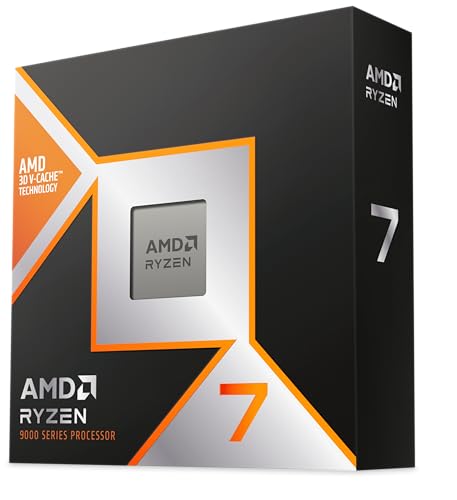
AMD Ryzen 5 9600X vs Ryzen 7 9800X3D at a Glance
| Feature | AMD Ryzen 5 9600X | AMD Ryzen 7 9800X3D |
|---|---|---|
| Processor Series | Ryzen 5 | Ryzen 7 |
| Architecture | AMD Zen 5 | AMD Zen 5 |
| Cores / Threads | 6 Cores / 12 Threads | 8 Cores / 16 Threads |
| Base Clock Speed | 3.9 GHz | 4.7 GHz |
| Max Boost Clock | 5.4 GHz | Up to 5.2 GHz |
| Total / L3 Cache | 38 MB Total Cache | 96MB L3 Cache (Next Gen 3D V-Cache) |
| Secondary Cache | 6 MB | 8 MB |
| Wattage | 65 Watts | 140 Watts |
| Cooling Requirement | Air | External Cooler |
| Best For | Efficient gaming and everyday desktop productivity | Uncompromising frame rates and CPU-heavy titles |
Cache Architecture and Gaming Performance
The defining hardware contrast between these two Zen 5 microprocessors lies in how their internal cache is partitioned and stacked. The Ryzen 7 9800X3D 3D V-Cache introduces a dedicated 96MB L3 cache pool engineered to keep game instructions and immediate asset calculations on-die. When dealing with modern game logic, rendering preparation, and complex simulation loops, a massive cache repository dramatically cuts down how often the chip must make high-latency trips out to system RAM. AMD explicitly presents this processor as built on Next Gen 3D V-Cache technology to achieve exceptional gaming output, paired with an advertised approximate 16% IPC uplift that accelerates per-clock throughput across modern game code.
By comparison, the AMD Ryzen 5 9600X specs detail an overall cache structure of 38 MB, supported by 6 MB of secondary cache. While this configuration is substantial for general desktop tasks, its L3 memory pool is a fraction of what is available on the stacked variant. The manufacturer highlights that the 9600X is designed for pure gaming performance capable of smooth 100+ FPS in popular titles. For gamers running standard 1440p or 4K monitors where graphics cards bear the heaviest burden, the 9600X supplies plenty of instruction capacity. However, in heavy esports scenarios or poorly optimized titles where the CPU governs minimum frame rates, the vast buffer on the 3D chip prevents the stuttering and frame dips that smaller caches cannot avoid.
When evaluating intel core ultra 7 265k vs amd ryzen 7 9800x3d or looking at standard desktop lineups, the difference in cache density remains the primary performance separator. The 9800X3D uses its specialized physical layout to bypass memory latency bottlenecks entirely. If a user seeks the highest possible frame ceiling and demands that competitive titles run without frame-rate dips during heavy on-screen action, the hardware differences documented in each Ryzen 7 9800X3D review highlight why that extra silicon footprint matters.
Edge: AMD Ryzen 7 9800X3D because its massive 96MB Next Gen 3D V-Cache fundamentally reduces memory retrieval delays in processor-bound gaming workloads.
Core Count and Multithreaded Processing
Core allocation dictates how well a processor manages intense productivity workflows, concurrent system background operations, and game streaming tasks. The 9800X3D provides an 8-core, 16-thread layout, whereas the 9600X operates with a 6-core, 12-thread design. Both processors are built upon the modern Zen 5 architecture, meaning their individual instructions per clock and foundational compute blocks benefit from the same generational advances. However, having two additional physical cores and four extra threads gives the octa-core processor a distinct operational advantage when software spreads its compute demands across multiple processor pipelines simultaneously.
For builders who multitask while playing-such as running live broadcast software, recording high-bitrate video, executing Discord communication, and maintaining browser sessions in the background-the 8-core layout on the 9800X3D provides dedicated resources that keep the primary game process from hitching. A comprehensive AMD Ryzen 5 9600X review reveals that while 6 cores and 12 threads are completely competent for standard gaming sessions and single-application tasks, the silicon can encounter resource limits when heavily parallel software is introduced. You can also explore how six-core chips balance alongside other alternatives in our amd ryzen 5 9600x vs ryzen 7 9700x breakdown.
The processing deficit of the 6-core design only surfaces when everyday compute tasks turn into serious productivity demands. Users rendering complex scenes, compiling code, or exporting video files will discover that the extra hardware on the 9800X3D completes multi-threaded tasks faster simply through physical execution capacity. The 9600X manages these workloads adequately for casual use, but the two extra cores on the higher-tier component offer tangible headroom for heavy desktop multi-tasking.
Edge: AMD Ryzen 7 9800X3D due to its 8-core and 16-thread layout that provides higher throughput for simultaneous background apps and compute-heavy tasks.
Clock Speeds and Single-Core Frequency
Clock speeds present a curious divergence between these two processors, reflecting their different silicon designs and operating priorities. The 9600X boasts a higher maximum boost clock of 5.4 GHz, compared to the 9800X3D, which is listed as reaching clock speeds up to 5.2 GHz. In bursty single-threaded applications and operating system navigation where only one or two cores are active, a higher boost ceiling allows the 9600X to complete rapid calculations very quickly. The listing also highlights that the 9600X is unlocked for overclocking, allowing enthusiasts to tune operating parameters manually.
Conversely, the 9800X3D compensates for its lower peak boost ceiling by offering an aggressive base clock speed of 4.7 GHz, which sits well above the 3.9 GHz base frequency of the 9600X. A high base clock guarantees that even under relentless multi-core processing loads where peak boost cannot be sustained indefinitely, the 9800X3D maintains a lofty performance baseline. The listing notes that the 9800X3D features better thermal performance compared to previous generations, which allows it to push these higher sustained frequencies despite the insulation challenges traditionally introduced by stacked cache layers.
The question of frequency versus cache is central to deciding between the Ryzen 7 9800X3D vs AMD Ryzen 5 9600X. Frequency-sensitive tasks that do not benefit from a large cache pool, such as certain audio editing suites or legacy utility software, benefit directly from the 5.4 GHz peak ceiling on the 9600X. When evaluating the intel core ultra 5 245k vs amd ryzen 5 9600x, pure clock speeds remain an important benchmark. However, for games, the massive cache pool on the 9800X3D easily makes up for its 200 MHz deficit in peak boost.
Edge: AMD Ryzen 5 9600X for its superior 5.4 GHz max boost frequency and unlocked multiplier flexibility for frequency-dependent workloads.
Power Consumption and Cooling Demands
The thermal and power envelope of a desktop processor dictates the cooling hardware you need and influences overall system temperatures. When evaluating Ryzen 5 9600X vs 9800X3D power consumption, the specifications reveal two completely different design targets. The 9600X operates at an efficient 65 watts. This low thermal rating makes it an ideal candidate for smaller cases, budget-friendly cooling setups, and compact system builds. The listing indicates that standard air cooling is the recommended thermal method, simplifying case airflow requirements and minimizing overall desktop system noise.
In contrast, the 9800X3D is rated at 140 watts, representing more than double the thermal power consumption of its 6-core sibling. The product listing explicitly specifies an external cooler method for this processor, meaning buyers must pair the chip with an aftermarket thermal solution capable of dissipating substantial heat. The increased power draw is a direct consequence of driving 8 Zen 5 cores at a 4.7 GHz base clock alongside the physical architecture of the 3D V-Cache. Those building around the 9800X3D must ensure their power supplies and chassis ventilation are configured to handle steady 140-watt heat dissipation.
Prospective buyers must also account for the fact that neither processor includes a boxed cooler inside the packaging. Both product listings state that a cooler is not included, requiring an additional cooling purchase regardless of which side you select. However, the 9600X can be cooled effectively by an inexpensive, modest air cooler, whereas the 140W rating of the 9800X3D demands a heavy-duty cooling assembly. For deeper insight into how high-draw processors impact power and thermal planning, see our amd ryzen 7 9700x vs 9800x3d comparison.
Edge: AMD Ryzen 5 9600X due to its lean 65-watt profile that requires simpler air cooling and generates far less heat inside the chassis.
Platform Compatibility and Memory Support
Both models are built for AMD Socket AM5, ensuring that builders can slot either CPU into modern motherboards supporting this platform. The 9600X listing explicitly notes support for DDR5-5600 system memory and PCIe 5.0 expansion on select motherboards. These attributes provide access to fast solid-state drives and modern add-in cards. The listing for the 9800X3D confirms that it is drop-in ready for proven Socket AM5 infrastructure, ensuring widespread motherboard support, though its specific supported memory speed is not listed in the product data.
Because both processors operate on the same AM5 socket and are validated for the Windows 11 platform, users have access to identical modern motherboard chipsets, UEFI management utilities, and firmware updates. Physical dimensions are also identical, with both items listed at 5 inches in length and 5 inches in width for package handling. Builders weighing high-core upgrades can also check out our amd ryzen 5 9600x vs ryzen 9 9900x overview to see how AM5 scales across other performance brackets.
The shared socket architecture makes platform upgrades straightforward. A builder could realistically start with the 6-core processor today and drop in an octa-core 3D cache processor in the future without changing motherboards or memory. Because both processors share the foundational AM5 infrastructure and Windows 11 readiness, neither processor holds a meaningful mechanical or platform-level advantage over the other.
Edge: Tie.
Pros and Cons
AMD Ryzen 5 9600X

Pros
- Low 65-watt power specification
- Higher 5.4 GHz max boost frequency
- Unlocked multiplier for user overclocking
- Standard air cooling compatibility
Cons
- Lower 6-core 12-thread capacity
- Smaller 38 MB total cache pool
- Cooler not included in package
View AMD Ryzen 5 9600X on Amazon
Who Should Buy Each One
Choose the AMD Ryzen 5 9600X If
- You prefer a lean 65-watt power envelope that keeps desktop heat output and energy use low.
- You plan to use a straightforward air cooling setup rather than investing in an advanced external cooler.
- Your primary applications prioritize high single-core frequency, taking advantage of the 5.4 GHz boost clock.
- You want a capable Zen 5 processor designed to deliver smooth 100+ FPS in mainstream games without demanding high wattage.
Choose the AMD Ryzen 7 9800X3D If

- You want the high frame rates and latency reduction delivered by 96MB of Next Gen 3D V-Cache.
- You play simulation, strategy, or competitive esports titles that are heavily limited by CPU cache size.
- You need 8 physical cores and 16 concurrent processing threads to run secondary applications while gaming.
- Your desktop case and power infrastructure can easily accommodate a 140-watt processor that requires external cooling.
Final Verdict
For the majority of everyday PC builders and mainstream gamers, the 9600X represents the most practical and balanced option. Its 65-watt thermal footprint dramatically simplifies system integration, allowing standard air coolers to maintain stable operating temperatures while the chip hits boost frequencies up to 5.4 GHz. It delivers reliable 100+ FPS performance in modern gaming titles without placing excessive demands on your power supply or chassis airflow. It is a streamlined introduction to the Zen 5 architecture that handles gaming and daily computing with minimal fuss.
When the priority shifts to uncompromising, competitive frame rates, the 9800X3D stands apart. The combination of 8 cores, 16 threads, and 96MB of Next Gen 3D V-Cache eliminates the micro-stutters and frame-rate drops that occur when a processor is starved of immediate memory access. If your setup features a high-refresh monitor and you regularly play CPU-intensive multiplayer or simulation titles, the 140-watt thermal requirement and external cooler demand are worthwhile investments to unlock the highest performance tier available on the AM5 platform.
FAQ
Do either of these processors include a cooling fan in the box?
Neither processor comes with a bundled cooler. The product specifications for both the 9600X and the 9800X3D state that a cooler is not included. The 9600X specifies air cooling as its standard cooling method, which can be handled by standard aftermarket air coolers. In contrast, the 9800X3D specifies an external cooler method, indicating that users must purchase a robust thermal solution capable of dissipating its 140-watt rating.
Can both processors run on the same Socket AM5 motherboard?
Yes. Both the 9600X and the 9800X3D are built for the AMD Socket AM5 platform. The 9800X3D listing highlights that it is drop-in ready for proven Socket AM5 infrastructure, while the 9600X indicates support for Socket AM5 along with PCIe 5.0 capabilities on select motherboards. Both run on the Windows 11 platform.
Is the Ryzen 7 9800X3D worth it over the Ryzen 5 9600X for gaming?
Whether the 9800X3D is worth it depends on the types of games you play and your monitor refresh rate. The 9800X3D features 96MB of L3 cache through its Next Gen 3D V-Cache technology, which is specifically designed to eliminate CPU bottlenecks in demanding games. The 9600X is advertised for smooth 100+ FPS gaming and provides a 38 MB cache pool, which is sufficient for mainstream gaming, but the 9800X3D delivers superior performance headroom for high-refresh competitive players.
How do the cache sizes differ between these two models?
The 9600X features an installed total cache size of 38 MB with 6 MB of secondary cache. The 9800X3D features a massive 96MB L3 cache powered by AMD Next Gen 3D V-Cache, along with 8 MB of secondary cache. The much larger L3 pool on the 9800X3D allows the processor to hold far more immediate application and game data on the chip, reducing the frequency of slower calls to external memory.
What are the power consumption differences between the two chips?
The 9600X operates at 65 watts, making it a very power-efficient 6-core processor. In contrast, the 9800X3D is rated at 140 watts to sustain its 8 cores and stacked 3D V-Cache architecture. As a result, the 9800X3D draws considerably more power and generates more heat under load, requiring stronger case ventilation and more substantial cooling hardware.
Does the Ryzen 5 9600X allow user overclocking?
Yes. The product listing for the 9600X explicitly states that the processor is unlocked for overclocking. This allows users with compatible Socket AM5 motherboards to adjust clock multipliers and frequencies beyond the factory base clock of 3.9 GHz and boost clock of 5.4 GHz. The listing for the 9800X3D does not explicitly specify unlocked overclocking capability in its feature bullet points.
What memory speeds do these processors support?
The 9600X listing explicitly confirms support for DDR5-5600 system memory. For the 9800X3D, the specific memory speed support is not listed in the provided product details, although it utilizes the same Socket AM5 platform infrastructure that standardizes DDR5 support.


