The single deciding factor between these two graphics cards comes down to whether your workload requires an expanded 20GB memory buffer to hold large machine learning models or an uncompromised PCI-Express x16 bus with high core throughput for graphics rendering. The specialized Nvidia RTX 3080 modification doubles the standard VRAM allocation to accommodate modern local artificial intelligence workflows, while the enthusiast-grade Nvidia RTX 3080 Ti relies on a faster memory clock and higher-bandwidth host connection to drive demanding visual tasks.
Choose the RTX 3080 if you primarily deploy local language models and neural networks that exceed standard 12GB desktop VRAM limits. Choose the RTX 3080 Ti if you require maximum frame rates in high-resolution video games, full PCIe bus bandwidth, and a refined triple-fan cooling system designed for standard desktop chassis.

Nvidia RTX 3080 vs Nvidia RTX 3080 Ti at a Glance
| Specification | Nvidia RTX 3080 | Nvidia RTX 3080 Ti |
|---|---|---|
| Graphics Coprocessor | NVIDIA GeForce RTX 3080 | NVIDIA GeForce RTX 3080 Ti |
| Video Memory | 20 GB GDDR6X | 12 GB GDDR6X |
| Memory Bus Width | 320-bit | Not listed |
| Memory Speed | 19 Gbps | 19.5 Gbps |
| Host Interface | PCI-Express x4 | PCI-Express x16 |
| Core Clock | 1710 MHz (1.7 GHz) | Not listed |
| Display Outputs | 3x DisplayPort, 1x HDMI | DisplayPort 1.4a, HDMI 2.1 |
| Maximum Digital Resolution | Not listed | 7680 x 4320 |
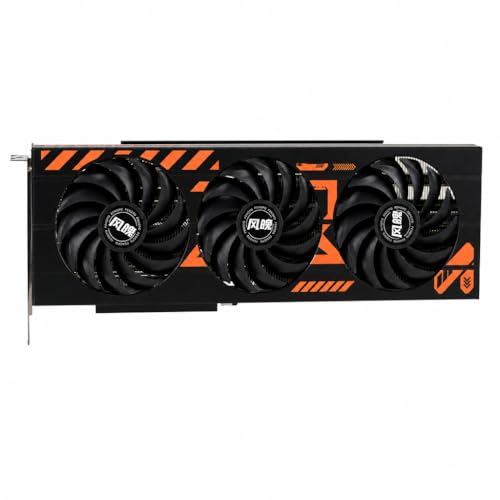
| Cooling Hardware | 3-fan dual-width turbo shroud | 3 Axial-tech fans, 2.9-slot heatsink |
| Dimensions | 11.8 inches L x 8.7 inches W | 12.53 inches L x 5.51 inches W |
| Power Connection | 8+8-pin (850W PSU recommended) | Not listed |
| Best For | Local LLMs and AI model inference | High-refresh 4K gaming and multimedia |
VRAM Capacity and Deep Learning Performance
In machine learning and neural network deployment, onboard memory volume dictates which model sizes can run entirely inside the GPU frame buffer. When loading model weights into hardware, running out of memory causes the application to fail immediately or offload layers into significantly slower system memory. For practitioners assessing the RTX 3080 vs 3080 Ti VRAM situation, the 20GB allocation on the modified RTX 3080 offers a substantial functional buffer over the 12GB found on the RTX 3080 Ti. This extra capacity allows local deployment of mid-sized architectures, including Qwen, GLM, and MiniMax, which cannot fit inside a standard 12GB memory envelope without severe quantization.
Examining the RTX 3080 20GB vs 3080 Ti 12GB dynamic reveals that deep learning researchers often value capacity over compute clock headroom. Comparing this modified setup against standard Ampere options in our nvidia rtx 3080 vs 3090 breakdown highlights how high memory ceilings alter computational feasibility. While the RTX 3080 operates its memory at 19 Gbps across a 320-bit bus, the ability to store entire weight matrices without system paging creates a reliable environment for multi-turn inference and local agent hosting. For dedicated compute clusters, the 20GB frame buffer is the primary operational advantage.
By contrast, the 12GB GDDR6X on the RTX 3080 Ti operates at a slightly faster 19.5 Gbps speed, but it remains strictly constrained by its total pool size. When deciding between the RTX 3080 or RTX 3080 Ti for AI training or large context windows, the Ti edition encounters hard memory limits much earlier in the pipeline. Unless your neural network tasks focus entirely on smaller vision models or tightly quantized networks, the RTX 3080 vs 3080 Ti deep learning comparison heavily favors the unit with the larger physical memory array.
Edge: Nvidia RTX 3080 because its 20GB GDDR6X capacity accommodates large language models and prevents out-of-memory errors that interrupt AI compute jobs.
Gaming Performance and Graphics Architecture
When assessing the RTX 3080 Ti vs RTX 3080 performance in rasterization and real-time graphics rendering, the silicon features of the RTX 3080 Ti provide a clear technical advantage. The ASUS ROG Strix variant incorporates NVIDIA Ampere Streaming Multiprocessors that deliver double the FP32 throughput over previous generations, paired with 2nd Generation RT Cores for concurrent ray tracing and shading. Furthermore, its 3rd Generation Tensor Cores feature structural sparsity and support advanced AI rendering algorithms like DLSS, allowing the GPU to maintain high frame rates at demanding resolutions up to 7680 x 4320.
The modified RTX 3080 runs at a core clock of 1710 MHz and utilizes GDDR6X memory clocked at 19 Gbps. While the underlying silicon provides substantial 3D processing power, the card is explicitly configured and modified for server-oriented compute tasks. As detailed in our review of top-tier desktop gaming silicon in the nvidia rtx 3080 ti vs 3090 comparison, enthusiast graphics cards require high memory bandwidth combined with rapid shader execution to avoid micro-stuttering during complex scenes. The RTX 3080 listing describes hardware modified for AI mapping and computing acceleration, making standard desktop gaming an secondary focus rather than its primary engineering goal.
For buyers asking whether the RTX 3080 or RTX 3080 Ti for gaming is the better purchase, the RTX 3080 Ti is explicitly tailored for rendering high-fidelity graphics. With faster 19.5 Gbps memory and specialized gaming display outputs including HDMI 2.1 and DisplayPort 1.4a, it handles modern game engines smoothly. Anyone wondering is the RTX 3080 Ti worth it for an ultra-high-definition monitor setup will find that its dedicated gaming architecture and display output pipeline align directly with consumer desktop needs.
Edge: Nvidia RTX 3080 Ti because its 19.5 Gbps memory speed, 2nd Gen RT Cores, and HDMI 2.1 pipeline provide a complete platform for 4K and 8K visual output.
Host Interface Bus Width and System Bandwidth
The physical motherboard interface defines how quickly information transfers between system memory, the CPU, and the graphics processor. A critical technical detail in this comparison is the difference in interface configuration: the ASUS ROG Strix RTX 3080 Ti connects via a full PCI-Express x16 slot, while the generic modified RTX 3080 connects across a PCI-Express x4 connection. In desktop environments, cutting the physical lane count from sixteen down to four reduces the maximum bidirectional data bandwidth between the host PC and the graphics card.
In high-resolution gaming and real-time video editing, a reduced host connection can cause throughput bottlenecks whenever game engines stream heavy textures, geometry, and asset packages from system storage into the GPU. When reading an in-depth RTX 3080 review or an enthusiast RTX 3080 Ti review, interface lane allocation is a fundamental consideration. The x16 interface on the RTX 3080 Ti ensures that high data transfer bursts between the host system and the graphics card occur without latency spikes, an advantage also seen when moving up from mid-range boards as examined in the nvidia rtx 3070 vs 3080 match-up.
Conversely, the modified RTX 3080 is structured similarly to server-bound accelerators where deep learning models are loaded into VRAM once and kept there during persistent inference tasks. For AI model inference, the data transfer bottleneck is minimal once the weights reside in the 20GB memory pool. However, if the card is placed in a consumer gaming rig that continuously moves streaming game assets back and forth across the bus, the x4 limitation presents a measurable throughput restriction that does not affect the full-bandwidth RTX 3080 Ti.
Edge: Nvidia RTX 3080 Ti because its full PCI-Express x16 interface provides four times the host lane throughput of the x4 modified card.
Thermal Architecture and Form Factor Compatibility
Sustained graphics and compute performance depend heavily on cooling assemblies to prevent thermal throttling. The ASUS ROG Strix RTX 3080 Ti features a 2.9-slot profile engineered specifically to maximize cooling surface area. Its thermal solution uses three Axial-tech fans, with the center fan spinning in reverse rotation relative to the outer fans to minimize turbulence and direct air smoothly through the large fin stack. At 12.53 inches in length and 5.51 inches in width, it fits standard enthusiast mid-tower and full-tower computer enclosures designed for multi-slot expansion cards.
In contrast, the Generic RTX 3080 features a dual-width server-oriented turbo design equipped with three fans. The card measures 11.8 inches long, but it possesses an unusually wide 8.7-inch profile that matches specialized server chassis and compute racks rather than traditional ATX desktop layouts. Additionally, the manufacturer notes that the visual appearance of the modified 3080 cards differs between manufacturing batches depending on parts on hand. Managing heat across dense hardware configurations presents clear challenges, similar to those explored when balancing performance and thermals in our nvidia rtx 3070 ti vs 3080 evaluation.
For standard desktop builders, the ASUS thermal design offers predictable form factor engineering, quieter directed airflow, and structural compatibility with ordinary motherboard layouts. The modified RTX 3080, with its wide 8.7-inch footprint and batch-dependent construction, requires careful measurement of chassis side-panel clearance and internal cable routing before installation.
Edge: Nvidia RTX 3080 Ti because its standard 2.9-slot Axial-tech cooling architecture provides engineered desktop thermal management and predictable case fitment.
Power Delivery and Hardware Ecosystem
High-wattage graphics silicon requires reliable electrical regulation to maintain stability under prolonged workloads. The ASUS ROG Strix RTX 3080 Ti incorporates Super Alloy Power II hardware, which includes premium alloy chokes, solid polymer capacitors, and high-current power stages designed to handle transient spikes. Complementing the hardware is ASUS GPU Tweak II, a dedicated software platform that provides granular control over core clocks, memory frequencies, fan curves, and real-time voltage monitoring.
The modified RTX 3080 operates with a standard 8+8-pin power interface and carries a manufacturer recommendation of an 850W or higher power supply. Because it is an unbranded generic server modification optimized for compute acceleration, it does not include custom utility software or proprietary electrical power stages. When evaluating upgrades from baseline graphics setups, as discussed in our nvidia rtx 3060 vs 3080 overview, consumer conveniences like unified driver utilities and integrated vendor software add tangible operational stability.
The inclusion of official vendor tuning utilities and high-grade power delivery on the RTX 3080 Ti gives users direct insight into thermals and component health without relying on third-party workarounds. While the modified RTX 3080 satisfies basic server power requirements with dual 8-pin inputs, it lacks the integrated hardware and software tuning ecosystem provided by the ASUS ROG platform.
Edge: Nvidia RTX 3080 Ti because of its Super Alloy Power II component design and native GPU Tweak II monitoring software.
Pros and Cons
Nvidia RTX 3080

Pros
- 20GB GDDR6X memory capacity
- 320-bit memory bus width
- Optimized for local LLM inference
- Triple-fan server cooling solution
Cons
- PCI-Express x4 host interface
- Batch-dependent visual appearance
- Requires 850W or higher power supply
View Nvidia RTX 3080 on Amazon
Nvidia RTX 3080 Ti

Pros
- Full-bandwidth PCI-Express x16 interface
- 5 Gbps memory speed
- Axial-tech 2.9-slot cooling system
- Super Alloy Power II electrical components
- Supports up to 8K resolution output
Cons
- Smaller 12GB VRAM buffer
- Large 2.9-slot case footprint
View Nvidia RTX 3080 Ti on Amazon
Who Should Buy Each One
Choose the Nvidia RTX 3080 If
- You run local LLMs like Qwen, GLM, or MiniMax that require more than 12GB of VRAM to stay resident in memory.
- Your primary workload consists of AI mapping, compute acceleration, or deep learning inference tasks.
- You have a workstation or server chassis that accommodates its wide 8.7-inch dual-width footprint.
- You operate an 850W or higher power supply equipped with dual 8-pin PCIe power cables.
Choose the Nvidia RTX 3080 Ti If
- You play modern games at high refresh rates and need full Ampere Streaming Multiprocessor and ray tracing support.
- You depend on a full PCI-Express x16 connection to ensure uninterrupted asset streaming in desktop applications.
- You want a refined 2.9-slot Axial-tech cooling system designed for standard desktop computer cases.
- You connect to high-end monitors requiring native HDMI 2.1 or DisplayPort 1.4a connections up to 8K resolution.
Final Verdict
For most desktop gamers, creative professionals, and mainstream builders, the ASUS ROG Strix Nvidia RTX 3080 Ti is the superior hardware choice. Its full-bandwidth PCI-Express x16 interface, 19.5 Gbps GDDR6X memory speed, 2.9-slot Axial-tech cooling system, and native HDMI 2.1 support ensure top-tier performance across visual rendering and modern 4K gaming titles. The card integrates directly into desktop chassis and delivers predictable, stable operation backed by Super Alloy Power II components and GPU Tweak II monitoring software.
The generic modified Nvidia RTX 3080 wins in specific professional and enthusiast scenarios where VRAM capacity is the single deciding constraint. If your objective is deploying local artificial intelligence models, hosting quantized language weights, or running compute workloads that crash on 12GB GPUs, the expanded 20GB GDDR6X frame buffer on this card solves a problem that raw core speed cannot fix. For dedicated machine learning boxes that can accommodate its 8.7-inch width and x4 PCIe slot, the 20GB RTX 3080 provides the necessary memory ceiling.
FAQ
Which card is better for running local AI models like Qwen and GLM?
The Nvidia RTX 3080 is substantially better for running local language models because of its 20GB GDDR6X memory pool. Large language models require extensive VRAM to load weight parameters into memory, and the 12GB capacity on the RTX 3080 Ti often causes out-of-memory errors when processing larger model sizes or extended context windows.
Why does this specific RTX 3080 have 20GB of VRAM instead of the standard 10GB?
This RTX 3080 model is a specialized modified server graphics card that incorporates additional GDDR6X memory modules to total 20GB of VRAM. It has been custom configured specifically for compute tasks, AI mapping, and local deep learning applications that require more frame buffer capacity than retail desktop cards provide.
Does the PCI-Express x4 interface limit gaming on the RTX 3080?
Yes, the PCI-Express x4 interface limits the rate at which game assets and high-resolution textures stream between the host system and the GPU. While deep learning models load into VRAM once and run inside the 20GB buffer, modern games constantly exchange data across the bus, making the full PCI-Express x16 interface on the RTX 3080 Ti much better for gaming performance.
What size power supply is needed for these graphics cards?
The listing for the modified RTX 3080 recommends a power supply of 850W or higher and requires dual 8-pin power connectors. While the listing for the ASUS ROG Strix RTX 3080 Ti does not specify an exact wattage number, graphics cards in this class generally require an equivalent 850W high-output power supply to handle continuous heavy computing or gaming loads.
Can the RTX 3080 Ti display video at 8K resolution?
Yes, the ASUS ROG Strix RTX 3080 Ti supports a digital maximum resolution of 7680 x 4320 through its HDMI 2.1 and DisplayPort 1.4a interfaces. Its Ampere architecture and updated Tensor Cores are explicitly engineered to support high-resolution visual displays up to 8K.
Will both graphics cards fit inside a standard desktop computer case?
The RTX 3080 Ti measures 12.53 inches long by 5.51 inches wide and uses a 2.9-slot thickness, which fits into most mid-tower cases with sufficient length clearance. The modified RTX 3080 measures 11.8 inches long by 8.7 inches wide; its substantial 8.7-inch width requires a wide workstation enclosure or server chassis to clear the side panel.
Does the appearance of the modified RTX 3080 vary?
Yes, the listing for the Generic RTX 3080 states that the physical appearance of different production batches will differ depending on what hardware components are on hand during assembly, whereas the ASUS ROG Strix RTX 3080 Ti maintains a standardized factory aesthetic with dedicated ROG shroud styling and RGB lighting.