Choosing between portable jobsite table saws usually comes down to a strict balance between personal physical protection and raw material handling capacity. The defining distinction between these two models is that the SawStop platform incorporates flesh-sensing safety technology designed to stop the blade within milliseconds of body contact, whereas the Bosch platform prioritizes ripping wider sheet goods with an expansive factory fence system and a rapid-collapsing stand.
Safety-focused finish carpenters and dedicated woodworkers who prioritize injury mitigation should choose the SawStop JSS-120A60. Production framers and mobile contractors who require a full 30-inch ripping width straight out of the box will be better served by the Bosch 4100XC-10.
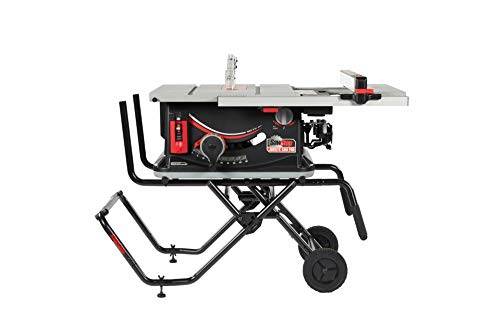
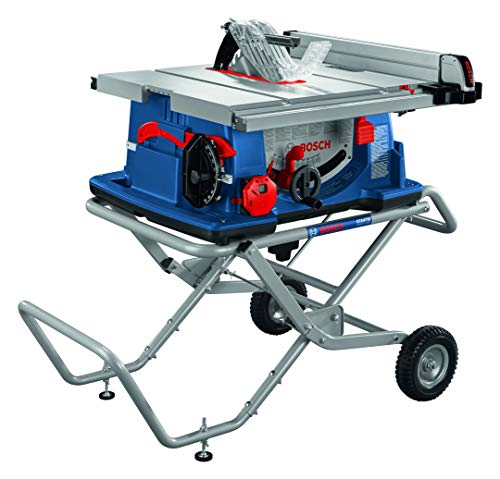
SawStop JSS-120A60 vs Bosch 4100XC-10 at a Glance
| Feature | SawStop JSS-120A60 | Bosch 4100XC-10 |
|---|---|---|
| Safety System | Patented flesh-detection system (under 5 ms stop) | Smart Guard System, restart protection, blade brake |
| Rip Capacity | The listing does not specify | 30 inches |
| Motor Specifications | 15 Amp, 1.5 HP, 1800 Watts, 120V | 15 Amp, 4.0 max HP, 3,650 RPM, 120V |
| Table Dimensions / Depth | 24 5/8-inch table depth | Large cast aluminum top |
| Stand Type | Integrated Mobile Cart Assembly | GTA47W Gravity-Rise Wheeled Stand |
| Product Weight | 113 pounds | 94 pounds |
| Stowed / Base Dimensions | 26.5″ L x 29″ W x 45″ H (stowed) | 27″ L x 30″ W x 13″ H (saw base) |
| Warranty Coverage | 2 Year Manufacturer Warranty | Limited Warranty |
| Best For | Maximum workshop safety and injury prevention | Wide sheet rips and high-mobility framing tasks |
Safety Systems and Injury Prevention
Jobsite table saws are inherently dangerous machines, and safety systems represent the primary divergence between these two machines. When evaluating sawstop vs bosch table saw safety, the mechanical architecture operates on fundamentally different philosophies. SawStop approaches jobsite security through automated physical intervention. The JSS-120A60 carries the proprietary SawStop Safety System, an active detection mechanism that passes a low-voltage electrical signal through the spinning blade. Because the human body is conductive, physical contact alters that signal, instantly triggering an aluminum brake block directly into the blade arbor. This mechanical arrest stops the blade rotation in under 5 milliseconds and retracts the assembly below the table surface, reducing what would otherwise be a severe amputation into a superficial nick.
Bosch safeguards the operator through passive physical barriers and intelligent electrical controls. The 4100XC-10 is equipped with the brand’s Smart Guard System, which combines a modular barrier guard, a dedicated riving knife, and anti-kickback pawls. The physical barrier deflects debris and physically obstructs fingers from wandering into the cut path while maintaining line-of-sight visibility. Beyond the barrier guard, Bosch integrates active electrical protections including an electronic blade brake, restart protection to stop accidental spin-up after power interruptions, and overload mitigation circuitry. While these features minimize secondary jobsite hazards like kickback and unexpected restarts, they do not intervene mechanically if a stray hand touches the teeth. Buyers reviewing comparable alternatives such as the dewalt dwe7491rs vs sawstop jss-120a60 often weigh similar structural trade-offs between physical barriers and flesh-sensing stopping systems.
The practical difference on a busy jobsite is profound. Bosch keeps the operator disciplined through standard safety protocols, guards, and anti-kickback hardware that prevent material binding. SawStop provides an active mechanical failsafe that accounts for momentary lapses in human attention or sudden slips on uneven terrain. For environments where multiple workers share a single machine, or for solo operators who place personal safety above all else, active flesh-detection technology delivers peace of mind that standard barrier guards cannot match.
Edge: SawStop JSS-120A60 because its patented flesh-sensing safety brake actively arrests blade rotation in under 5 milliseconds upon skin contact.
Rip Capacity and Material Support
Ripping sheet goods on a portable saw demands both a wide fence travel distance and sufficient surface area forward of the blade to support workpieces cleanly. The Bosch 4100XC-10 excels directly in raw material dimensions by providing a certified 30-inch ripping capacity. This capacity is managed by Bosch’s SquareLock rip fence, which glides along a large cast aluminum top and locks down parallel to the blade with a single clamp lever. A 30-inch rip span allows carpenters to split standard 4×8-foot plywood, OSB, and composite panels down the center with room to spare, eliminating the need to rough-cut wide stock with track saws or circular saws beforehand. Bosch also includes an enhanced auxiliary fence designed explicitly to support narrow workpieces without catching.
Material dimensions on the SawStop Jobsite Saw PRO are configured around cutting stability rather than maximum extension. In terms of raw sawstop jss rip capacity, the official listing does not specify the maximum distance to the right of the blade. However, the manufacturer specifies a class-leading 24 5/8-inch table depth. This extended depth provides generous bearing surface in front of the 10-inch blade, supporting long boards before they encounter the teeth. The deeper table gives finish carpenters tighter control over long trim boards and cabinetry components, minimizing blade binding caused by drooping lumber.
The operational divide centers on whether your daily workflow handles wider panel stock or precision longitudinal ripping. Woodworkers who regularly contrast portable machines, such as when comparing the dewalt dwe7485 vs bosch 4100xc-10, notice that fence extension dictates whether a jobsite saw can function as a primary sheet-breaking station. If splitting wide sheet goods is your primary task, Bosch’s 30-inch capacity eliminates friction. If your work consists of ripping framing lumber, hardwoods, or narrow architectural moldings, the deep table platform of the SawStop offers superior stability across the cut line.
Edge: Bosch 4100XC-10 due to its confirmed 30-inch rip capacity and dedicated SquareLock fence for sheet goods.
Stand Design and Jobsite Portability
A worksite saw is only as effective as its transport system, especially when a single operator must roll the tool over rough terrain, load it into a truck bed, or stow it in a crowded workshop. Looking closely at bosch gravity-rise vs sawstop mobile cart mechanics, the two brands approach mobility with custom tubular steel frames. Bosch equips the 4100XC-10 with its acclaimed GTA47W Gravity-Rise Wheeled Stand. This stand utilizes a single-action collapsible lever system that takes advantage of physical leverage to raise and lower the saw with minimal operator effort. Supported by 8-inch treaded rubber-composite tires, the Bosch stand glides over loose gravel, extension cords, and uneven jobsite debris. Furthermore, the complete Bosch setup weighs 94 pounds, making it noticeably easier to lift when loading into a vehicle.
SawStop pairs its machine with a heavy-duty Mobile Cart Assembly. The cart is designed for upright rollability and stable stationary cutting, collapsing down into compact stowed dimensions of 26.5 inches long, 29 inches wide, and 45 inches high. When deployed, the machine occupies a footprint of 48 inches long, 29 inches wide, and 36 inches high. The frame provides exceptional rigidity that prevents table flex under heavy timber loads, but this structural density brings the total product weight to 113 pounds. That 19-pound difference over the Bosch is immediately apparent when hoisting the unit into a van or maneuvering it up temporary jobsite stairways.
When deciding on the sawstop jss-120a60 or bosch 4100xc-10 for jobsite transport, the trade-off balances structural mass against fluid movement. Similar mobility compromises appear across the category, as seen in evaluations like the sawstop jss-120a60 vs skil ts6307-00. Bosch’s lighter 94-pound total weight and single-action Gravity-Rise folding linkage make it faster to pack up at the end of the shift. SawStop’s cart offers outstanding balance and stable upright storage, but it requires significantly more physical effort to transport solo.
Edge: Bosch 4100XC-10 because the GTA47W Gravity-Rise stand deploys via single-action leverage and carries 19 fewer pounds overall.
Motor Output and Speed Management
Motor engineering defines how consistently a jobsite saw chews through dense hardwoods, damp framing lumber, and laminated composite panels. In a detailed bosch 4100xc-10 review, the electronic power management features stand out. The saw draws 15 amps through a 120-volt corded connection, generating up to 4.0 maximum horsepower and a no-load blade speed of 3,650 RPM. Bosch integrates proprietary Constant Response circuitry, an electronic regulation system that senses physical resistance and modulates power delivery to maintain uniform rotational speed under heavy cutting loads. To prevent tripped circuit breakers during startup, the 4100XC-10 incorporates soft-start circuitry that smoothly ramps the motor up to its operational 3,650 RPM threshold.
A comprehensive sawstop jss-120a60 review reveals a motor engineered for clean, measured delivery. The JSS-120A60 features a 15-amp, 120-volt motor rated at 1.5 horsepower and 1800 watts. The product listing highlights brushless motor technology, providing efficient mechanical power transfer and lower thermal buildup over extended workdays. While the listing does not specify the maximum rotational RPM, the 1800-watt power plant produces steady, dependable torque tuned for fine woodworking cuts and clean timber sizing. The electrical configuration requires 1 product-specific battery for monitoring logic, ensuring the flesh-detection safety module remains active and properly calibrated during corded operation.
The functional performance difference shows up when feeding thick, wet pressure-treated posts or dense oak boards. Bosch’s Constant Response circuitry actively fights blade bog-down by feeding additional current into the cut, while soft-start ensures smooth initial operation on shared temporary power poles. SawStop’s 1800-watt design provides consistent execution for general woodworking, but Bosch offers more advanced electronic power compensation for aggressive worksite ripping. Shoppers who study power delivery in saws like the dewalt dw745 vs sawstop jss-120a60 will appreciate how modern motor electronics preserve blade velocity through knotty stock.
Edge: Bosch 4100XC-10 due to its 4.0 max HP rating, 3,650 RPM blade speed, and Constant Response circuitry that prevents bogging down under load.
Table Top Construction and Adjustment Controls
Every cut depends on the rigidity of the table surface and the precision of the blade alignment controls. In comparing the sawstop jobsite pro vs bosch worksite mechanisms, the interface designs highlight divergent priorities. SawStop equips the JSS-120A60 with an innovative one-turn elevation system. While traditional table saws require multiple complete rotations of a handwheel to raise the blade from below the table to full height, SawStop’s mechanism accomplishes full vertical travel in a single smooth hand motion. Fine adjustments can then be dialed in rapidly, speeding up setup routines between varied cut operations. The 24 5/8-inch table depth provides an exceptionally flat, extended reference plane that keeps long workpieces stable throughout the feed path.
Bosch builds the 4100XC-10 around a large cast aluminum top that combines structural stability with low friction. Aluminum construction sheds weight while resisting corrosion on damp outdoor jobsites. Material guidance is handled by the SquareLock rip fence, which self-aligns against the front rail to ensure parallel trueness without requiring manual front-and-rear squaring checks. For jobsite convenience, Bosch provides integrated onboard storage compartments that house the Smart Guard assembly, anti-kickback pawls, push stick, wrenches, and spare blades directly within the tool’s perimeter frame, keeping vital accessories organized during transport.
When deciding if the machine is bosch 4100xc-10 worth it, mobile trim carpenters must balance fence simplicity against SawStop’s rapid vertical setup. The SawStop elevation mechanism cuts down adjustment time on complex trim jobs requiring alternating blade heights for rabbets, dados, and through-cuts. Bosch’s cast aluminum deck and SquareLock fence provide a dependable, rugged staging area that tolerates the daily abuse of residential framing. Similar material considerations arise when contrasting the bosch 4100xc-10 vs skil ts6307-00, where table trueness directly influences joinery accuracy.
Edge: SawStop JSS-120A60 due to its one-turn elevation mechanism and class-leading 24 5/8-inch table depth for workpiece support.
Pros and Cons
SawStop JSS-120A60

Pros
- Flesh-sensing brake stops blade under 5 milliseconds
- Deep 24 5/8-inch table surface support
- Rapid one-turn blade elevation mechanism
- Two-year manufacturer warranty coverage
Cons
- Heavier 113-pound total unit weight
- Listing does not specify rip capacity
View SawStop JSS-120A60 on Amazon
Bosch 4100XC-10

Pros
- Expansive 30-inch maximum rip capacity
- Single-action Gravity-Rise wheeled stand
- Constant Response speed stabilization circuitry
- Lighter 94-pound jobsite transport weight
Cons
- Lacks active flesh-sensing safety system
- Standard limited warranty coverage
View Bosch 4100XC-10 on Amazon
Who Should Buy Each One
Choose the SawStop JSS-120A60 If
- You prioritize active flesh-sensing safety technology that stops the blade within 5 milliseconds to prevent severe injury.
- You need an extended 24 5/8-inch table depth to support long trim boards and cabinetry materials smoothly.
- You make frequent blade height adjustments and want the efficiency of a one-turn elevation mechanism.
- You want the peace of mind of a dedicated 2-year manufacturer warranty for long-term workshop use.
Choose the Bosch 4100XC-10 If
- You regularly rip wide plywood and OSB panels requiring a confirmed 30-inch rip capacity.
- You frequently move between rough jobsites solo and need the lighter 94-pound weight and Gravity-Rise wheeled stand.
- You need electronic motor features like Constant Response circuitry and soft-start to maintain RPM through dense lumber.
- You prefer a large cast aluminum table top with complete onboard storage for all guards and fence attachments.
Final Verdict
For most professional contractors and mobile carpenters, the Bosch 4100XC-10 represents the most capable and efficient all-around jobsite package. Its 30-inch ripping capacity easily handles wide sheet goods that would stall smaller saws, while the GTA47W Gravity-Rise stand with 8-inch rubber tires makes single-handed setup and transport fast and painless. Backed by Constant Response motor electronics, soft-start circuitry, and a durable cast aluminum top, the Bosch worksite saw delivers the operational capacity and portability required for fast-paced construction environments.
However, if jobsite safety, risk mitigation, and precision trim control are your absolute priorities, the SawStop JSS-120A60 is an unmatched investment that stands in a class of its own. No amount of rip capacity or mobility can replace the protection of a flesh-sensing safety system that arrests the blade in under 5 milliseconds. Supported by a class-leading 24 5/8-inch table depth, a rapid one-turn blade elevation mechanism, and a comprehensive 2-year warranty, the SawStop Jobsite Saw PRO is the premier choice for safety-conscious woodworkers, busy educational shops, and finish carpenters who refuse to compromise their hands.
FAQ
Does the SawStop JSS-120A60 stop the blade automatically on skin contact?
Yes. The SawStop JSS-120A60 features a patented flesh-detection safety system that monitors an electrical signal through the blade. Upon contact with human skin, the system activates a mechanical brake that stops the spinning blade in under 5 milliseconds and drops it below the table surface.
What is the rip capacity difference between the Bosch 4100XC-10 and SawStop JSS-120A60?
The Bosch 4100XC-10 features a verified 30-inch ripping capacity supported by its SquareLock rip fence, allowing users to cut wide sheet goods. For the SawStop JSS-120A60, the official product listing does not specify the maximum rip capacity, though it highlights a 24 5/8-inch table depth for material support.
How does the Bosch Gravity-Rise stand compare to the SawStop mobile cart?
The Bosch GTA47W Gravity-Rise stand uses a single-action collapsible design with 8-inch treaded rubber-composite tires and helps keep the overall saw weight down to 94 pounds. The SawStop mobile cart assembly provides a sturdy rolling platform that stows vertically at 26.5″ L x 29″ W x 45″ H, though the entire unit weighs a heavier 113 pounds.
What motor protections are included with the Bosch 4100XC-10?
The Bosch 4100XC-10 includes soft-start circuitry to prevent sudden startup torque and reduce circuit breaker trips, Constant Response circuitry to maintain blade speed under heavy loads, restart protection against accidental spin-ups, and overload protection.
How does the blade elevation system work on the SawStop JSS-120A60?
The SawStop JSS-120A60 utilizes an innovative one-turn elevation system that raises or lowers the 10-inch blade through its full vertical height range with a single turn of the handwheel, speeding up adjustments compared to traditional multi-turn mechanisms.
What warranties are provided with these two table saws?
The SawStop JSS-120A60 includes a 2-year manufacturer warranty covering the tool and its safety assembly. The Bosch 4100XC-10 listing specifies coverage under a Bosch limited warranty.


