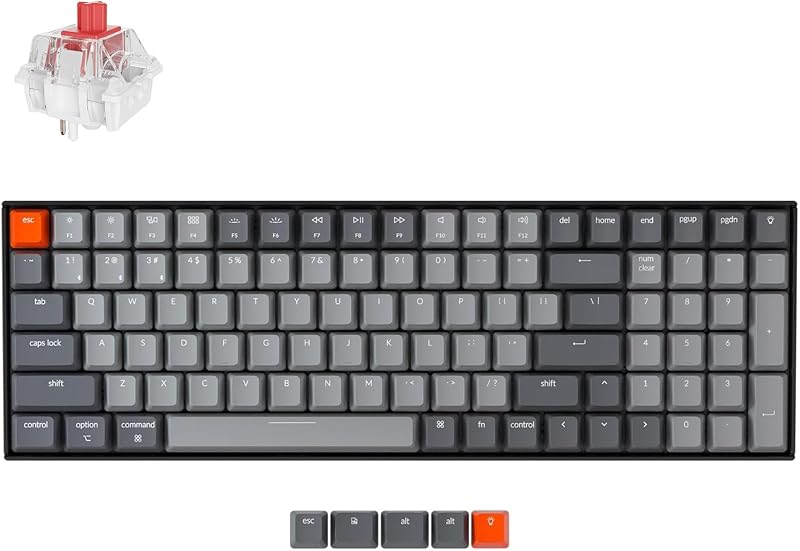
The single deciding factor between these two 75% mechanical boards comes down to internal hardware customization versus untethered multi-device versatility. The Glorious GMMK 3 is built specifically for mechanical keyboard enthusiasts who want granular physical control over typing feel through an interchangeable modular gasket architecture, whereas the
Modularity and Hardware Customization
Customization on a mechanical keyboard defines how much control a user possesses over the tactile feedback, acoustic resonance, and overall typing resistance. The gmmk 3 vs ducky one 3 comparison previously revealed how modular systems challenge traditional rigid builds, and this contrast is equally distinct here. The Glorious GMMK 3 is supplied as a GMMK 3 barebones custom keyboard featuring nine points of modularity. This construction empowers builders to swap out internal plates, alter the case materials, and adjust the GMMK 3 modular gasket system using modular building-block blocks. You can alter the gasket placement to yield an ultra-flexible typing bounce or arrange them for a firm, rigid bottom-out depending on personal preference.


By contrast, the Epomaker TH80 V2 approaches personalization from an assembled standpoint. While it provides hot-swappable switch sockets and changeable keycaps, its internal mounting configuration is fixed. You can freely pull and replace 3-pin or 5-pin mechanical switches without touching a soldering iron, but you cannot fundamentally alter the internal chassis geometry, exchange the switch plate architecture, or adjust gasket points as you can on the Glorious platform.
If you treat keyboard building as an ongoing hobby and want to tweak the physical flex of the deck, the modularity of the Glorious deck is unmatched in this bracket. The Epomaker delivers standard component hotswapping, but it cannot match the structural reconfiguration provided by Glorious’s nine modular contact areas.
Edge: Glorious GMMK 3 provides significantly deeper hardware control thanks to its Modular Gasket System and nine points of modularity.
Connectivity, Battery Life, and Multi-Device Support
Connectivity determines how cleanly a mechanical keyboard integrates into modern multi-screen and multi-system workstations. The Epomaker TH80 V2 is designed specifically to eliminate desktop cable clutter by offering versatile tri-mode connectivity. It supports low-latency 2.4GHz wireless via a USB receiver, Bluetooth for cross-platform pairing, and a traditional USB-C wired connection. In wireless operation, the board remembers up to five individual devices simultaneously, allowing users to jump instantly between a gaming rig, work laptop, tablet, and smartphone using simple profile shortcuts. Exploring a matchup like the ducky one 3 vs epomaker th80 v2 underlines just how decisive true tri-mode utility is for modern desks.
Underpinning the wireless performance of the Epomaker is a massive 8000mAh internal battery. The manufacturer rates the Epomaker TH80 V2 battery life at over 200 hours of continuous active play on a single charge. This massive reserve allows players to game or type for weeks without connecting a charging cable, making it a reliable road companion or couch-gaming peripheral.
The Glorious GMMK 3, on the other hand, operates exclusively as a wired USB-C device. The Amazon specifications list no internal battery and no wireless receiver. While a wired connection ensures constant power delivery without charging cycles or wireless interference, it locks the keyboard to a single physical desk space. You cannot quickly disconnect the GMMK 3 to draft an email on an iPad or control a living room media console without dragging a USB-C cord along.
Edge: Epomaker TH80 V2 dominates connectivity with an 8000mAh battery, tri-mode operation, and five-device pairing.
Acoustics and Internal Sound Dampening
A keyboard’s acoustic signature has become one of the most critical buying considerations for typists and office workers. The Epomaker TH80 V2 comes loaded with a five-layer sound-optimizing structure designed to create a deep, resonance-free acoustic profile right out of the retail box. Its internal stack incorporates PORON foam, an IXPE switch sheet, latex, silicone base dampening, and a PED pad. This multi-material sandwich absorbs metallic pinging, dampens hollow vibrations from the case, and pairs with an Epomaker TH80 V2 custom switch to produce the deep, creamy acoustic profile that enthusiasts typically spend hours modifying by hand. Typists analyzing options like the epomaker th80 v2 vs lofree flow often search for this specific pre-tuned acoustic richness.
The Glorious GMMK 3 utilizes a more traditional enthusiast approach to sound deadening. Inside its aluminum frame, the GMMK 3 features two dense layers of custom-fitted case foam designed to absorb unwanted case resonance. Because the GMMK 3 is a barebones board that arrives without switches or keycaps, the final sound profile depends entirely on the parts you install. Its rigid aluminum switch plate provides a bright, crisp acoustic reflection compared to plastic alternatives, but it lacks the intricate multi-stage membrane layers found inside the TH80 V2.
When comparing the GMMK 3 or Epomaker TH80 V2 for typing sound right out of the box, the Epomaker delivers a significantly more dampened and creamy acoustic output. The GMMK 3 can be tuned using different internal foams or custom switch selections, but Epomaker does the heavy sound-dampening work from the factory.
Edge: Epomaker TH80 V2 wins for out-of-the-box acoustic refinement thanks to its five integrated dampening layers.
Gaming Performance and Input Latency
When selecting the GMMK 3 or Epomaker TH80 V2 for gaming, input registration and physical stability become paramount. The Epomaker TH80 V2 features dedicated gaming hardware specifications, including a 1000Hz (1k) polling rate, 2ms low-latency wireless transmission over its 2.4GHz connection, and complete anti-ghosting across its 79-key matrix. These figures guarantee that rapid keystroke combinations in fast-paced titles register without dropped inputs or sluggish response times. Similar responsive traits are celebrated in comparisons like the akko 5075b plus vs epomaker th80 v2.
The Glorious GMMK 3 counters with a robust, hard-wired USB-C setup that avoids all potential radio interference. Its heavy aluminum chassis and rigid aluminum switch plate provide exceptional desk stability during intense gaming sessions where erratic hand movements can shift lighter plastic keyboards. With an 81-key configuration, the GMMK 3 retains two additional dedicated keys over the Epomaker, giving gamers more primary binding real estate without entering secondary function layers. It also advertises dedicated compatibility with supported gaming consoles alongside standard PC and Mac support.
Both keyboards deliver esports-grade input responsiveness with zero perceptible lag during wired play. The Epomaker offers the flexibility of wireless gaming with a fast 2ms transmission time, while the Glorious provides an unshakeable metal base and extra key real estate.
Edge: Tie, as the Epomaker brings fast 2ms wireless gaming while the GMMK 3 delivers rock-solid aluminum stability and extra input keys.
Controls, Software, and Aesthetic Lighting
Onboard controls and visual lighting enhance daily workflow and gaming station ambiance. The Glorious GMMK 3 features a fully programmable rotary knob located in the top-right corner. Using the Glorious CORE companion software suite, you can assign this knob to adjust system volume, cycle media playback, execute an immediate mute command, or map custom macro triggers. The GMMK 3’s per-key RGB backlighting can be mapped through CORE to display dynamic effects, complementing its sleek black aluminum shell. Evaluating other compact options such as the nuphy air75 v2 vs epomaker th80 v2 showcases how critical rotary dials and low-profile software suites have become for desktop productivity.
The Epomaker TH80 V2 matches this functionality with its own textured metal rotary knob, designed primarily as a tactile volume roller and control dial. Where the Epomaker steps forward visually is in its dual-zone lighting architecture. In addition to per-key, south-facing RGB LEDs that prevent keycap interference with aftermarket Cherry-profile sets, the TH80 V2 includes an integrated dynamic RGB decorative side-plate that casts a radiant glow across your desk surface. Epomaker’s companion software manages key remapping, deep macro recording, and dozens of static and dynamic lighting presets.
While the GMMK 3 offers deeper functional customization via the Glorious CORE software ecosystem, the Epomaker TH80 V2 provides superior visual flair with south-facing switch orientation and striking ambient side-rail lighting.
Edge: Epomaker TH80 V2 takes the aesthetic edge with south-facing LEDs and dynamic accent side-lighting.
Pros and Cons
GMMK 3

Pros
- Nine points of modular hardware customization
- Modular Gasket System for adjustable flex
- Durable aluminum body and switch plate
- Universal 5-pin MX hotswap compatibility
Cons
- Wired USB-C connection only
- Barebones model requires buying switches and caps
Epomaker TH80 V2

Pros
- Massive 8000mAh battery with 200+ hours playtime
- Tri-mode wireless pairs with five devices
- Five-layer acoustic dampening structure
- Dynamic south-facing RGB and decorative side-plate
Cons
- Fixed chassis without modular gasket swapping
- Two fewer keys than the GMMK 3 layout
View Epomaker TH80 V2 on Amazon
Who Should Buy Each One
Choose the GMMK 3 If
- You want complete physical control over typing firmness using the Modular Gasket System
- You already have a favorite set of 5-pin MX switches and custom keycaps waiting for a barebones base
- You prioritize a premium aluminum chassis and rigid aluminum switch plate over plastic frames
- You run a permanent, single-station gaming desk and prefer reliable wired USB-C connectivity
Choose the Epomaker TH80 V2 If
- You need seamless wireless pairing across multiple platforms including laptops, tablets, and smartphones
- You want an enormous 8000mAh battery that delivers over 200 hours of continuous use between charges
- You desire deep, creamy switch acoustics without spending hours opening the board to add foam mods
- You appreciate south-facing per-key RGB backlighting combined with dynamic accent side-plates
Final Verdict
Evaluating this pair in an objective GMMK 3 review against an in-depth Epomaker TH80 V2 review shows that both devices target fundamentally distinct mechanical keyboard users. The Epomaker TH80 V2 is the superior keyboard for the vast majority of everyday users, remote workers, and gamers who value wireless convenience. By packing a class-leading 8000mAh battery, triple-channel wireless switching across five devices, south-facing LEDs, and a factory-dampened five-layer acoustic sandwich, it answers the question of whether the Epomaker TH80 V2 is worth it with an emphatic yes. It delivers an exceptional, modded-feeling typing experience straight out of the box without requiring technical assembly.
However, when modular experimentation and premium materials take precedence, the Glorious GMMK 3 emerges as the undisputed champion. Its nine points of hardware modularity, aluminum enclosure, and adaptable Modular Gasket System allow mechanical hobbyists to tune the board’s bounce, sound, and switch dynamics to their exact taste. If you want a desktop centerpiece that you can pull apart, customize, and maintain as an ongoing mechanical hobby, the GMMK 3 is the ultimate modular foundation.
FAQ
Can the GMMK 3 connect wirelessly to a PC or tablet
No, the Glorious GMMK 3 is strictly a wired keyboard. According to the manufacturer listing, it relies entirely on a detachable USB-C cable for power and data transmission. It does not include Bluetooth, a 2.4GHz wireless dongle, or an internal rechargeable battery.
How long does the battery last on the Epomaker TH80 V2
The Epomaker TH80 V2 contains a massive 8000mAh rechargeable battery. The manufacturer specifications state that this high-capacity cell delivers over 200 hours of continuous active play on a single charge when used in wireless mode.
Does the GMMK 3 come with switches and keycaps in the box
The Glorious GMMK 3 model featured here is sold as a barebones custom keyboard. This means it comes with the aluminum case, switch plate, internal foam, modular gaskets, and hot-swap PCB, but you must supply and install your own 5-pin MX-compatible switches and keycaps.
Can I hot-swap switches on both the GMMK 3 and Epomaker TH80 V2
Yes, both keyboards feature hot-swappable switch sockets. The Glorious GMMK 3 natively supports 5-pin MX mechanical switches (linear, tactile, or clicky), while the Epomaker TH80 V2 supports standard hot-swappable switches, allowing you to change switch types without soldering.
Which keyboard offers better RGB lighting customization
Both keyboards feature per-key programmable RGB backlighting, but the Epomaker TH80 V2 offers dynamic south-facing LEDs that prevent interference with aftermarket Cherry-profile keycaps, as well as an exclusive dynamic RGB side-plate that illuminates your desk surface.
Is the Epomaker TH80 V2 fully compatible with Mac and gaming consoles
Yes, the Epomaker TH80 V2 lists explicit compatibility with PCs, laptops, gaming consoles, smartphones, and tablets across its Bluetooth, 2.4GHz wireless, and wired connection modes.
What does the Modular Gasket System on the GMMK 3 do
The GMMK 3 Modular Gasket System (MGS) utilizes a building-blocks-inspired design that lets users physically adjust or swap internal gaskets. This allows builders to achieve either a flexible, bouncy typing feel or a firmer, stiffer key bottom-out depending on how the gaskets are configured.