The decisive choice between the SteelSeries Prime Wireless and the Glorious Model D comes down to wireless freedom paired with cutting-edge optical switches versus an ultra-lightweight, ventilated wired frame designed for effortless glide. While one peripheral prioritizes untethered mobility and long-lasting switch mechanics, the other targets maximum weight reduction and pure ergonomic palm support.
Gamers should choose the SteelSeries Prime Wireless if they want a clean desk setup with reliable cordless performance and rapid optical actuation, while competitive players should pick the Glorious Model D if they prioritize shedding every possible gram of drag through an ultra-flexible cable and a lightweight honeycomb chassis.


SteelSeries Prime Wireless vs Glorious Model D at a Glance
| Feature | SteelSeries Prime Wireless | Glorious Model D |
|---|---|---|
| Connectivity | Lag-Free 2.4GHz Quantum 2.0 Wireless | USB Wired (Ascended Paracord Cable) |
| Weight | 74g | 61g |
| Sensor Model | TrueMove Air Optical | Pixart 3360 Optical |
| Maximum Sensitivity | 18,000 CPI | 12,000 DPI |
| Tracking Speed and Acceleration | 400 IPS, 40G | Not listed |
| Switch Type and Lifespan | Optical Magnetic Switches (100 Million Clicks) | Omron Mechanical Switches (Lifespan not listed) |
| Battery Life | 100 Hours with Fast Charging | Not applicable (USB powered) |
| Programmable Buttons | 5 | 6 (with Macro Support) |
| Chassis Construction | Solid Shell with Textured Matte Finish | Vented Honeycomb Shell with RGB LED |
| Skates Material | Not listed | 100% Pure Virgin PTFE Glorious Skates |
| Operating System Support | Windows 7 or later, Mac | Windows, Mac, Linux |
| Best For | Esports players wanting cordless agility | FPS competitors seeking minimum hand fatigue |
Weight and Chassis Architecture
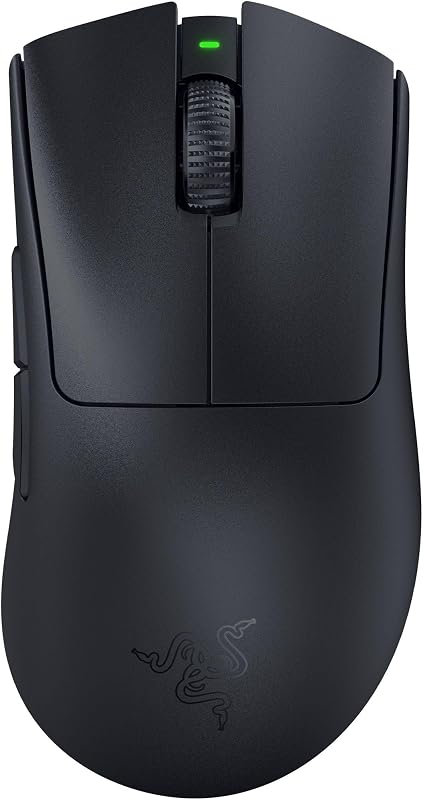
Physical mouse mass directly impacts flick speed, wrist fatigue, and micro-adjustments during high-stakes competitive matches. In any direct Prime Wireless vs Model D weight comparison, the difference in structural philosophy is immediate. The Model D uses an aggressive honeycomb cutout shell to reduce total mass down to an astonishing 61 grams. This open-ventilation framework not only removes unnecessary plastic but also keeps sweaty palms cooler during intense gaming marathons. Conversely, the Prime Wireless opts for a fully enclosed solid chassis with a mini form factor that tips the scales at 74 grams. While 74 grams remains respectably light for a wireless unit packing an internal rechargeable battery, players moving between both devices immediately feel the 13-gram disparity.
Chassis feel and maintenance also divide these two designs. The Prime Wireless features a hyper-durable textured matte finish that resists palm oils and provides dependable tactile traction without requiring grip tape. Because its body is completely sealed, internal electronic components remain shielded from ambient dust, pet hair, and accidental drink splashes. The Model D prioritizes airflow and weight optimization through its perforated shell, which exposes the interior circuit board. Players who frequently inspect gaming gear in our steelseries aerox 3 vs prime wireless breakdown know that open shells demand periodic cleaning with compressed air to prevent lint buildup around the scroll wheel and sensor opening.
In real-world tracking, the lower weight of the Model D allows for instantaneous directional stops and effortless target tracking across wide mousepads. The Prime Wireless counters with a denser, more unified hand feel that some players find provides greater tactile stability when anchoring the wrist. If your primary goal is removing physical mass to eliminate inertia during rapid target-switching, the lighter construction of the Glorious peripheral holds a measurable advantage over its closed competitor.
Edge: Glorious Model D, as its 61-gram honeycomb construction reduces wrist strain and hand fatigue significantly more than the 74-gram solid frame.
Switch Technology and Click Responsiveness
Switch mechanics dictate how quickly a click registers, how distinct the tactile feedback feels, and how long the hardware lasts before developing double-click malfunctions. In the Prime Wireless vs Model D switches matchup, the engineering approaches could not be more divergent. The Prime Wireless is armed with SteelSeries Optical Magnetic switches, an esports innovation engineered to survive 100 million crispy clicks. Instead of relying on moving metal contacts that corrode and degrade over time, these optical magnetic units use an infrared light beam paired with a mechanical spring and magnetic tensioning system. When you press the button, the beam is broken instantly, eliminating debounce delay and ensuring consistent actuation across years of competitive use.
The Model D relies on established Omron mechanical switches beneath its primary buttons. Omron switches have long been a baseline standard in performance gaming mice, offering a crisp, predictable actuation point and a familiar tactile response that most PC gamers know intimately. However, purely mechanical switches operate through physical contact points that eventually wear down from friction and electrical degradation. While reliable out of the box, mechanical assemblies are inherently more susceptible to register debounce errors or accidental double-clicking as the switches age compared to optical beam designs.
Tactile feedback also differs notably between the two implementations. The Optical Magnetic switches on the Prime Wireless produce an exceptionally crisp, firm, and authoritative snap that prevents accidental misclicks during tense tactical standoffs. The Omron switches inside the Model D provide a lighter, more classic actuation that some players prefer for spam-clicking semi-automatic weapons. Nevertheless, from an endurance and technological standpoint, optical actuation offers superior longevity and click response consistency over traditional mechanical contacts, a contrast also explored when looking at the steelseries prime wireless vs glorious model o.
Edge: SteelSeries Prime Wireless, because its 100-million-click Optical Magnetic switches eliminate debounce delay and outlast standard mechanical contacts.
Sensor Tracking and In-Game Precision
Pixel-perfect tracking is mandatory for competitive shooters, where a single lost count or sensor spinout translates to a lost engagement. Evaluating the Glorious Model D sensor vs Prime Wireless reveals two distinct optical solutions tailored for high-speed tracking. The Prime Wireless carries the custom TrueMove Air optical sensor, delivering a top sensitivity of 18,000 CPI, tracking speeds of 400 IPS (inches per second), and 40G acceleration handling. SteelSeries engineered this sensor in collaboration with professional players to deliver genuine 1-to-1 tracking, meaning that rapid mouse pad swipes translate across your display with zero artificial smoothing, jitter, or unwanted acceleration.
The Model D incorporates the battle-tested Pixart 3360 optical sensor, which has powered competitive gaming mice for years. It delivers up to 12,000 DPI, zero hardware mouse acceleration, and a rapid 1000 Hz polling rate for a 1-millisecond reporting interval. Glorious specifically tuned this implementation to maintain a sub-0.7mm lift-off distance, preventing cursor jitter whenever a player lifts and repositions the mouse during low-sensitivity sweeps. Tracking stability remains rock-solid, and spinouts are practically non-existent under tournament conditions.
While the Pixart 3360 remains fully capable for competitive play, the TrueMove Air inside the Prime Wireless yields higher raw ceiling metrics with its 18,000 CPI headroom and 400 IPS rating. Readers comparing high-tier tracking hardware in our steelseries prime wireless vs glorious model o 2 guide will appreciate that higher IPS limits safeguard tracking integrity during extreme, violent flick shots across extended desk surfaces. Both sensors track cleanly, but the TrueMove Air provides a more advanced technical envelope.
Edge: SteelSeries Prime Wireless, due to higher overall tracking velocity, greater acceleration thresholds, and wider CPI customization.
Connectivity, Cable Management, and Battery Endurance
A mouse’s connection method fundamentally dictates physical freedom and day-to-day desk maintenance. The Prime Wireless features next-generation Quantum 2.0 wireless technology operating across a lag-free 2.4GHz connection. This wireless protocol uses dual-channel optimization to transmit packets without latency spikes, matching the real-time responsiveness of wired peripherals while freeing your hand from cord drag. With up to 5.0 meters of operating range, it creates a clean, wire-free desk environment that eliminates snagging on monitor edges or mousepad seams.
Cord management is an ongoing concern for wired peripherals, but the Model D combats this with its proprietary Ascended Paracord cable. Glorious designed this cord to be ultra-flexible and exceptionally lightweight, drastically mitigating physical resistance against the desk surface. When paired with the factory-installed 100% pure Virgin PTFE Glorious Skates, the mouse glides smoothly across cloth and hard surfaces alike. Nevertheless, even the most flexible paracord cable produces subtle friction compared to a completely wireless peripheral unless suspended by a dedicated mouse bungee.
Battery endurance represents the trade-off for wireless freedom. The SteelSeries Prime Wireless battery life reaches up to 100 hours of continuous competitive play on a single charge, supported by built-in fast charging capabilities that quickly restore hours of gameplay in short charging bursts. The wired Model D completely eliminates battery anxiety, drawing continuous power directly from a standard USB port. For players who never want to remember a charging cable, the wired approach is foolproof, but the Prime Wireless delivers exceptional multi-day endurance that makes battery maintenance practically painless, an advantage similarly highlighted in our steelseries aerox 5 vs prime wireless comparison.
Edge: SteelSeries Prime Wireless, because lag-free 2.4GHz wireless freedom completely removes desk drag while still supplying a massive 100-hour battery reserve.
Ergonomics, Shape, and Grip Compatibility for FPS
Chassis shape and contouring determine how securely a mouse sits in the hand during rapid aiming adjustments. Deciding between the SteelSeries Prime Wireless or Glorious Model D for FPS titles depends largely on individual grip preference and hand size. The Model D is sculpted as a dedicated ergonomic right-handed chassis, specifically contoured for medium to large hands using palm or claw grips. Its sweeping ergonomic arch fills the natural hollow of the palm, resting the fingers comfortably and reducing tendon strain over extended sessions. Glorious also accommodates smaller hand profiles with the Model D- (Minus) variant, ensuring that gamers across varying physical hand dimensions can find an ergonomic match.
In contrast, the listing data indicates that the Prime Wireless utilizes an ambidextrous hand orientation built around a streamlined mini form factor. Co-developed with over 100 esports professionals, its compact silhouette is designed for fast, aggressive claw and fingertip grip styles where agile micro-adjustments take precedence over full-palm resting support. The narrower profile and textured matte flanks allow players to pinch the mouse tightly, making rapid reset lifts feel effortless despite the slightly higher physical weight. When analyzing the Model D vs Prime Mini Wireless form factors, the Model D supports the hand structurally, whereas the Prime Wireless invites a high-agility grip that lets the fingers dictate subtle crosshair placements.
Button layouts also reflect differing practical priorities. The Prime Wireless keeps things minimalist for esports purity, providing 5 programmable buttons that eliminate accidental actuation of auxiliary keys. The Model D incorporates 6 programmable buttons complete with macro support, granting an extra input that can be mapped to tactical abilities, melee strikes, or DPI cycling. Players interested in multi-button versatility often compare these layouts in our steelseries aerox 5 vs glorious model o 2 analysis. For dedicated ergonomic palm support and relaxed hand positioning, the Model D provides a more anatomically friendly contour.
Edge: Glorious Model D, as its sculpted ergonomic curve and dedicated thumb rest comfortably cradle medium to large hands during marathon play.
Pros and Cons
SteelSeries Prime Wireless

Pros
- 100-hour battery life with fast charging
- Durable 100M click optical magnetic switches
- High-precision 18,000 CPI TrueMove Air sensor
- Lag-free 2.4GHz Quantum 2.0 wireless
- Sealed matte chassis resists dust buildup
Cons
- Heavier 74g frame than the competitor
- Only 5 programmable buttons
View SteelSeries Prime Wireless on Amazon
Glorious Model D

Pros
- Featherlight 61g honeycomb construction
- 100% pure virgin PTFE Glorious Skates
- Ergonomic right-handed palm and claw design
- Flexible drag-free Ascended Paracord cable
- 6 programmable buttons with macro support
Cons
- Tethered USB wired connection only
- Mechanical Omron switches lack optical durability
View Glorious Model D on Amazon
Who Should Buy Each One
Choose the SteelSeries Prime Wireless If
- You demand a completely wireless setup powered by low-latency 2.4GHz Quantum 2.0 technology to eliminate desk clutter.
- You want optical magnetic switches tested for 100 million clicks that will not develop double-clicking issues.
- You prefer a compact, solid-shell chassis with a textured matte finish that keeps internal components sealed away from dust.
- You need long battery longevity that delivers up to 100 hours of continuous gameplay alongside rapid charging.
Choose the Glorious Model D If
- You prioritize extreme lightweight performance, wanting a featherlight 61-gram chassis to maximize flicking speed.
- You use a palm or relaxed claw grip and need an ergonomic right-handed contour tailored for medium to large hands.
- You prefer a permanent USB wired connection that never requires recharging or battery management.
- You value smooth, low-friction gliding provided by 100% pure Virgin PTFE skates right out of the box.
Final Verdict
When weighing the overall competitive package, the SteelSeries Prime Wireless emerges as the better all-around choice for the modern competitive gamer. By marrying lag-free Quantum 2.0 wireless transmission with an impressive 100-hour battery reserve and 18,000 CPI TrueMove Air tracking, it removes physical cord drag without introducing latency compromises. More importantly, its Optical Magnetic switches set a high standard for click consistency and hardware durability, giving tactical shooter enthusiasts total peace of mind against mechanical switch failure over millions of rounds.
However, the Glorious Model D remains an outstanding contender for pure speed purists and ergonomic loyalists. If your playstyle demands shaving every possible gram to achieve lightning-fast target acquisition, the Model D’s 61-gram ventilated body, pure Virgin PTFE skates, and ergonomic arch deliver a tailored experience that reduces wrist fatigue. For gamers who prioritize the absolute lowest moving weight and comfortable palm support over cordless convenience, the Model D proves that a thoughtfully designed wired mouse can still dominate the competitive arena.
FAQ
Is Glorious Model D worth it for competitive fast-paced shooters?
Yes, the Model D is well suited for competitive first-person shooters due to its 61-gram lightweight honeycomb shell, responsive Pixart 3360 optical sensor, and low-friction Virgin PTFE feet. The ultra-flexible Ascended Paracord cable prevents cord drag, giving players near-wireless agility while maintaining the zero-charging reliability of a standard USB wired connection.
What is the realistic SteelSeries Prime Wireless battery life during regular play?
The SteelSeries Prime Wireless listing specifies an average battery life of up to 100 hours on a full charge using its power-efficient Quantum 2.0 wireless protocol. In addition, the mouse features fast-charging support, allowing players to regain multiple hours of competitive gameplay after just a brief plug-in session via its charging cable.
How does the Glorious Model D sensor vs Prime Wireless compare on tracking limits?
The Prime Wireless features the TrueMove Air sensor, offering up to 18,000 CPI, 400 IPS tracking speed, and 40G acceleration handling. The Model D utilizes the Pixart 3360 sensor with a maximum sensitivity of 12,000 DPI and a 1000 Hz polling rate. Both sensors deliver flawless 1-to-1 tracking with zero acceleration, but the TrueMove Air provides higher tracking velocity thresholds for high-speed flicks.
Can you use both gaming mice on macOS and Linux computers?
The Glorious Model D explicitly lists broad platform compatibility across Windows, Mac, and Linux operating systems via its standard plug-and-play USB connection. The SteelSeries Prime Wireless officially supports Windows 7 or later and Mac systems for personal computer gaming, though custom on-board profile storage allows settings to persist when connected to other platforms.
How do the Prime Wireless vs Model D switches differ in mechanical design?
The Prime Wireless uses Optical Magnetic switches rated for 100 million actuations, which rely on an infrared light beam and magnetic tension to register clicks with zero debounce delay. The Model D utilizes traditional Omron mechanical switches, which rely on physical metal contact points to trigger signals, providing a familiar tactile click with standard mechanical durability.
Does the honeycomb design of the Glorious Model D make it fragile?
The Model D is engineered for high durability despite its lightweight honeycomb frame. The vented shell reduces chassis mass down to 61 grams while retaining structural rigidity across the palm rest and side grips, though its open design does allow dust to enter the housing more readily than the closed shell of the Prime Wireless.