The single difference deciding whether you should pick a wired gaming headset or a wireless gaming headset comes down to the trade-off between battery-free, zero-latency reliability and tether-free physical mobility. A wired gaming headset guarantees continuous operation directly through physical copper wiring without transmission delays, compression artifacts, or charging routines, whereas a wireless gaming headset eliminates cable clutter and grants the freedom to move away from your battlestation without dropping voice chat or missing game cues.
Choose a wired gaming headset if you prioritize plug-and-play simplicity, zero charging downtime, and uncompressed analog signals for long desktop sessions. Choose a wireless gaming headset if you demand seamless multiplatform switching, cord-free movement across your living space, and dedicated wireless transmitters that keep your play area tidy.

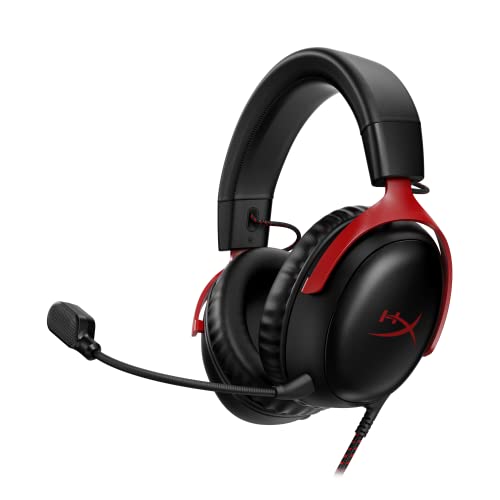
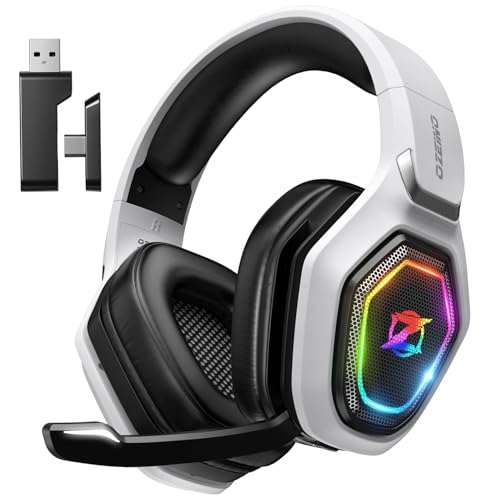
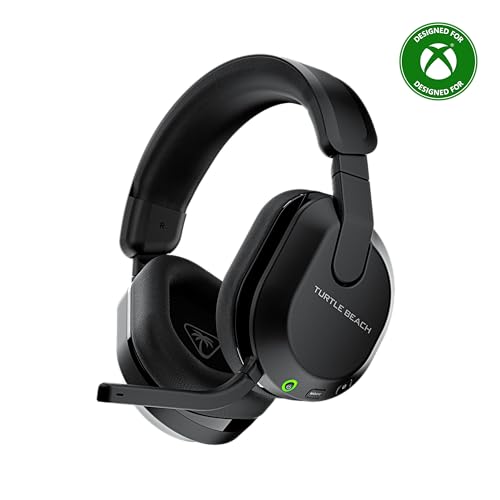
Wired Gaming Headset vs Wireless Gaming Headset at a Glance
| Attribute | Wired Gaming Headset | Wireless Gaming Headset |
|---|---|---|
| Primary Connection | 3.5mm analog, USB-C, USB-A | Not listed |
| Battery Life | Infinite (No battery required) | 40 to 80 hours per charge |
| Recharge Time | None (Passive host draw) | 2.98 hours to 15 hours |
| Transmission Latency | Zero measurable transmission latency | Ultra-low latency (under 30ms on 2.4GHz) |
| Acoustic Driver Size | 53mm angled dynamic drivers | 50mm drivers (standard or Nanoclear) |
| Microphone Architecture | Detachable 10mm noise-cancelling with internal mesh filter | Flip-to-mute with AI noise reduction or integrated boom |
| Platform Compatibility | PC, PS5, PS4, Xbox Series X|S, Xbox One, Switch, Mac, Mobile | PC, PS5, PS4, Switch, Mobile (Xbox compatibility varies by model) |
| Onboard Controls | Direct earcup volume wheel and mic mute switch | Mappable wheels, mode buttons, QuickSwitch, power and volume buttons |
| Frame Construction | Flexible aluminum frame with memory foam | Lay-flat adjustable headband with glasses-friendly cushions |
| Best For | Competitive desktop players seeking zero latency and no charging downtime | Multiplatform console and PC players wanting cable-free mobility |
Latency and Signal Stability
Audio latency and signal consistency represent the most critical technical division between physical wiring and radio frequency transmission. In competitive gaming environments, hearing sound cues such as footsteps, weapon reloads, and directional abilities the exact millisecond they occur is essential for fast reaction times. A wired gaming headset delivers signals through a direct physical copper conductor via 3.5mm or USB connections. Because the electrical audio signal travels directly from the host device sound card or digital-to-analog converter into the headset voice coils, transmission latency is essentially non-existent. There is zero digital encoding or packet decompression occurring over the air, which eliminates the possibility of signal dropouts or latency spikes caused by local radio traffic.
Modern wireless gaming headsets have closed this gap significantly through proprietary 2.4GHz digital transmitters. Best-selling models like the Ozeino OW810 provide real-time gaming audio through a 2.4GHz USB and Type-C transmitter engineered for ultra-low latency rated at less than 30ms of delay. Similarly, advanced wireless options like the Turtle Beach Stealth 600 utilize low-latency 2.4GHz wireless to maintain sync across fast-paced console and PC titles. When comparing this technology to peripheral connectivity like a wired vs wireless gaming mouse, 2.4GHz protocols offer nearly imperceptible delays for everyday play. However, wireless options also incorporate standard Bluetooth connections for mobile devices. As noted in the Ozeino specifications, Bluetooth modes introduce higher latency and operate within a 15-foot range, making Bluetooth unsuited for competitive shooters where split-second reaction times determine the outcome.
Signal interference is another practical reality that differentiates these setups. A wired gaming headset is entirely immune to high-density radio environments where multiple Wi-Fi 6 routers, smartphones, and wireless controllers compete for the 2.4GHz spectrum. Conversely, wireless headsets require uninterrupted communication with a dedicated transmitter. While modern frequency-hopping protocols mitigate packet loss, any severe radio congestion can theoretically cause brief stuttering or compressed vocal artifacts. For players competing in local tournaments or dense urban apartments, the physical cord provides unmatched peace of mind.
Edge: Wired Gaming Headset provides guaranteed zero latency and absolute immunity from wireless radio interference or packet drops.
Battery Life and Power Management
Power management defines your daily routine with gaming audio. A wired gaming headset contains no internal rechargeable cells, power regulator boards, or charging circuitry. It draws passive analog power directly from a 3.5mm audio jack or low-voltage power over USB. Because it never needs to store energy, you can pick up the headset after months of disuse and play immediately for ten hours straight without ever plugging it into a wall charger. There is zero risk of the headset shutting down during an intense ranked overtime match, and there is no internal lithium-ion cell that degrades in total capacity over years of ownership.
A wireless gaming headset introduces an active charging cycle into your gaming habits. The upside is immense freedom from cables, backed by substantial battery hardware. The Ozeino OW810 packs a battery average life of 40 hours, requiring 2.98 hours of charge time to reach full capacity. Pushing battery capacity even further, the Turtle Beach Stealth 600 provides a best-in-class 80-hour battery life with quick-charge capabilities, allowing gamers to play for weeks between plug-ins, although the listing notes a full charge time of 15 hours. Gamers weighing extreme stamina against tethered simplicity can examine our analysis of the hyperx cloud iii vs cloud alpha wireless to see how wireless battery engineering changes extended gaming sessions.
The operational cost of wireless audio is battery vigilance. If you forget to plug your wireless headset into its charging cable at the end of a long week, you risk an unexpected shutdown mid-game. Some models include a 3.5mm auxiliary backup cable, as seen with the Ozeino OW810, but others rely strictly on digital charging cables to replenish power. Furthermore, lithium battery cells experience chemical wear over multiple years of use, slowly diminishing their overall runtime. If you despise managing cables on your desk and remembering charging schedules, a wired configuration avoids that mental overhead entirely.
Edge: Wired Gaming Headset wins for zero charging requirements, infinite runtime, and the complete absence of battery degradation.
Platform Compatibility and Setup Simplicity
The physical interface of your audio gear dictates how easily you can swap between a PC, home consoles, handhelds, and mobile phones. A wired gaming headset like the HyperX Cloud III exemplifies universal plug-and-play versatility. Out of the box, it includes a direct 3.5mm cable, a USB to 3.5mm cable, and a USB-C adapter. This modular wiring configuration allows instant, native connectivity across PC, PS5, Xbox Series X|S, Xbox One, Nintendo Switch, Mac, and mobile devices. Because it operates through standardized audio ports, no pairing procedures, firmware synchronization, or proprietary console security handshakes are required.
Wireless compatibility is far more complex and varies heavily depending on the wireless chipset and manufacturer licensing. The Ozeino OW810 includes a versatile 2-in-1 USB and Type-C transmitter that connects seamlessly with PS5, PS4, PC, Mac, Laptop, and Switch. However, the manufacturer listing explicitly states that the OW810 wireless gaming headset is not compatible with any Xbox consoles. Additionally, its Bluetooth mode only works on phones, laptops, and the Switch, explicitly failing to function directly with Mac, PS5, PS4, or PC without buying an extra USB Bluetooth adapter. For broader cross-platform needs, the Turtle Beach Stealth 600 delivers true multiplatform 2.4GHz wireless engineered for Xbox Series X|S, Xbox One, PS5, PS4, Windows PC, Steam Deck, and mobile.
Setup friction can significantly alter your day-to-day experience when managing multi-system gaming spaces. If you routinely move from a competitive desktop rig to a console across the room, plugging in a standard 3.5mm connector takes two seconds. When evaluating the steelseries arctis nova 7 vs hyperx cloud ii, universal analog wiring removes all concerns about transmitter pairing or missing dongle adapters. While wireless dongles eliminate cable clutter across the floor, they consume dedicated USB-A or USB-C ports on your console or motherboard, which can become an issue if your available ports are already occupied by external drives and steering wheels.
Edge: Wired Gaming Headset delivers effortless, universal plug-and-play operation across all major platforms without hardware exclusions or transmitter pairing hurdles.
Driver Architecture and Acoustic Engineering
Acoustic performance depends heavily on the physical size, tuning, and placement of the internal speaker drivers. The wired HyperX Cloud III utilizes large, angled 53mm dynamic drivers that have been retuned by audio engineers specifically to accentuate dynamic in-game audio and spatial cues. By angling the 53mm drivers inside the earcups, the sound waves are directed straight down the ear canal, preserving natural ear anatomy reflections to enhance three-dimensional imaging. The HyperX Cloud III Black/Red listing specifies a 64-ohm impedance, enabling these large drivers to handle clean, robust amplification from dedicated PC sound cards, DACs, and console controllers without distortion.
Wireless gaming headsets must balance driver output with battery efficiency, relying on onboard digital-to-analog converters and integrated battery-powered amplifiers. The Ozeino OW810 incorporates 50mm drivers combined with lossless 2.4G wireless transmission, tuned to emphasize deep bass impact and footstep clarity in competitive titles such as Call of Duty and Fortnite. Taking custom acoustics further, the Turtle Beach Stealth 600 features 50mm Nanoclear drivers optimized for vibrant spatial audio. Turtle Beach supplements this hardware with built-in EQ modes, proprietary Superhuman Hearing presets, and the Swarm II desktop and mobile software app, which unlocks an advanced 10-band parametric EQ to tailor individual frequencies.
The audio trade-off between these two approaches comes down to raw acoustic headroom versus onboard digital flexibility. A wired headset with 53mm drivers receives uncompressed analog signals directly from the host hardware, delivering pristine dynamic range and superior driver surface area. A wireless headset utilizes active onboard DSP, EQ presets, and software integration to sculpt the sound profile to your liking. Similar considerations arise when reviewing the steelseries arctis nova 5 vs hyperx cloud alpha wireless, where software sound customization balances against raw hardware volume and passive driver design.
Edge: Wired Gaming Headset provides superior acoustic headroom and directional imaging through larger, angled 53mm drivers with 64-ohm impedance.
Microphone Clarity and Onboard Control Design
Voice communication requires both acoustic clarity for your squadmates and intuitive control over your settings mid-match. Wired headsets benefit from having a dedicated physical channel for mic transmission, free from wireless audio compression. The HyperX Cloud III features an upgraded 10mm detachable microphone engineered for clear voice chat and calls. The mic includes noise-cancelling circuitry alongside an integrated mesh filter that physically blocks disruptive breath pops and plosives. Furthermore, HyperX includes an onboard LED mic mute indicator directly on the microphone boom, giving you instant visual confirmation whenever your line is muted.
Wireless headsets manage both incoming audio and outgoing microphone data across the shared 2.4GHz wireless link, which traditionally requires audio compression algorithms to save bandwidth. To overcome this limitation, the Turtle Beach Stealth 600 introduces an all-new uni-directional flip-to-mute microphone backed by A.I.-based noise reduction that actively filters background distractions like clacking mechanical keyboards. In terms of onboard controls, wireless models shine by turning the earcups into full command centers. The Stealth 600 incorporates a mappable wheel, a mode button for customizable functions, and a dedicated QuickSwitch button to toggle between 2.4GHz console audio and incoming Bluetooth calls. The Ozeino OW810 features multi-functional push buttons to adjust volume, mute, answer phone calls, cut songs, and toggle lights directly on the earcups.
Wired models choose simplicity over complex secondary button layouts. The HyperX Cloud III keeps controls streamlined with direct touch and wheel controls on the earcup for volume adjustments and mic muting. While the wireless designs offer superior multi-device utility by letting you answer phone calls while playing games, the wired design provides a larger 10mm capsule with physical mesh filtering and an unambiguous visual LED mute status that requires no software checks.
Edge: Wired Gaming Headset wins for voice capture quality thanks to its larger 10mm microphone capsule, integrated mesh filter, and physical LED mute indicator.
Build Durability, Ergonomics, and Mobility
Headset construction determines physical comfort during marathon sessions and longevity against wear and tear. Without internal lithium battery packs or wireless radio components, a wired gaming headset can allocate more of its weight budget toward heavy-duty structural materials. The HyperX Cloud III is constructed around a flexible aluminum frame designed to withstand travel, drops, and sudden impacts. HyperX pairs this resilient metal frame with plush signature memory foam integrated directly into both the headband and the oval ear cushions, providing a comfortable, pressure-free seal over the ears during extended play.
A wireless gaming headset trades away the physical metal density for cable-free mobility and ergonomic versatility. The Turtle Beach Stealth 600 features an adjustable lay-flat headband design equipped with memory foam ear cushions that incorporate ProSpecs glasses-friendly technology, alleviating temple pressure for gamers who wear glasses. The Ozeino OW810 also features an over-ear oval cup design with intuitive push-button ergonomics. The primary functional benefit of wireless construction is untethered physical movement: you can stand up, celebrate a victory, grab a drink from the kitchen, or stretch your legs without ripping a cable from your computer or taking off your headset.
Physical cables create friction, dragging across mousepads or catching on chair armrests during sudden movements. Many gamers dealing with desk clutter encounter similar trade-offs when evaluating the razer basilisk v3 vs v3 pro, where removing cords radically cleans up the desktop aesthetic. While the wired headset uses superior structural aluminum and avoids internal battery weight, the wireless headset completely eliminates cord drag and grants unrestricted freedom of movement around your gaming space.
Edge: Wireless Gaming Headset wins for untethered physical mobility, eliminating cord drag, and allowing seamless room-scale movement.
Pros and Cons
Wired Gaming Headset

Pros
- Zero transmission audio latency
- Infinite runtime with no batteries
- Angled 53mm dynamic audio drivers
- Universal 3.5mm and USB platform compatibility
- Durable and flexible aluminum frame
Cons
- Physical cord restricts room-scale movement
- Lacks Bluetooth multi-device phone pairing
View HyperX Cloud III – Wired Gaming on Amazon
Wireless Gaming Headset

Pros
- Untethered room-scale physical mobility
- Up to 80-hour battery life
- Dual 2.4GHz and Bluetooth connectivity
- Customizable app-based 10-band EQ settings
- Glasses-friendly memory foam ear cushions
Cons
- Requires periodic battery charging cycles
- Xbox console compatibility varies by model
- Slight latency compared to direct wiring
View Ozeino Wireless Gaming Headset PS5 on Amazon
Who Should Buy Each One
Choose the Wired Gaming Headset If
- You play exclusively at a desk or close-range monitor setup where a trailing cable never restricts your physical range of motion.
- You participate in fast-paced competitive esports where zero-latency transmission and total immunity from wireless interference are non-negotiable.
- You switch between PC, PlayStation, Xbox, and Nintendo Switch and want a single 3.5mm and USB setup that works natively without transmitter swaps or console licensing lockouts.
- You want a zero-maintenance audio setup with an aluminum frame, no batteries to charge, and no risk of a dead headset shutting down during an overtime match.
Choose the Wireless Gaming Headset If
- You game from a couch or living room setup where running a long audio cord across the room poses a tripping hazard or cable management mess.
- You want the physical freedom to walk around your home, grab a drink, or stretch while remaining connected to your Discord voice channel.
- You value dual-mode connectivity such as 2.4GHz wireless paired with Bluetooth to take phone calls and stream mobile music while playing games.
- You prefer a clean, cable-free desk setup and are happy to manage periodic charging cycles with 40-hour to 80-hour battery capacities.
Final Verdict
For dedicated desktop players and competitive gamers, the wired gaming headset remains the most reliable, high-performance audio solution. By transmitting audio over physical copper connections, models like the HyperX Cloud III deliver uncompressed audio with zero transmission latency, absolute immunity from radio interference, and unlimited runtime that never leaves you stranded with a dead battery. Combined with an aluminum frame, larger angled 53mm drivers, an upgraded 10mm microphone with an LED mute indicator, and native plug-and-play support across PC, PS5, and Xbox, wired headsets maximize simplicity and long-term durability.
However, the wireless gaming headset wins decisively for living room setups, multi-device multitaskers, and players who despise cord clutter. Best-selling wireless options like the Turtle Beach Stealth 600 and Ozeino OW810 demonstrate that wireless technology now provides ultra-low latency under 30ms, massive battery lives ranging from 40 to 80 hours, and dual-wireless versatility with Bluetooth switching and app-based 10-band EQ customization. If you game from the couch or want the freedom to walk away from your desk without taking off your headset, a wireless gaming headset provides unmatched lifestyle convenience that justifies managing charging cables.
FAQ
Does a wired gaming headset have better audio quality than a wireless gaming headset?
A wired gaming headset often delivers cleaner audio dynamics and volume headroom because it receives an uncompressed analog or direct USB digital signal without needing over-the-air compression. For instance, the HyperX Cloud III features large angled 53mm drivers with 64-ohm impedance. While high-end wireless headsets with 50mm drivers and lossless 2.4GHz transmission sound impressive, physical wiring avoids any compression artifacts associated with wireless bandwidth management.
How long does the battery last on a wireless gaming headset?
Battery endurance varies significantly by model and manufacturer engineering. In our comparison data, the Ozeino OW810 delivers a 40-hour average battery life with a 2.98-hour charge time. The Turtle Beach Stealth 600 provides a best-in-class 80-hour battery life with quick-charge capabilities, requiring around 15 hours for a complete full recharge cycle. A wired headset, by contrast, has an infinite runtime because it draws passive power directly from your host device.
Is a wireless gaming headset fast enough for competitive gaming?
Yes, modern 2.4GHz wireless gaming headsets are fully capable of competitive gaming. Devices like the Ozeino OW810 feature low-latency 2.4GHz dongles that deliver delay times under 30ms, which is virtually imperceptible to human ears during normal gameplay. However, standard Bluetooth connections have higher latency and are not recommended for competitive play. A wired headset remains the gold standard for esports due to its true zero-latency physical connection.
Will a wireless gaming headset work on both PS5 and Xbox?
Cross-console compatibility depends on the specific wireless model. The Turtle Beach Stealth 600 is designed for multiplatform use, offering compatibility across Xbox Series X|S, Xbox One, PS5, PS4, PC, and mobile. However, the Ozeino OW810 explicitly states that it is not compatible with any Xbox consoles, working only across PS5, PS4, PC, Mac, and Switch via its 2.4GHz transmitter. Wired headsets using a standard 3.5mm connection work natively across all console controllers without compatibility restrictions.
Can you use a wireless gaming headset if the battery dies?
Many wireless gaming headsets provide a backup 3.5mm analog auxiliary cable in the box, such as the Ozeino OW810, which allows you to continue listening if the internal battery runs completely dry. Other models may require you to plug in a USB charging cable to continue using the device while it recharges. A wired headset never encounters this issue because it has no internal battery to deplete.
Why do wired headsets have larger microphone capsules?
Wired headsets do not have to conserve internal earcup space for battery cells, Bluetooth chipsets, or digital wireless transmitters. This extra physical space allows manufacturers to install larger microphone hardware, such as the 10mm noise-cancelling capsule and built-in mesh filter found on the HyperX Cloud III. Additionally, wired connections provide dedicated wiring for voice transmission without the data compression required over 2.4GHz wireless links.