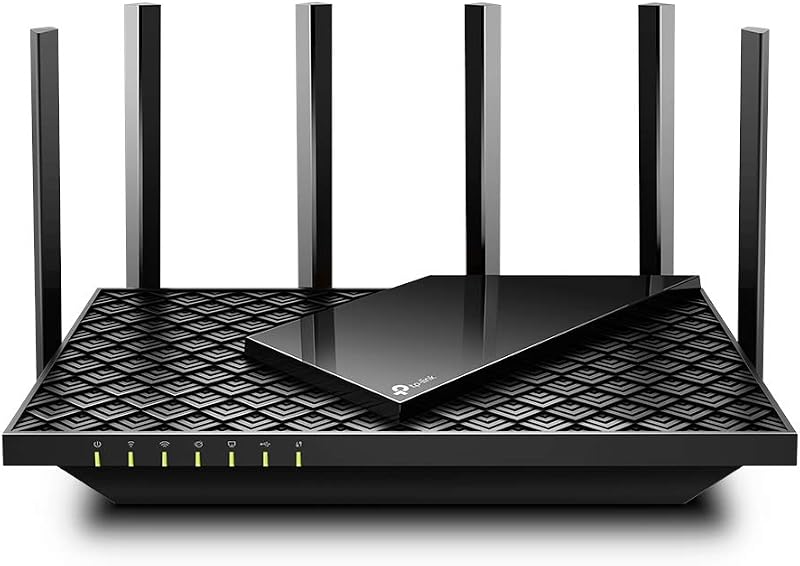
The defining difference between the Asus RT-AX86U Pro and the Ubiquiti UniFi Dream Router centers on raw packet-forwarding throughput versus prosumer ecosystem integration: Asus delivers unrestricted multi-gigabit speeds and dedicated latency reduction for heavy traffic, whereas Ubiquiti provides an all-in-one UniFi OS console with integrated Power over Ethernet engineered to manage smart devices across an expandable deployment.
Choose the Asus RT-AX86U Pro if you subscribe to an internet plan exceeding 500 Mbps and demand maximum wireless bandwidth alongside dedicated hardware prioritization for competitive multiplayer gaming. Choose the Ubiquiti UniFi Dream Router if you want a centralized console to run platform applications like UniFi Protect and power connected hardware directly from onboard network ports.
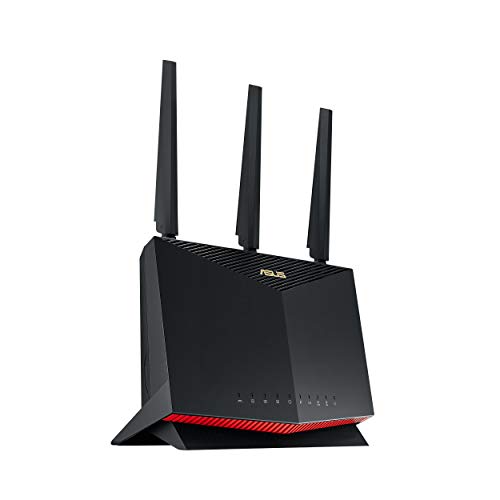

Asus RT-AX86U Pro vs Ubiquiti UniFi Dream Router at a Glance
| Feature | Asus RT-AX86U Pro | Ubiquiti UniFi Dream Router |
|---|---|---|
| Wi-Fi Generation and Class | Dual-Band WiFi 6 (802.11ax) | Dual-Band WiFi 6 (802.11ax) |
| Maximum Wireless Throughput | 5700 Mbps (AX5700) | 3 Gbps aggregate (2.4 Gbps 5GHz + 600 Mbps 2.4GHz) |
| Maximum WAN Speed | 2.5 Gbps wired / 2 Gbps aggregated | Up to 500 Mbps |
| Port Configuration | 6 ports (including 2.5G port and gaming port) | 5 GbE ports (1 WAN, 4 LAN with 2 PoE outputs) |
| Antenna Setup | 4 external fixed antennas | 1 internal antenna |
| Onboard Memory and Storage | 1 GB RAM | 128 GB internal storage and memory |
| Software Platform | AsusWRT with AiProtection Pro and Instant Guard | UniFi OS (Network, Protect, Talk, Access) |
| Display and Diagnostics | LED indicators | LCM color screen |
| Security Encryption | WPA3-Personal, WPA2-Enterprise, WPS | WPA-PSK, WPS |
| Best For | Multi-gigabit internet tiers and high-speed gaming | Prosumer network control and PoE accessory integration |
Throughput and WAN Processing Limits
Internet throughput dictates how much incoming bandwidth a networking router can route to your local network without creating a bottleneck. Modern internet service providers frequently offer tiers running at 1 Gbps or higher, which requires a router capable of handling heavy WAN traffic without internal processor saturation. Evaluating whether a device can handle modern connections depends entirely on its maximum upstream data transfer rating and physical input capacity.
The Asus RT-AX86U Pro supports up to a 2 Gbps internet connection using aggregated WAN lines alongside an independent wired 2.5 Gbps port, enabling true multi-gigabit throughput. Its total wireless capability reaches 5700 Mbps across dual-band WiFi 6, taking full advantage of 160MHz channels. In contrast, the official specifications for the Ubiquiti UniFi Dream Router define an aggregate wireless rate of up to 3 Gbps (2.4 Gbps on 5 GHz and 600 Mbps on 2.4 GHz), but explicitly cap WAN speeds at up to 500 Mbps. When comparing multi-gigabit alternatives like the asus rt-ax86u pro vs netgear nighthawk rs300, WAN limits are critical for avoiding lost bandwidth.
If you subscribe to a fiber or cable plan rated between 500 Mbps and 2 Gbps, the UniFi Dream Router throughput limit will throttle your incoming connection down to 500 Mbps at the WAN gateway. The RT-AX86U Pro 2.5G port removes that ceiling entirely, letting multi-gigabit plans pass freely to wired workstations or wireless WiFi 6 clients.
Edge: Asus RT-AX86U Pro because it handles true multi-gigabit WAN connections while the Dream Router caps upstream gateway throughput at 500 Mbps.
Port Selection and Power over Ethernet Integration
Port selection on a primary router dictates what physical hardware you can connect directly without having to purchase secondary switches or power adapters. For advanced homes, deciding whether you need high-bandwidth data ports or ports that deliver electrical power over network lines determines physical installation complexity.
The RT-AX86U Pro comes configured with 6 total network ports, featuring LAN port bandwidth running up to 2.5 Gigabit. It also includes a dedicated hardware gaming port that prioritizes any attached device without requiring complex software configurations. However, none of the ports on the RT-AX86U Pro supply electrical current, meaning connected access points or peripheral hardware must draw from their own dedicated power supplies or external PoE injectors.
The Ubiquiti UniFi Dream Router provides 5 GbE RJ45 ports divided into 1 WAN port and 4 LAN ports. Crucially, two of those LAN ports feature integrated PoE output, allowing the router to power compatible accessories like smart cameras, VoIP phones, or supplementary access points directly over Ethernet cabling. Similar prosumer comparisons like the netgear nighthawk rs300 vs ubiquiti unifi dream router highlight how built-in PoE simplifies cabling in modern installations.
Edge: Ubiquiti UniFi Dream Router because its two built-in PoE ports eliminate the need for standalone power supplies when deploying wired network peripherals.
Gaming Performance and Latency Management
Competitive multiplayer gaming requires low packet latency, minimal jitter, and sustained queuing efficiency under heavy local network activity. When multiple devices stream video or transfer files simultaneously, an unoptimized router can introduce lag spikes that disrupt real-time gameplay.
Evaluating the Asus RT-AX86U Pro gaming features reveals deep optimization for low-latency tasks. The router includes Mobile Game Mode, which allows users to minimize latency and lag on portable devices with a single tap inside the ASUS Router app. Its physical chassis hosts a dedicated gaming port that automatically prioritizes outbound packets from connected gaming consoles or personal computers ahead of other local network clients. When looking at options like the asus rt-ax86u pro vs netgear nighthawk rax50, these specialized gaming tools distinguish the RT-AX86U Pro from general-purpose hardware.
When weighing the Asus RT-AX86U Pro or Ubiquiti UniFi Dream Router for gaming, the Dream Router relies on standard 4×4 MU-MIMO and OFDMA queuing across its 5 GHz band. While it provides stable wireless delivery, it lacks dedicated client-level gaming modes or a dedicated priority port, and its 500 Mbps WAN throughput limit restricts rapid downloads of modern, multi-gigabyte game patches.
Edge: Asus RT-AX86U Pro because it provides a dedicated hardware gaming port, 160MHz channel widths, and Mobile Game Mode latency optimization.
Operating System and Ecosystem Management
The internal operating software of a router dictates how you monitor traffic, configure advanced routing, and expand your home setup over time. While consumer routers focus on straightforward web interfaces and companion apps, prosumer consoles function as mini-servers capable of hosting multi-faceted applications.
A comprehensive Ubiquiti UniFi Dream Router review must center on its operating software: the integrated UniFi OS Console. The Dream Router is engineered to run the full suite of UniFi applications, including UniFi Network, UniFi Protect, UniFi Talk, and UniFi Access. It comes equipped with 128 GB of internal storage to retain surveillance footage and application logs directly on the hardware. Users can configure and monitor network traffic either via the UniFi Network web application or through its mobile app, while an integrated LCM color screen on the front of the cylinder provides real-time connection status and visual telemetry.
The Asus RT-AX86U Pro operates on standard AsusWRT firmware, supported by 1 GB of installed RAM. Management is handled through touch control, the ASUS Router app, or a standard web interface compatible with Windows, Mac OS, and Linux. While versatile for home networking, it does not host auxiliary surveillance or access control suites. Prosumers weighing the asus rt-be88u vs ubiquiti unifi dream router often look specifically at whether this centralized console capability justifies the jump to UniFi hardware.
Edge: Ubiquiti UniFi Dream Router because its UniFi OS platform hosts an entire ecosystem of surveillance, telephony, and network management tools on 128 GB of internal storage.
Network Security and Remote Access
Securing a local area network against malicious traffic, intrusions, and unsafe browsing is vital as more connected devices populate modern households. Router platforms handle security either through integrated vendor partnerships or modular enterprise configuration rules.
In any thorough Asus RT-AX86U Pro review, network defense stands out as a core strength. The router features AiProtection Pro powered by Trend Micro, delivering commercial-grade security with no subscription requirements. This system continuously monitors the network, incorporates parental controls, and provides high-level firewall protection. For remote access, the RT-AX86U Pro provides ASUS Instant Guard, establishing a one-click encrypted VPN tunnel back to your home router when using untrusted public wireless networks. It also supports modern encryption standards including WPA3-Personal and WPA2-Enterprise.
The Ubiquiti UniFi Dream Router lists a medium router firewall security level and supports WPA-PSK and WPS security protocols. It includes standard guest mode and network isolation capabilities managed through the UniFi Network console, but the product listing does not specify commercial third-party threat databases or out-of-the-box VPN tunneling tools like Instant Guard. When choosing between the Asus RT-AX86U Pro or Ubiquiti UniFi Dream Router for home networking, security implementations play a significant operational role.
Edge: Asus RT-AX86U Pro because it delivers subscription-free AiProtection Pro powered by Trend Micro, enterprise-grade WPA2/WPA3 options, and Instant Guard VPN.
Wireless Coverage and Hardware Design
A router’s physical layout, antenna design, and cooling architecture directly affect wireless signal propagation throughout a home and how easily the device blends into living spaces. Antenna arrangements differ substantially between consumer gaming gear and prosumer equipment.
The RT-AX86U Pro features an upright black chassis with gaming-inspired red accents and cooling vents. It utilizes 4 external fixed antennas to broadcast over dual-band frequencies, achieving speeds up to 5700 Mbps. For expanding wireless coverage into distant rooms, the router includes native AiMesh support, allowing you to link any compatible Asus router into a unified roaming network without replacing your existing base station.
The Ubiquiti Dream Router adopts a minimalist cylindrical profile designed for open living areas. It houses 1 internal antenna assembly utilizing four-stream WiFi 6 technology with 4×4 MU-MIMO and OFDMA. Rather than using external plastic fins, all wireless components remain enclosed within its compact frame, accented by an LCM color screen that provides immediate visual diagnostic feedback. When evaluating the netgear nighthawk rax50 vs ubiquiti unifi dream router, aesthetic integration often tilts decisions toward UniFi hardware for visible home installations.
Edge: Tie because Asus provides 4 external antennas with wide 160MHz channel capabilities, while Ubiquiti delivers a clean, enclosed living-space aesthetic featuring a built-in LCM diagnostic display.
Pros and Cons
Asus RT-AX86U Pro

Pros
- Ultrafast 5700 Mbps WiFi 6 speeds
- Dedicated 2.5G and gaming Ethernet ports
- AiProtection Pro with zero subscription fees
- Dual-band 160MHz channel bandwidth support
Cons
- Lacks integrated Power over Ethernet outputs
- No built-in ecosystem application hosting
View Asus RT-AX86U Pro on Amazon
Ubiquiti UniFi Dream Router

Pros
- Integrated UniFi OS running Protect and Talk
- Two onboard PoE ports for accessories
- Built-in LCM color monitoring display
- 128 GB internal storage for applications
Cons
- WAN throughput capped at 500 Mbps
- Single gigabit LAN without multi-gigabit ports
View Ubiquiti UniFi Dream Router on Amazon
Who Should Buy Each One
Choose the Asus RT-AX86U Pro If
- You subscribe to an internet connection exceeding 500 Mbps and need a 2.5G port or 2 Gbps aggregated WAN to use your full bandwidth.
- You participate in competitive online multiplayer and want a dedicated physical gaming port alongside Mobile Game Mode latency reduction.
- You prefer commercial-grade security with subscription-free AiProtection Pro powered by Trend Micro and Instant Guard VPN remote access.
- You plan to expand your home wireless coverage using standard AiMesh-compatible routers.
Choose the Ubiquiti UniFi Dream Router If
- You want a centralized UniFi OS console capable of running UniFi Network, Protect, Talk, and Access applications.
- You deploy smart accessories like security cameras or VoIP phones that require direct Power over Ethernet (PoE) connections.
- You want 128 GB of internal storage to record security footage and store application telemetry locally.
- You appreciate a discreet cylindrical design featuring an integrated LCM color screen for direct status monitoring.
Final Verdict
For the vast majority of households, the Asus RT-AX86U Pro is the more practical and capable high-performance wireless router. It delivers top-tier WiFi 6 data transfer rates up to 5700 Mbps, supports internet plans well past 1 Gbps through its 2.5G and aggregated WAN ports, and provides comprehensive gaming optimizations that eliminate latency spikes. With built-in AiProtection Pro security requiring zero subscription fees, it functions as a turnkey powerhouse for streaming, competitive play, and heavy multi-device environments.
The Ubiquiti UniFi Dream Router wins decisively if you are establishing a unified smart home deployment or prosumer ecosystem rather than chasing raw gigabit speed. Its onboard PoE outputs, 128 GB of internal storage, and full compatibility with UniFi Protect surveillance software make it an exceptional foundation for smart camera and access control setups. However, prospective buyers must remember its 500 Mbps WAN throughput limitation; if your internet tier exceeds half a gigabit, the Asus RT-AX86U Pro remains the necessary hardware choice to avoid network throttling.
FAQ
Can the Ubiquiti UniFi Dream Router handle gigabit internet connections?
The Ubiquiti UniFi Dream Router has a specified maximum WAN speed of up to 500 Mbps and a maximum upstream data transfer rate of 500 megabits per second. If you subscribe to a gigabit or multi-gigabit internet tier, the Dream Router’s WAN gateway will throttle incoming speeds to roughly 500 Mbps, making the Asus RT-AX86U Pro a better fit for plans running at 1 Gbps or higher.
Does the Asus RT-AX86U Pro require a subscription for security features?
The Asus RT-AX86U Pro includes subscription-free AiProtection Pro powered by Trend Micro. It provides commercial-grade threat filtering, parental controls, and malicious site blocking without recurring monthly or annual service charges.
Can the Ubiquiti UniFi Dream Router run UniFi Protect cameras directly?
Yes, the Dream Router functions as a UniFi OS Console and includes support for UniFi Protect. It features 128 GB of internal storage for local video retention and provides two onboard PoE ports that can power compatible cameras directly over network cabling.
Can the 2.5G port on the Asus RT-AX86U Pro be used for LAN connections?
Yes, the Asus RT-AX86U Pro features a flexible 2.5G port that can be configured either as an ultra-fast WAN input for multi-gigabit modems or as a dedicated 2.5 Gbps LAN connection to link a high-speed personal computer, switch, or storage appliance.
Which router provides better support for mesh expansion?
Both devices support whole-home expansion using different methods. The Asus RT-AX86U Pro uses AiMesh technology, allowing you to link other compatible Asus routers wirelessly or via Ethernet. The Ubiquiti UniFi Dream Router integrates natively into the UniFi ecosystem, allowing you to adopt external UniFi access points managed directly from its UniFi OS console.
Does the Ubiquiti UniFi Dream Router have an onboard status screen?
Yes, the Ubiquiti UniFi Dream Router features an integrated LCM color display on the front face of its chassis. The screen displays real-time connection status, data throughput, and diagnostic warnings directly on the physical hardware.