The choice in the Roborock vs Ecovacs matchup comes down to a fundamental philosophical divide in robotic floor care: whether you prioritize bulletproof LiDAR navigation paired with low-maintenance sonic vibration mopping, or whether you demand extreme suction specifications combined with fully automated hot-water roller docks. Both manufacturers dominate the premium automated cleaning market, yet their flagship machines tackle stubborn household debris through vastly different mechanical approaches.
Choose Roborock if you want rapid mapping, highly predictable multi-room routing, and hassle-free dustbin evacuation that runs for months without dock upkeep. Choose Ecovacs if you need maximum pickup force for deep carpets, active hot-water washing to dissolve sticky floor grime, and a low-profile chassis that navigates underneath low-slung living room furniture.


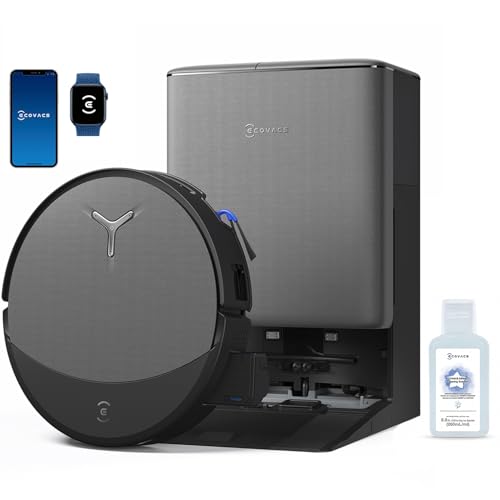

Roborock vs Ecovacs at a Glance
| Feature | Roborock | Ecovacs |
|---|---|---|
| Maximum Suction Power | 10,000 Pa HyperForce | 15,000 Pa to 30,000 Pa BLAST Suction |
| Navigation and Sensor Architecture | PreciSense LiDAR with ReactiveTech Structured Light | AIVI 3D 3.0 Obstacle Avoidance and RGB Camera with Agent YIKO |
| Mopping Technology | VibraRise 2.0 Sonic Vibration (up to 3,000 scrubs/min) | OZMO Roller 3.0 Pressurized Self-Washing Roller |
| Carpet Mop Clearance | 8 mm Auto-Lift | 0.6-inch (approx. 15.2 mm) Auto-Lift |
| Docking Station Automation | RockDock Plus Self-Emptying (2.7L Dust Bag, up to 70 days) | OMNI Station with 167°F Hot Water Washing and Hot Air Drying |
| Anti-Tangle Engineering | JawScrapers Comb Main Brush and Zero-Wrap Side Brush | ZeroTangle 2.0 and ZeroTangle 4.0 Direct Airflow |
| Maximum Battery Runtime | 150 minutes | 200 minutes |
| Operating Noise Level | 65 dB | 60 dB |
| Edge Cleaning Mechanism | Fixed Chassis with 13.9-inch Cleaning Path | TruEdge 2.0 / TruEdge 3.0 Extending Arm (0.6-inch reach) |
| Best For | Reliable multi-room mapping and low-maintenance everyday upkeep | Heavy kitchen grease, deep carpet debris, and automated mop laundering |
Suction Power and Carpet Performance
Suction ratings represent one of the clearest technical divergences when evaluating Roborock vs Ecovacs suction power. Roborock implements a standardized 10,000 Pa HyperForce motor layout across premium platforms such as the Roborock Q10 S5+. This motor configuration relies on dense static pressure and sealed air channels to dislodge pet dander, surface crumbs, and tracked-in grit from hard surfaces and medium-pile floor coverings. Roborock augments this baseline pull with ultrasonic carpet detection, which automatically raises the suction level to maximum while disengaging wet mop assemblies before fiber contact occurs.
Ecovacs takes an aggressive engineering stance on raw mechanical velocity, integrating motors that scale from 15,000 Pa up to an unprecedented 30,000 Pa BLAST suction on models like the ECOVACS DEEBOT T90 PRO Omni. High-velocity airflow at 30,000 Pa pulls embedded sand, heavy debris, and dense fur balls from deep inside thick area rugs where lesser motors struggle. For busy family spaces and homes with multiple shedding animals, this massive air displacement lifts dirt in a single sweep. Similar airflow dynamics are explored in our irobot roomba i3 vs s9+ comparison, showing how specialized carpet impellers alter deep extraction.
Both brands integrate anti-tangle brush rollers to prevent long strands from binding around mechanical bearings. Roborock utilizes a dual-component JawScrapers comb system paired with a specialized zero-percent tangling side brush, physically slicing and directing hair toward the intake. Ecovacs pairs its ZeroTangle 4.0 design with high-volume airflow channels to guide fibers directly into the suction stream before they coil around the cylinder. However, the sheer mechanical advantage of Ecovacs’ 15,000 to 30,000 Pa airflow allows it to pull significantly heavier particulate from low-pile and short carpet weaves.
Edge: Ecovacs, because its 15,000 to 30,000 Pa motor range delivers superior deep-pile extraction and airflow volume across heavily soiled carpeting.
Navigation and Obstacle Avoidance
Navigation precision dictates whether a robotic vacuum operates with complete autonomy or requires frequent physical rescue from household traps. Roborock bases its ecosystem on PreciSense LiDAR, utilizing a 360-degree rotating laser turret to generate millimeter-accurate geometric maps of your floor plan in seconds. In models like the Roborock Q7 M5+, this laser-based positioning allows the robot to plan straight, interlocking cleaning corridors without drifting, even inside completely pitch-black rooms where optical sensors lose tracking.
Obstacle avoidance separates standard room mapping from proactive item avoidance. Roborock reinforces its PreciSense system with ReactiveTech structured light sensors, measuring physical distortions in front of the bumper to detour around shoe laces, stray slippers, and floor clutter. Understanding how laser guidance holds up against alternate methods is a core theme in our irobot vs roborock analysis, where Roborock consistently excels in raw boundary tracking and swift map generation across multi-level properties.
Ecovacs takes a distinct approach to path planning by deploying AIVI 3D 3.0 and high-resolution RGB optical cameras backed by dedicated AI processing. Systems like Agent YIKO on the DEEBOT lineup visually recognize specific household objects, including twisted power cables, pet toys, and furniture legs, calculating dynamic clearance envelopes around each obstruction. The integrated camera also serves as an autonomous mobile security monitor, supporting two-way video calls, pet snapshots, and dedicated pet-finding routines. However, relying on optical image recognition means Ecovacs navigation can hesitate in dim lighting conditions where Roborock’s LiDAR continues scanning without interruption.
Edge: Roborock, as its PreciSense LiDAR establishes faster initial maps, navigates pitch-black environments flawlessly, and provides consistent boundary adherence.
Mopping Systems and Dock Maintenance
Mopping efficiency is the category where mechanical design diverges most sharply between Ecovacs vs Roborock. Roborock equips units like the Q10 S5+ with the VibraRise 2.0 mopping system, utilizing dual-zone sonic vibration modules that pulse up to 3,000 times per minute. Rather than merely dragging a damp rag over hardwood, the vibrating pad breaks down surface stains through high-speed friction. When transitioning onto area rugs, the VibraRise chassis automatically lifts the pad module up to 8 mm, preventing damp fabric from coming into contact with low-pile carpet fibers.
Ecovacs abandons flat vibrating pads entirely on its premium units, outfitting the DEEBOT T90 PRO Omni with an active OZMO Roller 3.0 system. This 10.6-inch continuous roller applies constant downward mechanical pressure while simultaneously self-rinsing with clean water in real time as it glides across floors. This active rinsing mechanism ensures dirty liquid is captured into a separate chamber instead of being wiped across clean tiles. Furthermore, Ecovacs achieves a superior 0.6-inch (approx. 15.2 mm) roller lift height, providing greater clearance over high-pile rugs and uneven room thresholds.
Docking automation represents the ultimate trade-off in ongoing maintenance. Roborock’s RockDock Plus focuses purely on dry debris extraction, utilizing a 2.7-liter sealed dust bag that provides up to 70 days or 7 to 9 weeks of hands-off dirt collection. It does not wash mop pads, meaning users must manually detach and launder the microfiber cloths. Conversely, the Ecovacs OMNI station delivers total hands-free wet maintenance, featuring an integrated 4-liter tank setup, self-cleaning dirty water flushing, 167°F hot-water mop washing to sanitize dried grease, and hot-air drying at up to 145°F to eliminate sour odors. Readers investigating self-washing docks can see similar automation dynamics in our roborock s7 maxv vs qrevo breakdown.
Edge: Ecovacs, due to its continuous pressurized roller scrubbing, greater 0.6-inch mop lift, and comprehensive 167°F hot-water washing station.
Chassis Design, Furniture Clearance, and Edge Cleaning
Clearance beneath furniture determines how much manual vacuuming remains after a robot completes its run. Traditional LiDAR housings require a protruding raised turret on the top deck, which restricts Roborock units from clearing clearance gaps lower than roughly 3.8 to 4 inches. While Roborock compensates with a broad 13.9-inch cleaning path width that covers wide open hallways rapidly, dust bunnies residing beneath low beds, platform couches, and low cabinets remain out of reach.
Ecovacs directly addresses low-clearance dead zones with the ECOVACS DEEBOT T50 PRO Omni, which incorporates an ultra-slim 3.19-inch chassis profile. By repositioning primary navigation hardware into the front bumper assembly, the T50 PRO glides beneath tight furniture frames that block taller competitors. Navigating restricted spaces without sacrificing edge-to-edge pickup is a primary consideration explored in our eufy vs roborock comparison, highlighting the trade-offs of low-profile chassis engineering.
Edge cleaning mechanisms highlight another fundamental contrast. Roborock relies on a fixed perimeter layout where the rotating side brush sweeps debris outward toward the central roller. Ecovacs introduces TruEdge technology, featuring an articulated swing-out assembly that dynamically extends the roller or side brush 0.6 inches beyond the robot’s physical shell. As the DEEBOT tracks along baseboards, wall corners, and kitchen cabinetry, the extending arm scrubs flush against vertical surfaces, eliminating the uncleaned perimeter line typical of standard circular vacuum designs.
Edge: Ecovacs, as its 3.19-inch low-profile chassis option and TruEdge expanding brush systems access tight gaps and clean flush against perimeter baseboards.
App Control, Voice Commands, and Daily Automation
Software performance governs everyday user satisfaction. The Roborock mobile app is widely regarded as an industry benchmark for responsiveness, stability, and deep map customization. Users can configure multi-level mapping across different home storeys, define virtual walls, mark sensitive no-go zones, customize carpet boost levels, and dial in three precise water flow stages for mopping. The visual interface renders room partitions instantly, allowing single-tap room cleanings or designated spot passes without software stutters. Voice integration pairs seamlessly with third-party ecosystems including Google Home and Amazon Echo.
Ecovacs equips its robots with proprietary smart assistants, replacing standard third-party reliance with conversational YIKO and YIKO-GPT voice control. Instead of issuing rigid scripted commands, users can speak naturally to direct the robot toward localized messes, adjust suction levels, or send the unit back to the OMNI dock. The Ecovacs mobile application provides detailed control over multi-level maps, soil level detection, and smart cleaning schedules. Furthermore, the live RGB camera feed allows users to remotely drive the unit through the house to check on pets or monitor interior spaces.
However, software complexity introduces reliability trade-offs. The Ecovacs app requires managing complex camera privacy permissions, AI object tags, and dock sanitization schedules, which can occasionally cause synchronization delays over 2.4GHz Wi-Fi networks. Roborock focuses exclusively on swift, bug-free mapping execution and straightforward scheduling. For readers comparing intelligent software workflows, our irobot roomba i3 vs j7 guide reviews how smart obstacle tagging impacts daily autonomous runtime.
Edge: Roborock, because its companion software delivers superior mapping responsiveness, rock-solid no-go zone adherence, and intuitive routine scheduling.
Pros and Cons
Roborock

Pros
- Flawless PreciSense LiDAR navigation in dark rooms
- VibraRise sonic scrubbing up to 3000 vibrations
- RockDock holds debris up to 70 days
- Intuitive app with reliable virtual no-go boundaries
- Dual anti-tangle JawScrapers comb minimizes hair maintenance
Cons
- Turret profile limits access beneath low furniture
- Lacks hot-water mop washing docking station
View roborock Q7 M5+ Robot Vacuum on Amazon
Ecovacs

Pros
- Massive suction options reaching up to 30000Pa
- Full OMNI station with 167°F hot-water washing
- Ultra-slim 3.19-inch profile fits low furniture
- TruEdge extending arms scrub tight room baseboards
- Long 200-minute maximum battery runtime
Cons
- Requires routine filling and emptying of water tanks
- App interface has occasional pairing and navigation hesitation
View ECOVACS DEEBOT T90 PRO Omni Robot on Amazon
Who Should Buy Each One
Choose the Roborock If
- Your home features multi-level floor plans that require rapid, pitch-black LiDAR mapping and precise room partitioning.
- You want a streamlined self-emptying dock with sealed dust bags that runs for up to 70 days without handling dirty mop water.
- You have delicate hardwood, laminate, or tile floors that benefit from high-frequency sonic vibration scrubbing without soaking the planks.
- You prefer a simple, highly responsive smartphone app that executes no-go boundaries and automated schedules without connectivity glitches.
Choose the Ecovacs If
- You have thick rugs, high-shedding dogs, or deep carpet pile that demands extreme suction power reaching 15,000 to 30,000 Pa.
- You want completely automated mopping maintenance, including 167°F hot-water pad laundering and heated-air drying at the base station.
- Your living spaces contain low sofas, platform beds, or dressers that require an ultra-slim 3.19-inch chassis profile.
- You need real-time obstacle recognition, pet-finding video routines, and dynamic extending edge-cleaning arms for baseboard lines.
Final Verdict
For the majority of households seeking reliable, hands-off automated floor care, Roborock remains the more balanced daily choice. Its PreciSense LiDAR scanning, rock-solid mobile software, and VibraRise sonic pad technology provide predictable cleaning runs without requiring babysitting or unexpected manual rescues. While its self-emptying docks omit hot-water mop washing, the 10,000 Pa suction and dual-comb anti-tangle brushes easily manage everyday dust, pet hair, and surface debris across mixed flooring.
Ecovacs wins decisively for homes facing severe messes, sticky kitchen spills, and heavy shedding. When raw 30,000 Pa extraction power, continuous roller scrubbing, and fully hands-free 167°F hot-water station sanitation are non-negotiable requirements, the DEEBOT lineup outmuscles standard robotic vacuum configurations. If you are willing to manage dirty water tanks in exchange for pristine baseboards, low-furniture clearance, and zero manual mop washing, Ecovacs delivers an elite level of commercial-grade automation.
FAQ
Which brand handles pet hair better, Roborock or Ecovacs?
Both brands incorporate effective anti-tangle brushware, but they solve pet hair management differently. Roborock utilizes JawScrapers combs and specialized side brushes to keep hair from wrapping around the roller, making it exceptionally reliable for daily pet shedding. Ecovacs pairs its ZeroTangle combs with massive suction ratings between 15,000 Pa and 30,000 Pa, allowing it to pull deeply matted pet hair and dander out of dense carpet fibers in a single pass.
Can Roborock and Ecovacs robot vacuums mop hardwood floors without damaging them?
Yes, both platforms are engineered for safe operation on sealed hardwood, parquet, and vinyl. Roborock provides three adjustable water flow settings inside its app, allowing users to apply minimal dampness while relying on 3,000 scrubs per minute of sonic vibration to clean without puddling. Ecovacs features smart floor recognition, auto-adjusting water dispensing and using active roller extraction to lift dirty water immediately back into the assembly so standing moisture never rests on wood surfaces.
Why does Ecovacs offer significantly higher suction power ratings than Roborock?
Ecovacs incorporates high-airflow BLAST motors engineered to achieve between 15,000 Pa and 30,000 Pa of negative pressure. This massive suction specification is optimized to extract heavy grit, sand, and deeply embedded carpet debris in one pass. Roborock caps its current flagship platforms around 10,000 Pa, balancing motor power with energy efficiency, noise abatement, and battery endurance across standard floor types.
How do Roborock and Ecovacs prevent mop pads from soaking carpets?
Both manufacturers deploy ultrasonic carpet detection to identify pile boundaries automatically. Roborock’s VibraRise system physically lifts the mopping plate 8 mm into the chassis when carpet is sensed, allowing the vacuum to sweep without wetting low-pile rugs. Ecovacs raises its roller assembly by 0.6 inches (roughly 15.2 mm) and offers a dedicated Carpets First mode that completes dry carpet sweeping before wetting the roller for hard floors.
Is an Ecovacs OMNI station harder to maintain than a Roborock RockDock?
An Ecovacs OMNI station requires more active oversight because it manages both wet and dry debris. While Roborock’s RockDock Plus only requires swapping a 2.7-liter dry dust bag every 7 to 9 weeks, an Ecovacs OMNI dock features clean and dirty water tanks that must be manually refilled and emptied to prevent stagnant odors, even with automated 167°F hot-water washing and hot-air drying.
Do Roborock and Ecovacs robots work on 5GHz Wi-Fi networks?
No, both Roborock and Ecovacs robotic vacuums operate exclusively on standard 2.4GHz Wi-Fi frequencies. When configuring either device via their respective mobile applications, smartphones must be connected to a 2.4GHz home network band to complete initial pairing and firmware setup successfully.


