Choosing between the Shark NV501 and the Shark LA802 comes down to whether you prefer a traditional high-wattage upright with mechanical controls or an automated vacuum equipped with multi-sensor floor detection and dual brushrolls.
Homeowners who value heavy-duty electrical draw, a slightly larger dust capacity, and four-wheel stability should choose the NV501, while busy households seeking automated suction adjustment, edge detection, and specialized dual-roller debris pickup should choose the LA802.
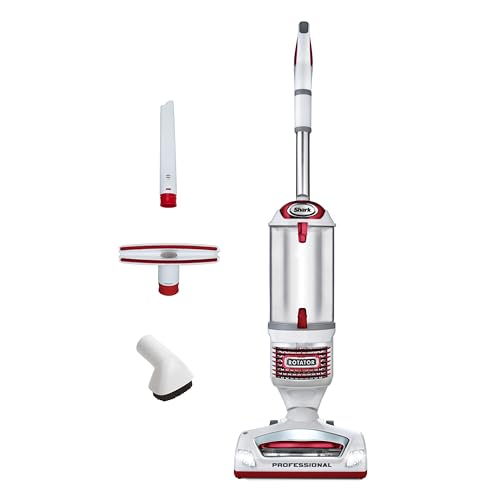
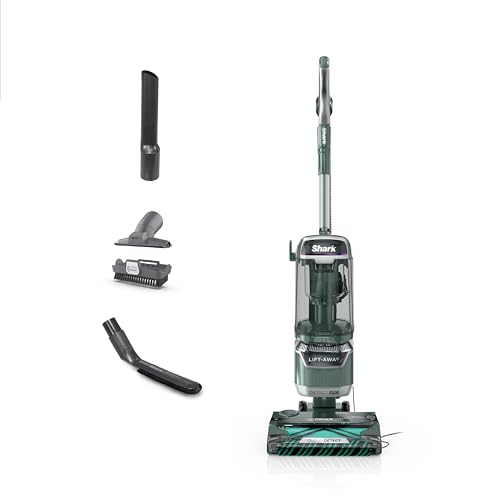
Shark NV501 vs Shark LA802 at a Glance
| Attribute | Shark NV501 | Shark LA802 |
|---|---|---|
| Motor Wattage | 1200 watts | 960 watts |
| Current Draw | 10 A | 6.5 A |
| Voltage | 110-120 volts | 120 volts |
| Dust Cup Capacity | 0.88 quarts | 0.8 quarts |
| Brushroll System | Standard single roller | DuoClean Detect (dual brushroll) |
| Automation and Sensors | None (manual controls) | 4-sensor Detect Pro system |
| Filtration | Foam filter, HEPA with Complete Seal | HEPA filter |
| Noise Level | 80 dB | Not listed |
| Included Tools | Dusting brush, upholstery tool, crevice tool | Anti-Allergen dust brush, crevice tool, pet-multi tool, Odor Neutralizer cartridge |
| Best For | Traditional deep cleaning with maximum continuous wattage | Automated multi-surface cleaning with dedicated edge pickup |
Motor Wattage and Suction Output
Electrical specifications dictate the core operating characteristics of an upright vacuum. The Shark NV501 runs on a 1200-watt motor drawing 10 amps across a 110-120 volt electrical line. This continuous high-draw configuration generates consistent static lift directly through the cleaning path. Because the motor operates at a fixed baseline, users receive unbroken suction delivery regardless of floor resistance. In contrast, the Shark LA802 operates on a 960-watt motor that pulls 6.5 amps at 120 volts. Rather than running at a single high electrical threshold, the LA802 uses two electronically controlled power levels designed to dynamically match airflow to the task at hand.
When evaluating Shark NV501 vs LA802 suction power, the difference lies in raw wattage versus dynamic airflow management. The 1200-watt motor of the NV501 provides uncompromising, constant current draw that pulls embedded dirt from carpet pile. However, modern airflow engineering on the LA802 allows it to maximize efficiency despite its lower 960-watt ceiling. Official listing data indicates the LA802 produces higher suction than the Bissell SurfaceSense Allergen Pet 3415 based on ASTM F558 testing measured at the hose. Similar comparisons emerge when studying the shark nv501 vs nv752, where motor size directly impacts sustained resistance against heavy carpets.
The operational trade-off centers on electricity use versus continuous suction pull. The 10-amp motor on the NV501 draws more electrical load, producing a reliable, heavy-duty suction stream that remains uniform. The LA802 draws less electricity and leverages microprocessors to increase motor speed only when needed, avoiding unnecessary power consumption. For users who prefer a vacuum that runs at full manual capacity without electronic intervention, the classic configuration holds a distinct functional appeal.
Edge: Shark NV501, because its 1200-watt, 10-amp motor delivers uninterrupted, heavy-duty suction power without electronic throttling.
Brushroll Architecture and Floor Transitioning
The physical interface between the vacuum head and your flooring defines how well a cleaner gathers fine dust, tangled hair, and large particles. The Shark NV501 uses a classic single-brushroll head with a 9.5-inch cleaning path width. It relies on two mechanical speed settings: a lower speed to gently clean bare floors and prevent debris scatter, and a higher speed to agitate fibers across medium- and high-pile carpets. Users must physically manipulate the switch when moving between rugs and bare flooring to adapt the brushroll action to different pile depths.
Comparing the Shark LA802 DuoClean Detect vs NV501 reveals a dramatic upgrade in roller technology. The LA802 incorporates Shark’s DuoClean Detect system, which combines two distinct brushrolls into a single floor nozzle: a soft front roller that maintains direct contact with hard surfaces and a secondary bristled roller designed to loosen deep carpet grime. Four internal sensors monitor the floor surface and actively accelerate or slow the brushrolls in real time. This engineering reflects the design evolution seen across other modern units like the shark nv501 vs la502, where dual rollers replace the single-roller assembly.
This structural difference changes daily operation. With the NV501, approaching a transition strip requires stopping to toggle between carpet and hard floor modes. The LA802 eliminates this pause entirely by sensing the transition beneath the head and modifying both roller velocity and suction instantly. Furthermore, the dual-roller design makes direct contact with bare surfaces, trapping fine dust films that single-roller designs often bypass.
Edge: Shark LA802, because its dual-brushroll DuoClean system automatically adapts across surfaces while providing continuous direct-floor contact.
Sensor Automation and Edge Performance
Traditional uprights rely on user observation to locate heavily soiled areas and require supplementary tools to clean alongside baseboards. The NV501 fits this manual mold completely. It features an integrated front headlight to illuminate dark corners and under furniture, but the user remains responsible for spotting dirt, assessing floor requirements, and attaching a crevice tool when cleaning wall borders. The single power level keeps operation straightforward, free from digital sensors that could introduce operational failure points.
The Detect Pro platform on the LA802 introduces automated functionality through four dedicated sensing channels. Its hidden dirt sensor measures particle volume passing through the nozzle, immediately boosting motor suction and brushroll speed when it hits an area of heavy debris. Furthermore, the LA802 integrates Direction Detect, allowing the DuoClean head to trap debris on both forward pushes and reverse pulls, whereas traditional cleaner heads primarily gather debris during forward passes. For shoppers wondering is Shark LA802 worth it, this multi-directional automation saves physical sweeping strokes during routine cleaning runs.
Edge cleaning provides another point of separation. The LA802 features integrated Edge Detect, an automated sensor system that detects when the nozzle operates within two inches of a wall or baseboard. Upon detecting a boundary, the vacuum diverts suction power to the outer edge of the floorhead, extracting trapped dust and pet hair from under trim without requiring an auxiliary hose attachment. While readers looking at the shark nv356e vs la802 often note similar performance shifts, the LA802 stands out by removing the need to switch to crevice attachments for perimeter maintenance.
Edge: Shark LA802, because its quad-sensor array and Edge Detect technology automate suction adjustments and clean along baseboards without manual tool changes.
Pet Hair Removal and Odor Management
Pet-friendly households face two cleaning hurdles: persistent hair embedded in carpet fibers and lingering odors that collect inside bagless dust chambers. In a Shark NV501 review, pet hair cleanup is centered around continuous 1200-watt suction paired with a wide upholstery tool. This attachment latches onto couches, stairs, and pet beds to extract shed hair. The NV501 seals this debris inside an Anti-Allergen Complete Seal system featuring a foam filter and a high-efficiency particulate air (HEPA) filter, ensuring dander and dust remain trapped inside the unit.
When evaluating the Shark NV501 or LA802 for pet hair, the LA802 adds several modern pet-oriented features. In addition to a specialized Pet-Multi Tool, the LA802 includes an Odor Neutralizer Technology cartridge that slots directly into the vacuum head. As air passes through the exhaust, the cartridge actively neutralizes unpleasant pet odors rather than circulating stale air back into your living room. Debris pickup tests per IEC62885-2 benchmarks also indicate the LA802 picks up debris more effectively than the Dyson Ball Animal 3 across forward and reverse passes.
Both uprights excel at keeping fine allergens contained, but the user experience differs when servicing pet zones. The NV501 relies on pure mechanical pulling power, lifting fur through sheer motor strength and a wide accessory opening. The LA802 pairs strong airflow with dual counter-rotating rollers that prevent hair from scattering across hard surfaces, while the odor cartridge treats the olfactory byproduct of heavy pet shedding. Examining comparable models like the shark nv501 vs az2002 highlights how modern odor and roller technologies streamline multi-pet home maintenance.
Edge: Shark LA802, because its Pet-Multi Tool, Odor Neutralizer cartridge, and bidirectional DuoClean rollers collect hair and combat odors more effectively.
Hard Floor Performance and Debris Handling
Hard surfaces such as oak, tile, and laminate present unique challenges for upright vacuums. On the NV501, bare floor cleaning relies on a two-speed motor control. Switching the cleaner to bare floor mode slows the brushroll to keep bristles from spraying cat litter, cereal, or dry kibble across the floor. However, because the single roller uses firm bristles set inside a conventional hood, large particles can occasionally deflect off the front bumper instead of passing underneath the vacuum path.
Addressing the Shark NV501 or LA802 for hardwood floors, the LA802 uses a front soft roller that makes continuous contact with hard flooring. Instead of pushing larger pieces forward, the soft roller pulls large debris directly into the suction channel while simultaneously buffing fine dust particles from floorboards. This dual-action system allows the LA802 to handle mixed debris sizes in a single pass without scattering particles across clean sections of flooring.
The LA802 also features Direction Detect, which maintains active debris gathering on the backstroke. Standard vacuums frequently push dirt backward when drawn toward the user, but the LA802 maintains effective suction during both movement phases. For homes featuring extensive hardwood, bamboo, or glazed tile flooring, the soft front roller provides protective cleaning that standard bristled heads cannot duplicate without auxiliary hard floor attachments.
Edge: Shark LA802, because the soft front roller engages large debris and dust without scattering particles on bare floors.
Maneuverability, Dust Capacity, and Lift-Away Pods
Both models feature Shark’s Lift-Away pod architecture, enabling users to detach the canister from the floorhead with the push of a button. Once disconnected, both vacuums function as portable canister units for stairs, drapes, and ceiling corners. The NV501 includes an upholstery tool, a dusting brush, and a crevice tool for these above-floor tasks. The LA802 provides an Anti-Allergen dust brush, a crevice tool, a Pet-Multi Tool, and features a 2.1-foot hose for overhead reaching.
Where these uprights diverge mechanically is in their chassis construction and capacity. The Shark NV501 features a four-wheel rolling base paired with smooth swivel steering. The four-wheel configuration provides upright stability, preventing the vacuum from tipping during abrupt turns or while operating in tight hallways. Furthermore, the NV501 offers a dust cup capacity of 0.88 quarts, giving it an advantage over the 0.8-quart cup found on the LA802. Those reviewing the shark nv356e vs nv501 frequently note that extra dust capacity translates directly into fewer interruptions during comprehensive whole-house cleaning.
The LA802 uses a two-wheel base to cut down on profile weight, relying on agile steering geometry to pivot around furniture legs. Both uprights incorporate built-in headlights to assist navigation beneath low tables and inside dark closets. While the LA802 offers advanced electronic sensors, the NV501 provides a sturdier four-wheeled stance and a larger debris capacity, making it well-suited for long cleaning sessions across large floor plans.
Edge: Shark NV501, because its four-wheel base enhances rolling stability and its 0.88-quart dust chamber holds more debris between dumps.
Pros and Cons
Shark NV501

Pros
- 1200-watt 10-amp heavy-duty motor
- Larger 0.88-quart dust cup capacity
- Stable four-wheel steering base
- Anti-Allergen Complete Seal HEPA filtration
Cons
- Lacks automated dirt and edge sensors
- Single brushroll requires manual speed switching
Shark LA802

Pros
- DuoClean Detect dual-brushroll system
- Quad-sensor automated suction adjustment
- Integrated Odor Neutralizer cartridge
- Direction Detect cleans forward and backward
Cons
- Smaller 0.8-quart dust cup capacity
- Lower 960-watt electrical power rating
Who Should Buy Each One
Choose the Shark NV501 If
- You want a robust 1200-watt, 10-amp motor that delivers steady, unthrottled suction across all surfaces.
- You prefer a larger 0.88-quart dust bin to minimize trips to the trash can during large cleaning jobs.
- You favor a four-wheel upright base that delivers steady tracking and prevents tip-overs around sharp corners.
- You prefer simple mechanical switches rather than digital sensors that automate your suction and roller speeds.
Choose the Shark LA802 If
- You want automated surface sensing that instantly adjusts brushroll speeds when transitioning between carpets and bare floors.
- You have pets and want an integrated Odor Neutralizer cartridge combined with dedicated pet tools to manage hair and smells.
- You need dedicated edge cleaning that ramps up suction within two inches of walls without attaching a crevice tool.
- You have extensive hardwood or tile flooring that benefits from the gentle, dust-trapping soft front roller of the DuoClean head.
Final Verdict
For the majority of modern homes, the Shark LA802 represents the superior vacuum investment. Its DuoClean Detect floorhead solves the persistent issue of debris scattering on bare floors, while the soft front roller actively polishes hard surfaces and pulls in large particles effortlessly. Backed by an intelligent four-sensor array, the LA802 automatically adjusts motor power based on dirt volume, floor texture, cleaning direction, and baseboard proximity. Adding the Odor Neutralizer cartridge and specialized pet tools makes it an exceptionally capable upright for active homes.
The Shark Rotator NV501 vs Detect Pro LA802 comparison remains relevant for buyers who prioritize mechanical simplicity and continuous electrical power. With its 1200-watt motor, four-wheel platform, and 0.88-quart canister, the NV501 delivers dependable deep cleaning for carpets without digital intervention. If you want maximum motor wattage, traditional two-speed controls, and a slightly larger waste capacity, the NV501 remains a proven, heavy-duty workhorse.
FAQ
Does the Shark LA802 have a larger dust cup than the Shark NV501?
No, the Shark NV501 features a dust cup capacity of 0.88 quarts, whereas the Shark LA802 has a capacity of 0.8 quarts. The NV501 provides slightly more volume before requiring an empty.
Can both vacuums clean above-floor surfaces using Lift-Away mode?
Yes, both models feature Shark’s Lift-Away pod functionality. By detaching the canister from the floorhead, both vacuums convert into portable pods for cleaning stairs, drapery, and furniture using their included wand attachments.
How does the Edge Detect feature on the Shark LA802 work?
The Shark LA802 includes an automated sensor that identifies when the nozzle is within two inches of a wall or baseboard. It automatically routes suction power directly to the side edge of the nozzle to extract debris without requiring a separate crevice tool.
Which vacuum draws more electrical power from the wall?
The Shark NV501 draws more electrical power, operating at 1200 watts and 10 amps. The Shark LA802 operates at 960 watts and 6.5 amps, utilizing variable motor speeds to conserve power during lighter cleaning tasks.
Do both models include sealed HEPA filtration?
Yes, both units feature HEPA filtration systems designed to capture dust and non-living allergens. The NV501 explicitly pairs its HEPA filter with an Anti-Allergen Complete Seal system and a washable foam filter to keep fine particles trapped inside.
What tools are included with the Shark LA802?
The Shark LA802 comes equipped with an Anti-Allergen Dust Brush, a Crevice Tool, a Pet-Multi Tool, and an Odor Neutralizer Technology cartridge that slots into the cleaner head to combat household odors.
How do the brushroll designs differ between the Shark Rotator NV501 vs Detect Pro LA802?
The NV501 utilizes a standard single-brushroll design with two manual speed settings. The LA802 utilizes the DuoClean Detect system, which pairs a soft front roller with a secondary bristled roller, automatically adjusting their speeds via integrated sensors.


