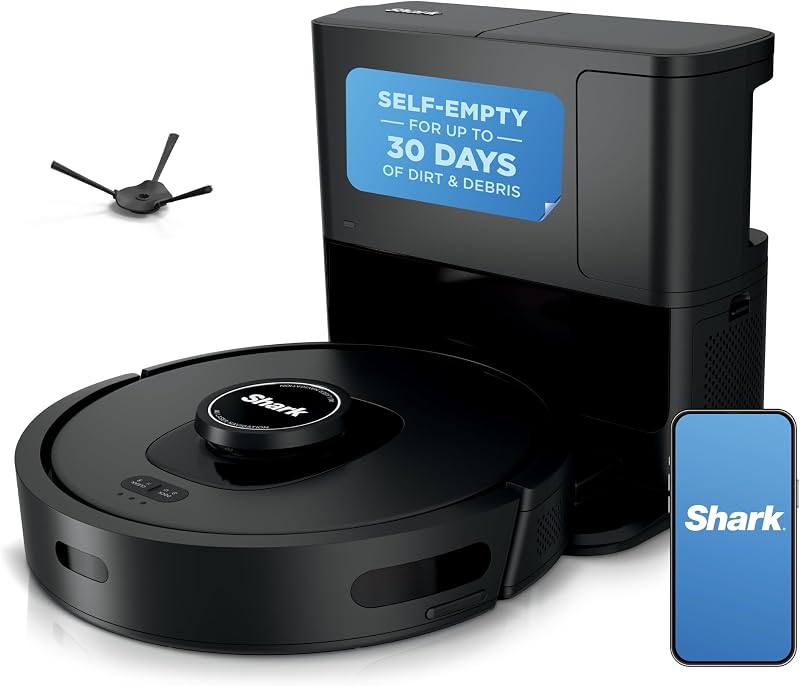
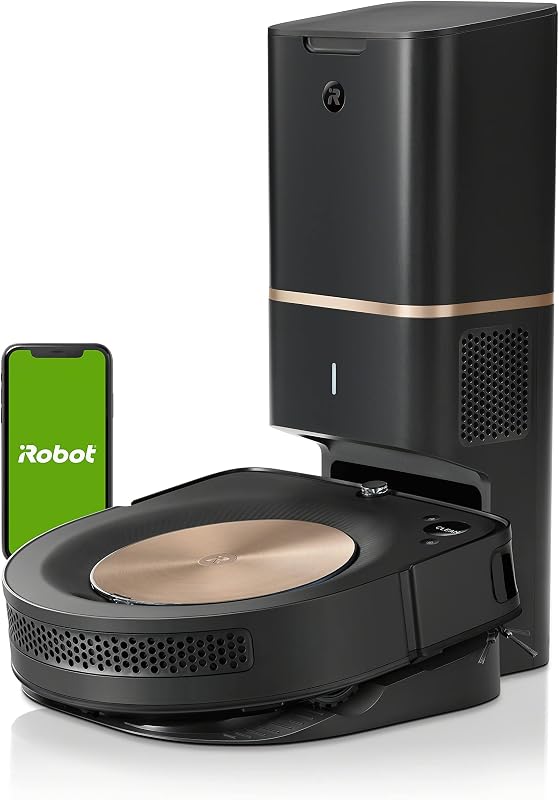
The decisive difference between these two robotic cleaners comes down to dock-driven automation versus pure vacuum extraction strength. The Roborock S7 Max Ultra is built around the hands-free RockDock Ultra station that empties dust, washes the mop pad, dries it with heat, and refills the onboard water reservoir, while the Roborock Q7 L5 operates as a standalone robot featuring a significantly stronger 8,000 Pa HyperForce motor and dual anti-tangle brushes designed specifically for debris-heavy flooring.
Choose the Roborock S7 Max Ultra if you have mixed hard surfaces and rugs and want a fully autonomous mopping system that lifts its own pad and cleans itself after every cycle. Choose the Roborock Q7 L5 if your home has thick carpets, shedding pets, and you prefer maximum suction power over automated dock maintenance.


Roborock S7 Max Ultra vs Roborock Q7 L5 at a Glance
| Feature | Roborock S7 Max Ultra | Roborock Q7 L5 |
|---|---|---|
| HyperForce Suction Power | 5,500 Pa | 8,000 Pa |
| Docking System | RockDock Ultra (Auto-Wash, Dry, Refill, Empty) | Standard Charging Dock |
| Mopping Technology | VibraRise Sonic Scrubbing (3,000 cycles/min) | Removable Pad with 3 Water Flow Levels |
| Mop Lifting Clearance | Auto Mop Lifting for carpets | Not listed |
| Main and Side Brushes | Floating All-Rubber Brush | Dual Anti-Tangle Main and Zero-Tangle Side Brush |
| Navigation and Avoidance | Reactive Tech Obstacle Avoidance | Precision LiDAR 360° Laser Navigation |
| Battery Runtime | Up to 180 minutes | Up to 150 minutes |
| Operating Noise Level | 67 dB | 60 dB |
| Water Tank Setup | Auto-refilling internal tank (up to 300 sqm range) | 270 ml integrated combo water tank and dustbin |
| Best For | Autonomous hard floor mopping and mixed floor plans | Deep carpet cleaning and high-shedding pet homes |
Dock Automation and Maintenance Demands
The operational experience of the Roborock S7 Max Ultra is shaped entirely by its multi-function base station. The RockDock Ultra takes over virtually every maintenance chore that normally makes robot vacuums tedious to run every day. After completing a run, the base station automatically drains the onboard dust into a disposable collection bag, cleans the mop pad with fresh water, applies warm air drying to prevent odors and bacterial growth, and tops off the robot’s internal reservoir so it is ready for the next scheduled session. For homes spanning multiple rooms, the listing notes an overall mopping capacity of up to 300 square meters before requiring human intervention. However, owners must account for physical space: the listing advises leaving 1 meter (3.3 feet) of clearance above and in front of the station, positioned against a flat wall.
In contrast, the Roborock Q7 L5 uses a traditional, compact charging cradle that leaves maintenance duties entirely in your hands. Dust and liquid are housed inside a single 270 ml combo part that combines the water reservoir and dirt compartment. Whenever the robot finishes a run, you must pull out this combo module, unclip the washable filter, tap out collected debris into a trash can, and manually rinse and detach the removable mopping cloth. When evaluating whether roborock s7 max ultra vs roborock qrevo or conventional models make sense for your lifestyle, dock autonomy represents the primary time-saving factor.
The functional trade-off between these two setups comes down to footprint versus physical effort. If you neglect to wash and dry the Q7 L5 pad manually after wet cleaning, damp odors quickly develop on the cloth. The S7 Max Ultra eliminates this friction through automated cleaning cycles and heat drying, though its tall station requires a dedicated footprint on a hard, flat surface. When asking roborock s7 max-ultra vs s7 maxv and similar hardware questions, assess whether you prefer dedicating floor space to an automated station or performing manual bin emptying after every session.
Edge: Roborock S7 Max Ultra, because the RockDock Ultra handles washing, drying, refilling, and dust evacuation without regular manual intervention.
Vacuuming Suction and Carpet Extraction
Suction performance is the area where the newer Roborock Q7 L5 establishes a distinct mechanical lead. Engineered with an 8,000 Pa HyperForce motor, the Q7 L5 pulls fine particulate, embedded grit, and hair out of deep carpet pile and subfloor cracks. This makes the Q7 L5 an aggressive dry-vacuuming tool capable of clearing dirt trapped at the base of heavy rugs where standard robotic vacuums leave residue behind. It features two power levels that let you step down suction on hard floors and ramp up to full strength when rolling over high-traffic carpet zones.
The Roborock S7 Max Ultra generates 5,500 Pa HyperForce suction. While 5,500 Pa is more than capable of clearing everyday surface dust, crumbs, and tracked-in debris from tiles, laminate, and low-pile area rugs, it provides 2,500 Pa less pull than its counterpart. The S7 Max Ultra compensates by using an upgraded floating rubber brush designed to hug the contours of uneven flooring, ensuring that the vacuum inlet maintains a tight seal against grout lines and floor transitions. It also features Carpet Boost technology, which automatically kicks the motor into higher suction mode whenever the robot identifies that it has transitioned onto soft flooring.
When comparing Roborock S7 Max Ultra vs Q7 L5 suction power across different flooring types, the choice hinges on carpet density. For homes dominated by medium-to-high pile carpeting, the 8,000 Pa motor of the Q7 L5 pulls significantly more weight. If you are debating whether to choose the Roborock S7 Max Ultra or Q7 L5 for carpet, the extra raw suction of the Q7 L5 provides deeper extraction inside fiber matrices where heavy dust settles.
Edge: Roborock Q7 L5, delivering 8,000 Pa HyperForce suction compared to the 5,500 Pa rating of the S7 Max Ultra.
Mopping Systems and Floor Transitions
Mopping capabilities reveal the sharpest engineering divide between these two machines. The Roborock S7 Max Ultra is equipped with the VibraRise mopping system, which uses sonic scrubbing technology that vibrates 3,000 times per minute under constant downward pressure. According to manufacturer listing data, this high-frequency scrubbing removes dried-on stains 30% more effectively than traditional passive robot mops. More importantly, the S7 Max Ultra features Auto Mop Lifting: built-in floor detection sensors identify the boundary between hard floors and carpets, automatically raising the wet pad out of contact when traversing rugs so carpets stay dry during a simultaneous vacuum-and-mop run.
The Roborock Q7 L5 takes a more conventional approach to wet cleaning. It uses an integrated combo assembly featuring a 270 ml water tank with three adjustable water flow levels alongside a static, removable mop pad. Because the pad remains flat against the floor surface rather than vibrating or applying dynamic downward scrubbing, it functions primarily as a damp wiping system to capture fine dust that the suction inlet misses. Furthermore, the Q7 L5 listing makes no mention of auto-lifting mechanics, which means the damp pad will drag across rugs unless you deliberately define keep-out zones in the app.
This dynamic alters how freely the machines run through complex floor plans. In an open-concept living area with hardwood floors, tile dining spaces, and scattered decorative rugs, the S7 Max Ultra completes vacuuming and scrubbing in one continuous cycle without human assistance. With the Q7 L5, managing mixed floors requires configuring No-Go Zones around area rugs in the Roborock app to prevent dampening carpet fibers, or scheduling dry vacuum runs separately from wet mopping runs. In any head-to-head evaluation of Roborock S7 Max Ultra vs Q7 L5 mopping, the VibraRise system delivers vastly superior automation and stain agitation.
Edge: Roborock S7 Max Ultra, thanks to its 3,000-scrub-per-minute sonic vibration and automatic mop lifting on carpet transitions.
Brush Architecture and Pet Hair Management
Managing pet fur, long human hair, and seasonal shedding requires brushes that resist jamming and wrapping around axle bearings. The Roborock Q7 L5 tackles this challenge with a dual anti-tangle system: it pairs a specially designed anti-tangle main roller brush with a zero-tangle side brush. The geometry of these brushes is designed to channel hair strands smoothly across the roller assembly and directly into the suction stream without binding the roller or twisting tightly around the side sweeping arms. When evaluating the Roborock S7 Max Ultra or Q7 L5 for pet hair, this dedicated anti-wrap roller design substantially cuts down how often you need to cut tangled fur off the assembly.
The Roborock S7 Max Ultra utilizes an upgraded all-rubber floating roller brush. This solid rubber design lacks bristles, which naturally reduces hair wrapping compared to traditional bristle brushes because long strands have fewer fibers to weave through. The floating suspension helps the brush frame pivot over tile grout lines and thresholds to maintain continuous floor contact. However, long hair can still collect near the removable end caps over prolonged cleaning cycles, requiring periodic manual clearance during weekly checkups.
Both robots include washable filters that trap dander and fine particulate before exhausting air back into the room. If your home has multiple shedding pets and thick rugs where hair weaves deeply into yarn, the combination of 8,000 Pa suction and dual zero-tangle brushes gives the Q7 L5 an advantage. If you want to see how this brush system compares across other models, read our analysis of the roborock s7 maxv vs q7 l5 to see how hardware brush sets balance pet hair maintenance.
Edge: Roborock Q7 L5, courtesy of its dual anti-tangle main and zero-tangle side brush configuration.
Navigation, Obstacle Avoidance, and Mapping
Both robots run on Roborock’s advanced software suite, but their physical scanning sensors handle floor obstacles differently. The Roborock S7 Max Ultra is equipped with Reactive Tech Obstacle Avoidance. This front-facing sensor detects shoes, pet bowls, and stray objects resting on the floor, steering the robot around them so you do not have to tidy up every room before launching a cleaning run. The onboard intelligence also identifies tight spatial bottlenecks where the robot might get wedged and automatically suggests No-Go Zones to protect it from becoming trapped or falling down stairs.
The Roborock Q7 L5 uses 360-degree Precision LiDAR Navigation mounted in a top turret. It scans the layout of your home in real time to generate precise multi-floor maps and calculate the most efficient cleaning paths. While it does not utilize the Reactive Tech optical avoidance module found on the S7 series, the Q7 L5 software identifies common low-profile problem areas such as clusters of cables or chair and table legs, automatically prompting you to establish no-go perimeters to prevent mid-run stalls. Detailed route mapping across multi-level homes is supported by both units within the Roborock app.
In practice, the Roborock S7 Max Ultra vs Q7 L5 obstacle avoidance comparison reveals distinct operational priorities. The S7 Max Ultra reacts dynamically to items dropped on the floor in real time, making it ideal for busy living rooms with children or pets. The Q7 L5 relies on its LiDAR mapping to maintain structured cleaning lines, preventing tangles by recognizing wire clusters and prompting permanent no-go boundaries. For shoppers reading an in-depth roborock s7 max ultra vs roborock saros 20 comparison, the S7 series remains the standard for automated spatial navigation.
Edge: Roborock S7 Max Ultra, due to its real-time Reactive Tech obstacle avoidance hardware that dodges dynamic clutter.
Runtime, Operating Noise, and Smart Controls
Operating endurance and noise output highlight meaningful differences for daily living. The Roborock S7 Max Ultra carries a lithium-ion battery delivering up to 180 minutes of runtime, making it well-suited for sprawling, multi-level homes that require long vacuuming and mopping passes. Its operating noise level is rated at 67 dB, which is typical for a robot running both an active suction fan and a 3,000-rpm sonic scrubbing motor. Both robots feature two selectable power levels in their software dashboards.
The Roborock Q7 L5 provides up to 150 minutes of continuous runtime on a single charge. While that is 30 minutes less than the S7 Max Ultra, 150 minutes is sufficient to vacuum standard-sized floor plans before docking. Where the Q7 L5 stands out is acoustic comfort: its operational sound level is rated at just 60 dB. This noticeable reduction in operating noise allows it to clean quietly in the background without drowning out television dialogue or home office calls. The Q7 L5 also includes an integrated child lock feature in the app to prevent accidental activation by curious pets or young children.
Smart home connectivity is identical between both machines. Each unit integrates with Amazon Echo, Google Home, and smartphone controls through the Roborock app, supporting voice prompts and customized room schedules. Notably, both robots only support 2.4 GHz Wi-Fi networks. As specified in the product documentation, users operating dual-band home networks must ensure their router is set to broadcast a dedicated 2.4 GHz band to complete network pairing successfully. If you are comparing mid-tier alternatives, consider reviewing our guide on the roborock s7 max ultra vs q7 m5 for additional hardware context.
Edge: Tie. The S7 Max Ultra runs 30 minutes longer for sprawling layouts, while the Q7 L5 operates with a noticeably quieter 60 dB profile and includes a child lock.
Pros and Cons
Roborock S7 Max Ultra

Pros
- Full RockDock Ultra auto-washing and drying
- VibraRise sonic scrubbing with auto mop lifting
- Reactive Tech obstacle avoidance system
- Extended 180-minute battery runtime
Cons
- Lower 5,500 Pa maximum suction power
- Requires large clearance around dock
- Higher 67 dB operating noise level
View Roborock S7 Max Ultra on Amazon
Roborock Q7 L5

Pros
- Ultra-powerful 8,000 Pa HyperForce suction
- Dual anti-tangle main and side brushes
- Quiet 60 dB operating volume
- Compact footprint with integrated combo tank
Cons
- Requires fully manual mop washing and bin emptying
- No automatic mop lifting over rugs
- Slightly shorter 150-minute runtime
Who Should Buy Each One
Choose the Roborock S7 Max Ultra If
- You have extensive tile, hardwood, or laminate floors that require active scrubbing rather than light dust wiping.
- You want complete dock automation, including self-emptying, warm air mop drying, pad washing, and automated water refilling.
- Your home has mixed flooring where rugs and hard floors sit side-by-side, requiring the mop pad to lift automatically.
- Your living areas frequently have stray toys, shoes, or pet accessories that require reactive obstacle avoidance.
Choose the Roborock Q7 L5 If
- Your primary concern is pulling heavy dirt and deeply embedded pet fur from carpets using 8,000 Pa suction.
- You have high-shedding pets and need dual anti-tangle roller and side brushes to eliminate hair wrapping.
- You prefer a compact charging dock that takes up minimal floor space rather than housing a multi-reservoir station.
- You value quiet daytime cleaning runs with a reduced 60 dB noise rating and integrated child lock protection.
Final Verdict
When assessing this matchup, the pick for most homeowners is the Roborock S7 Max Ultra. While it offers lower peak suction numbers than its rival, its automated workflow completely removes the manual burden of wet floor maintenance. The combination of the RockDock Ultra station-which washes, dries, and refills the robot-alongside VibraRise sonic scrubbing and automatic mop lifting allows it to transition across carpets and hard floors without user supervision. If you have been wondering is Roborock S7 Max Ultra worth it for mixed-surface households, its hands-off cleaning cycle provides unmatched day-to-day utility.
On the other hand, the Roborock Q7 L5 wins decisively for carpet-heavy homes where deep vacuuming power is paramount. If you do not need intensive mopping or simply do not want a large base station occupying room along your wall, the Q7 L5 delivers an exceptional 8,000 Pa suction motor and dual anti-tangle brushes that handle pet fur far better than traditional setups. If your home revolves around carpets, area rugs, and heavy shedding, the Q7 L5 is the more focused, quiet, and powerful dry vacuuming tool.
FAQ
Does the Roborock Q7 L5 lift its mop when it detects carpet?
The product listing for the Roborock Q7 L5 does not list an automatic mop-lifting feature. It uses an integrated 270 ml combo dustbin and water reservoir with a removable mop pad that stays flat against the floor. To prevent the damp pad from touching rugs, you must set up No-Go Zones around carpeted areas inside the Roborock mobile app or detach the pad bracket prior to vacuuming.
Can the Roborock S7 Max Ultra mop and vacuum in a single pass?
Yes. The Roborock S7 Max Ultra features Auto Mop Lifting alongside floor detection sensors. When it transitions from hard floors such as tile or hardwood onto an area rug or carpet, the robot automatically lifts its VibraRise mopping bracket off the ground. This keeps the carpet dry while the 5,500 Pa suction motor cleans the carpet fibers.
Which robot is better for homes with shedding pets?
The Roborock Q7 L5 holds the mechanical advantage for pet hair due to its 8,000 Pa HyperForce suction and dual anti-tangle system, which features a specially designed roller brush and a zero-tangle side brush to prevent hair wraps. While the S7 Max Ultra cleans up surface pet hair effectively with its floating rubber brush, the Q7 L5 extracts deeper fur from carpet pile and resists tangling more aggressively.
Do both robots support 5 GHz Wi-Fi connections?
No. Both the Roborock S7 Max Ultra and the Roborock Q7 L5 support only 2.4 GHz Wi-Fi frequencies. If you have a modern dual-band router, you must make sure the 2.4 GHz band is enabled or configure your network setup to permit the robots to connect during initial app pairing.
How does the mop cleaning process differ between these two models?
The Roborock S7 Max Ultra cleans its mop pad automatically at the RockDock Ultra station, using internal water reservoirs to wash the cloth and blowing warm air over it to ensure it dries thoroughly between cycles. With the Roborock Q7 L5, the mop pad must be detached by hand, rinsed and washed manually, and set out to dry after every mopping session.
What are the clearance requirements for the Roborock S7 Max Ultra dock?
The manufacturer listing recommends placing the RockDock Ultra station on a hard, flat surface against a wall with at least 1 meter (3.3 feet) of open clearance both directly in front of the dock and above it. Centering the station along a main wall ensures optimum navigational coverage and unobstructed docking.