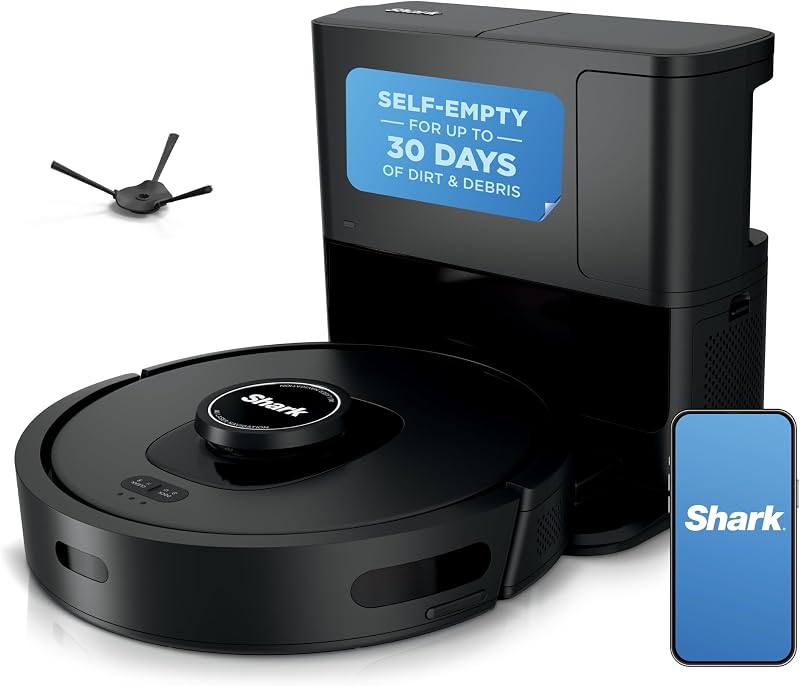
The single deciding difference between these two robot vacuums is how they handle dust disposal once a cleaning cycle finishes: the Roborock Q7 M5+ includes a dedicated RockDock Plus auto-empty station that stores debris for up to nine weeks, whereas the Roborock Q7 M5 relies entirely on a standard charging dock that requires manual emptying after every few runs.
Choose the Roborock Q7 M5+ if you prioritize hands-off maintenance and want pet hair and dirt sealed away automatically inside a multi-week collection bag. Choose the Roborock Q7 M5 if you want the exact same 10,000Pa vacuuming muscle and LiDAR intelligence in a compact setup and do not mind opening the onboard dustbin yourself.


Roborock Q7 M5+ vs Roborock Q7 M5 at a Glance
| Feature | Roborock Q7 M5+ | Roborock Q7 M5 |
|---|---|---|
| Docking System | RockDock Plus auto-empty station | Standard compact charging base |
| Hands-Free Emptying Capacity | 2.7L sealed dust bag (up to 7-9 weeks) | None (manual dustbin emptying) |
| Onboard Dustbin Capacity | The listing does not specify | 400 ml |
| Suction Power | 10,000Pa HyperForce | 10,000Pa HyperForce |
| Water Tank Capacity | The listing does not specify | 270 ml |
| Brush System | JawScrapers main brush with anti-tangle side brush | JawScrapers Comb main brush with tangle-free side brush |
| Mopping System | Simultaneous vacuum and mop (3 water levels) | Detachable mop pad (3 water levels) |
| Navigation Engine | PreciSense LiDAR | Smart PreciSense LiDAR |
| Listed Battery Runtime | The listing does not specify | Up to 150 minutes (Mop Only mode) |
| Color Finishes | Black01 | White |
| Best For | Busy households and pet owners wanting zero maintenance | Value seekers and smaller spaces with limited floor footprint |
Dust Management and Auto-Empty Convenience
The core separation in this head-to-head matchup lies in dirt containment. The Roborock Q7 M5+ auto empty dock, officially designated as the RockDock Plus, changes how often you interact with collected debris. When the robot finishes its route and docks, the station initiates a high-powered evacuation pull that transfers dust, lint, and hair directly from the robot into a 2.7-liter sealed bag. Roborock rates this bag to hold between seven and nine weeks of typical debris. This closed containment keeps allergens trapped inside the bag, eliminating the dust plume that commonly occurs when shaking out an onboard plastic container over an open wastebasket.
By comparison, the standard Roborock Q7 M5 features a 400ml onboard dustbin that you must manually pull from the chassis, pop open, and empty by hand. In homes with high-shedding dogs or active children, a 400ml bin can fill after just one or two whole-floor sweeps. If the container reaches capacity mid-cycle, cleaning efficiency drops until someone physically clears it. Buyers comparing the roborock q7 m5+ vs roborock qrevo s pro often observe that automated dust evacuation transforms a robot vacuum from a daily chore into an appliance that genuinely works independently in the background.
While the internal vacuum hardware performs similarly inside the home, the time savings and reduced exposure to airborne allergens provide a major operational upgrade. For buyers managing chronic allergies or those who simply forget to check dustbins daily, the self-clearing station on the plus model removes the primary hassle of autonomous floor care.
Edge: Roborock Q7 M5+ due to its 2.7-liter sealed auto-empty dock that delivers up to nine weeks of automated disposal.
Suction Power and Pet Hair Pickup
Both vacuum platforms share the identical 10,000Pa HyperForce suction rating, making the roborock q7 m5 suction power identical to that of its self-emptying sibling. This volume of suction places both models at the absolute upper tier of hard floor and carpet debris extraction. Fine sand, heavy kitchen crumbs, and deep carpet dander are pulled from floorboards and low-to-medium pile carpets with equal vigor. On the standard M5, the Roborock app provides three selectable power levels so you can reduce suction for light daily maintenance or max it out for neglected entryways. While the M5+ listing does not enumerate the exact number of power levels, both robots run the proprietary HyperForce motor system designed for hard surfaces and carpets alike.
When deciding between the roborock q7 m5+ or q7 m5 for pet hair, roller brush architecture matters just as much as raw suction. Both models incorporate Roborock’s dual anti-tangle system. This assembly combines the JawScrapers comb-style main roller with a specialized anti-tangle side brush engineered to resist hair wrap from long-haired pets and human hair. The scraper actively clears strands from the brush barrel while the robot operates, funneling loose fur directly into the suction inlet rather than allowing it to bind around the endcaps or stall the drive motor.
Because the suction power and brush assemblies are identical across the two machines, cleaning efficacy on pet fur, cat litter, and carpet fibers is essentially indistinguishable pass for pass. Shoppers evaluating the roborock s7 max ultra vs q7 m5 will find that the base-level cleaning engine on both M5 iterations delivers premium extraction across wood, tile, marble, and rugs without cutting corners on motor output.
Edge: Tie because both models share the identical 10,000Pa HyperForce suction motor and JawScrapers anti-tangle brush assembly.
Mopping Mechanics and Floor Washing
In addition to dry debris pickup, both robots provide simultaneous vacuuming and mopping capabilities to collect fine dust layers that suction alone leaves behind. The standard Roborock Q7 M5 details a combined tank arrangement housing a 270ml electronically controlled water reservoir alongside its 400ml dry bin. Its electronic pump enables three distinct water flow settings in the app: low flow for delicate natural wood, medium for regular tile, and high flow for stubborn stains in kitchen zones. The detachable mop assembly allows you to slip the pad off entirely when running dry-only sweeps across wall-to-wall carpets.
The Roborock Q7 M5+ provides the exact same three adjustable water flow settings, allowing users to tailor liquid dispensation according to floor sensitivity. However, its listing does not state the exact milliliter capacity of its onboard water container. In a practical roborock q7 m5 review, the mopping system on both units serves primarily for maintenance wiping and dust containment rather than scrubbing heavy grease spills. Unlike high-end oscillating pads or spinning roller mops, these static damp mop cloths run directly behind the suction channel to pick up leftover film.
One operational distinction involves runtimes while mopping. The Q7 M5 documentation notes up to 150 minutes of continuous runtime in mop-only mode, covering areas up to 2,260 square feet on a single charge of its lithium-ion pack. The Q7 M5+ documentation confirms battery monitoring within the app but omits the exact square footage and runtime figures. Those comparing the roborock q7 m5 vs roborock qrevo will appreciate that while neither M5 model washes its own mopping pad at the dock, both offer reliable daily damp-wiping.
Edge: Tie because both units use the same static-pad damp-wiping system with three app-controlled flow settings.
PreciSense LiDAR Navigation and Smart Mapping
Obstacle routing and house mapping depend on the PreciSense LiDAR array mounted in the raised turret on top of both robots. The roborock q7 m5+ vs m5 navigation technology uses spinning laser pulses to measure room boundaries and locate walls in seconds. In both cases, the system generates real-time floor plans without needing to bounce blindly off baseboards or furniture legs. The navigation engine plots systematic, parallel back-and-forth cleaning paths that maximize surface coverage while minimizing battery expenditure.
Both models connect to the Roborock smartphone app over 2.4GHz Wi-Fi, where users access room-specific scheduling, selective room cleaning, and customizable no-go zones. The standard Q7 M5 listing highlights that its map visualization allows users to manually populate the floor plan with furniture pieces, pet supplies, and explicit flooring materials to refine navigation behavior around obstacles. The Q7 M5+ listing emphasizes real-time cleaning progress, battery status monitoring, quick spot-cleaning triggers, and pet area isolation through digital boundaries.
When analyzing a roborock q7 m5+ review against navigation expectations, both units handle multi-room layouts and complex floor plans seamlessly. Neither robot features front-facing RGB cameras for advanced small-object AI identification, meaning both rely on their bumper sensors and the top-mounted LiDAR dome to navigate around low cords or scattered toys. The navigation hardware, sensor layouts, and underlying path algorithms perform identically during daily sweeps.
Edge: Tie because both robots use Roborock’s PreciSense LiDAR sensor array with identical path planning and no-go zone controls.
Maintenance Routines and Living Space Footprint
While their suction power and software ecosystems match, these two vacuums impose radically different footprints on your living area. The standard Q7 M5 comes with an ultra-compact charging puck that sits flush against the baseboard. Its small footprint slips easily under open console tables, behind doors, or into tight apartment corners. In contrast, the Q7 M5+ features the substantial RockDock Plus vertical tower necessary to house the 2.7-liter dust bag and secondary evacuation motor. This station demands dedicated vertical and horizontal floor clearance along an open wall.
Auditory impact also differs based on the dock design. According to product specifications, the Q7 M5 operates at 65 dB during standard runs and drops to 60 dB in mop-only mode. However, the Q7 M5+ produces a brief, loud rush of sound when the dock pulls debris out of the robot at the end of a cleaning run. While that loud evacuation cycle lasts only several seconds, it can startle pets or disrupt quiet rooms if scheduled late at night. The Q7 M5 avoids that sudden burst entirely, though it forces you to walk to the trash can to dump the 400ml bin manually.
Filter upkeep is straightforward on both versions, as both utilize washable filters that can be rinsed under cold water and air-dried. However, the Q7 M5+ requires you to purchase and swap replacement 2.7L dust bags every few months, whereas the base Q7 M5 carries zero recurring bag purchases. Examining the roborock q7 m5 vs roborock saros 20 or the roborock q7 m5 vs l5 underscores how docking stations dictate both space requirements and maintenance schedules.
Edge: Roborock Q7 M5 for tighter physical placement, zero recurring dust bag costs, and whisper-quiet docking cycles.
Pros and Cons
Roborock Q7 M5+

Pros
- Up to 9 weeks hands-free cleaning
- 7L sealed hygienic dust bag
- 10,000Pa HyperForce suction power
- JawScrapers anti-tangle brush system
- PreciSense LiDAR real-time mapping
Cons
- Dock footprint requires more floor space
- Requires purchasing replacement dust bags
View Roborock Q7 M5+ on Amazon
Roborock Q7 M5

Pros
- Identical 10,000Pa HyperForce suction
- Compact charging base fits tight spaces
- No recurring dust bag replacement costs
- Up to 150-minute mopping runtime
- Combined 400ml dustbin and 270ml tank
Cons
- Must manually empty dustbin after runs
- Only available in white finish
Who Should Buy Each One
Choose the Roborock Q7 M5+ If
- You want up to nine weeks of completely hands-free vacuuming without ever touching dirty dustbins.
- You live in a home with shedding pets where standard onboard dustbins fill up after single runs.
- You suffer from dust allergies and prefer sealed disposable bags that prevent allergens from recirculating into the room.
- You have enough open floor space against a wall to comfortably accommodate the taller RockDock Plus station.
Choose the Roborock Q7 M5 If
- You live in an apartment or compact home where a bulky auto-empty dock would create clutter.
- You want the full cleaning power of 10,000Pa suction without having to buy recurring replacement dust bags.
- You want a clean white aesthetic finish to match your modern baseboards and light-colored home interior.
- You do not mind spending thirty seconds manually emptying a 400ml dustbin into your kitchen trash can after cleaning.
Final Verdict
When comparing the roborock q7 m5 vs q7 m5+, your decision comes down entirely to dock utility. The underlying cleaning hardware is virtually identical: both models deliver an immense 10,000Pa HyperForce suction rating, the anti-tangle JawScrapers brush system, three-stage app-controlled mopping, and rapid PreciSense LiDAR navigation. For most homeowners, the Roborock Q7 M5+ is the superior daily investment because the RockDock Plus auto-empty station eliminates the single biggest chore of robotic floor cleaning, keeping dirt sealed out of sight for up to nine weeks.
On the other hand, the standard Roborock Q7 M5 is the smarter choice if your living quarters cannot accommodate a large docking tower or if you want to avoid buying proprietary replacement bags. It offers the exact same deep-cleaning floor performance and intelligent room mapping in a sleek, white, low-profile chassis. If manual dustbin maintenance does not bother you, the base M5 provides top-tier suction and navigation without the bulk.
FAQ
Does the Roborock Q7 M5+ use the same suction motor as the standard M5?
Yes. Both models feature the exact same 10,000Pa HyperForce suction power system capable of lifting deep dirt, pet hair, and crumbs from hardwood, tile, and carpeted floors.
Can I use the Roborock Q7 M5 without an auto-empty dock?
Yes. The Roborock Q7 M5 comes packaged with a standard compact charging dock. It does not auto-empty, meaning you simply slide out its onboard 400ml dustbin and dump it directly into your household waste container.
How long do the dust bags last on the Roborock Q7 M5+?
The RockDock Plus on the Roborock Q7 M5+ uses a 2.7-liter sealed dust bag engineered to hold collected debris for approximately seven to nine weeks under average home cleaning conditions.
Are the brush rollers on both models resistant to pet hair tangles?
Yes. Both the Q7 M5+ and Q7 M5 utilize the JawScrapers main comb brush alongside an anti-tangle side brush design specifically built to slice through wraps and prevent dog and cat fur from binding the rollers.
Do either of these robot vacuums support 5GHz Wi-Fi networks?
No. As stated in the product specifications, the system requires a standard 2.4GHz Wi-Fi network connection to pair with the Roborock smartphone application.
Does the mop pad wash and dry itself automatically on the dock?
No. Neither the Q7 M5 nor the Q7 M5+ features automatic mop washing or hot-air drying at the base. You must remove the detachable damp mopping cloth manually to rinse or wash it between mopping cycles.