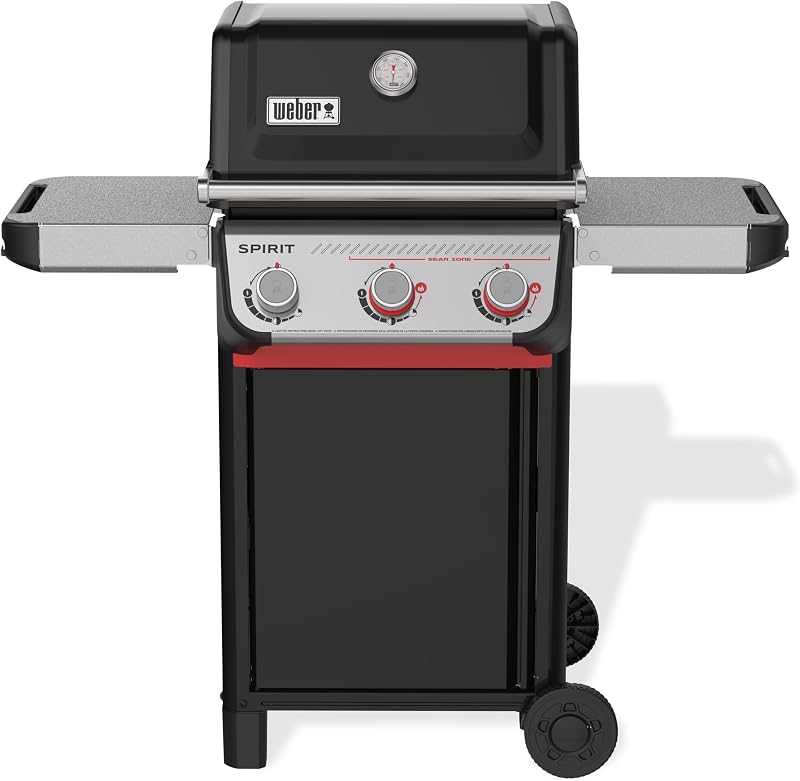
The primary operational dividing line between Traeger and Pit Boss centers on fire pot access versus dedicated indirect convection: Pit Boss equips its cookers with a sliding flame broiler mechanism engineered for open-flame searing over the burn pot, whereas Traeger builds its platform around closed-deflector indirect convection fueled by precision-milled hardwood pellets designed for clean, balanced combustion.
Choose Traeger if your goal is low-and-slow smoking precision backed by all-natural, low-ash hardwood pellets engineered for predictable burn rates and hands-off temperature maintenance. Choose Pit Boss if you need broad multi-cooking flexibility that allows you to shift instantly from low-temperature smoking to direct high-heat flame broiling across a broad operating range.


Traeger vs Pit Boss at a Glance
| Feature | Traeger | Pit Boss |
|---|---|---|
| Primary Cooking Method | Indirect wood-fired convection | Direct flame broiling and indirect convection |
| High-Heat Searing Mechanism | Indirect ambient heat (no sliding plate listed) | Flame Broiler Lever for instant open-flame access |
| Temperature Range | Not listed in fuel specifications | 180°F to 500°F via digital control board |
| Primary Cooking Area | Not listed in fuel specifications | 518 sq. in. (Mahogany 440 model) |
| Pellet Composition | 100% all-natural American hardwood with no binders | 100% all-natural hardwood compatible |
| Fuel Moisture Engineering | Moisture sweet spot for balanced burn and low ash | Not listed |
| Standard Fuel Capacity | 18 lb bag packaging | 5 lb hopper capacity (Mahogany 440 model) |
| Cooking Scope | Smoking, roasting, baking, barbecue | 8-in-1 (smoke, bake, roast, braise, sear, grill, char-grill, BBQ) |
| Chassis Protection Options | Not listed | Heavy-duty polyester cover with PVC backing and drawstring |
| Best For | Consistent smoke production and clean-burning fuel | High-heat searing versatility and multi-style grilling |
Direct Flame Broiling and Searing Capability
The ability to achieve a genuine crust on steaks, chops, and burgers depends heavily on whether a pellet cooker allows radiant thermal energy to reach the cooking surface unimpeded. The Pit Boss 440 Mahogany Series Wood Pellet Grill solves the traditional searing limitations of pellet cooking through its integrated Flame Broiler Lever. This hardware feature physically slides an internal deflector plate open, exposing the cast cooking grates directly to the roaring pellet fire pot beneath. Operating across a standard range of 180°F to 500°F, this setup lets pitmasters switch instantly from diffuse convection heat to direct open flame broiling without having to dismantle internal drip pans or rearrange heat shields.
By contrast, Traeger models operate on an indirect convection design. In a standard Traeger setup, a solid steel heat baffle sits directly above the fire pot, topped by an angled grease tray that guides drippings away from the flames toward an external collection bucket. Because there is no open-slotted slide plate, meat never encounters raw fire. When evaluating pit boss austin xl vs pro series 1150 builds and related setups, this fundamental difference in heat delivery determines whether high-heat grilling functions like an outdoor oven or an open-flame charbroiler. Achieving heavy grill marks on an indirect system requires cranking the entire barrel temperature and relying on prolonged conductive grate transfer, which can inadvertently bake thin cuts before the surface caramelizes.
The trade-off with Pit Boss open-flame broiling lies in grease management and fire control. Exposing the live burn pot means rendered animal fats can drip directly into the flame path, creating localized flare-ups that require active management during high-heat searing. Traeger closed heat deflection shields the burn pot completely, virtually eliminating direct flame contact with rendered juices during roasting and smoking. For cooks who demand dark, flame-kissed charring on steaks and burgers, the mechanical slide plate on Pit Boss provides direct flame access that closed-deflector designs cannot replicate.
Edge: Pit Boss wins by providing direct, open-flame searing access through its physical Flame Broiler Lever, whereas Traeger relies exclusively on indirect convection heat.
Temperature Control and Smoke Consistency
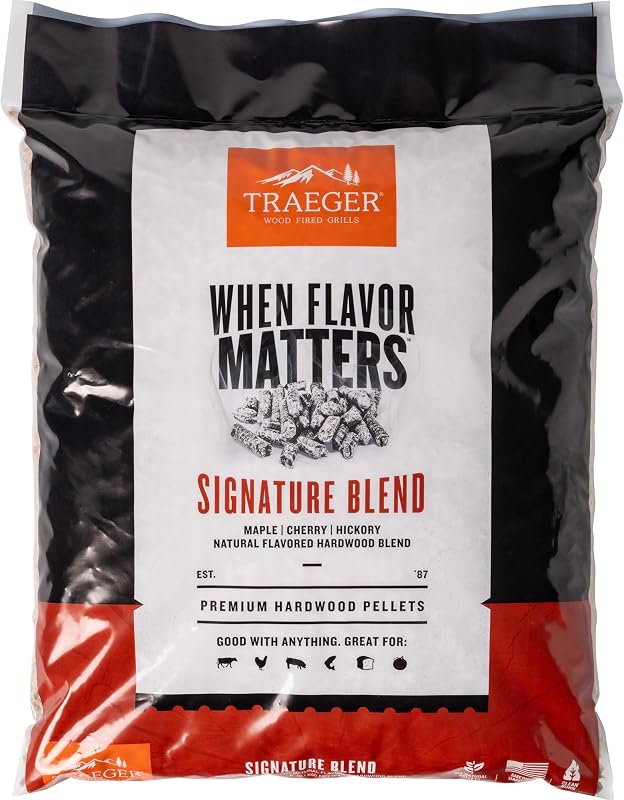
Maintaining stable thermal equilibrium over eight to sixteen hours is the core benchmark of wood-fired smoking, especially when tackling large primal cuts. In any pellet system, temperature control represents an interconnected relationship between electronic fuel augers, combustion airflow, and the structural density of the wood pellets. Traeger Grills Signature Blend Wood Pellets demonstrate the brand emphasis on combustion consistency: manufactured exclusively in American mills, these all-natural hardwood pellets feature a unique compact cell structure engineered to achieve a balanced burn. Traeger controls moisture content down to an optimized sweet spot, preventing the erratic fuel burn rates that trigger internal chamber temperature spikes and drops.
Pit Boss approaches chamber management with a dial-in digital control board paired with an LED display, as featured on the PB440D2. This interface allows users to select temperatures from 180°F to 500°F and track performance without lifting the lid and losing built-up heat. However, the open design of the flame broiler slide mechanism can occasionally introduce subtle convective turbulence across the cooking grates compared to the uniform, closed heat shielding found in dedicated smokers. Comparing cook chamber airflow across brands, such as looking at the pit boss pro series 1150 vs recteq rt-700, highlights how solid internal baffling creates smoother heat gradients across the primary cooking area.
When cooking brisket or pork butt, smoke quality matters as much as temperature stability. Wet or poorly compressed wood fuel smothers the burn pot, creating thick, white, acrid smoke that leaves a bitter residue on the meat. Traeger engineered pellet density produces a continuous, clean burn that yields mild, full-bodied wood smoke without wild heat swings. While Pit Boss electronic controls give you direct macro-level command from low smoking to high heat, Traeger precise fuel engineering ensures the fire burns with surgical consistency during sensitive overnight sessions.
Edge: Traeger holds the advantage for long-session thermal stability and clean smoke output due to rigorously calibrated hardwood pellet moisture and cell density.
Fuel Quality and Wood Pellet Combustion
The operational lifespan and daily performance of a pellet grill depend directly on the cleanliness and composition of the fuel fed through the auger tube. The Traeger Signature Blend combines hickory, maple, and cherry hardwoods, while Traeger Grills Apple Wood Pellets utilize all-natural apple hardwood to impart sweet, fruity smoke suited for pork, poultry, and baked goods. Both blends are manufactured in the United States without artificial binders, chemical additives, or filler woods, producing a clean burn that preserves the delicate electronic and mechanical components of the grill.
The defining technical factor in the Traeger formulation is its low ash yield. In a pellet fire pot, loose wood fibers, bark inclusions, or synthetic glues generate excessive powdery ash. This ash can blow around the cooking chamber, coating greasy briskets with gray grit, or accumulate inside the fire cup until it chokes the electric igniter rod, causing an unexpected mid-cook flameout. Traeger uniform cell compression and moisture-controlled processing ensure each pellet burns cleanly down to minimal residue, reducing the frequency of teardown cleanings required between long cooks.
Pit Boss grates accommodate any standard all-natural hardwood pellet fuel, offering reliable utility across its temperature band. However, the brand listing data does not detail proprietary moisture targeting or specialized compact cell engineering for its fuel lineup. Burning pellets that lack strict moisture controls can lead to inconsistent auger feed rates, increased dust in the hopper, and heavier ash accumulation in the barrel base. For pitmasters evaluating long-term maintenance and predictable burn performance, Traeger dedicated focus on pellet manufacturing standards provides an unmistakable operational advantage.
Edge: Traeger takes this category with American-milled, all-natural hardwood pellets engineered with tight moisture controls, zero binders, and exceptionally low ash production.
Cooking Versatility and Space Efficiency
Backyard pitmasters often need a cooker that can adapt beyond low-temperature smoking to handle diverse weekday dinner preparations. Pit Boss prioritizes wide-spectrum versatility, explicitly designing the Mahogany 440 around an 8-in-1 cooking capability. Under this unified system, cooks can smoke, bake, roast, braise, sear, grill, char-grill, or barbecue on a single machine. The PB440D2 packs 518 square inches of total cooking space into a manageable footprint, making it an effective all-around outdoor workstation for both low-and-slow weekend barbecues and rapid high-heat weeknight grilling.
Traeger platforms excel at roasting, baking, and smoking, pairing hardwood smoke with convection baking to handle everything from artisan bread and fruit pies to smoked ribs and salmon. However, because Traeger systems rely on closed heat diffusers without a direct flame slide, true high-heat char-grilling remains outside their standard operational scope. Users can bake wood-fired pizzas or roast poultry with exceptional moisture retention, but the lack of an exposed fire pot limits direct-surface caramelization. When considering cooking flexibility across compact platforms, comparing dimensions like the pit boss pro series 1150 vs camp chef smokepro dlx demonstrates how functional versatility often dictates how much cooking volume you actually utilize.
Capacity and fuel management represent the primary trade-off on compact Pit Boss units. The Mahogany 440 utilizes a 5-pound pellet hopper, which keeps the exterior profile trim and mobile but demands frequent fuel monitoring during long low-temperature cooks. In contrast, Traeger standardizes its fuel distribution in 18-pound bags, allowing cooks to fuel larger hoppers for extended runs without mid-cook replenishment. If your cooking routine requires shifting seamlessly from searing burgers to braising short ribs and char-grilling wings, Pit Boss provides the broader multi-function platform.
Edge: Pit Boss wins on overall cooking versatility with genuine 8-in-1 functionality that bridges the gap between low-and-slow smoking and open-flame char-grilling.
Outdoor Durability, Maintenance, and Protection
Because pellet cookers house electric auger motors, induction fans, digital display boards, and combustion igniters, protecting the unit from outdoor elements is essential for long-term reliability. Pit Boss addresses external environmental threats with heavy-duty protection gear like the Pit Boss 800 Series Deluxe Grill Cover. Sized at 59.5 inches long, 23.75 inches wide, and 47.75 inches high, this accessory is constructed from heavy-duty polyester backed with a resilient PVC layer, engineered to shield grills from torrential rain, snow, harsh ultraviolet radiation, cosmetic scratches, and water spots via an integrated locking drawstring closure.
On the internal side of maintenance, Traeger focuses on clean combustion to reduce routine labor. The mechanical vulnerability in any pellet grill is ash buildup: fine particulate matter settles into the fire pot, coating the hot rod igniter and accumulating in the bottom of the barrel. Because Traeger wood pellets are manufactured without binders and calibrated to a strict moisture threshold, they burn down cleanly. This leaves minimal unburned debris, dramatically reducing the frequency of shop-vac teardowns and lowering the risk of auger jams caused by fuel dust swelling inside the tube.
Balancing these two maintenance profiles comes down to whether you are managing internal residue or external weather exposure. Pit Boss provides rugged, tailor-fitted protective covers designed to withstand punishing weather conditions, as seen across heavy-gauge platforms like those in the pit boss austin xl vs camp chef woodwind 24 comparison. Meanwhile, Traeger cleaner combustion profile protects the internal mechanical drivetrain and electronics from ash-induced failures. Both systems address durability effectively through different engineering vectors.
Edge: Tie. Traeger minimizes internal ash accumulation and auger maintenance through clean-burning fuel, while Pit Boss provides robust, PVC-backed heavy-duty exterior weather protection.
Pros and Cons
Traeger
Pros
- 100% all-natural American hardwood pellets
- No artificial binders or chemical fillers
- Low ash output reduces fire pot cleanouts
- Calibrated moisture content for steady burn
Cons
- Lacks direct open-flame searing plate
- Available in standard 18 lb bags only
View Traeger Grills Signature Blend 100% All-Natural on Amazon
Pit Boss

Pros
- Sliding Flame Broiler Lever for direct searing
- Broad 180°F to 500°F temperature range
- True 8-in-1 cooking versatility
- Heavy-duty PVC-backed polyester covers available
Cons
- Small 5 lb hopper on compact series
- Direct flame slots increase flare-up risk
View Pit Boss 800 Series Deluxe Grill on Amazon
Who Should Buy Each One
Choose the Traeger If
- You prioritize clean, reliable smoke flavor generated by American-milled, 100% all-natural hardwood fuel with zero artificial binders.
- You want set-and-forget indirect convection smoking without managing the grease flare-ups associated with open flame pots.
- You spend most of your cooking time preparing classic barbecue staples like brisket, pork butts, ribs, and delicate baked goods.
- You want to reduce regular fire pot cleaning cycles by utilizing low-ash pellets engineered with optimized internal moisture levels.
Choose the Pit Boss If
- You demand high-heat searing and char-grilling performance enabled by a mechanical, sliding Flame Broiler Lever.
- You want an 8-in-1 cooker capable of transitioning from 180°F smoking to 500°F direct-heat broiling.
- You prefer an intuitive dial-in digital control board with an LED display that allows precise temperature adjustments without opening the lid.
- You want heavy-duty outdoor storage options like PVC-backed polyester covers with locking drawstrings to guard against harsh weather.
Final Verdict
The choice between Traeger and Pit Boss comes down to whether you view a pellet grill primarily as an authentic indirect barbecue smoker or as an all-in-one backyard cooking station. Pit Boss positions itself as a remarkably versatile cooker that solves the traditional searing weakness of the pellet category. By incorporating the innovative Flame Broiler Lever on models like the Mahogany 440, Pit Boss allows users to slide between indirect convection smoking and open-flame charring up to 500°F. For backyard cooks who want to smoke ribs on Saturday and sear ribeye steaks over open flames on Tuesday, Pit Boss delivers comprehensive 8-in-1 utility that few convection-only smokers can match.
Traeger, on the other hand, remains the gold standard for dedicated pitmasters who demand pristine smoke output and unwavering low-temperature stability. By refining fuel production in American mills and mastering wood moisture content, Traeger ensures that its all-natural Signature and Apple blends burn evenly with minimal ash. This closed convection ecosystem produces consistent heat diffusion across the grates, eliminating hot spots and protecting large cuts from grease flare-ups during extended cooks. If open flame searing is your absolute priority, pick Pit Boss; if predictable smoking performance, fuel purity, and hands-off brisket execution matter most, Traeger is your winner.
FAQ
Can you sear steaks effectively on a Traeger without an open flame?
Traeger grills cook through indirect convection, meaning they do not feature an open-flame sliding plate. You can still cook steaks at high chamber temperatures, but surface browning occurs primarily through conductive heat transfer from the grates and hot circulating air rather than direct flame radiation. Pit Boss models with a Flame Broiler Lever expose the meat directly to the fire pot, producing faster, more defined char marks.
Can you burn Traeger wood pellets in a Pit Boss grill?
Yes, Traeger all-natural hardwood pellets are fully compatible with Pit Boss grills. Because Traeger pellets are manufactured in American mills without synthetic binders or chemical glues, they burn cleanly and generate low ash, which can improve airflow and reduce cleanout frequency inside a Pit Boss fire pot.
How does the Pit Boss flame broiler mechanism operate?
The Pit Boss flame broiler consists of an arched metal plate with open slots positioned directly beneath the main cooking grate and over the fire pot. By moving the external Flame Broiler Lever, the cook slides a solid cover plate open or closed. Opening the slots allows open fire and radiant heat to contact the grates for direct searing, while closing them redirects heat for indirect convection smoking.
Which brand is better suited for long brisket cooks?
Traeger is generally better suited for long brisket sessions because its closed heat deflector creates uniform indirect convection with minimal localized hot spots. Furthermore, Traeger moisture-calibrated pellets burn consistently over long durations, producing clean smoke without the excessive ash buildup that can disrupt extended overnight smoking.
Is Pit Boss or Traeger easier for a beginner to operate?
Both brands provide accessible, user-friendly operation for beginners, but they cater to different styles. Pit Boss utilizes simple dial-in digital controllers that let beginners manage temperatures from 180°F to 500°F easily, similar to versatile platforms reviewed in the pit boss austin xl vs camp chef smokepro dlx comparison. Traeger simplifies the learning curve by eliminating flare-up risks, allowing novice cooks to set their target temperature and let indirect convection do the work.
Why is pellet moisture content important in these grills?
Moisture content dictates how cleanly and steadily wood pellets ignite. Pellets with excessive moisture produce bitter, billowing smoke, burn at irregular rates, and leave heavy ash deposits in the burn pot. Traeger engineers its pellets to a precise moisture sweet spot, ensuring dependable heat output and minimal ash residue throughout the cooking cycle.