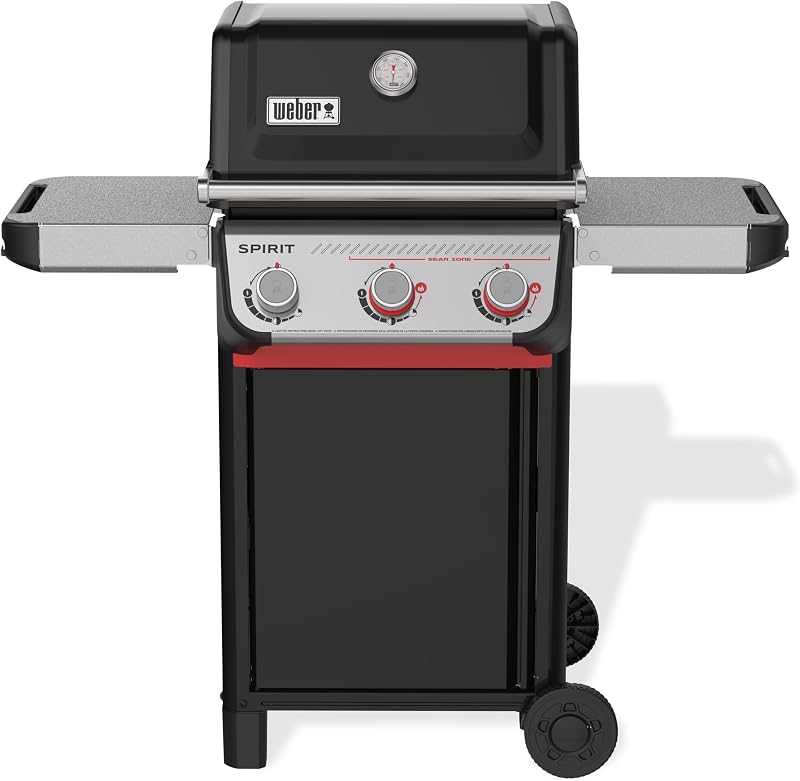
Deciding between Weber and Traeger comes down to whether you prioritize direct, high-heat charcoal searing with tactile fire management or automated, low-and-slow wood-fired convection smoking. The core distinction in the charcoal vs pellet grill debate rests on how each platform generates heat and smoke: charcoal relies on manually regulated airflow across glowing briquettes, while pellet systems depend on metered hardwood fuel feeding an electric combustion pot.
Choose Weber if you want classic firecraft, blisteringly hot grilling temperatures, and a durable kettle design that operates completely off the electrical grid. Choose Traeger if you want push-button temperature consistency, hands-off operation, and gentle aromatic wood smoke infused across long cooking sessions.


Weber vs Traeger at a Glance
| Feature | Weber | Traeger |
|---|---|---|
| Primary Fuel Type | Charcoal | 100% All-Natural Wood Pellets |
| Primary Cooking Method | Direct and indirect charcoal grilling | Wood-fired smoking, baking, and roasting |
| Airflow and Temperature Control | Rust-resistant aluminum dampers and lid vents | Automated fuel feed and convection airflow |
| Ash Cleaning Mechanism | One-Touch cleaning system with aluminized ash catcher | Low-ash combustion into internal burn pot |
| Body Construction and Finish | Porcelain-enameled bowl and lid with aluminum frame | Not listed |
| Lid Handling | Angled lid hook and glass-reinforced nylon handle | Not listed |
| Internal Temperature Monitoring | Built-in lid thermometer | Not listed |
| Cooking Surface Capacity | Up to 13 burgers (363 sq. in.) | Not listed |
| Manufacturer Warranty | 10-year limited warranty | Not listed |
| Best For | High-heat searing, burger grilling, and hands-on firecraft | Hands-off smoking, baking, and aromatic wood flavor |
Fuel Source and Temperature Control
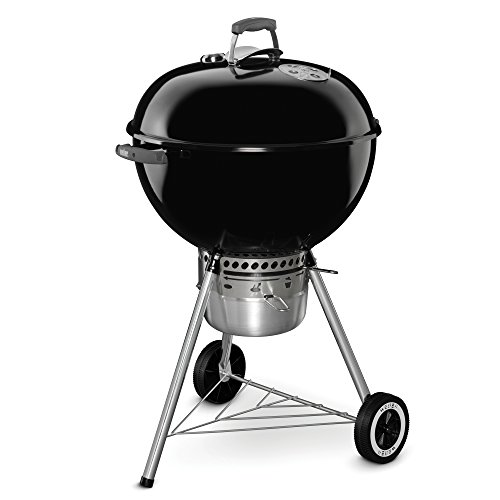
Managing cooking temperature is the fundamental operational difference between a classic charcoal kettle and an automated wood pellet cooker. On a traditional charcoal setup like the Weber Original Kettle Premium Charcoal Grill, temperature regulation is entirely mechanical and tactile. Combustion air enters through lower intake vents and exhausts through a rust-resistant aluminum damper mounted on the lid. Choking down the damper restricts oxygen to lower the burn rate, while opening the vents feeds oxygen to increase heat. Mastering this balance takes practice, and long cooking sessions require manually replenishing coals via the hinged cooking grate.
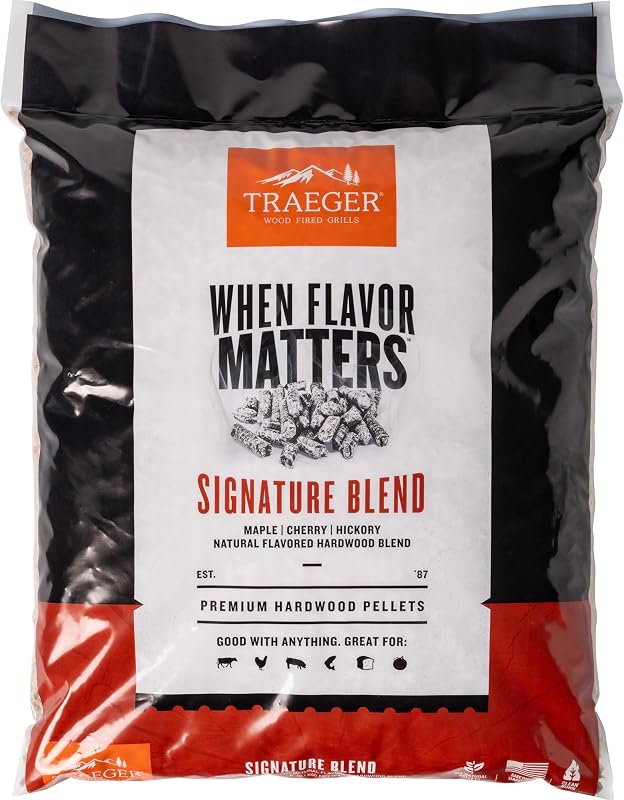
Pellet systems eliminate manual fire tending by relying on automated mechanical fuel delivery and forced convection. Powered by fuels like Traeger Grills Signature Blend Hardwood Pellets, pellet grills feed compressed hickory, maple, and cherry hardwood into an internal firepot via a motorized auger. Traeger manufactures its hardwood with a compact cell structure and controlled moisture content to maintain a balanced, dependable burn. An automated controller constantly monitors internal heat and feeds pellets as needed, eliminating the guesswork of adjusting vents during fluctuating ambient weather.
This technical divergence defines your cooking workflow. The Weber grants direct, physical authority over raw embers, allowing you to reach searing temperatures or throttle down for indirect roasting using purely physical dampers. The Traeger operates much like an outdoor convection oven, maintaining tight temperature bands with minimal user involvement. When comparing Traeger vs Weber, outdoor cooks must decide whether they enjoy the hands-on ritual of building a fire or prefer the effortless consistency of an automated control board.
Edge: Traeger delivers superior temperature stability and automated convenience, removing the need to manually adjust airflow dampers.
Cooking Versatility and Flavor Profiles
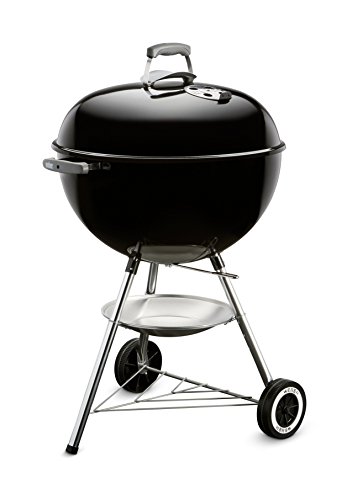
The flavor profile and searing capabilities of each platform represent the most passionately argued differences in the Weber vs Traeger flavor debate. A charcoal kettle positions your food directly above radiant, glowing briquettes or lump charcoal. When meat drippings fall onto the hot coals, they vaporize instantly, sending flavor-packed aerosolized droplets back into the meat. On the 363-square-inch cooking surface of the Weber Original Kettle Charcoal Grill, you can fit up to 13 burgers over intense direct heat, generating deep caramelization, distinct grill marks, and an unmistakable grilled char.
Pellet cookers approach outdoor cooking by circulating clean hardwood smoke via convection currents. Burning dedicated blends like Traeger Grills Apple Hardwood Pellets imparts pork, chicken, baked goods, and vegetables with a subtle, fruity sweetness. Because Traeger pellets are made in American mills from all-natural hardwood without synthetic binders, they produce a smooth, clean smoke that never turns acrid. However, because pellet grills rely on an internal drip tray and heat deflector to distribute convection heat, they struggle to produce the direct, radiant searing heat that charcoal provides naturally.
If your weekly meal rotation centers on ribeye steaks, smash burgers, and charred chicken thighs, Weber delivers the intense radiant energy required for proper searing. If your cooking leans toward smoked pork shoulder, whole chickens, and delicate fish where uniform convection heat and subtle wood aromatics take precedence, Traeger holds the advantage. Examining broader kettle variations like our weber original kettle vs master-touch guide shows how versatile charcoal can be, but charcoal remains the champion for authentic direct-heat searing.
Edge: Weber wins for high-heat direct searing and crust formation, while Traeger takes the edge for clean, aromatic wood-fired smoke infusion.
Ease of Use and the Learning Curve
Choosing between Weber or Traeger for beginners comes down to your patience for manual fire management. Lighting a charcoal grill requires arranging briquettes, using a chimney starter, and waiting for the coals to ash over before cooking can begin. An authentic Weber review must highlight that beginners often struggle early on with temperature spikes or dying coals caused by incorrect damper positioning, making charcoal cooking an engaging craft that demands hands-on trial and error.
Pellet grills feature virtually zero operational learning curve. Starting a pellet cook requires filling the hopper with hardwood pellets, turning the temperature dial, and letting the electric ignition system initiate the fire. Much like evaluating compact outdoor cookers in our traeger tailgater vs ranger comparison, the core appeal of the pellet platform lies in its straightforward operation. Beginners can achieve tender, evenly smoked ribs or brisket on their very first attempt without learning how to build two-zone charcoal fires or manage drafts.
Convenience features on the Weber Original Kettle Premium-such as the built-in lid thermometer, angled lid hook for hands-free lid placement, and heat shield beneath the handle-make charcoal management much easier than on entry-level barrels. However, Traeger’s automated fuel feed system requires far less physical oversight, making it the most approachable choice for cooks who want great barbecue without managing an active charcoal bed.
Edge: Traeger provides an easier learning curve with push-button ignition and fully automated cooking consistency.
Smoking Capabilities and Long Cooks
When outdoor cooks evaluate Weber or Traeger for smoking, the primary consideration is how long you can step away from the cooker. Smoking on a charcoal kettle is entirely achievable using the snake method or banking coals to one side for indirect convection. The porcelain-enameled bowl and lid retain thermal energy effectively, holding low temperatures for several hours. When you add natural wood chunks over charcoal, the kettle produces a pronounced smoke profile, but the cook remains responsible for monitoring the lid thermometer and replenishing fuel.
Traeger systems were engineered from the ground up for low-and-slow barbecue. The compact cell structure and controlled moisture content of Traeger hardwood pellets ensure that the pellets combust steadily, producing gentle smoke without sudden temperature surges. Because the hopper holds an entire 18-pound bag of pellets, the cooker can run for twelve hours or more overnight without requiring fuel additions, letting you smoke brisket or pork shoulder while you sleep.
While charcoal enthusiasts love the tactile satisfaction of managing an open fire-a dynamic also explored when comparing gas and portable formats in our weber genesis e-325s vs traveler review-pellet smokers provide unmatched peace of mind during extended cooks. For unattended cooking sessions and consistent heat over ten or more hours, the automated pellet system offers a massive practical benefit.
Edge: Traeger dominates low-and-slow smoking due to its continuous automated fuel supply and reliable overnight operation.
Ash Cleanup, Maintenance, and Weather Resistance
Post-cook cleanup differs significantly between these two platforms. Weber addresses charcoal cleanup with its One-Touch cleaning system, an aluminized steel mechanism featuring three sweeping blades inside the bowl. Moving the external handle sweeps accumulated charcoal ash out of the bowl and drops it into a removable, high-capacity ash catcher below. This keeps ash contained, resists corrosion, and makes ash removal clean and fast. Furthermore, the porcelain-enameled steel finish resists rust and will not peel under extreme heat.
Traeger hardwood pellets are formulated for clean combustion, producing minimal ash compared to standard charcoal briquettes. However, because a pellet grill relies on a motorized induction fan to stoke the firepot, fine wood ash gets circulated throughout the interior cooking chamber. Every few cooking sessions, you must remove the grill grates, pull out the drip pan and heat deflector, and vacuum the loose ash directly out of the firepot and basin to maintain proper airflow.
Weather resistance is another major differentiator. Gas alternatives like those in our weber spirit ii e-310 vs traveler comparison highlight the need for durable exterior finishes, but pellet cookers also house delicate electric components, including an auger motor, induction fan, and digital control board. Moisture can also cause compressed wood pellets in the hopper to swell and jam the auger. The Weber kettle, built from porcelain-enameled steel, aluminum legs, and glass-reinforced nylon handles, contains zero electrical parts, allowing it to withstand harsh outdoor weather with virtually no risk of electrical failure.
Edge: Weber wins for simple mechanical ash sweeping, extreme weather durability, and the total absence of sensitive electronic components.
Build Durability and Long-Term Value
Assessing whether is Weber worth it or is Traeger worth it requires analyzing long-term durability and operational independence. The Weber Original Kettle includes a 10-year limited warranty, demonstrating the brand’s confidence in its porcelain-enameled steel bowl and lid. With no moving mechanical parts beyond the damper blades and ash sweeper, a Weber kettle can endure decades on an open patio. At roughly 32.3 pounds, it is lightweight, features all-weather wheels for easy mobility, and operates completely independently of electrical cords.
A comprehensive Traeger review shows that pellet cookers offer incredible multi-cook versatility, functioning as a smoker, roaster, and convection oven in a single package. High-grade pellets like the Signature Blend pair seamlessly with beef, poultry, pork, lamb, seafood, and baked goods. However, pellet grills are fundamentally complex outdoor appliances that require a continuous 110-volt electrical outlet, regular electronic upkeep, and careful protection from rain. Readers who evaluate compact outdoor options like the weber q2200 vs traveler appreciate low maintenance, and Weber’s mechanical simplicity ensures an exceptionally low lifetime cost of ownership.
If you value an indestructible cooker that never experiences an auger jam, circuit board fault, or power outage interruption, the Weber kettle is an extraordinary investment. If you prioritize automated convenience that turns smoking brisket into an effortless culinary task, the higher mechanical complexity of a Traeger pellet grill delivers undeniable lifestyle value.
Edge: Weber wins for mechanical simplicity, proven multi-decade longevity, and its 10-year limited warranty.
Pros and Cons
Weber

Pros
- Intense direct heat for searing
- Durable porcelain-enameled lid and bowl
- One-Touch cleaning system with ash catcher
- Operates off-grid without electrical power
- 10-year limited warranty on kettle
Cons
- Requires manual damper fire management
- Needs active attention during long smokes
- Demands physical charcoal handling and cleanup
View Weber® Original Kettle Premium Charcoal Grill on Amazon
Traeger
Pros
- Automated set-and-forget temperature control
- All-natural hardwood pellets without binders
- Clean combustion produces low ash levels
- Versatile convection smoking and roasting
- Steady performance across overnight cooks
Cons
- Requires continuous electrical power connection
- Lacks direct radiant heat for hard searing
- Internal firepot requires periodic vacuuming
View Traeger Grills Signature Blend 100% All-Natural on Amazon
Who Should Buy Each One
Choose the Weber If
- You want intense, direct radiant heat for high-temperature searing on steaks and burgers.
- You appreciate the tactile craft of lighting charcoal, banking embers, and tuning airflow dampers manually.
- You need an off-grid outdoor cooker that operates anywhere without an electrical power outlet.
- You prioritize long-term durability, weather resistance, and a 10-year limited warranty over automated electronics.
Choose the Traeger If
- You want set-it-and-forget-it temperature consistency for effortless, unattended low-and-slow smoking.
- You prefer mild, clean, aromatic wood smoke flavor derived from 100% natural hardwood pellets without binders.
- You want a multi-purpose outdoor cooker capable of smoking, roasting, and baking with convection airflow.
- You are a beginner seeking predictable barbecue results without the steep learning curve of fire tending.
Final Verdict
For most backyard cooks who want a reliable, multi-purpose cooker for quick weeknight burgers, seared steaks, and weekend barbecue, the Weber Original Kettle remains the better overall choice. Its ability to generate searing radiant heat, its total independence from electrical outlets, and its resilient porcelain-enameled bowl and lid make it an indestructible backyard staple. The One-Touch cleaning system and hinged cooking grate streamline charcoal management, providing exceptional durability and performance.
However, if your primary passion is low-and-slow barbecue, smoked ribs, and overnight brisket, Traeger is well worth the investment. Its automated fuel delivery system removes the fatigue of managing coals, keeping temperatures locked in for hours at a time while infusing food with balanced hardwood smoke. If you value automated convenience and steady convection smoking above high-heat searing, Traeger is the clear winner for your backyard.
FAQ
Can a Weber kettle smoke meat as well as a Traeger?
A Weber kettle can produce excellent smoked barbecue when configured for indirect cooking using the snake method. Its porcelain-enameled lid and bowl retain heat effectively, but it requires periodic manual adjustments to the dampers and vents to keep temperatures steady, whereas a Traeger regulates fuel and temperature automatically.
Do Traeger pellet grills get hot enough to sear steaks?
Traeger grills cook via indirect convection heat directed around an internal heat baffle, meaning they excel at roasting and smoking rather than direct radiant searing. While you can cook steaks thoroughly on a pellet grill, a Weber charcoal grill generates far higher direct surface temperatures to create a deep, caramelized crust.
Can you use Traeger hardwood pellets in a Weber charcoal grill?
Yes, you can scatter a handful of Traeger all-natural hardwood pellets over glowing charcoal embers in a Weber grill to generate aromatic wood smoke flavor. However, you cannot use pellets as the sole fuel source in a Weber kettle because the grill lacks the specialized burn pot and forced-air induction fan required for continuous pellet combustion.
Does a Traeger pellet grill require an electrical outlet to operate?
Yes, Traeger pellet grills must be connected to an electrical power source to run the motorized pellet auger, digital control board, and internal convection fan. A Weber charcoal grill operates entirely without electricity, making it usable during power outages and at remote tailgates.
What flavor pellets work best for everyday grilling on a Traeger?
Traeger Signature Blend pellets offer the greatest everyday versatility because they combine hickory, maple, and cherry hardwoods into a balanced profile that complements beef, poultry, pork, seafood, and vegetables. For lighter meats like chicken and pork, or for baked goods, Apple hardwood pellets provide a subtler, sweeter wood-fired aroma.
How often do you need to clean ash out of a Weber compared to a Traeger?
On a Weber kettle equipped with the One-Touch cleaning system, you can sweep charcoal ash into the removable catcher after every cook in a few seconds. A Traeger burns pellets down to very low ash levels, but the internal convection fan blows fine ash across the interior barrel, requiring you to vacuum the firepot and interior base every few cooking sessions.