The defining difference that decides the choice between the DeWalt DCD771 and the DeWalt DCD999 comes down to hammer drilling capability and heavy-duty motor design versus compact, entry-level convenience. While the DCD771 is engineered as a dedicated two-speed drill and driver for standard household materials like lumber and drywall, the DCD999 is a commercial-grade three-speed hammer drill built with brushless FLEXVOLT ADVANTAGE technology to drive large fasteners and bore through poured concrete, brick, and stone.
Homeowners, hobbyists, and DIYers looking for a complete starter kit with included batteries for furniture assembly, light maintenance, and cabinet installations should choose the DCD771. Tradespeople, remodelers, and general contractors requiring maximum torque, masonry hammer capability, and heavy structural timber drilling should choose the DCD999.

DeWalt DCD771 vs DeWalt DCD999 at a Glance
| Feature | DeWalt DCD771 | DeWalt DCD999 |
|---|---|---|
| Drill Classification | Basic Drill/Driver | Hammer Drill/Driver |
| Motor Technology | High-performance motor (300 UWO) | Brushless motor with FLEXVOLT ADVANTAGE |
| Transmission Speeds | 2 speeds (0-450 & 1,500 rpm) | 3 speeds (RPM not listed) |
| Chuck Size & Type | 1/2-inch single sleeve ratcheting | 1/2-inch keyless chuck |
| Maximum Torque | 650 in-lb (530 in-lb listed torque) | Not listed |
| Hammer Mechanism | No (not suitable for concrete/masonry) | Yes (integrated 3-speed hammerdrill) |
| Wood Drilling Capacity | 30 millimeters | Not listed |
| Metal Drilling Capacity | 13 millimeters | Not listed |
| Tool Weight | Not listed | 3.5 pounds (bare tool) |
| Included Equipment | Two 1.3Ah batteries, charger, contractor bag | Bare tool only (batteries and charger sold separately) |
| Best For | Routine DIY tasks, basic drilling, and screwdriving | Masonry boring, commercial framing, and high-load tasks |
Hammer Drilling and Masonry Capabilities
The presence of a mechanical hammer mechanism completely changes what a tool can accomplish on a jobsite. A standard drill relies strictly on rotational force to shave away material, which works smoothly in fibrous woods, soft plastics, and metals. In contrast, hammer drills combine high-speed rotation with a rapid, pulsing percussion action that pulverized brittle materials such as brick, concrete block, and stone, allowing the flutes of the bit to extract the dust efficiently.
When assessing the primary dewalt dcd771 vs dcd996 and DCD999 operational boundaries, the DCD771 is restricted to non-percussive drilling. The product data for the DCD771 explicitly states that it is not suitable for drilling into concrete or masonry. Attempting to force the DCD771 into poured concrete or brick with standard masonry bits will overheat the motor, prematurely dull the bit, and produce sluggish results. Its design is strictly tailored for wood up to 30 millimeters, metal up to 13 millimeters, plastic, and drywall anchors.
The DCD999 is built from the ground up as a dedicated 3-speed hammer drill. With its internal percussion mechanism engaged, it drives masonry bits into foundation walls, mortar joints, and brick facades with minimal resistance. For users comparing the DeWalt DCD771 or DCD999 for masonry, the DCD999 is the only viable contender between these two tools, providing the essential percussion mechanism required to set concrete anchors, run conduit sleeves, and anchor structural framing into masonry.
Edge: DeWalt DCD999 because it features an integrated hammerdrill mechanism capable of drilling concrete and masonry, whereas the DCD771 lacks hammer capability entirely.
Power Output and Motor Performance
Power delivery determines not just how quickly a tool drives a screw, but whether it can sustain high loads without stalling or thermal shutdown. In modern cordless platforms, power is heavily influenced by motor architecture. Brushed motors utilize physical carbon brushes to transfer current to the spinning armature, generating friction and heat. Brushless motors use electronic microprocessors to modulate current directly to the stator, reducing internal friction, improving efficiency, and delivering higher sustained output under severe resistance.
In a direct DCD771 vs DCD999 power comparison, the DCD771 is rated to produce 300 unit watts out (UWO) from its high-performance motor, pulling power from standard 20V Max lithium-ion packs. This 300 UWO output is well-balanced for light-duty construction, drilling pilot holes, hanging drywall, and assembling cabinetry. However, high-demand structural boring with large augers or hole saws will quickly push a 300 UWO motor to its limits, resulting in slower feed rates and noticeable battery draw.
The DCD999 steps into commercial territory with its brushless motor and specialized FLEXVOLT ADVANTAGE electronics. This onboard technology detects when a high-capacity 60V MAX FLEXVOLT pack is attached and increases power delivery accordingly. According to the manufacturer data, the DCD999 delivers up to 42% more power when paired with a DCB606 FLEXVOLT battery compared to a standard DCB205 20V MAX 5.0Ah battery. While the listing does not specify the exact standalone UWO number, this expandable brushless architecture produces significantly higher working power than the fixed 300 UWO motor in the DCD771. Readers researching the broader power spectrum often compare the dewalt dcd777 vs dcd999 to see how compact brushless motors stack up against this heavy-duty platform.
Edge: DeWalt DCD999 because its brushless FLEXVOLT ADVANTAGE motor can scale output by up to 42% under heavy loads, far surpassing the fixed 300 UWO output of the DCD771.
Transmission Speeds and Drilling Control
Mechanical transmissions allow operators to select the optimal balance between rotational speed and applied torque. High speeds are essential for cleanly cutting small holes in timber or spinning sheet metal screws, whereas low gear selections provide the rotational muscle needed to turn wide-diameter boring bits and drive structural lag bolts without binding the drivetrain.
The DCD771 utilizes a dual-speed transmission delivering 0-450 rpm in low gear and 0-1,500 rpm in high gear. In practical home repairs, 450 rpm offers reliable control for setting fasteners without stripping screw heads or damaging wooden stock, while the 1,500 rpm upper threshold allows for swift drilling within its rated 30 mm wood and 13 mm metal capacities. Those who have read a comprehensive DeWalt DCD771 review know that this two-speed gearbox is straightforward, intuitive, and effective for basic assembly tasks, as also highlighted in comparisons like the dewalt dcd771 vs dcd777.
By comparison, the DCD999 incorporates a three-speed all-metal transmission. While the specific RPM ratings for each individual gear are not listed in the provided product data, having three distinct mechanical speed ranges gives users a substantial tactical advantage on complex jobsites. Gear one delivers massive torque at low speeds for large self-feed bits, gear two bridges the gap for mid-sized hole saws and structural framing screws, and gear three provides ultra-high speeds for fast masonry hammer drilling and small metal bits. This three-tier flexibility ensures the tool operates in its peak efficiency curve regardless of material density.
Edge: DeWalt DCD999 because its three-speed transmission offers superior mechanical versatility across low-torque drilling, high-load fastening, and high-speed percussion tasks.
Chuck Specs and Fastening Torque
The chuck and clutch assembly form the physical bridge between the tool motor and the working accessory. A slipping chuck can ruin expensive drill bits or damage fastener heads, while an inadequate clutch can cause aggressive over-driving or wrist sprain when a large bit catches unexpectedly inside structural framing.
The DCD771 features a 1/2-inch single sleeve ratcheting chuck that provides tight bit-gripping strength for round and hex shank accessories. In terms of rotational force, the DCD771 torque specs indicate a maximum torque of 650 in-lb, with 530 in-lb specified for standard sustained fastening. This level of rotational force is more than sufficient for household anchors, hinge installations, electrical box brackets, and running three-inch wood screws into wall studs. Builders evaluating the dewalt dcd771 vs dcd998 often note that while 650 in-lb is solid for basic DIY tasks, heavy construction hardware requires a substantially stiffer mechanical backbone.
On the DCD999, you also receive a full 1/2-inch keyless chuck engineered for commercial duty. The listing does not specify the exact torque figure in inch-pounds for the DCD999, but its designation as a heavy-duty hammerdrill paired with FLEXVOLT power scaling means it handles extreme-diameter hole cutting and heavy lag driving that would trigger thermal cutoffs on lighter drills. Buyers wondering is DCD999 worth it will find that the industrial-grade chuck and massive driving capacity make it indispensable for commercial trades, even though the listing omits the specific maximum inch-pound rating.
Edge: DeWalt DCD999 because its heavy-duty 1/2-inch chuck assembly and robust internal drivetrain are built to sustain severe industrial torque loads without slippage.
Size, Weight, and Handling Ergonomics
A drill that delivers tremendous power is of little benefit if it is too heavy or bulky to fit into the workspace. Extended overhead drilling, plumbing rough-ins between 16-inch stud bays, and intricate work inside base cabinets require an agile tool that minimizes physical strain on the operator’s wrists and forearms.
Ergonomics is where the DCD771 truly excels in home and light-maintenance environments. The product data highlights a compact, lightweight design specifically intended to access tight areas where bulkier hammer drills struggle to fit. An ergonomic handle provides comfort and balanced control, functioning seamlessly as both an electric screwdriver and a standard drill. The complete kit packaging measures 13.88 inches long, 9.88 inches wide, and 4.25 inches high. When considering the DeWalt DCD771 or DCD999 for home use, the manageable physical profile of the DCD771 prevents fatigue during routine household maintenance.
The DCD999, by contrast, is a noticeably larger, professional-grade machine. The bare tool itself measures 12.1 inches long, 8.78 inches wide, and 4.02 inches high, and weighs in at 3.5 pounds without a battery pack installed. When paired with a beefy FLEXVOLT battery to unlock its top power potential, the operating weight increases substantially. While the rugged construction ensures longevity under jobsite abuse, the extra mass and extended barrel length make prolonged overhead drilling and tight-corner cabinetry work physically demanding. Those seeking a middle ground in compact sizing frequently look toward guides like the dewalt dcd771 vs dcd800 to evaluate smaller brushless options.
Edge: DeWalt DCD771 because its compact, lightweight chassis and ergonomic grip make it significantly easier to maneuver in tight spots and less fatiguing for overhead use.
Kit Packaging, Accessories, and System Value
What comes inside the box dictates whether you can begin working immediately or need to invest in supplementary batteries, specialized chargers, and storage accessories. Total system value depends on whether a buyer already owns batteries within a compatible manufacturer platform.
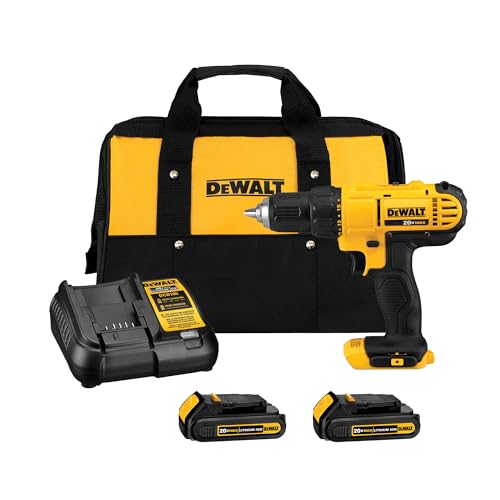
The DCD771 is sold as the comprehensive DCD771C2 kit. This package includes the drill driver itself, two 20V MAX compact 1.3Ah lithium-ion battery packs, a dedicated charger, and a rugged contractor bag for storage and portability. For someone setting up their first tool kit or replacing an older system, this provides everything required to start assembling, drilling, and fastening immediately without any hidden equipment requirements.
In contrast, the DCD999 is listed under part number DCD999B as a bare tool only. The product data specifies that the battery and charger are sold separately, with only the tool itself included in the box. While this bare-tool arrangement is ideal for seasoned professionals who already possess multiple 20V MAX or FLEXVOLT battery packs and fast chargers, a newcomer must acquire those high-capacity power sources separately. An honest DeWalt DCD999 hammer drill review must emphasize that unlocking its full 42% power boost requires a DCB606 FLEXVOLT pack, which adds substantial overall investment compared to the all-inclusive DCD771 package.
Edge: DeWalt DCD771 because it includes two lithium-ion batteries, a charger, and a storage bag in the box, delivering a complete, ready-to-work setup.
Pros and Cons
DeWalt DCD771
Pros
- Includes two batteries, charger, and contractor bag
- Compact lightweight design for tight spaces
- Dual-speed transmission up to 1500 rpm
- 1/2-inch single-sleeve ratcheting chuck
Cons
- No masonry or concrete drilling capability
- Lower power output capped at 300 UWO
- Small 1.3Ah battery capacity
DeWalt DCD999
Pros
- Hammer drill capability for masonry work
- FLEXVOLT ADVANTAGE boosts power up to 42%
- Efficient brushless motor
- Versatile 3-speed transmission
Cons
- Bare tool only without battery or charger
- Heavier 3.5-pound bare tool weight
Who Should Buy Each One
Choose the DeWalt DCD771 If

- You want a complete, ready-to-use drill kit with two 1.3Ah batteries, a charger, and a contractor bag included in the box.
- Your primary workload consists of routine home DIY tasks like assembling furniture, hanging shelves, and mounting cabinet hardware.
- You drill exclusively in wood (up to 30 mm), sheet metal (up to 13 mm), plastic, and drywall without touching masonry.
- You prefer a lightweight, compact drill body designed to access cramped corners and reduce fatigue during overhead fastening.
Choose the DeWalt DCD999 If

- You need an integrated percussion hammer drill to bore holes into brick, stone, mortar, or poured concrete foundations.
- You already own or plan to invest in DeWalt FLEXVOLT battery packs to unlock up to 42% more power via FLEXVOLT ADVANTAGE.
- You require an industrial three-speed gearbox to manage wide-diameter hole saws, heavy augers, and structural lag bolts.
- You work on commercial jobsites or heavy remodeling projects where maximum motor durability and torque take priority over compact tool weight.
Final Verdict
For the vast majority of homeowners, weekend DIYers, and residential property managers, the DeWalt DCD771 is the more practical and sensible choice. It arrives as an all-in-one package with two lithium-ion batteries, a charger, and a durable carry bag, allowing you to get straight to work without hunting down extra components. Its 300 UWO motor and 2-speed transmission handle furniture assembly, drywall anchor mounting, light metal drilling, and standard lumber boring up to 30 millimeters with ease, while its compact, ergonomic footprint prevents wrist fatigue during tight cabinet work.
However, when your work demands raw structural capability, masonry penetration, and continuous commercial power, the DeWalt DCD999 takes the lead decisively. With its integrated hammerdrill mode, three-speed metal transmission, and brushless motor that unlocks up to 42% more power when paired with a FLEXVOLT battery, it operates in an entirely different performance class. If you drill into concrete foundations or run heavy framing hardware on a regular basis, the extra power and percussion mechanism of the DCD999 make it well worth the added weight and the need to supply your own batteries.
FAQ
Can the DeWalt DCD771 drill into concrete or brick?
No, the DeWalt DCD771 cannot drill into concrete or brick. The manufacturer listing explicitly states that it is not suitable for drilling into concrete or masonry. It is a standard rotary drill/driver that lacks the percussion hammer mechanism required to fracture aggregate and stone, and running it into masonry can overheat the motor and ruin standard drill bits.
What does FLEXVOLT ADVANTAGE mean on the DeWalt DCD999?
FLEXVOLT ADVANTAGE is an internal tool technology featured on the DeWalt DCD999 that identifies the type of battery attached to the tool. When paired with a DCB606 60V MAX FLEXVOLT battery instead of a standard DCB205 20V MAX 5.0Ah pack, the tool electronics automatically adjust to deliver up to 42% more operational power for demanding structural applications.
Does the DeWalt DCD771 include batteries and a charger?
Yes, the DeWalt DCD771 (model DCD771C2) comes as a complete kit. The package includes two 20V MAX 1.3Ah lithium-ion batteries, a compatible charger, and a durable contractor bag, giving you an operational system straight out of the box.
Does the DeWalt DCD999 include a battery and charger?
No, the DeWalt DCD999 (model DCD999B) is sold as a bare tool only. The product listing states that the battery and charger are sold separately. You must supply your own compatible DeWalt 20V MAX or FLEXVOLT battery and charger to run the tool.
How many speed settings do the DeWalt DCD771 and DCD999 have?
The DeWalt DCD771 features a two-speed transmission delivering 0-450 rpm for low-speed fastening and 0-1,500 rpm for drilling. The DeWalt DCD999 features a three-speed transmission, providing three distinct mechanical gear ranges for low-speed high-torque driving, mid-range drilling, and high-speed hammer work.
What are the maximum drilling capacities of the DeWalt DCD771?
According to the product specifications, the DeWalt DCD771 has a maximum drilling capacity of 30 millimeters in wood and 13 millimeters in metal. The listing does not specify the maximum drilling capacities for the DeWalt DCD999.
Is the DeWalt DCD771 brushless?
No, the DeWalt DCD771 uses a standard high-performance motor rather than a brushless design. In contrast, the DeWalt DCD999 is equipped with a modern brushless motor that reduces friction and works in tandem with FLEXVOLT ADVANTAGE electronics to optimize runtime and power output.