Choosing between the Omron Gold and the Withings BPM Connect comes down to whether you prioritize specialized clinical screening tools or seamless, automated daily logging. The Omron monitor emphasizes cardiovascular surveillance by pairing blood pressure checks with dedicated Atrial Fibrillation detection and morning hypertension indicators, whereas the Withings device focuses on frictionless routine tracking through standalone Wi-Fi synchronization and an ultra-compact, all-in-one arm cuff design.
Patients managing complex cardiovascular risks or morning pressure spikes should select the Omron Gold for its targeted screening features. Tech-minded individuals and busy households seeking effortless, background data uploads without keeping a smartphone nearby will find the Withings BPM Connect significantly more convenient.

Omron Gold vs Withings BPM Connect at a Glance
| Feature | Omron Gold | Withings BPM Connect |
|---|---|---|
| Model Number | BP5360 | WPM05 |
| Wireless Sync Methods | Bluetooth | Wi-Fi and Bluetooth |
| Arrhythmia Screening | OMRON-exclusive AFib Screening Technology | Heart rate measurement (specific AFib screening not listed) |
| Morning Surge Tracking | High Morning Average Indicator | Not listed |
| Measurement Accuracy Tech | Advanced Accuracy with TruRead Technology | Medically accurate, FDA cleared |
| Power Source | 4 AA batteries (included) | Rechargeable battery (up to 6 months per charge) |
| On-Device Screen | Digital tabletop console display | Built-in LCD with color-coded feedback |
| Arm Cuff Circumference | The listing does not specify | 22-42 cm (9-17 inches) |
| Dimensions and Weight | 7.5 x 4.6 x 3.3 inches; 1.37 lbs | 6.1 x 2.36 x 2.16 inches; 12.8 oz |
| Manufacturer Warranty | The listing does not specify | 2 year manufacturer warranty |
| Best For | Clinical hypertension and AFib risk tracking | Frictionless Wi-Fi sync and portable routine use |
Wireless Connectivity and Data Synchronization
How a home blood pressure monitor transfers your readings to your digital health records directly dictates how consistent your tracking habit will be. The Omron Gold relies on standard Bluetooth wireless pairing to transmit systolic, diastolic, and pulse readings to the OMRON Connect app. Operating over Bluetooth means your smartphone must be powered on, unlocked, and within close physical proximity to the tabletop unit while the app syncs your latest measurement session.
In contrast, Withings BPM Connect Wi-Fi sync eliminates the requirement to have a phone nearby during testing. By connecting directly to your home Wi-Fi network, the device pushes systolic, diastolic, and heart rate figures directly to Withings cloud servers the moment a reading concludes. It also retains Bluetooth connectivity as an alternative pairing method when traveling away from your home router. Readers evaluating broader brand ecosystems in our omron vs withings blood pressure monitors overview frequently highlight this standalone Wi-Fi capability as the single greatest usability upgrade for multi-user smart homes.
Evaluating the technical data transfer in Omron BP5360 vs Withings WPM05 reveals a fundamental divergence in philosophy. The BP5360 demands an intentional synchronization routine between monitor and smartphone. The WPM05 operates as an autonomous internet-connected appliance, ensuring readings reach your digital timeline even if your phone is charging in another room. For long-term adherence without friction, background Wi-Fi synchronization remains unmatched.
Edge: Withings BPM Connect due to standalone home Wi-Fi synchronization that logs readings automatically without requiring a phone nearby.
Cardiovascular Screening and Diagnostic Features
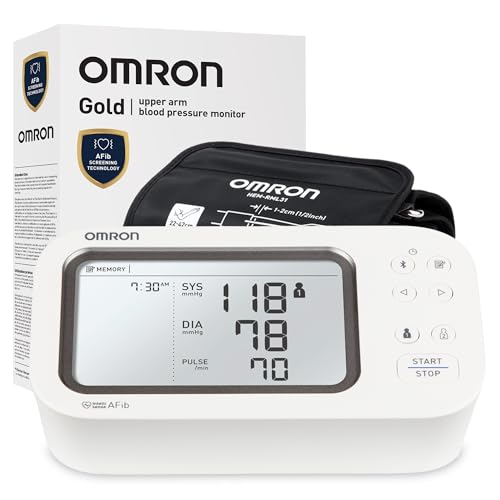
While basic blood pressure tracking measures systolic and diastolic pressures alongside resting heart rate, specialized diagnostic capabilities help users identify dangerous underlying cardiovascular events before they escalate. A comprehensive Omron Gold review must highlight its standout diagnostic asset: OMRON-exclusive AFib Screening Technology. The listing specifies that this monitor automatically screens for Atrial Fibrillation during every measurement, requiring only a single reading session to detect this stroke-increasing irregular rhythm.
Furthermore, the Omron Gold integrates a High Morning Average Indicator designed to flag when early readings exceed standard thresholds. Morning hypertension represents a documented clinical risk factor, and having an on-device indicator allows individuals to recognize dangerous morning patterns immediately. The monitor also utilizes TruRead Technology alongside Omron Advanced Accuracy algorithms to provide reliable figures for personal medical records. Shoppers comparing tiered options in our omron gold vs omron 7 series comparison will recognize that these advanced screening technologies define Omron’s higher-tier clinical lineup.
The Withings BPM Connect provides medically accurate blood pressure and heart rate measurements backed by FDA clearance. However, the manufacturer listing does not specify dedicated Atrial Fibrillation screening algorithms or morning hypertension indicators on this model. For users whose primary medical concern is stroke risk prevention, irregular rhythm detection, or managing early morning arterial spikes, Omron Gold AFib screening and clinical indicators deliver medical insight that Withings does not match on this unit.
Edge: Omron Gold thanks to dedicated single-measurement AFib screening algorithms and an on-device High Morning Average Indicator.
Power Architecture and Battery Longevity
Power management determines whether your monitor sits ready on your nightstand or leaves you stranded during a scheduled check. The Withings BPM Connect features a built-in rechargeable battery that delivers up to 6 months of operation on a single charge. The package includes a dedicated charger, and users can monitor remaining power levels directly through the in-app battery monitor inside Health Mate. This rechargeable architecture eliminates ongoing battery purchases entirely and ensures the device maintains a slim profile.
Conversely, the Omron Gold BP5360 relies on traditional disposable power, requiring 4 AA batteries. Omron includes the initial set of four alkaline batteries inside the box, allowing you to deploy the unit immediately out of packaging. While standard AA cells are universally accessible and quick to swap without waiting on a charging cable, they introduce recurring operational upkeep over years of daily testing. Those weighing entry-level versus advanced battery configurations can see similar trade-offs in our omron gold vs omron bronze breakdown.
When assessing Withings BPM Connect battery life against disposable alkaline cells, convenience favors rechargeable internal cells for most modern homes. Recharging via cable twice a year is cleaner, lighter, and less wasteful than managing packs of alkaline batteries. Omron’s AA system provides value only if you routinely test in locations far from electrical outlets where plugging in a charging cable is impractical.
Edge: Withings BPM Connect for its 6-month rechargeable battery design and in-app capacity monitoring.
Hardware Design, Portability, and Cuff Fit
The physical footprint of a monitor dictates where and how easily you can take readings. The Withings BPM Connect weighs 12.8 ounces and measures 6.1 inches long, 2.36 inches wide, and 2.16 inches thick. It features a compact, integrated tubular shape where the motor, display, and cuff form a single continuous fabric unit. The cuff supports arm circumferences from 22 to 42 cm (approximately 9 to 17 inches). Rather than using a glass screen, it projects blood pressure and heart rate figures onto an LCD integrated into the fabric casing, accompanied by immediate color-coded feedback to show whether readings fall into normal ranges.
The Omron Gold represents a classic dual-component clinical monitor design. It features a tabletop console base connected via air tubing to an upper arm cuff. The unit measures 7.5 x 4.6 x 3.3 inches and weighs 1.37 pounds, making it noticeably bulkier and heavier than its Withings counterpart. While the listing does not specify the exact arm circumference range for the included cuff, the console housing provides a dedicated desktop display screen featuring TruRead data visualization. Readers comparing compact hardware form factors in our withings bpm connect vs beurer bm67 analysis will note how all-in-one cuffs reduce bedside clutter.
For individuals who travel frequently or prefer a device that rolls up neatly into an overnight bag, the Withings BPM Connect holds a distinct advantage. Its single-piece construction eliminates dangling rubber air tubes and separate base stations. However, users who prefer resting a dedicated console on a table in front of them while wrapping a separate cuff around their arm will find the Omron Gold layout more familiar to traditional medical equipment.
Edge: Withings BPM Connect due to its lightweight, tube-free integrated cuff architecture and universal 22-42 cm fit range.
Mobile App Experience and Long-Term Health Tracking
Both manufacturers provide companion mobile applications designed to turn isolated systolic and diastolic numbers into actionable long-term cardiovascular trend lines. The Omron Gold pairs with the OMRON Connect app, which provides unlimited reading storage, trend graphing, and formatted report sharing that users can export to their physician. Because Omron designs its software specifically around clinical hypertension management, the interface highlights morning averages, TruRead results, and irregular rhythm notifications clearly.
The Withings BPM Connect syncs with the free Withings Health Mate app, widely recognized for its polished design and broad ecosystem integration. When examining a Withings BPM Connect review, users consistently praise Health Mate’s color-coded feedback, historical graphs, and rapid PDF report generation for medical consultations. Because Health Mate supports Withings smart scales and activity trackers, it consolidates blood pressure metrics alongside body weight, pulse, and daily movement into a single unified health dashboard. Buyers exploring cross-brand transitions in our omron 7 series vs withings bpm connect guide appreciate this broader fitness tracking integration.
Deciding between these ecosystems depends on your digital priorities. If your focus is dedicated clinical hypertension logs with specialized morning surge breakdowns, OMRON Connect provides clear, targeted utility. If you prefer a seamless, modern application that tracks your blood pressure alongside broader lifestyle wellness metrics, Health Mate delivers a slightly more expansive software experience. Because both applications provide unlimited cloud history and direct physician report export, neither ecosystem creates a functional bottleneck.
Edge: Tie. Both OMRON Connect and Withings Health Mate provide unlimited cloud data storage, easy report generation for doctors, and clear visual trend graphing.
Pros and Cons
Omron Gold

Pros
- Single-measurement AFib screening
- High Morning Average indicator
- TruRead advanced accuracy algorithm
- Four AA batteries included in box
Cons
- Lacks Wi-Fi synchronization
- Bulky tabletop console form factor
- Arm cuff size not listed
Withings BPM Connect

Pros
- Automatic Wi-Fi and Bluetooth sync
- Six-month rechargeable battery life
- Compact all-in-one travel design
- On-device color-coded feedback
Cons
- No dedicated AFib screening algorithm
- No morning hypertension indicator
View Withings BPM Connect on Amazon
Who Should Buy Each One
Choose the Omron Gold If
- You need automatic Atrial Fibrillation screening built directly into routine single-measurement blood pressure checks.
- You have concerns regarding early morning blood pressure surges and want a dedicated High Morning Average Indicator.
- You prefer a traditional tabletop console setup with a separate upper arm cuff rather than an all-in-one arm wrap.
- You want to power your monitor with standard, replaceable AA batteries rather than recharging via an internal battery.
Choose the Withings BPM Connect If
- You want fully automated Wi-Fi synchronization that uploads measurements directly to the cloud without opening a phone app.
- You travel often and need a lightweight, all-in-one arm cuff that rolls up tightly without tangled air hoses.
- You prefer a rechargeable internal battery that lasts up to 6 months per charge and eliminates recurring battery purchases.
- You want immediate, on-device color-coded feedback to quickly verify if your readings sit within standard healthy thresholds.
Final Verdict
When deciding between the Omron Gold or Withings BPM Connect for home use, the final choice hinges on clinical arrhythmia detection versus modern wireless convenience. The Omron Gold takes top honors for clinical screening. By incorporating single-measurement AFib detection, High Morning Average alerts, and TruRead measurement technology, it functions as an early warning system for serious cardiovascular risks. For hypertension patients whose doctors specifically recommend tracking morning spikes or watching for irregular heart rhythms, Omron provides medical diagnostic safeguards that Withings leaves out.
On the other hand, the Withings BPM Connect is the clear winner for effortless daily tracking, home automation, and portable design. Its standalone Wi-Fi synchronization removes the friction of opening a smartphone app during testing, while its rechargeable 6-month battery and compact 12.8-ounce all-in-one cuff make it the superior choice for travel and streamlined bedside storage. If you want a medically accurate, FDA-cleared monitor that blends seamlessly into a digital smart home routine, the BPM Connect delivers an exceptional user experience.
FAQ
Does the Withings BPM Connect screen for Atrial Fibrillation?
The product listing for the Withings BPM Connect specifies medically accurate blood pressure and heart rate measurements, but it does not list dedicated Atrial Fibrillation screening technology. If single-reading AFib screening is an essential medical requirement from your physician, the Omron Gold specifically includes OMRON-exclusive AFib Screening Technology.
Can the Omron Gold sync measurements over Wi-Fi?
No, the Omron Gold uses Bluetooth connectivity rather than Wi-Fi. To sync your readings to the OMRON Connect mobile app, your smartphone must have Bluetooth enabled and be located nearby to receive the data from the monitor.
Is Withings BPM Connect worth it for frequent travelers?
Yes, the Withings BPM Connect is exceptionally well suited for travel. Weighing just 12.8 ounces with a compact 6.1-inch profile, it integrates the pump, display, and cuff into a single piece of fabric without external rubber hoses. Its 6-month rechargeable battery also means you rarely need to pack a charging cable for short trips.
What arm circumference does the Withings BPM Connect cuff support?
The Withings BPM Connect features an adjustable upper arm cuff that accommodates arm circumferences from 22 to 42 centimeters, which translates to approximately 9 to 17 inches. The Omron Gold listing does not specify its exact cuff dimensions.
How do the power sources compare between these two blood pressure monitors?
The Omron Gold operates using 4 standard AA alkaline batteries, which are included in the box. The Withings BPM Connect features a built-in rechargeable battery that lasts up to 6 months on a single charge and comes with its own charging adapter.
Are both the Omron Gold and Withings BPM Connect eligible for FSA or HSA accounts?
The Withings BPM Connect product listing explicitly highlights that the device is FSA and HSA eligible and accepts FSA payment cards. While blood pressure monitors are generally eligible health care expenses, check your specific benefit administrator guidelines regarding the Omron Gold model BP5360.
Can I export blood pressure history to my doctor using these devices?
Yes, both companion applications support sharing data with healthcare providers. The OMRON Connect app allows you to export reading history and trends, while the Withings Health Mate app generates structured historical reports that you can easily share with your physician.