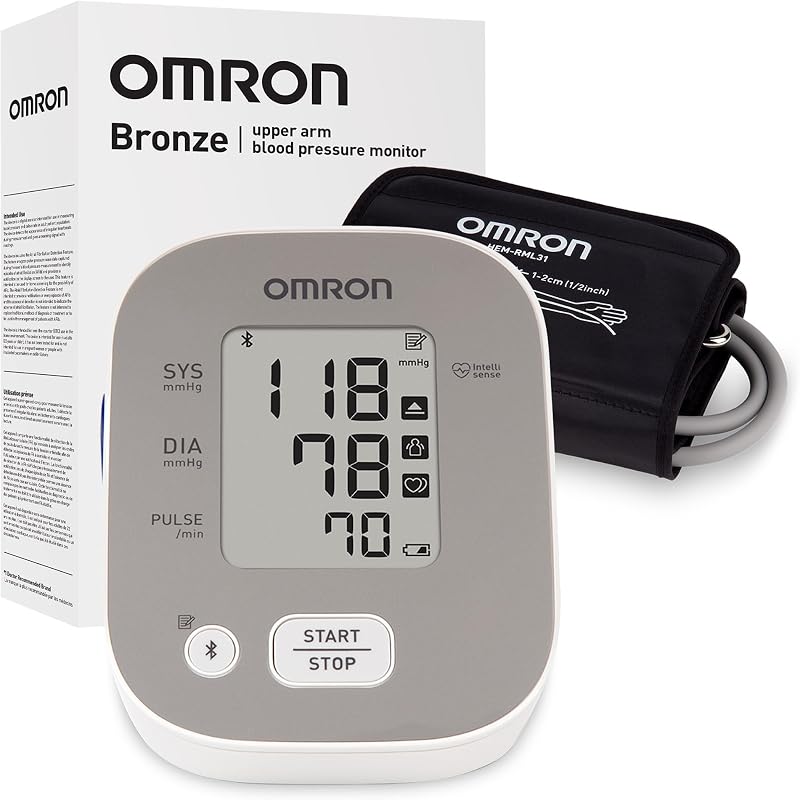
The core difference between an upper arm blood pressure monitor and a wrist blood pressure monitor is anatomical measurement reliability versus compact everyday convenience. Upper arm monitors sit directly over the brachial artery at natural heart level to deliver readings that closely mirror clinical environments, whereas wrist monitors read from the narrower radial artery inside an ultra-portable housing that eliminates bulky cuffs.
Choose an upper arm blood pressure monitor if you require dependable long-term tracking, app-based physician reporting, and clinical consistency for managing hypertension. Choose a wrist blood pressure monitor if you travel frequently, struggle with limited shoulder mobility, or need rapid daily checks without having to roll up tight sleeves.


Upper Arm vs Wrist Blood Pressure Monitor at a Glance
| Attribute | Upper Arm Blood Pressure Monitor | Wrist Blood Pressure Monitor |
|---|---|---|
| Primary Measurement Location | Brachial artery (upper bicep) | Radial artery (wrist joint) |
| Average Device Weight | 1.23 lbs (Omron BP5150) | 3.59 oz (Oklar W1101L) to 8 oz (MMIZOO) |
| Typical Physical Dimensions | 5.5 x 3.3 x 4.3 inches (Omron) | 3.03 x 2.55 x 2.63 inches (Oklar) |
| Power Configuration | 4 AA batteries (Omron BP5150) | Rechargeable Lithium-ion (Oklar) or 2 AAA (MMIZOO) |
| Digital App Connectivity | Bluetooth via OMRON Connect (BP5150) | Not listed on Oklar W1101L or MMIZOO W1681 |
| Heart-Level Alignment | Automatic when seated upright | Manual positioning required by user |
| Included Storage Gear | Standard cuff assembly | Dedicated carrying case (MMIZOO W1681) |
| Best For | Clinical home precision and long-term trend tracking | Travel convenience and rapid, unencumbered checks |
Measurement Reliability and Sensor Placement
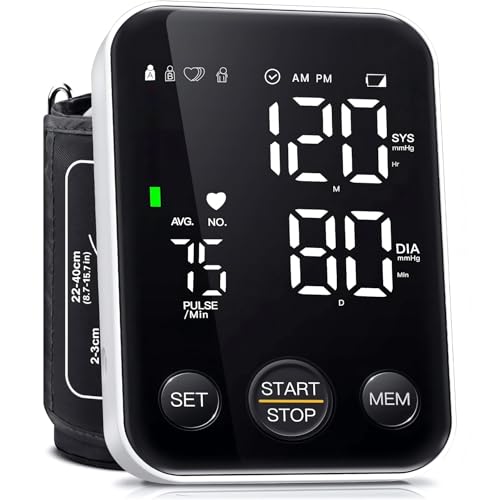
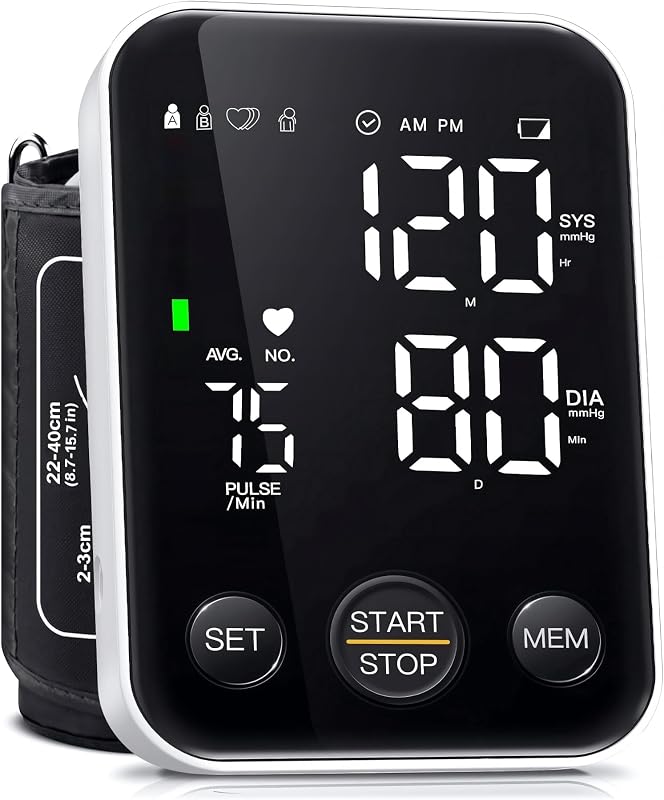
The primary concern for any patient evaluating an upper arm vs wrist blood pressure monitor is physiological measurement stability. An upper arm cuff wraps around the bicep to compress the brachial artery, which rests horizontally parallel to the left ventricle when sitting upright. Because this artery is wide and deep, blood flow readings remain remarkably stable across multiple daily tests. Devices like the OMRON Bronze Blood Pressure Monitor leverage this anatomical advantage through Advanced Accuracy Technology and a built-in Hypertension Indicator that warns users when values exceed healthy targets. While the listing for the Oklar FDA Cleared Blood Pressure Monitor Upper Arm BP Machine for Home Use provides minimal specification data, its upper-arm form factor naturally benefits from this identical hemodynamic position.
By contrast, a wrist monitor captures circulatory pulses from the radial artery located between the delicate wrist bones. The radial vessels are significantly narrower and sit closer to the skin surface, making them sensitive to minor positional deviations. When performing an assessment with the Oklar Wrist Blood Pressure Monitor, the user must actively hold their arm across their chest at exact heart level. Resting the wrist on a desk below the sternum artificially elevates the recorded pressure due to hydrostatic fluid forces, while lifting it too high yields artificially low readings. Consequently, upper arm or wrist blood pressure monitor accuracy depends heavily on user technique rather than mechanical failure.
For individuals tracking clinical hypertension, this distinction directly impacts medical management. Even slight hydrostatic discrepancies can distort diagnostic trends. While a dedicated wrist blood pressure monitor accuracy protocol can yield functional numbers if you hold your arm strictly stationary at mid-sternum, an upper arm cuff eliminates user alignment error entirely. It provides an immediate, stable baseline that doctors recognize without hesitation.
Edge: Upper Arm Blood Pressure Monitor provides direct brachial artery alignment that matches clinical standards without requiring manual heart-level balancing.
Portability, Dimensions, and Traveling Convenience
Transportability represents the strongest selling point for wrist designs. When packing health gear for work trips or vacations, physical footprint dictates whether a user actually maintains compliance. The Oklar W1101L wrist unit measures an ultra-compact 3.03 x 2.55 x 2.63 inches and weighs a mere 3.59 ounces. Similarly, the MMIZOO Wrist Blood Pressure Monitor measures 3.5 x 3.7 x 3.8 inches, weighs 8 ounces, and includes a protective carrying case. These compact profiles let travelers slip a monitor into a backpack side pocket, briefcase, or carry-on without sacrificing clothing space.
Upper arm monitors demand considerably more luggage volume. The OMRON BP5150 weighs 1.23 pounds with dimensions of 5.5 x 3.3 x 4.3 inches. That bulk does not account for the rolled fabric cuff and air hose, which must be coiled carefully to avoid kinking the pneumatic tubing. While the Oklar upper arm machine does not list specific package dimensions in its data, any traditional desktop monitor with a bicep cuff occupies substantially more real estate than a compact wrist housing.
For active users wondering if a wrist blood pressure monitor is worth it, the sheer freedom of movement often tips the scale. Having a miniature, self-contained unit ready inside a glove box or gym bag encourages spontaneous health checks during hectic workdays. In contrast, packing an upper arm machine usually requires a dedicated travel pouch and a stable tabletop setup.
Edge: Wrist Blood Pressure Monitor offers dramatically smaller dimensions and weighs as little as 3.59 ounces, making it far simpler to pack and carry.
Data Tracking, Memory, and Connectivity
Recording individual readings is essential for sharing health data with physicians. The OMRON Bronze BP5150 features integrated Bluetooth hardware that syncs with the OMRON Connect application. This pairing allows users to store unlimited historical readings, graph daily and monthly trends, and export structured digital files directly to a physician. For an in-depth look at how connected health gear handles digital records, see our omron vs withings comparison. If you prefer deep wireless utility, an upper arm blood pressure monitor review often highlights these app-connected features as decisive advantages.
In contrast, portable wrist units like the Oklar W1101L and the MMIZOO W1681 do not list Bluetooth functionality, wireless syncing, or cloud application support in their product data. These standalone units display your systolic, diastolic, and pulse readings on their integrated LCD screens, requiring the patient to record figures manually on paper or inside a separate mobile diary. Readers evaluating modern smart monitors may also want to read our omron 7 series vs withings bpm connect breakdown for alternative connected formats.
The gap between automated app syncing and standalone screen readouts matters for ongoing clinical therapy. A patient managing severe cardiovascular risk benefits immensely from automated cloud logs that capture time-stamped fluctuations. While basic local displays work fine for occasional spot-checks, the Omron upper arm ecosystem prevents user transcription mistakes and keeps a thorough log for every clinic checkup.
Edge: Upper Arm Blood Pressure Monitor takes this category thanks to the Omron Bronze platform supporting Bluetooth sync, unlimited app records, and physician data exports.
Power Sources and Daily Maintenance
Power configurations influence how often a user must purchase replacement cells or recharge their device. The Oklar W1101L wrist monitor features an integrated rechargeable Lithium-ion battery that comes included in the package. Rechargeable cells eliminate recurring battery expenses and allow users to refresh the monitor using standard USB wall adapters or portable battery banks, an enormous perk for frequent flyers.
Traditional upper arm units rely on dry-cell batteries. The OMRON Bronze BP5150 requires four AA batteries to operate its heavy-duty motorized pneumatic pump. While AA cells are easy to find in grocery stores, maintaining four fresh alkaline batteries adds ongoing maintenance overhead. The product data for the Oklar upper arm monitor does not specify its battery configuration or power adapter details. Meanwhile, the MMIZOO W1681 wrist monitor runs on two AAA batteries, using half the cells needed by the Omron machine.
The energy demands of inflating a wide bicep cuff are higher than those required to inflate a narrow wrist band. Over months of multi-user testing, an upper arm monitor exhausts battery sets faster than a compact wrist model. Having an internal rechargeable lithium-ion battery on the Oklar wrist unit simplifies home care routines by removing the need for spare battery packs.
Edge: Wrist Blood Pressure Monitor wins for maintenance flexibility by offering integrated rechargeable lithium-ion power alongside lightweight multi-battery alternatives.
Ergonomics, Cuff Application, and Daily Accessibility
Strapping on a blood pressure monitor correctly is essential for getting valid measurements. For an upper arm device, you must thread your arm through a tubular fabric cuff, pull it snug 1 inch above the elbow crease, and center the inflation bladder over the brachial artery. For older individuals dealing with arthritis, restricted shoulder mobility, or excess arm tissue, aligning a bicep cuff can be frustrating. You can learn more about how physical cuff designs affect daily ergonomics in our withings bpm connect vs beurer bm67 review.
By contrast, putting on a wrist device feels as simple as fastening a watch. The unit wraps directly around the wrist joint using a short hook-and-loop strap, avoiding clothing interference altogether. Users do not need to take off heavy winter sweaters, unbutton dress shirts, or squeeze a large arm into a tight sleeve. For a related analysis of cuff ergonomics, explore our omron 7 series vs beurer bm67 guide.
This accessibility makes wrist models popular among specific demographics. When considering an upper arm or wrist blood pressure monitor for seniors who live alone, struggling with a stiff bicep cuff can cause emotional distress that spikes systolic readings. However, that physical simplicity requires strict mental discipline: the user must remember to bring the wrist monitor directly to mid-chest height before initiating inflation, or the ergonomic benefit is lost to positional measurement error.
Edge: Wrist Blood Pressure Monitor is significantly easier to strap on without disrobing or navigating shoulder and elbow mobility constraints.
Pros and Cons
Upper Arm Pressure Monitor
Pros
- Brachial artery placement matches clinical standards
- Advanced Accuracy Technology on Omron Bronze
- Bluetooth sync with OMRON Connect app
- Built-in Hypertension Indicator
Cons
- Bulky unit footprint weighing 1.23 pounds
- Requires four AA replacement batteries
View Oklar FDA Cleared Blood Pressure Monitor on Amazon
Wrist Blood Pressure Monitor

Pros
- Ultra-compact housing weighing under 4 ounces
- Rechargeable lithium-ion battery on Oklar model
- Includes hard carrying case on MMIZOO
- Quick application without rolling up sleeves
Cons
- Requires strict heart-level arm positioning
- Lacks app-based wireless data sync
View Oklar Wrist Blood Pressure Monitor FDA on Amazon
Who Should Buy Each One
Choose the Upper Arm Blood Pressure Monitor If
- You need clinical-grade measurement consistency that eliminates positioning guesswork.
- You manage diagnosed hypertension and need to export digital trend reports directly to your physician via OMRON Connect.
- You prefer standard AA battery power without tracking proprietary charging cords.
- You perform your health routines primarily at home beside a comfortable desk or nightstand.
Choose the Wrist Blood Pressure Monitor If
- You travel regularly and need a lightweight device that weighs under 4 ounces, like the Oklar W1101L.
- You have severe shoulder, elbow, or hand arthritis that makes wrapping a bicep cuff painful.
- You want rechargeable lithium-ion battery convenience without buying replacement disposable cells.
- You need to perform discrete health checks at work without rolling up long-sleeved professional clothing.
Final Verdict
For most households, the upper arm blood pressure monitor remains the superior diagnostic investment. The natural alignment of the bicep over the brachial artery removes positional error, providing reliable data that aligns with doctor standards. Coupled with the Bluetooth functionality, Advanced Accuracy Technology, and Hypertension Indicator found on models like the OMRON Bronze BP5150, an arm-based system gives patients the comprehensive records they need to manage long-term cardiovascular health safely.
However, the wrist blood pressure monitor is a worthwhile alternative for mobile professionals, frequent flyers, and seniors with restricted range of motion. Units like the rechargeable Oklar W1101L and the MMIZOO W1681 provide convenient, featherweight tracking that slips into any bag. Provided you hold your wrist level with your heart throughout the measurement cycle, a wrist monitor offers dependable everyday screening wherever you go.
FAQ
Is a wrist blood pressure monitor as accurate as an upper arm monitor?
When used with strict technique at mid-heart level, a wrist monitor can produce dependable readings. However, upper arm monitors are naturally more reliable because they measure the larger brachial artery at chest level, eliminating the positional errors common to radial artery wrist cuffs.
Why do wrist blood pressure monitors read higher than arm monitors?
Wrist monitors read artificially high when the wrist rests below the level of the heart. Hydrostatic gravity pressure adds extra resistance within the radial artery, exaggerating both systolic and diastolic numbers. Keeping the wrist elevated at the center of the chest prevents this issue.
Which monitor design is better for senior citizens living alone?
An upper arm monitor is preferred if medical precision and automatic app tracking are paramount. However, if a senior struggles with arthritis, limited arm flexibility, or rolling up thick sleeves, a wrist monitor is far easier to fasten independently without assistance.
Can I wear a wrist blood pressure monitor over my watch or clothing?
No, a wrist blood pressure cuff must sit directly against bare skin roughly one finger-width below the wrist joint. Wearing the sensor over a watch band or clothing fabric prevents the optical and pressure sensors from detecting clean arterial pulses.
What batteries do these blood pressure monitors require?
Power setups vary by model. The OMRON Bronze BP5150 upper arm unit runs on four AA batteries. The MMIZOO W1681 wrist unit requires two AAA batteries, while the Oklar W1101L wrist monitor includes an internal rechargeable Lithium-ion battery.
Do wrist blood pressure monitors connect to smartphone health apps?
Most basic wrist models, including the Oklar W1101L and MMIZOO W1681, do not list Bluetooth or companion app connectivity in their specifications. If wireless data syncing to an app like OMRON Connect is essential, choose a compatible upper arm model like the OMRON Bronze BP5150.