The core difference between these two cordless tools comes down to motor gearing and fastening output: the DeWalt DCF887 provides a 3-speed selector with up to 2,000 in-lb of torque for heavy trade fastening, while the DeWalt DCF787 is a single-speed tool offering 1,500 in-lb of torque designed for general assembly and household repairs.
Choose the DCF787 if you need an out-of-the-box kit with an included battery and charger for straightforward home maintenance, or pick the DCF887 if you demand multi-speed versatility, higher rotational velocity, and greater power for demanding construction tasks.
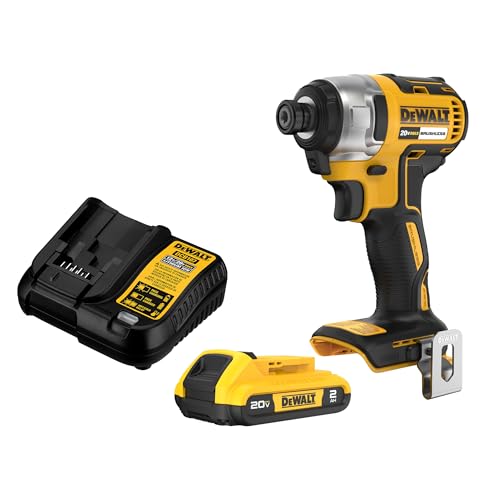
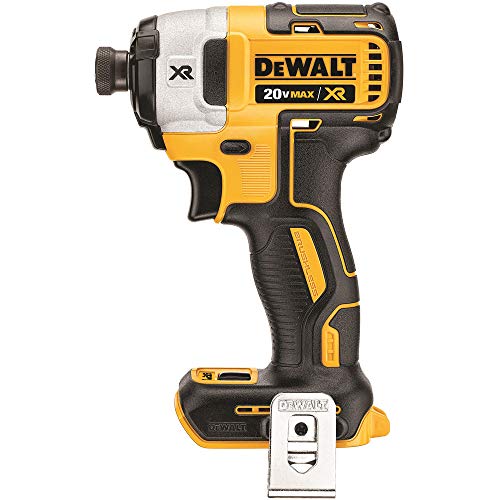
DeWalt DCF787 vs DeWalt DCF887 at a Glance
| Attribute | DeWalt DCF787 | DeWalt DCF887 |
|---|---|---|
| Motor Type | Brushless | Brushless (XR) |
| Maximum Torque | 1,500 in-lb | 2,000 in-lb |
| Maximum Rotational Speed | 2,800 RPM | 3,250 RPM |
| Speed Settings | 1 speed (variable trigger) | 3 speeds (with Precision Drive) |
| Chuck Size & Design | 1/4-inch hex | 1/4-inch hex (one-handed loading) |
| LED Worklights | Single LED with 20-second delay | 3 LEDs with 20-second delay |
| Wood Drilling Capacity | 2 inches | 2.68 inches |
| Metal Drilling Capacity | Not listed | 2 inches |
| Included Package | DCF787D1 kit (2Ah battery, charger, belt hook) | DCF887B (tool only) |
| Best For | General DIY, home repair, and basic fastening | Heavy construction, timber fastening, and fine cabinetry |
Fastening Torque and Driving Capacity
Torque is the rotational force that allows an impact driver to sink wide fasteners, drive lag screws into dense lumber, and bust loose stubborn bolts without transferring wrist-straining kickback to the operator. When evaluating dewalt dcf787 vs dcf845 or older tools, raw fastening force dictates whether a tool stalls out halfway through dense material. In this DeWalt 20V impact driver comparison, torque output forms the most significant mechanical divide between the two units.
The DCF887 generates a rated 2,000 in-lb of torque, pairing that twisting force with an upper wood drilling capacity of 2.68 inches and a metal drilling capacity of 2 inches. By contrast, the DCF787 delivers 1,500 in-lb of maximum torque (with the listing also stating 1500 ft-lb in technical specifications and a 2-inch wood drilling capacity). In daily operation, that 500 in-lb difference is substantial when driving long structural screws or driving large-diameter spade bits through framing lumber. Where the DCF787 settles into a steady rhythm on medium fasteners, the DCF887 continues driving without bogging down.
For standard assembly tasks-such as driving 2-inch drywall screws, assembling flat-pack furniture, or securing deck boards-the 1,500 in-lb ceiling of the DCF787 provides ample rotational power. However, users frequently running 3-inch timber screws or structural framing hardware will find the higher output of the DCF887 saves considerable installation time and reduces motor strain over sustained cycles.
Edge: DeWalt DCF887 because its 2,000 in-lb maximum torque provides significantly more muscle for heavy-duty structural driving and larger drilling diameters.
Speed Control and Application Versatility
Impact drivers rely on rotational speed (RPM) to quickly run threads into pre-drilled holes or self-tapping media. However, excessive speed can easily strip screw heads or snap delicate workpieces if not properly managed. Speed flexibility is therefore essential when switching between fine finish work and rough framing, a factor often explored when examining dewalt dcf787 vs dcf850 configurations across the brand’s ecosystem.
The DCF887 features a dedicated 3-speed selector switch located at the tool’s base, delivering a maximum rotational speed of 3,250 RPM. Crucially, Speed 1 incorporates Precision Drive technology, engineered specifically to prevent overtightening and fastener head damage during delicate tasks. The DCF787 operates on a single mechanical speed reaching up to 2,800 RPM, relying solely on its variable-speed trigger to modulate rotational velocity. Managing trigger feathering on a single-speed driver requires significant hand control, especially when working on brittle stock or short fasteners.
When deciding between the DeWalt DCF787 or DCF887 for woodworking, the presence of Precision Drive and multi-speed control completely alters the user experience. Working with smaller cabinet screws requires low RPM and controlled impacts to avoid blowing out cabinet faces, an area where the DCF887 excels. The DCF787 can handle these tasks, but the operator must continually concentrate on variable-speed trigger modulation to prevent fastener overdrive.
Edge: DeWalt DCF887 due to its 3-speed selector switch, higher 3,250 RPM ceiling, and dedicated Precision Drive setting for delicate fastening.
Chuck Operation and Bit Compatibility
Chuck ergonomics determine how fast an operator can swap bits during complex projects that require swapping between drill bits, Torx drivers, and nutsetters. Standard quick-release hex chucks often require two hands: one pulling the collar forward and the other pulling the bit out. A streamlined chuck design speeds up workflow across a full workday.
The DCF887 utilizes a one-handed loading 1/4-inch hex chuck with an easy-grip sleeve, accepting short 1-inch bit tips directly into the collar. This mechanism allows you to push a 1/4-inch hex shank bit directly into the receiver until it clicks, without manually sliding the outer sleeve forward. The DCF787 features a standard 1/4-inch (0.25-inch) quick-release hex chuck that requires pulling the outer sleeve to insert or release the accessory. Both tools accept universal 1/4-inch hex shank accessories, but their mechanical engagement differs in convenience.
While both mechanisms hold bits securely during high-vibration driving, the ability of the DCF887 to accept 1-inch bit tips directly improves clearance inside tight cabinet corners. The DCF787 chuck accommodates standard impact-rated accessories effortlessly, making it practical for general home repairs, though it lacks the effortless drop-in loading of its counterpart.
Edge: DeWalt DCF887 for its one-handed drop-in hex chuck mechanism and ability to seat short 1-inch bit tips.
Worklight Illumination and Visibility
Impact drivers are routinely used inside dark cabinets, under sink vanities, and between unlit framing joists. Integrated LED lights are critical not just for seeing the fastener head, but for eliminating tool-cast shadows that obscure the driving axis. When reviewing dewalt dcf787 vs dcf809 or other compact models, lighting placement often separates basic homeowner tools from professional-grade designs.
The DCF887 features a 3-LED ring array mounted directly around the nose cone. This circular configuration casts light around the bit shank from three distinct angles, effectively eliminating the triangular shadow typically cast by the chuck sleeve. The DCF787 uses a single LED light mounted on the tool body, illuminating the general workspace but casting a noticeable shadow above or below the fastener head depending on work angle.
Both drivers include a 20-second delay function that keeps the LED active after the trigger is released, allowing either tool to serve as an impromptu flashlight when positioning fasteners in pitch-black conditions. However, the shadow-free 3-LED setup on the DCF887 provides much clearer visibility when seating driver bits into small Phillips or Torx heads in dimly lit spaces.
Edge: DeWalt DCF887 thanks to its 3-LED ring configuration that eliminates work surface shadows around the chuck.
Packaging, Inclusions, and Power Ecosystem
Out-of-the-box readiness is a primary factor for anyone buying their first cordless tool or switching battery platforms. An impact driver cannot function without compatible lithium-ion power packs and a charging station, which significantly influences total setup convenience. As shown in our dewalt dcf845 vs dcf887 breakdown, kit configurations vary dramatically depending on whether a tool targets tradespeople or casual users.
The DCF787 comes packaged as the DCF787D1 kit, which includes the 1/4-inch impact driver, a 20V MAX 2.0Ah lithium-ion battery (model DCB203, with the specs table also referencing a 1.3A capacity), a DCB107 battery charger, and an attached belt hook. This complete kit allows a buyer to unbox the tool, charge the battery pack, and immediately begin driving fasteners without procuring extra accessories. The DCF887 (model DCF887B) is sold as a bare tool only, with battery packs and chargers sold separately.
For tradespeople who already own a fleet of DeWalt 20V MAX or XR power tools, buying the bare DCF887 tool avoids accumulating duplicate chargers and standard batteries. Conversely, for a beginner or DIY homeowner without an existing DeWalt charger, the DCF787 kit eliminates the friction of matching compatible battery packs and separate charging docks.
Edge: DeWalt DCF787 because the DCF787D1 bundle supplies the essential battery, charger, and belt hook right out of the box.
Pros and Cons
DeWalt DCF787

Pros
- Complete kit with battery and charger
- Efficient brushless motor for durability
- Compact body for tight spaces
- 1500 in-lb torque handles common chores
- Integrated 20-second LED delay
Cons
- Single-speed motor lacks precision settings
- Single LED casts workpiece shadows
DeWalt DCF887

Pros
- 2000 in-lb torque for heavy fastening
- 3-speed selector with Precision Drive
- High 3250 RPM top speed
- 3-LED shadow-free lighting ring
- One-handed chuck accepts 1-inch bits
Cons
- Sold bare without battery or charger
- Overkill for basic household maintenance
Who Should Buy Each One
Choose the DeWalt DCF787 If
- You need a complete kit with a 20V MAX battery and charger included in the box.
- Your primary tasks involve light-to-medium residential fastening, assembling furniture, and routine home maintenance.
- You prefer a simple, straightforward tool without multi-position speed switches or specialized drive modes.
- You rarely drive heavy structural fasteners, large timber lag bolts, or run hole saws over 2 inches.
Choose the DeWalt DCF887 If
- You already own DeWalt 20V MAX or XR batteries and chargers and just need a high-performance bare tool.
- You require up to 2,000 in-lb of torque to sink long timber screws, structural anchors, and wide fasteners.
- You do fine woodworking or cabinetry where Speed 1 Precision Drive prevents stripped heads and surface marring.
- You frequently work in dark enclosures where a 3-LED shadow-free light ring speeds up bit placement.
Final Verdict
For most readers who need a capable, high-output impact driver that adapts to both delicate trim work and heavy framing, the DeWalt DCF887 is the clear overall winner. Its combination of 2,000 in-lb of maximum torque, a 3,250 RPM motor ceiling, a 3-speed selector switch, Precision Drive mode, and shadow-free 3-LED nose ring provides unmatched versatility across trade and workshop environments. While it ships as a bare tool, its mechanical capabilities far exceed standard single-speed drivers, making it the smarter long-term addition to any 20V cordless collection.
The DeWalt DCF787 remains the ideal purchase for homeowners and entry-level users who want a reliable brushless driver without the hassle of purchasing batteries and chargers separately. Delivering a solid 1,500 in-lb of torque and 2,800 RPM, the DCF787 handles typical household maintenance, fence repairs, and basic DIY builds with complete reliability. If your tasks do not require high-torque framing power or multi-speed precision, the all-in-one DCF787 kit provides everything you need to start working immediately.
FAQ
Does the DeWalt DCF787 have multiple speed settings?
No, the DCF787 features a single speed setting with a variable-speed trigger that delivers up to 2,800 RPM. Speed is regulated entirely by finger pressure on the trigger, unlike the DCF887 which features a 3-speed selector switch.
Is the DeWalt DCF887 worth it over the DCF787 for woodworking?
Yes, the DCF887 is well worth choosing for woodworking because of its 3-speed mechanical switch and Speed 1 Precision Drive mode. This setting offers greater low-speed control to prevent stripping delicate brass screws, snapping small hardware, or over-driving fasteners into expensive hardwoods.
What is the difference in torque between the DCF787 and DCF887?
The DCF887 provides a maximum torque rating of 2,000 in-lb, whereas the DCF787 is rated at 1,500 in-lb of torque (with the specification sheet also noting 1500 ft-lb). The extra 500 in-lb of rotational force on the DCF887 gives it a distinct advantage when sinking long structural fasteners into dense timber.
Can the DCF887 use standard 1-inch bit tips?
Yes, the DCF887 chuck is specifically engineered with an easy-grip sleeve that accepts 1-inch bit tips directly, allowing the bit to sit deeper into the chuck for superior clearance in confined spaces. The DCF787 uses a standard 1/4-inch hex chuck.
Does the DeWalt DCF887 include a battery and charger?
No, the DCF887 (model DCF887B) is sold as a bare tool, meaning battery packs and chargers are sold separately. The DCF787 (model DCF787D1) includes a 20V MAX battery, a DCB107 charger, and a belt hook in the box.
How do the LED worklights compare on both models?
Both models feature a 20-second shutoff delay after releasing the trigger. However, the DCF887 uses a 3-LED ring mounted around the chuck to eliminate shadows on the fastener, while the DCF787 utilizes a single LED light mounted on the tool body.
Are both the DCF787 and DCF887 brushless impact drivers?
Yes, both models feature efficient brushless motors designed for increased runtime and durability compared to older brushed designs, running on the DeWalt 20V MAX battery platform.


