The decisive difference between an air fryer and a convection oven comes down to airflow velocity and chamber geometry: an air fryer uses an aggressive, high-speed fan situated directly adjacent to compact heating elements to strip surface moisture and produce rapid crisping, whereas a convection oven relies on a larger, horizontal baking cavity with gentler air circulation to heat multi-rack trays and standard flat bakeware evenly.
Choose an air fryer if you want lightning-fast cooking speeds, zero preheat delays, and deep-fried crispness on finger foods with minimal cleanup. Choose a convection oven if you need the broad horizontal space to toast multiple slices of bread, bake 12-inch pizzas, or handle delicate pastries that high-velocity airflow would otherwise scorch.

Air Fryer vs Convection Oven at a Glance
| Feature | Air Fryer | Convection Oven |
|---|---|---|
| Primary Airflow Mechanism | High-velocity focused convection fan (up to 3,600 RPM) | Steady convection fan circulation or natural convection flow |
| Standard Cavity Capacity | 6 quarts (Cosori) to 10 quarts / 10 liters (Chefman) | 4 slices / 9-inch pizza (Black+Decker) to 0.6 cu. ft. (Cuisinart) |
| Operating Wattage | 1,700 watts to 1,725 watts | 1,150 watts to 1,800 watts |
| Temperature Range | 90°F to 450°F | 80°F to 450°F |
| Preheating Time | Instant to 3 minutes (customizable or skip entirely) | Extended preheat (up to 10 minutes for natural convection) |
| Bakeware Compatibility | Proprietary crisper plates, rotisserie spits, mesh racks | Standard flat baking pans, 9- to 12-inch pizza pans, wire racks |
| Component Maintenance | Dishwasher-safe nonstick ceramic or stainless accessories | Hand-wash cooking accessories, slide-out crumb trays |
| User Interface | Digital capacitive touchscreens with up to 17 presets | Mechanical knobs or analog jog dials with shade selectors |
| Best For | Rapid browning, frozen finger foods, and concentrated crisping | Even baking, multi-slice toasting, and full sheet-pan meals |
Airflow Velocity and Cooking Speed
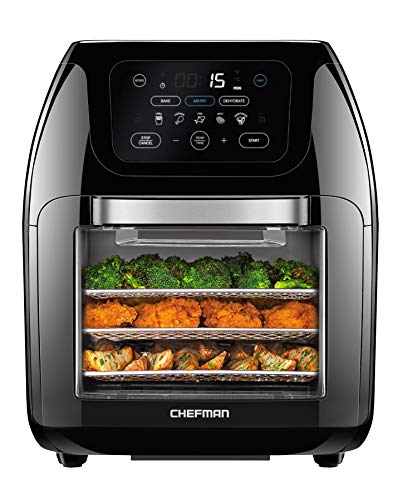
Countertop cooking efficiency relies entirely on how thermal energy transfers to the surface of your food. In a dedicated air fryer, heating elements sit directly above or around a high-powered fan designed to push heat downward at extreme speeds. For example, the Cosori TurboBlaze Air Fryer incorporates a specialized DC motor capable of reaching 3,600 RPM across a five-speed airflow system. This intense air movement eliminates the insulating boundary layer of cool air that naturally surrounds raw food, accelerating heat penetration and evaporating exterior moisture almost immediately. Similarly, the Chefman Multifunctional Digital Air Fryer+ uses rapid-air heating elements rated at 1,700 watts to circulate heat so aggressively that preheating cycles can be skipped entirely for most weeknight meals.
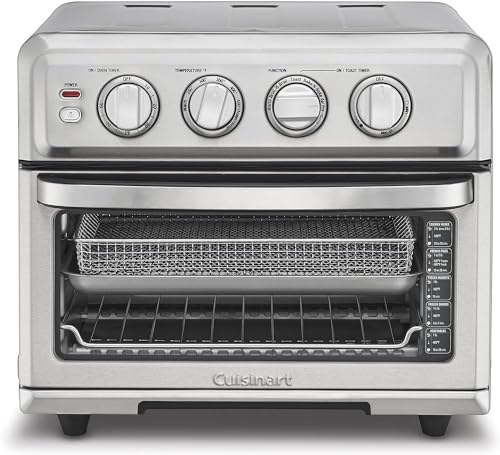
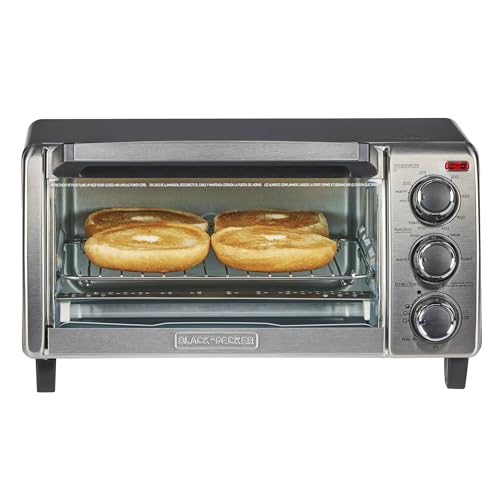
In contrast, a convection oven uses a larger perimeter interior where air moves at a noticeably more relaxed pace. The Cuisinart Air Fryer Toaster Oven leverages an 1,800-watt output paired with its top-mounted AirAdvantage fan assembly, yet because its interior spans 0.6 cubic feet, the airflow disperses over a much wider volume. Meanwhile, traditional compact models like the BLACK+DECKER TO1313SBD Toaster Oven draw 1,150 watts and rely on natural convection airflow, which specifically requires a full 10-minute preheating period to stabilize interior temperatures before cooking begins. When evaluating air fryer vs toaster oven capabilities, the difference between air fryer and convection oven speed comes down to air volume displacement per square inch.
This variance significantly impacts preparation times. If you are preparing chicken cutlets, frozen snacks, or roasted root vegetables, an air fryer trims roughly 20 to 30 percent off the total cook time compared to a convection toaster unit. The intense convective heat transfer sears exteriors rapidly, sealing juices inside while creating a crisp crust without requiring pools of cooking fat. A convection oven still outpaces a traditional full-sized kitchen range, but its larger cavity inevitably demands extra warm-up time and prolonged heat exposure to achieve comparable exterior browning.
Edge: Air Fryer, because high-velocity fans exceeding 3,500 RPM strip moisture and cook food significantly faster without requiring lengthy preheating cycles.
Usable Capacity and Bakeware Flexibility
While air fryers lead in speed, their internal architecture creates noticeable physical constraints. Basket-style units like the Cosori TurboBlaze feature a 6-quart square vessel designed to drop food into a concentrated wind tunnel. Even multi-tier air fryers like the Chefman Multifunctional unit-which features a 10-quart (10-liter) interior and three flat airflow racks-prioritize vertical stacking over horizontal floor space. As a result, air fryers struggle with wide, flat foods. If you attempt to lay out multiple chicken breasts or fish fillets, you must either stack them across vertical wire racks or cook in successive batches to avoid shielding the lower pieces from the circulating heat stream.
Convection ovens solve this problem by prioritizing broad, shallow cooking decks that mirror traditional kitchen ovens. The Cuisinart Air Fryer Toaster Oven spans an expansive 15.75-inch width, allowing it to hold a 12-inch pizza, roast an entire 4-pound chicken, or toast six slices of sandwich bread across a single horizontal plane without crowding. Even the budget-friendly BLACK+DECKER TO1313SBD is engineered with a curved rear interior that fits a standard 9-inch pizza or four bread slices across its dedicated wire rack. This horizontal layout gives you the flexibility to use standard oven-safe ceramic dishes, shallow sheet pans, and silicone muffin cups that simply cannot squeeze into a circular or square air fryer basket.
When cooking for three or more people, air fryer vs convection oven capacity becomes the primary bottleneck. Stacking food vertically inside an air fryer often requires pausing the cycle halfway through to rotate the upper and lower trays, ensuring the lower tiers receive adequate radiant heat. A convection oven permits unobstructed top-down radiant heat across the entire surface of an expansive baking pan, making it infinitely superior for sheet-pan dinners, breakfast toast runs, and standard-sized frozen pizzas. Those who regularly prepare wide family meals will appreciate the extra square inches documented in our breville smart oven air fryer pro vs cuisinart toa-60 breakdown.
Edge: Convection Oven, because its broad horizontal layout accommodates standard 9-to-12-inch pizzas, multi-slice toasting racks, and standard flat bakeware.
Baking and Roasting Performance
The culinary results produced by these appliances depend heavily on what type of recipe you prepare. When deciding whether to use an air fryer or convection oven for wings, the air fryer is virtually unbeatable. The high-velocity convective storm quickly renders subcutaneous chicken fat, driving off moisture to create an audible crunch that rivals traditional deep frying while using up to 95% to 98% less added oil, as demonstrated by the Cosori and Chefman specifications. The rotisserie spit and retrieval tool included with the Chefman Multifunctional unit further capitalize on this concentrated heat, self-basting a rotating roast chicken under 1,700 watts of targeted thermal energy.
However, baking delicate batters and baked goods reveals the dark side of high-speed airflow. When testing an air fryer or convection oven for baking cakes, muffins, or soufflés, an aggressive air fryer fan can be detrimental. The rapid air movement tends to blow liquid batters sideways, rippling the top surface before it sets, or scorching the crust before the internal crumb can fully rise. Convection ovens, particularly those with gentle fan systems or manual function switches, provide a much softer thermal envelope. The Cuisinart TOA-70NAS includes distinct settings for standard bake, convection bake, broil, and convection broil, allowing you to turn off active fan convection entirely when preparing delicate sandwich bread, light sponge cakes, or custards that demand still, radiant heat.
Furthermore, toasting bread remains a fundamental weakness of dedicated air fryers. While basket air fryers can technically heat sliced bread, the circulating air flings lightweight slices around the chamber, and the intense element dries the bread into a hard crouton rather than creating a tender center with crisp surfaces. Convection toaster ovens incorporate dedicated toast shade selectors and lower heating elements engineered specifically for crisping bread evenly across both sides. Shoppers researching similar performance dynamics will notice this trend in our ninja af161 vs sp101 comparison.
Edge: Tie. The air fryer dominates high-heat roasting and crispy chicken wings, but the convection oven is far superior for delicate baking and multi-slice bread toasting.
Countertop Footprint and Kitchen Ergonomics
Countertop space is premium real estate in most kitchens, and these two cooker styles interact with your cabinetry in completely different ways. Air fryers like the Chefman Multifunctional unit feature a vertical tower footprint measuring 12 inches deep, 12 inches wide, and 15 inches tall, while weighing 14.2 pounds. Basket units like the Cosori TurboBlaze sit slightly lower at 11.9 inches high but demand 14.4 inches of counter depth. Because air fryers prioritize height over width, they consume less linear countertop run, leaving more open counter area for food preparation cutting boards. However, you must ensure sufficient vertical clearance below your overhead kitchen cabinets to safely vent hot air.
Convection toaster ovens reverse these proportions by expanding outward horizontally. The Cuisinart TOA-70NAS measures 15.75 inches wide and 13.75 inches tall, carrying a heavy weight of 11.5 kilograms (over 25 pounds). Moving a 25-pound stainless steel convection oven in and out of a pantry is impractical; it is designed to claim a permanent parking spot on your counter. Even the smaller BLACK+DECKER unit measures 14.5 inches wide by 10.8 inches deep. Furthermore, convection ovens feature drop-down glass doors that swing outward across the counter surface. This requires keeping the workspace immediately in front of the unit completely clear of ingredients, plates, and cords whenever you open the door to baste or retrieve a hot tray.
Ergonomically, basket-style air fryers offer a distinct handling advantage: you can grab the cool-touch handle, shake a pound of french fries with one hand, and slide the basket back into place without touching a hot metal rack or using oven mitts. Conversely, convection ovens demand two hands, heat-resistant silicone gloves, and a clear landing pad for scorching wire racks. If your kitchen layout features narrow prep zones or limited horizontal space, an air fryer fits far more naturally into daily routines, a point echoed in our evaluation of the ninja dz201 vs sp101.
Edge: Air Fryer, thanks to its more compact horizontal counter footprint, lighter chassis weight, and convenient one-handed basket operation.
Cleaning, Maintenance, and Daily Operation
Post-cooking maintenance frequently determines whether a countertop appliance becomes an indispensable daily workhorse or sits abandoned in a corner. Dedicated air fryers are engineered from the ground up for frictionless sanitation. The Cosori TurboBlaze features a nonstick basket and crisper plate treated with a durable PFAS-free ceramic coating that sheds burnt-on grease and marinades under warm running water. Both the basket and tray are fully dishwasher safe. Similarly, the Chefman 10-liter unit features a removable drip tray at the base of the cavity and dishwasher-safe airflow racks, catching dripping fat before it can bake onto internal heating elements.
Convection toaster ovens are notoriously more demanding to keep clean. While models like the BLACK+DECKER TO1313SBD and Cuisinart TOA-70NAS include slide-out crumb trays to catch loose crumbs, their broad internal walls are lined with exposed stainless steel surfaces. Fat and grease thrown off by high-heat convection air frying inevitably splatter against the interior walls, ceiling, and exposed heating rods. Once grease bakes onto those stainless steel panels over successive 450°F cycles, scrubbing it off requires intensive elbow grease and specialized non-abrasive cleaners. Furthermore, the Cuisinart listing specifies that its multi-functional accessories require hand washing to preserve their integrity.
Noise levels during operation also factor into daily kitchen comfort. Dedicated air fryers historically carried a reputation for loud, whirring fan noise. However, modern engineering has largely mitigated this; the Cosori TurboBlaze operates at sound levels below 53 decibels even at its maximum 3,600 RPM setting, utilizing a soft-start motor design. Convection ovens run relatively quietly as well, but their long cycle times mean hearing fan motors and ticking mechanical timers for 30 to 60 minutes at a stretch. Between nonstick dishwasher-safe parts and fully enclosed drip collection, air fryers present far fewer maintenance hurdles, making an air fryer review score high on convenience compared to an intensive convection oven review.
Edge: Air Fryer, because PFAS-free ceramic nonstick coatings, dishwasher-safe baskets, and self-contained drip management make post-meal cleanup vastly simpler.
Pros and Cons
Air Fryer

Pros
- High-velocity 3,600 RPM airflow for fast crisping
- Minimal to zero preheat delays
- Dishwasher-safe PFAS-free ceramic nonstick baskets
- Compact vertical countertop footprint
- Uses up to 98% less cooking oil
Cons
- Limited horizontal space for flat pans
- High-speed air can scorch delicate baking
- Poorly suited for multi-slice toast
View CHEFMAN Multifunctional Digital Air Fryer+ Rotisserie on Amazon
Convection Oven

Pros
- Spacious horizontal capacity fits 12-inch pizzas
- Dedicated toasting controls for up to 6 slices
- Gentler air circulation protects delicate baked goods
- Accommodates standard flat bakeware and casserole dishes
Cons
- Requires extended 10-minute preheating cycles
- Heavier footprint with swinging drop-down door
- Exposed interior surfaces require manual scrub cleaning
View Cuisinart Air Fryer Toaster Oven 1800W on Amazon
Who Should Buy Each One
Choose the Air Fryer If
- You prioritize cooking speed and want to prepare meals immediately without waiting 10 minutes for preheating.
- Your weekly menu leans heavily on roasted vegetables, crispy chicken wings, frozen fries, and finger foods that demand intense browning with minimal oil.
- You want effortless cleanup through dishwasher-safe nonstick ceramic baskets and self-contained grease trays.
- Countertop horizontal real estate is tight, making a compact, vertically oriented appliance the smarter choice.
Choose the Convection Oven If
- You regularly toast four to six slices of sandwich bread or bagels and need dedicated shade control.
- You cook 9-inch to 12-inch frozen pizzas, flat casserole dishes, or standard sheet-pan meals for the entire family.
- You enjoy baking delicate cakes, pastries, and cookies that require gentle, even radiant heat rather than violent air turbulence.
- You prefer a permanent, multi-functional countertop fixture equipped with heavy-duty drop-down doors and multi-tier wire racks.
Final Verdict
For the vast majority of modern home cooks seeking fast weeknight dinners and crispy textures, the air fryer is the superior countertop cooker. Appliances like the Cosori TurboBlaze and Chefman Multifunctional Air Fryer+ deliver blistering cooking speeds, aggressive 3,600 RPM fan circulation, and virtually instantaneous heat-up times that convection toaster ovens cannot match. When you factor in dishwasher-safe ceramic nonstick components and the ability to achieve deep-fried textures using 95% less oil, an air fryer offers immediate, practical convenience that radically changes everyday meal prep.
However, the convection oven remains an essential centerpiece if your culinary routine revolves around baking, toasting, and full-pan family portions. Multi-function countertop ovens like the Cuisinart TOA-70NAS and compact units from BLACK+DECKER provide the wide horizontal volume necessary to bake flat 12-inch pizzas, toast six slices of bread at once, and bake delicate pastries without scorching the crusts. If you already own a dedicated slot toaster and want fast, ultra-crisp finger foods, buy the air fryer; if you need to replace your standard toaster while adding versatile sheet-pan baking to your counter, a convection oven is well worth the investment.
FAQ
What is the primary difference between an air fryer and a convection oven?
The primary difference lies in airflow velocity and cooking chamber size. An air fryer employs a high-velocity fan situated directly adjacent to compact heating elements within a small, sealed basket, moving air at speeds up to 3,600 RPM to strip moisture and rapidly brown food. A convection oven circulates air much more gently throughout a wider horizontal cavity designed to hold multi-slice toasting racks and standard baking pans.
Is an air fryer or convection oven for baking cakes and delicate pastries better?
A convection oven is significantly better for delicate baking. High-velocity air fryer fans can blow liquid batters out of shape and scorch the top of cakes, breads, and muffins before the interior dough has fully baked through. Convection ovens offer softer airflow and allow you to disable convection entirely, providing steady radiant heat that lets pastries rise evenly.
Can a convection oven cook chicken wings as crispy as an air fryer?
While a convection oven with an air fry mode (such as the Cuisinart TOA-70NAS) can produce very good chicken wings, a dedicated air fryer still yields a crispier exterior in less time. The concentrated, high-speed convective vortex inside an air fryer renders chicken fat much faster, creating an authentic crunch that wider convection chambers struggle to duplicate without prolonged cooking times.
Do air fryers require preheating before cooking?
Most dedicated air fryers do not require preheating. Units like the Chefman Multifunctional Air Fryer+ generate intense heat rapidly, allowing you to place food inside immediately. While some advanced models like the Cosori TurboBlaze include a customizable preheat feature for specialized searing, you can safely skip the preheat cycle on most air fryer recipes without sacrificing texture.
Is a convection oven worth it if you already own a standard kitchen oven?
Yes, a countertop convection oven is worth it if you frequently cook smaller family meals, toast bread, or want to avoid heating up your entire kitchen with a full-sized 30-inch range. Countertop convection models heat up faster, draw less overall household energy, and provide a dedicated appliance for daily toast, small-batch roasting, and reheating pizza slices without turning rubbery.
Can you use standard metal baking pans and aluminum foil in both appliances?
Standard metal pans fit effortlessly into convection ovens, provided the pan dimensions fit within the interior width (such as 9-inch or 12-inch pans). In an air fryer, you can use oven-safe metal pans and aluminum foil, but you are strictly limited by the smaller basket dimensions. Additionally, foil must always be weighed down by food inside an air fryer so the powerful fan does not blow it into the heating element.


