The single operational difference deciding the choice between these two power tools is tool classification and working clearance: the DeWalt DCD800 is an ultra-compact basic drill/driver engineered for confined cabinetry and general fastening, whereas the DeWalt DCD996 is a full-sized hammer drill built with a dedicated percussion mechanism and a 3-speed transmission for drilling into masonry and heavy structural materials.
Woodworkers, cabinetmakers, and general remodelers who value lightweight ergonomics in tight quarters should choose the DCD800. Commercial contractors, electricians, and masons requiring hammer drilling through concrete, brick, and high-load timbers should invest in the DCD996.

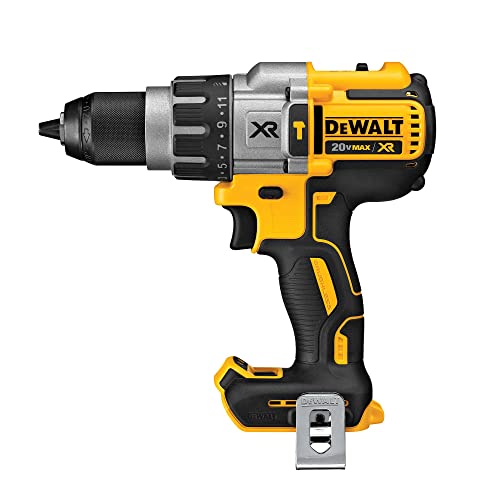
DeWalt DCD800 vs DeWalt DCD996 at a Glance
| Feature | DeWalt DCD800 | DeWalt DCD996 |
|---|---|---|
| Tool Classification | Basic Drill / Driver | Hammer Drill |
| Motor Type & Power | Brushless (300 Watts Max Output) | Brushless (300 Watts Max Output) |
| Gearing & Speed Range | 2 Speeds (0-650 / 0-2,000 RPM) | 3 Speeds (Up to 2,800 RPM listed / 2,000 RPM max rotational speed) |
| Chuck Construction | 1/2 in. Metal Ratcheting | 1/2 in. (13 mm) Nitro-Carburized Metal with Carbide Inserts |
| Tool Head Length | 6.37 inches | Not listed |
| Exterior Dimensions | 6.37″L x 2.5″W x 8.14″H | Not listed |
| Worklight System | 3-Position Pivoting 70-Lumen LED with 20-Min Spotlight | 3-Mode LED (20X brighter than previous model) with 20-Min Spotlight |
| Tool Asset Tracking | Tool Connect Chip Pocket (accepts DCE042 chip) | Not listed |
| Supplied Components | Two 2Ah batteries, charger, belt hook, kit bag | 360° side handle, belt hook (tool only) |
| Best For | Compact woodworking, cabinetry, and general fastening | Heavy-duty masonry boring, concrete anchors, and structural jobs |
Drilling Mechanism and Masonry Capability
The operational divide between a basic drill/driver and a hammer drill determines the materials each tool can penetrate effectively. A standard rotary drill relies purely on smooth rotational torque to pare away material, making it suitable for drilling wood, composite boards, plastics, and mild metals. A hammer drill, however, supplements continuous rotation with a mechanical percussion action, rapidly hammering the chuck forward and backward thousands of times each minute to pulverize stone and masonry aggregate while the flutes clear the particulate debris.
Examining the tool specifications reveals that the DCD800 is classified strictly as a basic drill without a percussion hammering mode. Its manufacturer specifications indicate a 0.5-inch drilling capacity in wood and a 0.5-inch drilling capacity in metal. Conversely, the DCD996 is engineered specifically as a hammer drill driver, listing drilling capacities of 16 millimeters in wood and 15 millimeters in metal alongside its high-impact hammer function. Comparing the capabilities found in our detailed comparison of the DeWalt DCD796 vs DCD996 confirms how a dedicated hammering clutch expands utility when moving across varied architectural surfaces.
For shoppers weighing the DeWalt DCD800 or DCD996 for masonry, the DCD996 is the sole viable choice. Attempting to bore into concrete footings, brick walls, or mortar joints with the DCD800 results in excessive heat buildup, prematurely blunted bits, and severe motor strain because the tool lacks the mechanical impact blows necessary to fracture brittle masonry materials. If your project schedule involves installing masonry anchors, running conduit through brick veneer, or drilling tapcon holes in concrete slabs, the hammer function of the DCD996 is mandatory.
Edge: DeWalt DCD996 because it incorporates a dedicated hammer drilling mechanism built specifically to penetrate concrete, brick, and stone.
Transmission Speeds and Drilling Velocity
Transmission gearing dictates how effectively a motor converts electrical energy into rotational speed and working torque across different bit circumferences. A multi-speed transmission permits operators to set mechanical thresholds: lower gears multiply torque for driving hefty lag screws or turning broad auger bits, whereas higher gears spin small-diameter twist bits rapidly to ensure clean, chatter-free holes. Having more mechanical speed stages prevents the motor from stalling under load or bogging down when transitioning between different materials.
Evaluating the DeWalt DCD996 hammer drill specs highlights its heavy-duty 3-speed all-metal transmission. The manufacturer data lists a maximum operational speed of 2,800 rpm (with a 2,000 rpm maximum rotational speed rating), supplying three discrete operational gears. The DCD800 employs a 2-speed transmission regulated by a variable-speed trigger, generating 0 to 650 rpm on gear one and 0 to 2,000 rpm on gear two. As noted in our analysis of the DeWalt DCD777 vs DCD996, that extra third gear step gives heavy-duty models a major operational advantage during high-velocity boring operations.
In the direct DCD996 vs DCD800 comparison, the 3-speed gearing of the DCD996 provides greater operational nuance. Speed one delivers raw low-end turning torque, speed two provides a balanced mid-tier velocity ideal for standard metal drilling and hole saws, and speed three unleashes peak rotational velocity for swift penetration in masonry or small hole production. The 2-speed setup on the DCD800 covers ordinary shop tasks and general carpentry, but it lacks the intermediate gear that fine-tunes cutting speeds for mid-diameter cutting accessories.
Edge: DeWalt DCD996 thanks to its 3-speed transmission that provides greater speed customization and reaches up to 2,800 rpm.
Tool Dimensions, Clearance, and Ergonomics
Physical clearance frequently dictates whether a tool can complete a job without damaging surrounding fixtures. In cabinetry, plumbing retrofits, and vehicle repair, access is severely constrained by parallel studs, shelving, and joist bays. A tool with an extended front-to-back length forces operators to drive screws at off-angles, which strips screw heads and damages pre-drilled surfaces. Ergonomics also governs fatigue during extended overhead tasks or long fastening cycles.
The DeWalt DCD800 specs emphasize an ultra-compact chassis designed specifically for confined quarters. The listing documents an overall length of 6.37 inches (measuring 6.37″L x 2.5″W x 8.14″H), which is a full 1/2-inch shorter in length than the previous-generation DCD791 tool head alone. For the DCD996, the listing does not specify precise exterior dimensions or overall length, but it does include a substantial 360-degree side handle with vibration control. Our breakdown of the DeWalt DCD796 vs DCD800 illustrates how trimming tool length down to 6.37 inches transforms maneuverability inside standard wall assemblies.
When assessing a DeWalt 20V compact vs hammer drill, ergonomic priorities shift dramatically. The DCD800 allows a carpenter to work inside 12-inch cabinet boxes, between standard 16-inch center wall studs, and within crawl spaces without bumping the back of the motor housing against obstructions. The DCD996, designed for high-stress masonry and structural loads, is a significantly larger and more cumbersome frame that demands two-handed operation with its auxiliary handle, making it unwieldy for fine cabinetry or repetitive light assembly.
Edge: DeWalt DCD800 due to its ultra-compact 6.37-inch length and agile profile tailored for confined spaces.
Torque Output and Heavy-Duty Performance
Heavy-duty drilling operations place massive demands on motor winding efficiency, gear durability, and chuck retention. When driving large self-feed bits, broad spade bits, or heavy structural screws, high torsional resistance threatens to stall the motor or cause the drill bit shank to spin loose inside the chuck jaws. Maintaining continuous rotational drive without slippage requires both internal mechanical muscle and hardened chuck components.
When analyzing DCD800 vs DCD996 torque characteristics, both tools utilize high-efficiency brushless motors rated at 300 watts of maximum power. The DCD800 listing specifies a maximum torque figure of 1400 ft-lb and pairs that output with a 1/2-inch metal ratcheting chuck. The DCD996 listing does not specify a numerical ft-lb torque metric, but the drill is equipped with a heavy-duty 1/2-inch (13 mm) ratcheting nitro-carburized metal chuck containing carbide inserts for superior bit gripping strength. As explored in our guide covering the DeWalt DCD996 vs DCD998, chuck grip integrity is paramount when heavy bits encounter dense resistance.
Prospective buyers wondering is DCD996 worth it for demanding commercial framing will find the answer in its heavy-duty mechanical hardware. The carbide inserts brazed inside the nitro-carburized chuck jaws physically bite into round and hex bit shanks, stopping bit slippage during high-torque stalls. While the metal chuck on the DCD800 provides dependable retention for general carpentry, the DCD996 is engineered with the auxiliary side handle and chuck reinforcement required to endure intense, sustained mechanical shock loads without failing.
Edge: DeWalt DCD996 because of its heavy-duty nitro-carburized chuck with carbide inserts and included 360-degree auxiliary side handle.
Woodworking and Fine Fastening Control
Precision woodworking requires delicate trigger modulation, balanced weight distribution, and controlled rotational momentum. Installing hinges, assembling face frames, mounting drawer runners, and countersinking brass hardware demand a drill that responds instantly to subtle trigger pressure. If a tool possesses excessive rotating mass or a heavy, front-weighted balance, driving fasteners flush without over-torquing, stripping wood fibers, or marring finished stock becomes extremely difficult.
In any thorough DeWalt DCD800 review, the tool’s compact balance and low-speed finesse stand out for fine carpentry. Its 0 to 650 rpm low gear provides a steady, controllable speed curve for sinking finish screws into hardwoods without cam-out. The listing specifies a drilling capacity of 0.5 inches in wood and 0.5 inches in metal, which perfectly matches common cabinetmaking hardware, pocket hole joinery, and shelf-pin jigs. Reviewing our overview of the DeWalt DCD800 vs DCD998 reveals that compact chassis geometry fundamentally improves accuracy when executing detail-oriented joinery.
When deciding between the DeWalt DCD800 or DCD996 for woodworking, the DCD800 is the far superior workshop instrument. The DCD996, with its reinforced hammer mechanism, larger casing, and 16-millimeter wood drilling capacity rating, is front-heavy and overbuilt for setting small fasteners into delicate furniture pieces. The agility, short head clearance, and centered balance of the DCD800 enable woodworkers to maintain absolute squareness against cabinet panels without the wrist strain caused by a heavy industrial hammer drill.
Edge: DeWalt DCD800 for its superior tactile balance, manageable mass, and excellent low-speed trigger control in fine woodworking.
Worklight Features and Smart Jobsite Tracking
Illumination and digital equipment management represent crucial aspects of everyday jobsite efficiency. Dark utility closets, unlit under-sink cabinets, and unfinished basements regularly require auxiliary lighting to see pilot marks and fastener heads clearly. Simultaneously, commercial contractors running multi-person jobsites require methods to monitor tool deployments and mitigate tool loss across scattered worksites.
In a comprehensive DeWalt DCD996 review, the lighting array stands out as a major upgrade over older generations. The DCD996 includes a 3-mode LED system rated up to 20 times brighter than the previous generation, featuring a dedicated 20-minute spotlight shutoff mode for prolonged work in darkened spaces. The DCD800 matches this runtime feature and introduces directional versatility: it incorporates an adjustable, 3-position 70-lumen LED with 3 modes, including its own 20-minute spotlight shutoff mode. Its pivoting base allows the user to aim the beam directly at the bit contact point, eliminating the chuck shadow common on fixed-light drills.
The DCD800 also incorporates modern asset tracking architecture. Its housing features an integrated Tool Connect chip pocket that accommodates the Tool Connect Chip DCE042 (sold separately), allowing seamless synchronization with the Tool Connect Site Manager app for digital asset management. The DCD996 listing does not specify a built-in Tool Connect chip pocket. For trade professionals managing tool cribs, the DCD800 offers integrated readiness for modern digital tracking systems.
Edge: DeWalt DCD800 due to its 3-position pivoting 70-lumen LED and integrated Tool Connect chip pocket for asset management.
Pros and Cons
DeWalt DCD800

Pros
- Compact 6.37-inch head length
- Pivoting 3-position 70-lumen LED worklight
- Includes two 2Ah batteries and charger
- Integrated Tool Connect chip pocket
Cons
- No hammer mode for masonry drilling
- Limited to 2-speed transmission
DeWalt DCD996

Pros
- Dedicated hammer mode for masonry drilling
- 3-speed transmission up to 2,800 rpm
- Nitro-carburized chuck with carbide inserts
- Includes 360-degree side handle
Cons
- Tool only without battery or charger
- Bulkier chassis requires greater clearance
Who Should Buy Each One
Choose the DeWalt DCD800 If
- You specialize in cabinetry, finish carpentry, or interior remodeling where a 6.37-inch head length is essential for fitting inside tight clearances.
- You need an all-inclusive kit out of the box, as the DCD800 package includes two 20V MAX 2Ah lithium-ion batteries, a charger, and a kit bag.
- You want an adjustable, 3-position pivoting 70-lumen LED worklight that can be directed precisely at fastener points without chuck shadows.
- You manage tools across commercial crews and want an integrated Tool Connect chip pocket that accepts the DCE042 chip for digital tracking.
Choose the DeWalt DCD996 If
- You regularly drill into masonry, brick veneer, block, or concrete foundations that require a true mechanical percussion hammer action.
- You already own DeWalt 20V MAX batteries and chargers and only require a heavy-duty, bare hammer drill equipped with a 360-degree side handle.
- You need the high drilling velocity and versatile gearing of an all-metal 3-speed transmission capable of reaching up to 2,800 rpm.
- You demand extreme bit retention under punishing torque loads provided by a nitro-carburized ratcheting metal chuck with carbide inserts.
Final Verdict
For most tradespeople, woodworkers, and general property owners, the DeWalt DCD800 is the more practical and ergonomic daily power tool. Its ultra-compact 6.37-inch head length resolves clearance issues inside cabinets and between framing members, while its brushless 300-watt motor supplies ample power for general wood and metal fabrication. Bundled as a comprehensive kit with two 2Ah batteries, a charger, a kit bag, and a pivoting 70-lumen worklight with Tool Connect integration, the DCD800 delivers superior handling, lower fatigue, and exceptional convenience for non-masonry drilling tasks.
The DeWalt DCD996 remains the decisive champion for structural framing, commercial mechanical installations, and masonry applications. Its internal percussion hammer mechanism allows it to conquer brick, concrete, and stone that would instantly stall or ruin the DCD800. Supported by an advanced 3-speed all-metal transmission reaching up to 2,800 rpm, a vibration-damped 360-degree side handle, and carbide-reinforced chuck jaws, the DCD996 is the heavy-duty workhorse built to tackle aggressive, multi-material jobsites where raw boring speed and masonry capability cannot be compromised.
FAQ
Does the DeWalt DCD800 have a hammer drill setting?
No, the DeWalt DCD800 is classified strictly as a basic drill/driver and does not feature a percussion hammer mechanism. It is designed for drilling wood and metal up to 0.5 inches and driving mechanical fasteners. For drilling into masonry, brick, stone, or concrete, you will need the dedicated hammer mechanism found on the DCD996.
What are the chuck differences between the DCD800 and DCD996?
The DCD800 is fitted with a 1/2-inch metal ratcheting chuck suitable for standard round and hex-shank drill bits. The DCD996 is equipped with a heavy-duty 1/2-inch (13 mm) nitro-carburized metal ratcheting chuck featuring carbide inserts, which bite deeper into drill bit shanks to prevent slipping under extreme torsional stress.
Can the DeWalt DCD800 use larger DeWalt 20V MAX batteries?
Yes, both tools belong to the DeWalt 20V MAX system and share full battery cross-compatibility. While the DCD800 kit includes two compact DCB203 2Ah lithium-ion batteries, it can accept higher-capacity DeWalt 20V MAX battery packs. However, installing larger battery packs will increase the tool’s overall weight and alter its compact center of gravity.
Why does the DeWalt DCD996 include an auxiliary side handle?
The DCD996 includes a 360-degree side handle with vibration control to give operators the two-handed mechanical leverage necessary to control heavy rotational torque. When turning wide-diameter bits or drilling into concrete with hammer action, sudden bit binding can twist the tool violently; the side handle ensures positive operator control and jobsite safety.
How do the LED worklight systems differ between the two models?
Both drills feature 3-mode LED worklights with a 20-minute shutoff spotlight function for dark work zones. The DCD800 provides an adjustable 3-position pivoting light emitting up to 70 lumens, allowing operators to direct illumination directly at the work surface. The DCD996 features a fixed 3-mode LED positioned on the base that is rated up to 20 times brighter than the prior generation.
What is the Tool Connect chip pocket on the DeWalt DCD800?
The Tool Connect chip pocket on the DCD800 is an integrated housing slot designed to hold a DeWalt DCE042 Tool Connect Chip (sold separately). Installing this chip allows the tool to connect with the Tool Connect Site Manager mobile application, enabling digital tracking and asset management for commercial contractors. The DCD996 listing does not specify this integrated chip pocket feature.


