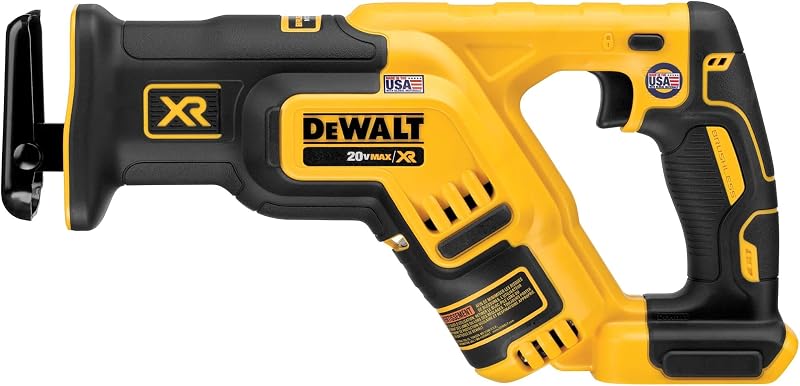
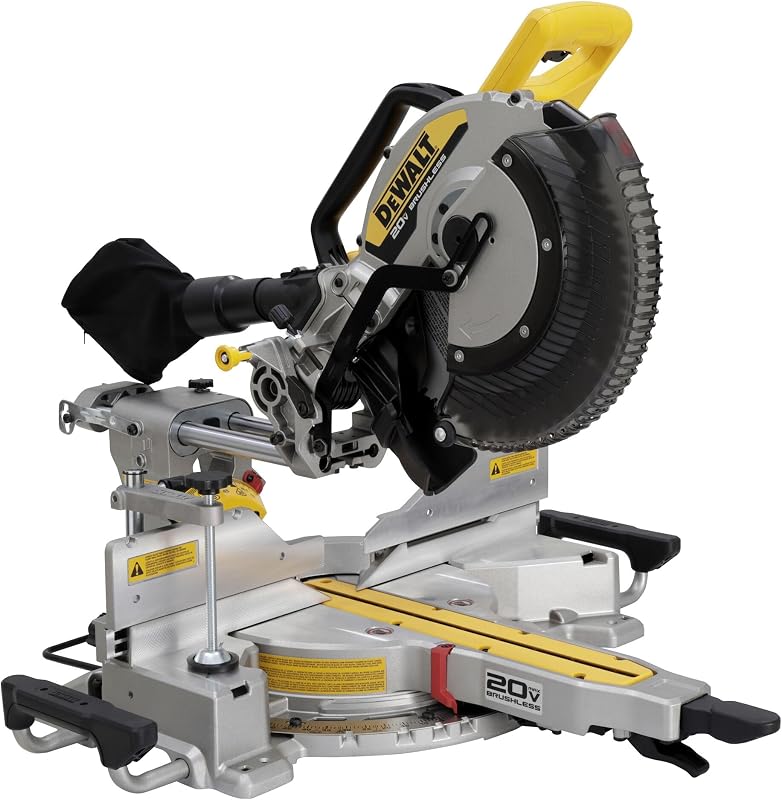
The fundamental dividing line between the DeWalt DCS785 and the Metabo HPT C10FCG2 comes down to crosscut capacity and power configuration: the DeWalt is a heavy-duty, battery-powered 12-inch sliding miter saw engineered to slice through boards up to 14 inches wide without an electrical outlet, whereas the Metabo HPT is an ultra-lightweight, corded 10-inch compound miter saw designed for straightforward stationary cutting on a standard 120-volt circuit.
Carpenters, deck builders, and trim specialists who require massive cutting reach and cordless mobility on rough job sites should choose the DeWalt DCS785. Workshop woodworkers, DIY hobbyists, and light-duty renovators looking for an easy-to-carry benchtop tool with continuous 15-amp wall power should select the Metabo HPT C10FCG2.

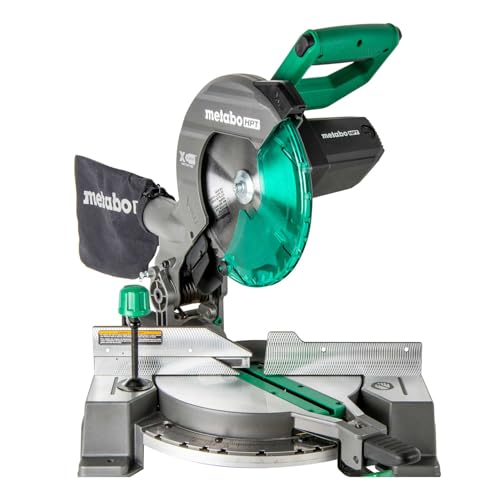
DeWalt DCS785 vs Metabo HPT C10FCG2 at a Glance
| Feature | DeWalt DCS785 | Metabo HPT C10FCG2 |
|---|---|---|
| Blade Diameter | 12 inches | 10 inches |
| Saw Architecture | Double Bevel Sliding Miter Saw | Single Bevel Compound Miter Saw |
| Power Source | 20V MAX / FLEXVOLT Battery Cordless | 120V Corded Electric (15-Amp, 1950W) |
| Max Horizontal Crosscut Capacity | Up to 14 inches | Not listed |
| Vertical Material Capacity | 6-1/2 in. baseboard / 6-1/2 in. crown | Not listed |
| Miter Range | 22.5-degree cutting angle stop listed | 0 to 52 degrees (Left and Right) |
| Bevel Capability | Double Bevel (pawls for 22.5° and 33.9°) | Single Bevel (0 to 45 degrees Left) |
| Tool Weight | 51.7 lbs bare tool (65.9 lbs total weight) | 24 lbs (24.2 lbs item weight) |
| Dust Collection | Up to 97% capture, Wireless Tool Control | Dust collection port (chute) |
| Included Blade | 60-tooth carbide blade | 40-tooth tungsten carbide blade |
| Warranty | Limited Warranty | 5-Year Warranty |
| Best For | Heavy jobsite framing, wide shelving, trim | Portable benchtop cutting, light molding |
Cutting Capacity and Blade Diameter
Blade diameter and rail design dictate the physical dimensions of lumber a miter saw can process in a single cut. A 12-inch sliding saw functions by pulling the spinning blade forward along precision rails, plunging into the timber, and pushing back through the material, which exponentially multiplies its horizontal span. A 10-inch non-sliding compound saw operates on a fixed pivot arm, restricting the cut width to the natural radius of the plunging blade.
When assessing the DeWalt DCS785 crosscut capacity, the specifications demonstrate true professional jobsite scale. The dewalt dws780 vs metabo hpt c10fcg2 comparison highlights similar reach differences, as the DeWalt DCS785 sliding miter saw cuts lumber up to 14 inches horizontally, handles 6-1/2 inch baseboard standing vertically against the fence, and manages 6-1/2 inch nested crown molding. The Metabo HPT C10FCG2 compound saw relies on a 10-inch blade without sliding rails, meaning its cutting depth and horizontal width suit standard dimensional framing like 2x4s and 2x6s, while wide stair treads, fascia boards, and 12-inch shelving boards exceed its single-pass reach.
The practical result of this dimensional difference is versatility. If your project demands cutting wide composite decking, large LVL beams, or oversized architectural trim, the 12-inch sliding carriage on the DeWalt finishes the job cleanly. With the Metabo HPT, cutting wide material requires flipping the board over or making multiple passes on a secondary tool, adding labor time to larger installations.
Edge: DeWalt DCS785 dominates capacity with a 14-inch horizontal cut span and dedicated clearances for tall vertical moldings.
Power Source and Operational Runtime
The power architecture of a cutting tool establishes where you can work and how long you can cut before pausing. Cordless tools eliminate trip hazards, extension cords, and hunting for live outlets, but they depend on the energy density of lithium-ion batteries. Corded tools provide limitless continuous run time from any standard utility outlet or generator, but they tether the operator to a wall plug.
In our DeWalt DCS785 review of power systems, the saw leverages a 20-volt cordless platform engineered for total battery compatibility across standard 20V MAX and higher-output FLEXVOLT battery packs. DeWalt integrates regenerative braking technology to harvest energy during deceleration, yielding up to 371 cuts in 3-1/4 inch MDF baseboard molding or 153 cuts in pressure-treated 4×4 timber per charge cycle. A built-in bevel gear transmission minimizes mechanical power loss between the motor and the arbor. Conversely, as explored in our dewalt dws779 vs metabo hpt c10fcg2 overview, the Metabo HPT C10FCG2 uses a corded 120-volt, 15-amp electric motor that generates 1,950 watts and a blistering 5,000 RPM no-load speed without ever running out of battery power.
Choosing between them involves weighing freedom against maintenance. The DeWalt DCS785 frees you from generator setups on unfinished construction sites, but requires keeping high-capacity batteries charged. The Metabo HPT guarantees full 5,000 RPM cutting velocity from morning to night, making it exceptionally reliable for high-volume repetitive cutting near an outlet.
Edge: Tie. DeWalt DCS785 delivers high-efficiency cordless portability with regenerative technology, while Metabo HPT C10FCG2 ensures non-stop 15-amp power without battery downtime.
Size, Weight, and Jobsite Portability
A miter saw often moves between a workshop, a truck tailgate, and multiple floors of a residential build. Tool weight and physical bulk directly affect user fatigue during setup, teardown, and transport through narrow doorways or up flights of scaffolding.
The Metabo HPT C10FCG2 weight profile stands out immediately, measuring an exceptionally light 24 pounds (with a 24.2-pound shipping specification) and compact dimensions of 23.6 inches long, 18.3 inches wide, and 21.8 inches high. It features an integrated vice clamping system and a wide 10-inch support table, allowing a single person to lift and store it on high workshop shelving with ease. The DeWalt DCS785 is an entirely different class of machinery, weighing 51.7 pounds for the bare tool and 65.9 pounds with packaging, paired with a frame spanning 33.81 inches long, 23.81 inches wide, and 19.5 inches high. While DeWalt equips the saw with molded carry handles, moving a 52-pound sliding chassis requires notable physical effort.
For mobile tradespeople who load equipment into a service van multiple times a day, this weight delta is significant. The dewalt dws715 vs metabo hpt c10fcg2 dynamic illustrates how non-sliding saws prioritize transport, and the Metabo HPT excels as a grab-and-go solution that occupies minimal floor or bench space.
Edge: Metabo HPT C10FCG2 wins portability decisively by weighing less than half of the DeWalt sliding saw.
Miter and Bevel Adjustments for Trim Work
Executing accurate joints on crown molding, baseboards, and casing requires refined miter and bevel adjustability. The distinction between single bevel and double bevel configurations determines whether you must flip long boards around end-for-end to make matching compound cuts or simply tilt the saw head in the opposite direction.
Deciding between the DeWalt DCS785 or Metabo HPT C10FCG2 for trim hinges on these mechanics. The DeWalt DCS785 is a double-bevel machine, allowing the blade head to tilt left and right. DeWalt incorporates physical bevel pawls for quickly locking into common architectural trim angles like 22.5 degrees and 33.9 degrees, alongside intuitive depth-of-cut stops. The Metabo HPT C10FCG2 utilizes a single-bevel setup that tilts from 0 to 45 degrees to the left only, featuring adjustable mechanical stops. However, the Metabo HPT compensates with an extended miter angle range that rotates from 0 to 52 degrees both left and right, supported by an improved miter scale and user-friendly control handles.
A double-bevel saw saves time and prevents mistakes when installing crown molding because the work material always remains oriented in the same direction against the fence. In contrast, similar to considerations in our bosch gcm18v-12sdn vs metabo hpt c10fcg2 evaluation, a single-bevel saw demands careful visualization to avoid making backward compound cuts on pre-finished stock.
Edge: DeWalt DCS785 earns the advantage for trim installation through dual-bevel tilting and preset trim pawls, though Metabo HPT offers an impressive 52-degree miter swing.
Dust Extraction and Cutline Accuracy
Fine particulate dust created during interior remodeling compromises air quality and requires extensive cleanup time. Concurrently, seeing the exact cut path before the spinning blade touches the wood ensures precise joinery and reduces material waste.
DeWalt engineered the DCS785 with an aggressive dust collection channel capable of capturing up to 97% of airborne debris during active cutting. It includes a standard collection bag and vacuum adapter, complemented by integrated Wireless Tool Control (WTC). This wireless protocol pairs the saw directly with compatible cordless dust extractors, automatically triggering vacuum suction the moment the saw trigger is pulled. For sightline precision, DeWalt uses its CUTLINE blade positioning system, an adjustment-free shadow line that casts the blade kerf directly onto the workpiece regardless of ambient light. Our Metabo HPT C10FCG2 review reveals that Metabo uses its proprietary Xact Cut shadow line system for blade alignment, which also casts an accurate blade kerf shadow, but relies on a standard passive dust port chute without automated wireless vacuum integration.
On occupied residential renovations or closed indoor workshops, dust capture makes a massive difference. The DeWalt saw actively cleans while cutting, significantly reducing broom and vacuum time at the end of the shift.
Edge: DeWalt DCS785 takes the category due to its 97% dust capture rating and automated Wireless Tool Control system.
Build Quality, Blade Equipment, and Warranty Value
Long-term reliability depends on motor resilience, arbor stability, and manufacturer backing. A comparison of the Metabo HPT C10FCG2 vs DeWalt DCS785 must consider the durability standards each brand builds into its tools and the out-of-the-box accessories provided.
The DeWalt DCS785 utilizes heavy-duty aluminum castings, a robust bevel gear transmission that eliminates belt slippage, and arrives equipped with a 60-tooth carbide-tipped finish blade tailored for smooth cuts in fine molding. DeWalt covers the unit with a standard limited warranty. The Metabo HPT C10FCG2 reflects Japanese tool engineering, featuring a resilient 15-amp motor, a 40-tooth tungsten carbide blade suited for general framing and rough carpentry, an included arbor wrench, and a material clamp. For shoppers asking is Metabo HPT C10FCG2 worth it, the standout factor is Metabo HPT’s 5-year warranty, which provides substantially longer factory protection than the standard coverage found on most commercial power tools, as also observed in our metabo hpt vs makita brand breakdown.
DeWalt delivers a higher-tier finish blade out of the box that is immediately ready for fine architectural trim. Metabo HPT counters with an extraordinary 5-year warranty that offers unmatched peace of mind for long-term ownership.
Edge: Metabo HPT C10FCG2 wins on warranty security, while DeWalt provides superior out-of-the-box blade tooth count and drivetrain engineering.
Pros and Cons
DeWalt DCS785
Pros
- 14-inch horizontal crosscut capacity
- Cordless 20V MAX and FLEXVOLT compatibility
- Captures up to 97% of dust
- Regenerative braking maximizes battery runtime
- Double bevel with quick pawl stops
Cons
- Heavy 51.7-pound bare tool weight
- Tool-only configuration requires separate batteries
- Large footprint demands substantial workspace
Metabo HPT C10FCG2

Pros
- Ultra-lightweight 24-pound chassis
- Continuous 15-amp corded power at 5000 RPM
- Generous 0-52 degree miter angle range
- Comprehensive 5-year manufacturer warranty
- Xact Cut shadow line system
Cons
- Non-sliding design limits crosscut capacity
- Single bevel tilts to the left only
- Requires access to a standard electrical outlet
View Metabo HPT C10FCG2 on Amazon
Who Should Buy Each One
Choose the DeWalt DCS785 If
- You need a massive 14-inch horizontal crosscut capacity for cutting wide stair treads, dimensional planks, and shelving.
- You cut crown molding and baseboard standing up and require the speed of a double-bevel tilting mechanism.
- You work on active construction jobsites lacking wall power and already utilize DeWalt 20V MAX or FLEXVOLT battery packs.
- You prioritize clean indoor air quality and want an integrated 97% dust capture system with Wireless Tool Control.
Choose the Metabo HPT C10FCG2 If
- You want an ultra-portable miter saw weighing just 24 pounds that is easy to move between your garage, basement, and truck.
- You prefer continuous corded 15-amp wall power running at 5,000 RPM without managing lithium-ion battery chargers.
- You primarily cut 2×4 lumber, standard deck boards, and small trim moldings within 10-inch non-sliding compound limits.
- You value outstanding consumer protection backed by a 5-year manufacturer warranty.
Final Verdict
When comparing a cordless 12 inch vs corded 10 inch miter saw, the DeWalt DCS785 is the clear choice for demanding contractors, finish carpenters, and framers. Its sliding rail design creates an expansive 14-inch horizontal crosscut reach, while its double-bevel system, 60-tooth carbide blade, and 97% dust extraction efficiency tackle fine interior trim with professional speed. While it carries considerable weight at 51.7 pounds, the freedom of 20V/FLEXVOLT cordless operation and regenerative braking makes it an exceptional jobsite workhorse.
For hobbyists, DIYers, and mobile remodelers who do not require wide sliding cuts, the Metabo HPT C10FCG2 provides outstanding practical capability. Weighing just 24 pounds, it delivers effortless transport, an expansive 0 to 52-degree miter range, continuous 15-amp cutting power, and an industry-leading 5-year warranty. If your workflow centers on portability and traditional framing dimensions, the Metabo HPT C10FCG2 delivers reliable cutting without the physical heft or battery logistics of a full-size sliding saw.
FAQ
Does the DeWalt DCS785 come with batteries and a charger?
The DeWalt DCS785 listing specifies this model as a tool-only unit (DCS785B). It does not include batteries or a charger in the box, but it is fully compatible with any DeWalt 20V MAX or DeWalt FLEXVOLT battery you may already own.
Can the Metabo HPT C10FCG2 slide forward to cut wide boards?
No. The Metabo HPT C10FCG2 is a non-sliding compound miter saw. It pivots downward on a stationary hinge, which limits its crosscut capacity compared to sliding models like the DeWalt DCS785.
What is the weight difference between the Metabo HPT C10FCG2 and DeWalt DCS785?
The Metabo HPT C10FCG2 weighs 24 pounds (24.2 pounds item weight), making it exceptionally portable. The DeWalt DCS785 bare tool weighs 51.7 pounds (with a total listed weight of 65.9 pounds), which is more than double the weight of the Metabo HPT.
What does Wireless Tool Control do on the DeWalt DCS785?
Wireless Tool Control is an integrated feature that connects the saw wirelessly to compatible DeWalt dust extractors. When you pull the saw trigger to make a cut, the paired vacuum turns on automatically, turning off shortly after you release the trigger.
What kind of blade comes standard on each miter saw?
The DeWalt DCS785 includes a 12-inch, 60-tooth carbide blade intended for fine trim and general carpentry. The Metabo HPT C10FCG2 includes a 10-inch, 40-tooth tungsten carbide blade designed for framing and general woodworking cuts.
Does the Metabo HPT C10FCG2 tilt in both directions for bevel cuts?
No. The Metabo HPT C10FCG2 is a single-bevel saw that tilts exclusively to the left from 0 to 45 degrees. The DeWalt DCS785 is a double-bevel saw that tilts both left and right with quick-setting bevel pawls.
What is the warranty coverage on the Metabo HPT C10FCG2?
The Metabo HPT C10FCG2 comes backed by a 5-year manufacturer warranty, which offers substantially longer coverage than standard limited power tool warranties.