Choosing between high-performance portable table saws often comes down to balancing injury prevention against raw ripping capacity and daily transport practicalities. The primary distinction that decides this matchup is safety technology: SawStop integrates an active flesh-detection safety brake that halts spinning blades in less than five milliseconds, whereas DeWalt prioritizes a 32-1/2-inch rip capacity and a substantially lighter overall setup.
Choose the DeWalt DWE7491X if you routinely rip broad sheet goods and want a lighter, straightforward package that is simple to carry onto jobsite staging areas. Choose the SawStop JSS-120A60 if eliminating severe blade-contact injuries is your absolute priority and you prefer a dedicated rolling cart assembly for shop or commercial woodworking.

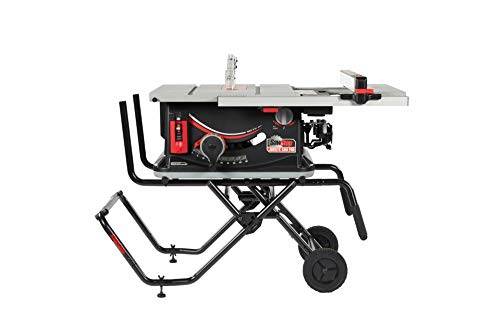
DeWalt DWE7491X vs SawStop JSS-120A60 at a Glance
| Feature | DeWalt DWE7491X | SawStop JSS-120A60 |
|---|---|---|
| Motor Specifications | 15 Amp, 120V (1800 Watts) | 1.5 HP, 15 Amp, 120V (1800 Watts) |
| Safety Technology | Standard Blade Brake & Site-Pro Guarding | Patented Flesh-Detection Safety System (< 5 ms) |
| Rip Capacity | 32-1/2 Inches | Not listed |
| Table Depth | Not listed | 24-5/8 Inches |
| Fence System | Rack & Pinion Telescoping Fence | Not listed |
| Tool Weight | 87 Pounds | 113 Pounds |
| Included Stand | Folding Scissor Stand | Mobile Cart Assembly |
| Blade Elevation | Standard Handwheel | One-Turn Elevation System |
| Warranty | Limited Warranty | 2 Year Manufacturer Warranty |
| Best For | Sheet goods ripping and easy vehicle loading | Workshop safety and rapid single-turn blade adjustments |
Safety Technology and Blade Braking
On any active jobsite or woodworking shop, table saw safety is an essential factor during repetitive operations. The SawStop JSS-120A60 sets the standard in this criterion through its proprietary flesh-detection system. When conductive human skin touches the spinning blade, the saw induces an electrical signal change that triggers an aluminum brake cartridge into the teeth. This mechanism arrests blade rotation in less than five milliseconds and drops the assembly below the table level, turning a potentially life-altering amputation into a minor cut. Woodworkers frequently ask is SawStop JSS-120A60 worth it for peace of mind, and the answer is evident whenever multiple hands operate equipment around busy spaces.
In contrast, the DeWalt DWE7491X relies on standard physical barriers alongside an integrated motor brake. It includes the Site-Pro modular guarding system, which allows tool-free adjustments of riving knives, anti-kickback pawls, and barrier shields to match differing cutting tasks. While the internal motor brake decelerates the spinning arbor once power shuts down, it cannot sense human flesh or stop instantaneously upon physical contact. When evaluating the SawStop safety brake vs DeWalt rack and pinion setup, safety consciousness remains entirely on the operator with DeWalt, demanding disciplined featherboard use and push stick adherence.
The difference between these approaches represents entirely distinct protection philosophies. DeWalt provides dependable physical guards that keep hands clear when properly deployed, but human error or kickback slips still present dangerous exposure. SawStop provides an active mechanical failsafe that steps in when mistakes happen. While triggering the SawStop system requires replacing the cartridge and blade afterward, it averts devastating medical consequences.
Edge: SawStop JSS-120A60 due to its flesh-sensing safety system that arrests the blade in under five milliseconds.
Rip Capacity and Material Support
Ripping dimensional lumber and composite panels efficiently requires sufficient lateral support to the right of the blade. A standard 4×8 sheet of plywood measures 48 inches wide, meaning a saw must offer at least 24 inches of rip width to bisect panels down their center. The DWE7491X vs JSS-120A60 rip capacity comparison highlights a substantial specification difference for framing crews and cabinet builders handling wide materials.
The DeWalt DWE7491X delivers a confirmed 32-1/2-inch rip capacity, supported by a telescoping rail system. This extended reach allows users to cut directly through the center of four-foot panels without awkward secondary supports. DeWalt also incorporates a two-position flip-over rip fence that provides an auxiliary shelf for narrow ripping tasks or overhangs to hold sheet stock level. For woodworkers evaluating a dewalt dwe7485 vs dwe7491x upgrade, this generous table width is the primary operational draw.
The SawStop listing does not specify its maximum rip capacity, though it notes an expansive 24-5/8-inch table depth from front to rear. That deeper surface creates superior fore-and-aft stability before and after the blade, reducing premature board drop-off. Nevertheless, without a verified wide-capacity rail extension listed in its technical data, the DWE7491X clearly leads for wide sheet material sizing.
Edge: DeWalt DWE7491X thanks to its confirmed 32-1/2-inch rip capacity and flip-over fence support.
Fence Mechanism and Precision Control
Fence movement defines cut accuracy, parallel alignment, and repeatable workflow throughout a workday. If a fence slips out of square, boards bind against the blade, creating burned edges or severe kickback. The fence mechanisms on these two models approach adjustment and repeatability through distinct mechanical methods.
The DeWalt DWE7491X features a dedicated rack and pinion telescoping fence system. By utilizing geared tracks at the front and back of the table synchronized by a drive shaft, turning the adjustment dial shifts both ends of the fence at the identical rate. This ensures the fence stays strictly parallel to the blade without manual nudging, alignment tapping, or double-checking measurements with a tape measure. Readers studying a dewalt dwe7491x vs skil ts6307-00 comparison will recognize DeWalt rack-and-pinion gearing as one of the most reliable systems in the portable tool category.
The SawStop JSS-120A60 focuses on overall cutting geometry and control through its class-leading 24-5/8-inch table depth. However, specific fence drive mechanisms like rack-and-pinion gearing are not listed in the manufacturer data for this unit. In our SawStop JSS-120A60 review evaluation of the provided specs, DeWalt provides the more documented, mechanically linked adjustment gear for day-in, day-out fence parallel precision.
Edge: DeWalt DWE7491X for its rack and pinion fence system that keeps cuts parallel effortlessly.
Jobsite Mobility and Stand Configurations
Transporting a table saw across unfinished terrain, up flights of stairs, or in and out of vehicle tailgates requires thoughtful mobility engineering. A saw that is cumbersome to stow or excessively heavy wears on a crew over the course of an installation project. Evaluating the DeWalt DWE7491X or SawStop JSS-120A60 for jobsite use reveals distinct differences in weight and base structures.
The DeWalt DWE7491X weighs 87 pounds and comes equipped with a folding scissor stand. This stand is designed for swift setup and breakdown with a wide, stable footprint, though it lacks integrated rolling wheels. When you finish cutting, the saw separates from the scissor stand, allowing you to lift each piece independently into a truck bed. This lower 87-pound weight makes solo handling significantly easier when navigating stairs or loading without assistance.
The SawStop JSS-120A60 is substantially heavier at 113 pounds, reflecting its heavy internal safety hardware and chassis construction. To offset this mass, SawStop includes a dedicated Mobile Cart Assembly. The unit stows into a compact vertical profile measuring 26.5 inches long, 29 inches wide, and 45 inches high, allowing operators to tilt and roll the saw across smooth jobsite surfaces like hand trucks. For further context on rolling bases, exploring the dewalt dwe7491rs vs sawstop jss-120a60 matchup shows how integrated wheeled stands compare across brands. While the SawStop cart rolls smoothly on flat ground, hoisting 113 pounds into a tall vehicle unassisted presents a significant physical burden compared to DeWalt’s lighter frame.
Edge: DeWalt DWE7491X due to its 26-pound lighter weight that makes solo transport and vehicle loading simpler.
Blade Elevation and Functional Features
Small operational adjustments made repeatedly across a shift can either streamline or slow down production. Adjusting cut height to match joinery, switching between grooving and through-cuts, and collecting waste sawdust are essential steps in professional woodworking routines.
The SawStop JSS-120A60 includes a patented one-turn elevation system. Rather than requiring numerous manual rotations of a conventional handwheel to crank the blade from beneath the table up to maximum height, the SawStop mechanism elevates or lowers the blade with a single quick turn. This accelerates setup times when changing stock thicknesses or dropping the blade below the surface between tasks. The SawStop listing also specifies a brushless motor design and a 2-year manufacturer warranty, offering extended factory backing compared to DeWalt’s standard limited warranty.
The DeWalt DWE7491X relies on a standard multi-turn handwheel for blade elevation, requiring multiple rotations to move the 10-inch blade from lowest to highest reach. For workshop cleanliness, DeWalt includes a 2-1/2-inch dust collection port positioned at the rear of the cabinet, which hooks directly to standard shop vacuums or extractor hoses to capture fine wood chips. While dust extraction on the DeWalt is convenient, the rapid single-turn elevation and two-year warranty on the SawStop provide superior convenience and long-term assurance.
Edge: SawStop JSS-120A60 for its fast one-turn blade elevation mechanism and 2-year manufacturer warranty.
Pros and Cons
DeWalt DWE7491X

Pros
- 32-1/2-inch rip capacity
- Rack and pinion fence system
- Lighter 87-pound total weight
- Tool-free Site-Pro modular guard
Cons
- Lacks flesh-sensing brake technology
- Scissor stand lacks wheels
View DeWalt DWE7491X on Amazon
SawStop JSS-120A60

Pros
- Flesh-sensing brake under 5 milliseconds
- One-turn blade elevation mechanism
- Mobile cart assembly included
- 24-5/8-inch table depth
Cons
- Heavy 113-pound tool weight
- Rip capacity not listed in data
View SawStop JSS-120A60 on Amazon
Who Should Buy Each One
Choosing between the SawStop Jobsite Saw PRO vs DeWalt DWE7491X requires looking closely at your workspace environment, cutting dimensions, and injury tolerance. Both saws feature capable 15-amp, 1800-watt power plants, but their design priorities cater to different professional demands.
Choose the DeWalt DWE7491X If
- You regularly rip wide plywood and composite panels requiring up to 32-1/2 inches of rip capacity.
- You work alone and need an 87-pound saw that is easy to hoist into a truck or van without help.
- You value a geared rack and pinion fence system that maintains parallel alignment without manual tapping.
- You want a stable folding scissor stand that breaks down quickly for compact vehicle staging.
Choose the SawStop JSS-120A60 If
- You want flesh-sensing blade technology that stops spinning teeth in under five milliseconds upon skin contact.
- You run a shared workshop, training facility, or commercial crew where safety compliance is crucial.
- You prefer a wheeled mobile cart that tilts and rolls across jobsites without being carried.
- You appreciate fast machine setups enabled by a single-turn blade elevation mechanism.
Final Verdict
When comparing the SawStop JSS-120A60 vs DeWalt DWE7491X, the DeWalt DWE7491X proves to be the more practical and adaptable option for high-volume jobsite framing and remodeling. Its 32-1/2-inch rip capacity accommodates full-sized sheet goods with ease, and its rack and pinion fence ensures quick, square cuts without guesswork. Combined with a total tool weight of 87 pounds, it remains easy to transport, load, and deploy across diverse work environments without excessive physical strain.
However, when asking which saw is best when deciding DeWalt DWE7491X or SawStop JSS-120A60 for woodworking around community shops or risk-sensitive settings, the SawStop JSS-120A60 is in a class of its own. Its flesh-sensing safety system eliminates the catastrophic injuries that standard saws risk every day. If safety and rapid elevation adjustments outweigh wide sheet rip capacity and carry weight, the SawStop remains the definitive choice for personal security.
FAQ
How does the safety brake on the SawStop JSS-120A60 work?
The SawStop safety system monitors a continuous electrical signal running through the saw blade. Because human tissue is naturally conductive, contact with skin alters this electrical signal, triggering a heavy-duty spring that drives an aluminum brake block into the spinning blade. This process arrests blade rotation in under five milliseconds and drops the assembly beneath the table surface.
What is the rip capacity of the DeWalt DWE7491X?
The DeWalt DWE7491X has a maximum rip capacity of 32-1/2 inches to the right of the blade. This wide capacity is facilitated by a telescoping rack and pinion rail system and an integrated flip-over fence that provides outboard support for wide sheet materials or low clearance for narrow strips.
What stands are included with the DeWalt DWE7491X and SawStop JSS-120A60?
The DeWalt DWE7491X includes a folding scissor stand that provides a solid four-point base for fast setup and breakdown without wheels. The SawStop JSS-120A60 includes an integrated Mobile Cart Assembly featuring wheels and folding handles that allow the 113-pound saw to tilt and roll like a hand truck.
Can the DeWalt DWE7491X connect to a shop vacuum?
Yes, the DeWalt DWE7491X includes a 2-1/2-inch dust collection port located on the back of the saw shroud. This port connects directly to standard 2-1/2-inch shop vacuum hoses for efficient chip and dust evacuation during dry woodworking tasks.
Does the SawStop JSS-120A60 require a battery?
According to the product specifications, the SawStop JSS-120A60 lists one product-specific battery required alongside its standard 120-volt corded electric power source. This power setup supports the internal monitoring systems of the machine.
How do the weights of the two saws compare for solo workers?
The DeWalt DWE7491X weighs 87 pounds, while the SawStop JSS-120A60 weighs 113 pounds. The 26-pound weight difference makes the DeWalt significantly easier for a single worker to pick up and lift into a vehicle bed, whereas the heavier SawStop is best rolled on its mobile cart over flat surfaces.


