The core distinction that separates these two portable power pioneers comes down to power throughput versus ergonomic carrying convenience: EcoFlow engineers its systems for aggressive output wattage, ultra-fast wall recharging, and sub-10ms uninterrupted power supply (UPS) speeds, whereas Jackery prioritizes grab-and-go weight savings, streamlined physical footprints, and simplified outdoor utility.
Choose an EcoFlow unit if you need heavy-duty wattage to run high-draw home appliances through sudden blackouts without tripping an inverter; pick a Jackery station if you want a lighter, space-efficient power source built for vehicle packing, trail excursions, and low-friction weekend camping.
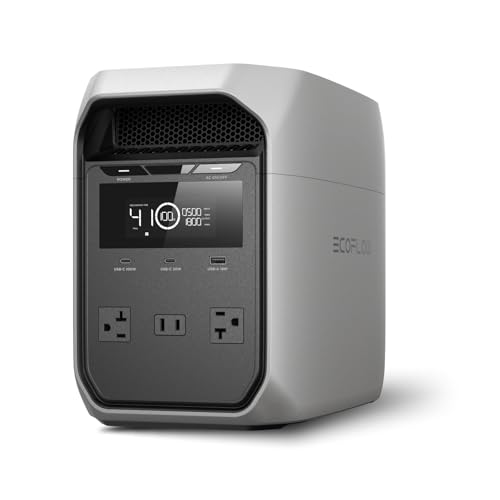


EcoFlow vs Jackery at a Glance
| Attribute | EcoFlow | Jackery |
|---|---|---|
| Continuous AC Output | 1800W (DELTA 3 Classic) to 2400W (DELTA 3 Max) | 300W (Explorer 300) to 1500W (Explorer 1000 v2) |
| Maximum Surge / Overdrive | Up to 3400W continuous X-Boost (DELTA 3 Max) | 600W (Explorer 300) to 3000W surge (Explorer 1000 v2) |
| AC Wall Recharge Speed | 0-80% in 45 min (DELTA 3 Classic) to 1.13 hrs (DELTA 3 Max) | 0-100% in 1 hr emergency mode (Explorer 1000 v2; 1.7 hr default) |
| Battery Cell Chemistry | LiFePO4 (LFP) | LiFePO4 (LFP) |
| Cycle Life Expectancy | 10+ years daily use rating | 4,000+ cycles to 70% capacity (10-11+ years) |
| UPS Transfer Speed | Under 10 milliseconds | Not listed |
| Solar Input Integration | 500W solar panel recharge in 2.5 hours (DELTA 3 Classic) | Proprietary Jackery panel compatibility (Explorer 1000 v2) |
| Unit Weight | 26.7 lbs (DELTA 3 Classic) | 7.5 lbs / 12.9 lbs package (Explorer 300) to 23.8 lbs (Explorer 1000 v2) |
| App Support & Scheduling | EcoFlow app with Storm Alert and Self-Powered Mode | Jackery App with quiet, emergency, and efficiency modes |
| Best For | Home blackout defense and heavy appliance loads | Recreational camping and lightweight field power |
AC Output Wattage and Appliance Support
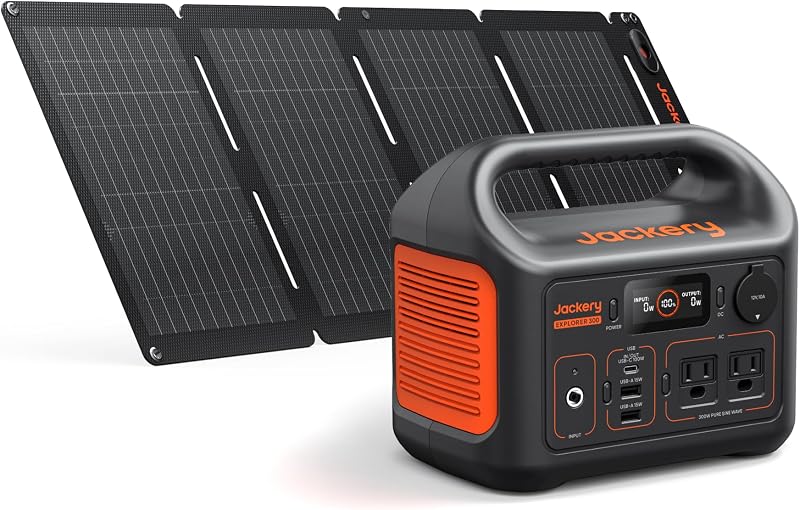
Continuous inverter output determines which household or job site devices a portable power station can safely start and maintain without triggering an overload shutoff. When analyzing EF ECOFLOW Portable Power Station Delta 3 Classic against its segment rivals, the hardware emphasizes overhead capacity. The DELTA 3 Classic provides 1800W of continuous output with a 3600W surge ceiling, augmented by proprietary X-Boost technology that scales to handle resistance heating loads up to 2600W. Stepping up to the Jackery Explorer 1000 v2 Portable Power Station delivers a continuous 1500W output rated for a 3000W surge peak, which is sufficient for operating blenders, portable coffee makers, electric cooking pots, and compact air conditioners. However, it lacks the multi-kilowatt overdrive headroom engineered into EcoFlow models. At the ultra-compact end of the lineup, the Jackery Solar Generator 300 is rated for 300W continuous delivery with a 600W surge peak, intentionally tailored for cameras, drones, field monitors, and laptops rather than thermal appliances. Those studying traditional backup setups through a generac gp8000e vs ecoflow delta 2 evaluation will recognize that clean battery inverter output eliminates fuel storage, but raw capacity remains bounded by continuous inverter limits.
The gap in ecoflow vs jackery output wattage becomes stark once multiple appliances share the inverter simultaneously. With the DELTA 3 Classic offering 6 AC outlets and the DELTA 3 Max supporting up to 3400W running wattage, users can sustain multiple intensive electronics together. The Explorer 1000 v2 provides 3 pure sine wave AC outlets across its 1500W limit, operating at a 12.5A current rating. If your daily or emergency power routine involves running heating elements alongside refrigeration compressors, EcoFlow supplies substantially broader headroom before requiring load division.
Edge: EcoFlow, because its higher continuous ratings and X-Boost headroom up to 3400W support heavier household and workshop appliances without tripping.
Recharge Speeds and Grid Efficiency
Recharge speed dictates how rapidly a power station can replenish its cells before severe weather strikes or during brief stops at an electrical outlet between outdoor destinations. Looking at ecoflow vs jackery charging speed benchmarks, EcoFlow leans heavily on its integrated X-Stream AC charging architecture. The DELTA 3 Classic takes full advantage of this circuitry, charging from 0% to 80% in 45 minutes straight from a standard wall outlet. The larger 2048Wh DELTA 3 Max charges from 0% to 80% in approximately 1.13 hours. This rapid grid turnaround minimizes pre-trip planning anxiety and allows quick battery recovery during intermittent grid restorations during an extended neighborhood power outage.
Jackery approaches AC replenishing with a dual-mode strategy via its mobile application. The Explorer 1000 v2 incorporates ChargeShield 2.0 technology, providing an Emergency Super Charging mode that accomplishes a 0% to 100% replenishment cycle in one hour. However, the listing notes that the system defaults to a 1.7-hour cycle to prioritize overall battery cell health, requiring users to actively engage the high-speed option inside the mobile interface each time. For smaller systems like the Explorer 300, charging relies on external AC adapters or solar inputs, taking 2.8 hours to reach 80% via a 100W solar panel or 7.5 hours using the bundled 40W Air solar panel. Anyone weighing quiet battery stations against combustion equipment in a honda eu2200i vs ecoflow delta 2 comparison knows that fast wall turnarounds are vital when access to an alternating current wall source is temporary.
Solar replenishment dynamics show distinct architectural philosophies as well. EcoFlow equips the DELTA 3 Classic with high-input solar charging capabilities, handling up to a 500W solar panel input to achieve a full recharge in 2.5 hours. Jackery integrates convenient outdoor solar kits, yet the Explorer 1000 v2 listing explicitly emphasizes that solar charging is compatible only with Jackery solar panels. This limitation restricts users from easily splicing existing third-party solar arrays without brand-specific connectors. Between standard default rates and array flexibility, EcoFlow offers a more responsive charging experience without software prerequisites.
Edge: EcoFlow, delivering 0-80% wall replenishment in 45 minutes out of the box without requiring manual software-mode overrides.
Portability and Physical Handling
Field ergonomics and vehicle packaging dictate how practical a power bank feels during weekend trips, camper van builds, and remote excursions. In any practical ecoflow or jackery for camping assessment, physical weight distribution and form factor become paramount. Jackery has long prioritized recreational utility, engineering the Explorer 1000 v2 to hit a compact 23.8 pounds with physical dimensions measuring 12.87 inches long, 8.82 inches wide, and 9.72 inches high. Its integrated foldable handle sits flush with the top chassis when stowed, creating a flat top surface that packs effortlessly alongside coolers, tents, and cargo storage boxes inside crowded vehicle trunks.
At the ultra-light level, the Jackery Explorer 300 shines as a dedicated backcountry power station. With a base unit weight of only 7.5 pounds (and 12.9 pounds listed total packaging including panel and cables), it is 17% lighter than class averages, allowing single-handed transport down trails, docks, or remote hunting blinds. Conversely, the EcoFlow DELTA 3 Classic weighs 26.7 pounds with an exterior footprint of 7.9 x 11.1 x 15.7 inches. While still technically portable, the higher density of EcoFlow hardware makes it noticeably heavier when lifting repeatedly in and out of a truck bed. The DELTA 3 Max increases the physical profile further, measuring 9.4 x 12 x 19.44 inches to house its large 2048Wh capacity within an aluminum and plastic housing.
Managing space on an extended overland journey requires evaluating how every pound affects your payload, an equation frequently examined in champion 100519 vs ecoflow delta 2 equipment matchups. Jackery clearly designs its enclosures for effortless handling, quick repacking, and minimal physical strain. The flush-folding handles and lighter materials make Jackery power stations significantly less cumbersome to transport across campsites, fishing piers, and outdoor tailgates.
Edge: Jackery, providing significantly lighter hardware, space-saving foldable handles, and superior grab-and-go portability across identical capacity brackets.
Battery Longevity and LiFePO4 Chemistry
The battery chemistry inside a power station determines its operational lifespan, thermal safety, and capacity retention after thousands of charge and discharge cycles. Both manufacturers have abandoned older lithium-ion formulas in these product tiers in favor of advanced Lithium Iron Phosphate cells. An examination of ecoflow vs jackery lifepo4 implementations reveals industry-leading durability specifications on both sides of the aisle. The EcoFlow DELTA 3 Classic and DELTA 3 Max use EV-grade CTC (cell-to-chassis) battery packs managed by an integrated smart Battery Management System (BMS), yielding a lifecycle rating designed for over 10 years of consistent daily cycling.
Jackery matches this standard by upgrading its modern lineup with premium LFP chemistry. The Jackery Explorer 1000 v2 is rated to retain over 70% of its original battery capacity after 4,000 complete charging cycles, which equates to more than 10 years of regular use. The smaller Explorer 300 similarly claims 4,000 charge cycles before reaching 70% state-of-health, promising more than 11 years of reliable field life. This high cycle ceiling eliminates the degradation fears that once plagued older portable generators, making both product families exceptionally durable long-term hardware investments.
When readers ask is jackery worth it or is ecoflow worth it based purely on battery longevity, the technical answer is that both brands deliver outstanding durability. Each brand backs its hardware with automated temperature monitoring, cell-balancing circuitry, and over-voltage safeguards. Because both sides utilize premium LFP cells rated for 4,000 cycles or a decade of daily abuse, cell longevity ceases to be a separating factor between them.
Edge: Tie, as both brands employ high-grade LiFePO4 cells offering 4,000 cycles or 10-plus years of sustained operational lifespan.
Emergency Backup and UPS Transfer Capabilities
During an unpredicted blackout, the speed at which a power station transitions from wall passthrough power to internal battery reserves determines whether connected home electronics survive the interruption. For consumers deciding between ecoflow or jackery for home backup, EcoFlow holds a massive engineering advantage through its dedicated uninterruptible power supply capabilities. Both the DELTA 3 Classic and DELTA 3 Max feature an automatic transfer switch rated at under 10 milliseconds (<10ms). This rapid switchover prevents desktop PCs, home servers, network modems, CPAP machines, and sensitive medical hardware from rebooting, dropping data, or cutting off during sudden electrical grid drops.
Jackery builds the Explorer 1000 v2 primarily around manual emergency deployment rather than permanent sub-10ms UPS inline stationing. While the Explorer 1000 v2 listing confirms recommended uses for emergencies and home backup, its manufacturer specifications do not state an ultra-fast sub-10ms automatic switchover rating. It serves effectively as a standby power hub that you bring to appliances during an outage to keep communication gear, portable refrigeration, and lighting functional. Readers assessing residential resilience through a duromax xp13000eh vs ecoflow delta 2 perspective understand that uninterrupted inline switching is essential for office workstations and medical gear that cannot endure even a momentary voltage dropout.
EcoFlow supplements its hardware-level transfer switch with extensive software automation. Through the EcoFlow mobile app, owners can configure automated functions such as Storm Alert mode to top off batteries automatically when severe weather approaches, or Self-Powered Mode to manage household energy distribution. The Jackery app provides helpful modes, including a 30 dB quiet overnight charging profile and basic efficiency controls, but it does not match the automated storm readiness and millisecond transfer reliability designed into the EcoFlow ecosystem.
Edge: EcoFlow, providing true <10ms UPS automatic transfer switching that protects sensitive electronics, workstations, and medical devices from rebooting.
Pros and Cons
EcoFlow

Pros
- Up to 3400W continuous X-Boost mode
- Ultra-fast 0-80% charging in 45 minutes
- Under 10ms automatic UPS transfer time
- Long-lasting 10-year LiFePO4 battery pack
- High 500W solar input compatibility
Cons
- Heavier base units reaching 26.7 pounds
- DELTA 3 Classic incompatible with extra batteries
View EF ECOFLOW Portable Power Station Delta on Amazon
Jackery
Pros
- Ultra-lightweight 7.5-pound compact build available
- Durable LiFePO4 rated for 4000+ cycles
- Space-saving design with foldable carrying handle
- Emergency 1-hour fast charging mode
- Whisper-quiet 30 dB overnight charging profile
Cons
- Lower continuous output wattage ceiling
- Explorer 1000 v2 requires proprietary solar panels
View Jackery Solar Generator 300 40W on Amazon
Who Should Buy Each One
Choose the EcoFlow If
- You need uninterrupted power supply functionality with an automatic <10ms transfer switch to protect desktop computers, CPAP units, and home network modems.
- You intend to run high-wattage home appliances like large refrigerators, microwaves, and electric power tools through X-Boost modes reaching up to 3400W.
- You demand rapid emergency charging from a standard AC wall outlet, reaching 0-80% in as little as 45 minutes without changing app presets.
- You want broad solar array options, including 500W input rates that replenish the battery in 2.5 hours using non-restrictive solar connections.
Choose the Jackery If
- You prioritize lightweight transport, wanting an ultra-portable battery station like the 7.5-pound Explorer 300 for hiking, drone flying, or hunting blinds.
- You need space-saving packing for car camping and overland travel, benefiting from the Explorer 1000 v2’s foldable handle and 23.8-pound frame.
- You want a quiet, dedicated night mode that charges your power station at an ultra-low 30 dB sound profile inside tents or small RV cabins.
- You prefer a simplified plug-and-play outdoor ecosystem built to integrate cleanly with dedicated, matching solar panels.
Final Verdict
When evaluated across specifications and practical usability, EcoFlow emerges as the overall superior choice for users demanding high electrical throughput, resilient home backup, and rapid energy turnaround. By combining continuous inverter outputs up to 2400W (with 3400W continuous X-Boost headroom), automatic sub-10ms UPS switching, and 45-minute wall charging, models like the DELTA 3 Classic and DELTA 3 Max operate as legitimate residential defense stations. They easily power demanding resistance appliances, keep essential home hardware online through storms, and recharge fast enough to take full advantage of brief utility restorations.
Jackery remains the undisputed victor for campers, weekend road trippers, and mobile creators who value physical agility over brute output power. With the Explorer 1000 v2 weighing just 23.8 pounds with a flat-stowing foldable handle, and the Explorer 300 dipping down to a featherweight 7.5 pounds, Jackery makes field transport substantially easier. If your electrical demands center on powering electronics, camp lighting, portable coolers, and basic small appliances while on the move, Jackery delivers the most refined, travel-friendly package available.
FAQ
Is Jackery worth it for outdoor camping?
Yes, Jackery is exceptionally well suited for outdoor camping because of its lightweight construction and practical exterior design. Products like the Explorer 300 weigh only 7.5 pounds, while the Explorer 1000 v2 features a flush-folding handle and a 23.8-pound frame that packs neatly alongside vehicle gear. With long-lasting LiFePO4 cells rated for over 4,000 cycles, Jackery provides dependable outdoor power for cameras, portable fridges, and mobile devices without adding excess bulk to your load.
Is EcoFlow worth it for whole-home blackout protection?
Yes, EcoFlow provides clear advantages for emergency home outages due to its higher continuous wattage ratings and rapid switchover hardware. With models like the DELTA 3 Classic delivering 1800W continuous output (expandable to 2600W via X-Boost) and the DELTA 3 Max providing 2400W continuous power (3400W running wattage), EcoFlow easily runs essential appliances like refrigerators, microwaves, and medical equipment that would trip smaller portable units.
What is the difference between EcoFlow and Jackery charging speeds?
EcoFlow models feature default X-Stream wall charging that replenishes batteries from 0% to 80% in 45 minutes on the DELTA 3 Classic and 1.13 hours on the DELTA 3 Max. Jackery’s Explorer 1000 v2 can achieve a full 0% to 100% charge in one hour, but it requires users to manually enable an emergency super charging mode inside the Jackery App; otherwise, it defaults to a 1.7-hour charging profile to preserve cell health.
Can I use third-party solar panels with the Jackery Explorer 1000 v2?
According to the product specifications, the Jackery Explorer 1000 v2 is compatible only with Jackery solar panels for solar charging. This design requires users to remain within the manufacturer’s solar hardware ecosystem rather than utilizing generic third-party solar arrays without brand-specific integration.
Can EcoFlow power stations act as an uninterrupted power supply for computers?
Yes, both the EcoFlow DELTA 3 Classic and DELTA 3 Max feature an automatic transfer switch rated at less than 10 milliseconds (<10ms). This ultra-fast switchover allows sensitive electronics, including personal computers, network routers, and CPAP machines, to remain powered seamlessly without shutting down or losing data when grid power cuts out.
How do EcoFlow and Jackery compare in battery lifespan?
Both brands offer outstanding longevity by utilizing premium LiFePO4 (LFP) battery chemistry. Jackery rates units like the Explorer 300 and Explorer 1000 v2 for over 4,000 cycles before reaching 70% capacity, exceeding 10 to 11 years of service life. EcoFlow similarly rates its EV-grade LFP cells for 10-plus years of daily usage, ensuring that neither side degrades rapidly under frequent cycling.
Can you expand the battery capacity on the EcoFlow DELTA 3 Classic?
The product listing notes that the EcoFlow DELTA 3 Classic is not compatible with the DELTA 2 Smart Extra Battery or the Delta 3 Series Smart Extra Battery. Buyers needing more raw capacity should look toward higher-capacity stand-alone models like the DELTA 3 Max, which provides 2048Wh natively.


