The defining difference between the Elgato Wave 3 and the Audio-Technica AT2020 comes down to connection architecture: the Wave 3 is a digital USB condenser microphone built with integrated signal processing, while the AT2020 is a traditional analog XLR studio condenser requiring external audio hardware. Deciding between them means choosing between an all-in-one desktop command center and an expandable analog recording chain.
Choose the Wave 3 if you want instant plug-and-play setup, virtual audio mixing, and digital clipping protection directly over USB. Choose the AT2020 if you plan to build a dedicated studio audio chain with audio interfaces, mixers, and balanced analog cabling.

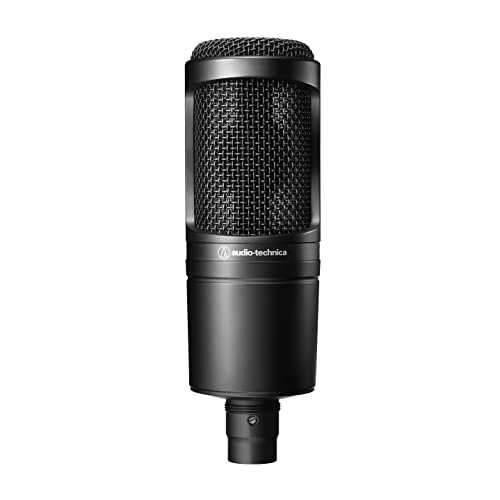
Elgato Wave 3 vs Audio-Technica AT2020 at a Glance
| Feature | Elgato Wave 3 | Audio-Technica AT2020 |
|---|---|---|
| Connector Type | USB Type-C | Integral 3-pin XLRM |
| Power Source | Corded Electric / Plug-In Power | Phantom Power (48V external) |
| Polar Pattern | Super Cardioid | Unidirectional / Cardioid |
| Signal Processing | Wave FX Processor, Clipguard 2.0, Auto Gain | None (Pure Analog Signal) |
| Onboard Controls | Multifunction dial, capacitive mute, LED ring | None |
| Signal-to-Noise Ratio | 110 dB | 74 dB |
| Enclosure Material | Metal, Plastic | Metal |
| Headphone Monitoring | Integrated 3.5mm jack with zero latency | None (Requires interface output) |
| Weight | 7.52 ounces | The listing does not specify |
| Best For | Live streamers, gamers, and direct desktop recording | Home studio musicians, voiceover, and multi-mic setups |
Connectivity and Hardware Requirements
The operational gap between these two microphones begins at the connector. The Wave 3 is built for direct connection to personal computers and laptops via a modern USB Type-C cable. It bypasses the need for external conversion hardware, operating entirely on standard plug-in bus power. Users who want a fast, clutter-free desk setup can connect the Wave 3 to a PC or Mac and immediately begin streaming or recording without installing specialized drivers or handling analog cable runs.
By contrast, an Audio-Technica AT2020 XLR setup relies on a balanced 3-pin XLR male connector that outputs an unamplified analog signal. The microphone cannot plug directly into a computer USB port. Operating the AT2020 requires an external audio interface or mixing console capable of delivering 48V phantom power. While this adds extra equipment to your desk, it connects the microphone to professional studio racks, hardware preamps, and multi-channel field recorders.
When weighing this Elgato Wave 3 vs AT2020 USB vs XLR trade-off, evaluate whether you value simplicity or modular expansion. The USB route of the Wave 3 keeps the entire audio chain inside a single cord. The XLR design of the AT2020 allows individual components-such as preamps, converters, and cables-to be replaced or upgraded independently without swapping out the microphone capsule itself.
Edge: Elgato Wave 3 for streamers wanting immediate plug-in connectivity without buying extra hardware.
Audio Processing and Software Control
Digital signal processing marks a massive divide in how these microphones handle incoming vocal dynamics. Any comprehensive Elgato Wave 3 review highlights the internal Wave FX Processor. This system runs real-time digital signal processing, combining equalization, noise reduction, and compression before the audio hits your recording software. It also features Clipguard 2.0, a multi-stage safety feature that automatically routes excessive volume peaks through a secondary, lower-volume signal path to prevent harsh digital clipping.
The AT2020 takes the opposite philosophy by delivering completely raw, uncolored analog sound. Because it lacks onboard processing, chips, or software suites, any vocal shaping, gating, or volume leveling must occur down the line. Audio engineers and home recording enthusiasts often prefer this blank canvas, managing dynamics via analog outboard compressors or digital signal chains inside their digital audio workstation. For readers comparing alternative USB options with software control, checking the elgato wave 3 vs hyperx quadcast s can illuminate how different brands handle digital DSP.
In addition to hardware DSP, the Wave 3 integrates with the proprietary Wave Link application. This tool functions as a digital mixing desk, enabling creators to blend multiple software audio channels-such as game audio, voice chat, alerts, and music-into distinct stream and monitor mixes. With the AT2020, achieving similar sub-mixing requires configuring virtual audio cables or purchasing an audio interface that features hardware loopback channels.
Edge: Elgato Wave 3 for its powerful onboard DSP, multi-channel software mixer, and Clipguard anti-clipping technology.
Microphone Capsule and Acoustic Performance
A closer look at capsule architecture reveals distinct engineering targets. The AT2020 uses a custom-engineered low-mass diaphragm designed specifically for extended frequency response down to 20 Hz and superior transient response. In an Audio-Technica AT2020 review, its ability to capture crisp vocal consonants and subtle acoustic instrument dynamics stands out. The microphone handles high sound pressure levels with ease, offering a wide dynamic range and an impedance rating of 200 ohms that pairs well with studio preamplifiers.
The Wave 3 features a premium condenser capsule tuned specifically for spoken-word clarity and vocal broadcast work. The manufacturer specifications list a super cardioid polar pattern, providing a tight pickup area that helps reject off-axis computer fans and mechanical keyboard typing. In the technical specifications, the Wave 3 posts a signal-to-noise ratio of 110 dB, compared to the 74 dB signal-to-noise ratio and 20 dB audible noise floor reported on the AT2020 data sheet.
In practical Elgato Wave 3 vs AT2020 sound quality assessments, your acoustic environment plays a huge role. The AT2020 features a wide cardioid pattern that captures natural room reflections alongside your voice, making acoustic wall treatment beneficial for clean results. You can read more about how studio condenser mics behave against broadcast dynamic options in our guide on the rode podmic vs audio-technica at2020. The Wave 3 focuses more tightly on the speaker, leaning on Auto Gain algorithms to maintain level stability when you lean away from the capsule.
Edge: Audio-Technica AT2020 for its custom low-mass diaphragm, wide dynamic range, and natural acoustic fidelity.
Physical Design and Onboard Controls
Tactile control during live sessions can streamline or disrupt your workflow. The Wave 3 integrates interactive hardware directly into its housing. A multifunction front dial lets you adjust input gain, headphone volume, and the mix balance between your microphone monitor and PC audio. Directly above the dial, a capacitive mute sensor allows silent muting with a gentle tap, while real-time LED indicator lights display your current levels and mute status at a glance.
The AT2020 strips away all onboard controls. Its rugged, side-address body features no dials, switches, or mute toggles. Adjusting your gain requires reaching for the physical knob on your external audio interface, and muting your channel must be done through software hotkeys or mixer buttons. To monitor your voice with the AT2020, you must plug your headphones directly into your interface or dedicated studio monitor output, rather than into the microphone itself.
Build materials also differ noticeably. The AT2020 features an all-metal chassis designed for durability inside studio environments where heavy mic booms and shock mounts are standard. The Wave 3 combines metal components with plastic framing to maintain a light footprint of 7.52 ounces, resting on an included desktop stand that takes up 3.9 by 3.9 inches of desk space. For listeners checking headphone monitoring options alongside studio mics, exploring the audio-technica ath-m50x vs ath-m20x shows how studio gear pairs together.
Edge: Elgato Wave 3 for its integrated multifunction dial, instant tap-to-mute sensor, and zero-latency 3.5mm monitoring port.
Streaming and Content Creation Workflow
Content creators have different operational demands depending on format. When choosing between the Elgato Wave 3 or Audio-Technica AT2020 for streaming, the Wave 3 holds a distinct architectural advantage. Streamers frequently juggle Discord audio, game sound, royalty-free music, and microphone levels live on air. The Wave Link software acts as a master hub, allowing you to feed your audience one customized mix while sending a different mix to your own headphones.
When selecting the Elgato Wave 3 or Audio-Technica AT2020 for podcasting, the calculation shifts toward recording format. If your podcast features multiple hosts in the same physical room, USB microphones like the Wave 3 present routing challenges on a single operating system. The AT2020 shines in multi-mic tabletop setups because two, three, or four XLR microphones can plug into a single multi-channel interface or field recorder, tracking each voice onto isolated audio tracks.
Solitary voiceover artists and narrative podcasters will find advantages in both designs. The Wave 3 lets you produce finished, processed vocal tracks directly out of the box using built-in VST effects. The AT2020 gives creators an uncolored vocal baseline ready for nuanced post-production equalization inside audio mastering software. Readers interested in alternative desktop gaming solutions can compare the hyperx quadcast s vs audio-technica at2020 to see how multi-pattern mics stack up.
Edge: Elgato Wave 3 for single-creator livestreaming, but Audio-Technica AT2020 for multi-host podcasting.
Durability and Long-Term Versatility
Longevity depends heavily on whether you value future-proof connectivity or complete hardware integration. The AT2020 is widely regarded as a legacy studio tool because the 3-pin XLR standard has remained unchanged for decades. An AT2020 purchased today will plug into any analog mixer or audio interface manufactured ten years from now. Its rugged all-metal construction gives it the resilience required for project studio life, handling physical wear from mic stands and studio moves.
The Wave 3 offers durability geared toward desktop use, but its long-term functionality remains tethered to software operating systems and USB driver updates. While USB Type-C ensures broad current compatibility across modern PCs and Macs, digital USB microphones are inherently bound to computer hardware platforms. However, its combined feature set minimizes clutter, reducing the number of failure points by eliminating external cables, power supplies, and preamps.
Determining whether the Audio-Technica AT2020 is worth it depends on your desire to build a broader audio rig over time. If you want a microphone that grows alongside upgraded preamplifiers and outboard processors, the AT2020 serves as a reliable cornerstone. Asking if the Elgato Wave 3 is worth it comes down to whether you want maximum capability contained entirely within one compact unit on your desk right now.
Edge: Audio-Technica AT2020 for its rugged all-metal build and timeless analog connectivity.
Pros and Cons
Elgato Wave 3

Pros
- Plug-and-play USB Type-C connectivity
- Clipguard 2.0 multi-stage distortion protection
- Wave FX Processor with onboard DSP
- Multifunction dial with tap-to-mute
- 110 dB signal-to-noise ratio
Cons
- Enclosure includes plastic components
- Tied strictly to USB audio environments
Audio-Technica AT2020

Pros
- Standard 3-pin XLR studio connection
- Custom low-mass diaphragm for fast transients
- Rugged all-metal construction
- High sound pressure level handling
Cons
- Requires external interface with phantom power
- No onboard controls or mute buttons
View Audio-Technica AT2020 on Amazon
Who Should Buy Each One
Choose the Elgato Wave 3 If
- You want a single-cable USB-C microphone without buying an external audio interface
- You manage live stream broadcasts and need complex software audio routing for game, chat, and music
- You produce energetic content where loud vocal spikes require Clipguard anti-distortion hardware
- You need immediate tactile control over gain, headphone volume, and muting at your fingertips
Choose the Audio-Technica AT2020 If
- You already own or plan to purchase a dedicated XLR audio interface or studio mixer
- You record acoustic instruments, vocals, or voiceover in a dedicated acoustic space
- You plan to expand to a multi-microphone podcast setup sharing one recording interface
- You prefer an uncolored analog signal that you can sculpt manually using hardware gear or plugins
Final Verdict
For the vast majority of desktop livestreamers, gamers, and remote content creators, the Elgato Wave 3 is the superior overall purchase. It removes the friction of external preamps, cables, and converters by combining studio-quality condenser audio with an exceptional software mixer. The inclusion of the Wave FX Processor, Clipguard 2.0 anti-clipping protection, and tactile onboard controls gives solo creators everything required to produce broadcast-ready vocal tracks directly over a single USB-C cable.
The Audio-Technica AT2020 remains the undisputed champion for project home studios, acoustic musicians, and multi-person podcasting environments. Its custom low-mass diaphragm, wide dynamic range, and high SPL handling provide transparent, uncompressed vocal reproduction that digital USB mics struggle to match. If you want a rugged, all-metal microphone that integrates seamlessly into a traditional analog hardware chain and will never become obsolete, the AT2020 is the ideal foundation.
FAQ
Can I plug the Audio-Technica AT2020 directly into my computer with a basic adapter cable?
No, the AT2020 requires 48V phantom power to energize its internal condenser capsule and active circuitry. A simple XLR-to-3.5mm or passive XLR-to-USB cable cannot supply this operating voltage. You must connect the microphone to an audio interface, mixer, or standalone phantom power supply that connects to your computer.
Does the Elgato Wave 3 require the Wave Link software to function?
The Wave 3 operates as a standard plug-and-play USB condenser microphone on PC and Mac systems without the software running. However, installing Wave Link is essential if you want to use the multi-channel audio sub-mixing features, VST plugin integration, and onboard DSP controls.
Which microphone does a better job of blocking out background room noise?
The Wave 3 features a super cardioid polar pattern, giving it a slightly narrower frontal pickup zone than the standard cardioid pattern on the AT2020. This tighter pattern, combined with digital noise reduction tools in the Wave Link software, makes the Wave 3 more effective at ignoring keyboard clicks and room reverberation in untreated desktop spaces.
Can I use the Elgato Wave 3 with an analog audio interface?
No, the Wave 3 has only a digital USB Type-C port and a 3.5mm headphone monitoring output. It does not feature an analog XLR connection, meaning it cannot be plugged into studio mixers, external preamplifiers, or hardware audio interfaces.
Is the Audio-Technica AT2020 suitable for gaming and Discord voice chat?
The AT2020 works very well for voice chat and gaming, delivering clear, natural vocal quality. However, because it lacks onboard mute buttons, noise filtering, and auto-gain control, you will need to manage your muting, noise gates, and volume leveling through your interface hardware or third-party computer software.
Does the Elgato Wave 3 support zero-latency headphone monitoring?
Yes, the Wave 3 includes an integrated 3.5mm stereo headphone jack on the back of the microphone body. This port provides direct hardware monitoring of your voice with zero latency, and the multifunction front dial allows you to blend your live voice with computer playback audio in real time.


