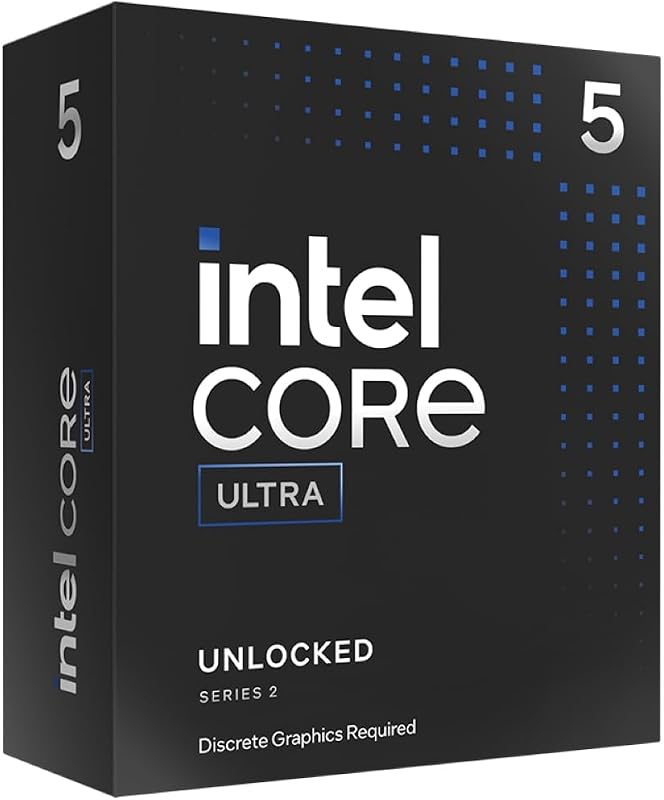
Choosing between these two mid-tier desktop processors comes down to whether you prioritize lower power consumption with an included cooler or higher clock frequencies and multithreaded capacity. The Intel Core i5-14400F emphasizes turnkey efficiency with its 65W base power profile and bundled thermal solution, whereas the Intel Core i5-13600KF targets heavy workloads with an unlocked multiplier, 14 cores, and an elevated 125W base power rating.
Builders seeking a straightforward, cool-running chip for a dedicated gaming rig should pick the Core i5-14400F, while those needing extensive multithreaded headroom for demanding productivity tasks should choose the Core i5-13600KF.


Intel Core i5-14400F vs i5-13600KF at a Glance
| Feature | Intel Core i5-14400F | Intel Core i5-13600KF |
|---|---|---|
| Processor Generation | 14th Gen | 13th Gen |
| Core Configuration | 10 cores (6 P-cores + 4 E-cores) | 14 cores (6 P-cores + 8 E-cores) |
| Concurrent Threads | 16 threads | 20 threads |
| Maximum Turbo Clock Speed | Up to 4.7 GHz | Up to 5.1 GHz |
| Secondary Cache | 20 MB | 24 MB |
| Processor Base Power | 65W (148W wattage listed) | 125W |
| Thermal Solution Included | Intel Laminar RM1 included | None included |
| Integrated Graphics | None (discrete graphics required) | None (discrete graphics required) |
| Socket Compatibility | LGA 1700 | LGA 1700 |
| Best For | Efficient gaming and simple out-of-box builds | High-framerate gaming and heavy multithreaded creation |
Core Architecture and Thread Count
Modern desktop tasks rely heavily on hybrid core design to delegate work between foreground execution and background housekeeping. Both of these processors use Intel performance hybrid architecture, integrating high-performance P-cores alongside energy-efficient E-cores to distribute software instructions intelligently across the Windows operating environment. However, the physical hardware layout reveals a notable difference when comparing the 13600KF vs 14400F core count across demanding workloads.
The Core i5-14400F features a 10-core layout split into 6 Performance cores and 4 Efficient cores, executing up to 16 concurrent threads. In contrast, the Core i5-13600KF steps up to a 14-core configuration featuring 6 Performance cores and 8 Efficient cores, supporting 20 concurrent threads. While both chips supply identical counts of 6 primary Performance cores to drive single-threaded application priorities, the 13600KF doubles the secondary E-core array, allowing it to soak up concurrent background utilities without stealing processing cycles from primary operations. For additional context on how 10-core hybrid models stack against previous steps, see our comparison of the intel core i5-14400f vs i5-13500.
In everyday use, those additional 4 E-cores and 4 threads on the Core i5-13600KF give users substantial room to run intensive tasks like video encoding, software compiling, or live broadcasting alongside modern game engines. The Core i5-14400F handles basic multitasking without strain, but its 16-thread ceiling leaves fewer spare resources when heavy background tasks compete with your active programs.
Edge: Intel Core i5-13600KF delivers four additional Efficient cores and four extra processing threads, providing superior multithreaded capacity.
Clock Speeds and Gaming Headroom
Peak operating frequencies directly dictate how fast individual instruction streams process through the execution pipeline, which remains a vital factor for high-framerate PC gaming. Looking at the i5-14400F vs 13600KF clock speed figures, the listings show different frequency ceilings. The Core i5-14400F reaches a maximum frequency of up to 4.7 GHz, whereas the Core i5-13600KF climbs up to 5.1 GHz utilizing Turbo Boost Max Technology 3.0.
When weighing the Intel Core i5-14400F or i5-13600KF for gaming, clock speed advantages translate into better frame pacing and higher frame ceilings in CPU-bound competitive titles. The 13600KF pairs its 5.1 GHz boost ceiling with an unlocked multiplier, giving enthusiast builders the flexibility to tune operating parameters manually on compatible motherboards. The 14400F operates within factory-defined boundaries up to 4.7 GHz, providing dependable plug-and-play output without configuration tinkering. To see how intermediate models perform against this tier, explore our breakdown of the intel core i5-13400f vs i5-13600kf.
The cache pool also benefits the 13th Gen chip, which packs 24 MB of secondary cache compared to 20 MB on the 14th Gen unit. That extra 4 MB of cache keeps more immediate frame data close to the cores, reducing memory bus delays when rendering dense environments. Both processors require a discrete graphics card because neither contains an integrated graphics processor, making dedicated GPU pairing mandatory for both rigs.
Edge: Intel Core i5-13600KF achieves a higher 5.1 GHz maximum boost clock and features an unlocked multiplier for enthusiast tuning.
Multitasking and Productivity Performance
Productivity performance depends on how effectively a processor handles sustained, all-core computing loads during tasks like media exports, scene rendering, archive decompression, and complex project compiling. Deciding between the i5-14400F or 13600KF for productivity comes down to whether your software tools scale across all available execution threads. An Intel Core i5-14400F review of specifications shows an able mid-range performer with 16 threads, which easily handles office workflows, image manipulation, and standard productivity tasks.
On the other hand, an i5-13600KF review perspective emphasizes raw throughput. With 20 threads powered by 8 Efficient cores and higher sustained power targets, the 13600KF stays responsive when tackling heavy production pipelines. If you frequently export timeline edits or run multi-track audio suites, the additional physical cores slash processing times and keep the user interface fluid. Power users looking at upper-tier chips can also read our evaluation of the intel core i5-14400f vs i5-13600k for related workload assessments.
So, is i5-13600KF worth it for work-focused systems? If your workstation workflow produces measurable waiting periods during batch rendering or packaging large codebases, the 20-thread structure of the 13600KF offers the hardware runway needed to reduce downtime. For routine document handling, standard photo editing, and light content creation, the 10-core 14400F supplies ample processing power without working the system hard.
Edge: Intel Core i5-13600KF completes heavy production tasks faster thanks to its 20 threads, 24 MB cache, and 8 dedicated E-cores.
Power Consumption and Thermal Profiles
Processor wattage ratings impact total electricity draw, power supply requirements, and the amount of heat dumped inside the chassis. In assessing i5-14400F power consumption vs 13600KF specifications, the two CPUs occupy completely different power envelopes. The Core i5-14400F features a 65W processor base power, with a maximum wattage listed at 148 watts. In contrast, the Core i5-13600KF features a 125W processor base power baseline, reflecting its higher clock targets and expanded core complex.
That lower 65W baseline makes the 14400F far gentler on compact enclosures and modest desktop builds. Because it dissipates less heat during standard desktop tasks, it runs comfortably in smaller enclosures with standard case fan configurations, keeping ambient internal temperatures low. Those curious about generational efficiency gains can reference our writeup comparing the intel core i5-13400f vs i5-14400f.
By comparison, the 13600KF draws significantly more energy when its 14 cores reach maximum utilization. Sustaining 125W at base frequencies demands steady airflow, robust motherboard power delivery stages, and a well-ventilated chassis to prevent thermal buildup. For builders designing an energy-conscious system that stays cool under casual operating conditions, the 14400F presents a significantly lighter footprint.
Edge: Intel Core i5-14400F consumes less baseline energy with its 65W base power profile, generating less heat inside your system.
Cooler Inclusion and Out-of-Box Readiness
A crucial practical distinction between these two processors is what you find inside the retail packaging. The Core i5-14400F includes an Intel Laminar RM1 thermal solution in the box. This bundled air cooler is engineered specifically to handle the thermal output of a 65W base processor, allowing builders to unbox the CPU, install it onto the motherboard, attach the included cooler, and power on the system without purchasing extra parts.
Conversely, the Core i5-13600KF listing explicitly notes that no thermal solution is included. Because the 13600KF operates at a 125W base rating and targets clock frequencies up to 5.1 GHz, standard stock coolers cannot tame its heat output. Anyone purchasing the 13600KF must select and install a compatible LGA 1700 aftermarket cooling unit, such as a large multi-heatpipe tower cooler or an all-in-one liquid cooling loop. Comparing the higher-end unlocked offerings in our intel core i5-13600kf vs i5-14600k analysis reveals a similar ongoing cooling requirement across enthusiast models.
In this i5-13600KF vs Intel Core i5-14400F packaging comparison, the 14400F eliminates assembly guesswork. If you want a quick installation process that does not require measuring cooler clearances inside your case or buying thermal compound separately, the 14400F provides full out-of-the-box readiness.
Edge: Intel Core i5-14400F includes the Intel Laminar RM1 cooler in the retail box, eliminating the need to source an aftermarket cooler.
Platform Features and Memory Support
System builders considering either chip benefit from identical motherboard and memory flexibility. Both processors install into the LGA 1700 processor socket and maintain broad compatibility with Intel 600-series (which may require a BIOS update) and Intel 700-series chipset motherboards. This shared infrastructure means you can pair either CPU with existing motherboards without being locked into a single platform generation.
Memory compatibility is also identical across both units. Both CPUs support both older DDR4 memory and newer high-bandwidth DDR5 memory standards. This dual-standard support allows builders to carry over existing DDR4 kits on compatible motherboards or step up to high-speed DDR5 modules on updated boards. Additionally, both processors offer PCIe 5.0 and PCIe 4.0 lane support to accommodate modern graphics cards and fast NVMe solid-state storage drives.
The only specialized platform distinction in the product specifications is that the Core i5-13600KF listing highlights Intel Optane Memory support alongside Turbo Boost Max Technology 3.0. Beyond that niche feature, platform flexibility, interface expansion, and RAM options remain equal across both options.
Edge: Tie, as both processors share the LGA 1700 socket, PCIe 5.0/4.0 standards, DDR4/DDR5 memory support, and 600/700-series motherboard options.
Pros and Cons
Intel Core i5-14400F

Pros
- Includes Intel Laminar RM1 cooler
- Lower 65W base power profile
- DDR4 and DDR5 memory support
- 10 cores with 16 threads
Cons
- Lower 4.7 GHz maximum boost clock
- Fewer total cores than 13600KF
View Intel Core i5-14400F on Amazon
Intel Core i5-13600KF

Pros
- 14 cores and 20 threads
- Up to 5.1 GHz boost clock
- Unlocked multiplier for tuning
- Larger 24 MB cache
Cons
- No cooler included in box
- Higher 125W processor base power
View Intel Core i5-13600KF on Amazon
Who Should Buy Each One
Choose the Intel Core i5-14400F If
- You want an all-in-one package that includes the Intel Laminar RM1 thermal solution in the box.
- You prefer a 65W processor base power rating that produces less heat in your case.
- You are assembling a dedicated gaming PC focused on solid 10-core 14th Gen performance without overclocking.
- You want a fast, hassle-free installation process without matching third-party cooling gear.
Choose the Intel Core i5-13600KF If
- You manage heavy multithreaded workloads that scale across 14 cores and 20 threads.
- You want higher clock ceilings reaching up to 5.1 GHz with an unlocked multiplier for tuning.
- You plan to install a high-capacity aftermarket air or liquid cooling solution.
- You want a larger 24 MB cache to support competitive high-framerate gaming.
Final Verdict
For most mainstream PC builders putting together a dedicated gaming setup, the Core i5-14400F is the most sensible and practical choice. Its hybrid structure of 6 Performance cores and 4 Efficient cores provides 16 threads of responsive compute power, easily handling modern games and daily background software. Backed by an efficient 65W processor base power and the included Intel Laminar RM1 cooler, it offers a complete, hassle-free build experience that runs cool inside virtually any standard enclosure.
However, the Core i5-13600KF is the clear victor when raw computational speed and multithreaded capacity are your top priorities. With 14 physical cores, 20 concurrent threads, an unlocked 5.1 GHz boost ceiling, and an expanded 24 MB cache, it easily outpaces the 14400F in video rendering, compiling, and intensive multitasking. If you are willing to invest in a dedicated aftermarket cooler to handle its 125W thermal profile, the 13600KF provides the higher performance ceiling demanding power users need.
FAQ
Do both of these processors require a dedicated graphics card?
Yes. Both the Core i5-14400F and Core i5-13600KF are “F” designated models without integrated processor graphics. You must install a discrete graphics card to display video output on your monitor.
Does the Intel Core i5-13600KF come with a cooler in the box?
No. The Core i5-13600KF listing explicitly states that no thermal solution is included. You must supply a compatible LGA 1700 aftermarket cooler. By comparison, the Core i5-14400F includes the Intel Laminar RM1 cooler in its package.
Can I use my existing DDR4 RAM with these processors?
Yes. Both the Core i5-14400F and Core i5-13600KF support both DDR4 and DDR5 memory standards. Your ability to run DDR4 depends on whether your LGA 1700 motherboard features DDR4 memory slots.
Will either CPU work on an Intel 600-series motherboard?
Yes. Both processors are compatible with Intel 600-series and Intel 700-series chipset motherboards. If you install either CPU onto a 600-series board, you may need to perform a BIOS update first for the system to recognize the chip.
What is the core count difference between the 13600KF and 14400F?
The Core i5-13600KF features 14 cores (6 P-cores and 8 E-cores) with 20 threads, whereas the Core i5-14400F features 10 cores (6 P-cores and 4 E-cores) with 16 threads.
Can you overclock the Intel Core i5-14400F?
The Core i5-14400F operates up to a maximum boost clock of 4.7 GHz and does not support full multiplier overclocking. In contrast, the Core i5-13600KF features an unlocked multiplier allowing enthusiast clock tuning up to and beyond its 5.1 GHz factory boost.
What is the difference in base power between these two CPUs?
The Core i5-14400F features a 65W processor base power (with 148W max wattage listed in specs), while the Core i5-13600KF operates at a 125W processor base power.