The core architectural divide between the Intel Core i7-14700K and the Intel Core i9-13900K comes down to total multithreaded capacity versus targeted clock efficiency. While the Core i9-13900K leverages a massive 24-core configuration with peak frequencies reaching 5.8 GHz for raw production throughput, the refreshed Core i7-14700K introduces an expanded 20-core setup with speeds up to 5.6 GHz designed to maximize gaming responsiveness without the full hardware overhead of a top-tier flagship.
Mainstream builders and dedicated gamers should choose the Core i7-14700K for its balanced core distribution and modern frequency optimization. Demanding video editors, 3D animators, and heavy multitaskers should choose the Core i9-13900K to capitalize on its four additional efficiency cores and higher multithreaded headroom.
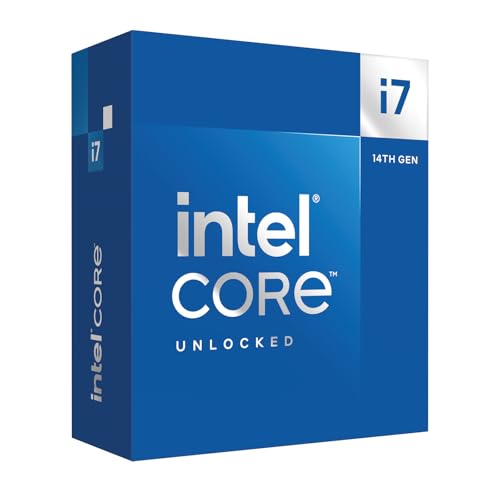
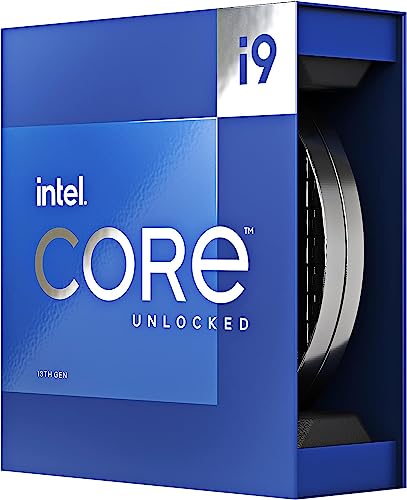
Intel Core i7-14700K vs Intel Core i9-13900K at a Glance
| Feature | Intel Core i7-14700K | Intel Core i9-13900K |
|---|---|---|
| Processor Generation | Intel 14th Gen | Intel 13th Gen |
| Core Configuration | 20 cores (8 P-cores + 12 E-cores) | 24 cores (8 P-cores + 16 E-cores) |
| Thread Count | 28 threads | 32 threads |
| Maximum Boost Clock | Up to 5.6 GHz | Up to 5.8 GHz |
| Boost Technologies | Turbo Boost Max Technology 3.0 | Thermal Velocity Boost, Adaptive Boost, Turbo Boost Max 3.0 |
| Cache | 33 MB Secondary Cache (33 GB installed listed) | 36 MB Cache (32 MB secondary cache listed) |
| Base Power Rating | 125 watts | 125 watts |
| Integrated Graphics | Intel UHD Graphics 770 | Intel UHD Graphics 770 |
| Memory Architecture | DDR4 and DDR5 support | DDR4 and DDR5 support |
| Motherboard Compatibility | Intel 600-series (potential BIOS update), 700-series | Intel 600-series (potential BIOS update), 700-series |
| Best For | High-framerate gaming and balanced productivity | Heavy multithreaded rendering and professional content creation |
Core Count and Multithreaded Processing
Thread allocation defines how effectively modern processors handle multi-application rendering pipelines, background task distribution, and intense computational workloads. The structural breakdown of the i7-14700K vs i9-13900K core count demonstrates how Intel balances performance cores (P-cores) and efficient cores (E-cores) across product tiers. The Core i9-13900K features 24 physical cores arranged into 8 Performance cores and 16 Efficient cores, giving it the capacity to run 32 concurrent threads. In contrast, the Core i7-14700K features 20 physical cores, blending 8 Performance cores with 12 Efficient cores to deliver 28 concurrent threads. Both processors utilize 8 primary performance cores, meaning their foundational compute structure for direct, single-threaded throughput remains evenly matched on paper.
Where the difference becomes tangible is in heavy background scaling and production rendering. The extra cluster of four efficiency cores on the Core i9-13900K allows it to ingest compute-heavy tasks such as Blender asset compilation, file compression, and distributed rendering routines with less pipeline congestion. Those upgrading their systems can observe that in the context of an intel core i7-13700k vs i7-14700k comparison, the 14700K gained an extra cluster of E-cores over its predecessor, closing the gap substantially against previous flagship silicon. Despite this update, the Core i9-13900K retains a measurable 14 percent thread count advantage that prevents workflow stalls during sustained parallel processing.
For daily desktop operation and general multitasking, the 28 threads offered by the Core i7-14700K provide more than enough computing headroom to stream, run communication software, and browse while running demanding foreground tasks. However, when evaluating heavy multi-core workflows, the raw thread saturation of the 24-core flagship processes batch actions at a noticeably accelerated pace. Choosing between them on compute architecture alone depends on whether your software engine can actively address more than 28 threads at a time.
Edge: Intel Core i9-13900K, because its 24-core, 32-thread configuration provides greater hardware parallelism for demanding multithreaded software.
Clock Speeds and Gaming Responsiveness
Frequency scaling dictates instant system responsiveness and high refresh rate stability in modern game engines. The Core i9-13900K achieves an unlocked maximum clock speed of up to 5.8 GHz, supported by an advanced boosting suite that includes Intel Thermal Velocity Boost, Intel Adaptive Boost Technology, and Intel Turbo Boost Max Technology 3.0. The Core i7-14700K reaches a ceiling of up to 5.6 GHz driven by Intel Turbo Boost Max Technology 3.0. The 200 MHz delta between these two chips translates to slightly higher burst frequency potential on the Core i9 processor when thermal headroom permits.
In actual play, when deciding on an i7-14700K or i9-13900K for gaming setup, frame rates in modern titles depend heavily on the 8 performance cores shared by both silicon designs. While the Core i9-13900K can sustain its peak 5.8 GHz frequency across single-core burst scenarios, real-world gaming loads generally push both chips into sustained multi-core frequencies where the differences shrink to marginal levels. When comparing hardware across generations, as seen in an intel core i7-14700k vs i9-14900k analysis, microarchitecture refinements in the 14th Gen design help narrow the perceived real-world disparity against higher-tier 13th Gen parts.
The extra clock speed on the flagship model requires pristine thermal management to maintain consistently. The Core i7-14700K achieves its 5.6 GHz target with less sophisticated thermal boosting dependencies, making high gaming frame rates more attainable on standard cooling solutions. Enthusiast gamers pushing competitive settings at extreme refresh rates will appreciate the absolute top-end speed of the Core i9-13900K, but mainstream gamers gain virtually identical stability from the Core i7 processor.
Edge: Intel Core i9-13900K, due to its higher 5.8 GHz maximum frequency ceiling and additional boost algorithms.
Platform Compatibility and Memory Architecture
Motherboard compatibility and memory flexibility determine both upgrade paths and overall system longevity. According to the product specifications, both the Core i7-14700K and Core i9-13900K support Intel 700-series chipsets as well as previous-generation Intel 600-series motherboards, the latter requiring a potential BIOS update before installation. Both chips integrate support for modern PCIe 5.0 and PCIe 4.0 lanes, ensuring fast communication channels for the newest graphics cards and solid-state storage drives. This cross-generational socket continuity allows owners of existing motherboards to drop either processor into their current build without purchasing a new platform.
Memory integration remains completely mirrored across both models. Each processor offers dual support for both DDR4 and DDR5 memory modules, granting system builders flexibility when choosing their memory kits. Running DDR4 provides a practical path for builders repurposing existing RAM modules, while DDR5 unlocks expanded system bandwidth that cuts down application loading times and aids data-heavy background transfers. System builders evaluating choices like the intel core i7-14700kf vs i9-13900k will note that Intel kept this memory controller identical across the entire desktop generation.
While the product listing for the Core i7-14700K specifies an LGA 771 socket entry in its technical detail field, standard physical compatibility for Intel 600- and 700-series desktop platforms centers around the LGA 1700 socket design specified on the Core i9-13900K listing. Because both processors explicitly declare complete motherboard compatibility with the exact same Intel 600 and 700 chipset families and offer identical PCIe and DDR4/DDR5 interfaces, neither chip gains a platform-level advantage over the other.
Edge: Tie, as both processors utilize identical chipset options, support PCIe 5.0 and 4.0 lanes, and provide dual DDR4/DDR5 memory compatibility.
Power Specifications and Thermal Profiles
Sustained computing performance relies heavily on how much electrical energy a processor demands and how much heat cooling equipment must dissipate. Both the Core i7-14700K and the Core i9-13900K feature an official Processor Base Power rating of 125 watts in their manufacturer specifications. Each processor features an unlocked multiplier that invites enthusiast adjustments, meaning both units can draw substantially more power than their baseline rating under demanding, all-core computing scenarios.
Managing heat dissipation requires serious planning on both chips. Because the Core i9-13900K incorporates 24 physical processing cores operating up to 5.8 GHz, its thermal management becomes significantly more challenging under complete load compared to the 20-core configuration of the Core i7-14700K. Anyone looking closely at a Core i9-13900K review will notice that keeping all 32 threads fully saturated without hitting thermal throttling requires substantial liquid cooling hardware. System builders migrating from older architectures, as discussed in our intel core i7-13700k vs i9-13900k analysis, must account for the strict thermal boundaries required to maintain maximum boost clocks on flagship silicon.
The Core i7-14700K runs with 12 efficiency cores instead of 16, resulting in slightly lower overall thermal density during sustained rendering loads. Both chips demand substantial cooling arrays, reliable power delivery from the motherboard, and adequate power supply units. Since their stated base power ratings are completely identical at 125 watts and both require robust cooling to run at peak capacity, neither model establishes a definitive efficiency win based solely on listing specifications.
Edge: Tie, because both chips share an identical 125-watt base power rating and require premium cooling solutions to maintain maximum boost behavior.
Content Creation and Professional Workstation Capability
Production environments place distinct demands on cache hierarchies and hardware media acceleration. For creators analyzing a 14700K vs 13900K video editing workflow, cache sizes and hardware video decoders play an active role in timeline scrubbing and timeline effects rendering. The Core i9-13900K is equipped with 36 MB of cache (with 32 MB secondary cache listed), whereas the Core i7-14700K listing indicates 33 MB of secondary cache (with a listing entry of 33 GB total installed cache). The broader cache pool on the Core i9 processor allows larger data blocks to remain immediately accessible to processing cores, accelerating high-bitrate video encoding tasks.
Hardware-level media encoding remains identical between the two processors thanks to integrated Intel UHD Graphics 770 silicon. Both chips feature this built-in GPU engine, which supports hardware video transcoding and media decoding pipelines, relieving the CPU cores of simple video playback tasks. This is particularly valuable for creators running non-linear editors that tap into integrated graphics acceleration alongside dedicated workstation GPUs. For those upgrading from legacy systems, as highlighted in the intel core i7-12700k vs i9-13900k breakdown, integrated UHD Graphics 770 provides a dependable fallback for troubleshooting and multi-monitor display outputs.
While their integrated graphics solutions are identical, the Core i9-13900K moves ahead in pure production environments due to its combination of 32 threads, 36 MB cache, and higher 5.8 GHz single-core bursts. Complex tasks like 3D animation rendering, ray tracing calculations, and export queues in modern video suites leverage every available efficiency core. The Core i7-14700K is remarkably competent for standard content workflows, but the flagship Core i9 design finishes heavy batch tasks faster.
Edge: Intel Core i9-13900K, because its 36 MB cache and 32-thread hardware layout accelerate video rendering, 3D workloads, and large file exports.
Pros and Cons
Intel Core i7-14700K
Pros
- Newer 14th Gen architecture
- High 20-core 28-thread configuration
- Up to 5.6 GHz turbo boost
- DDR4 and DDR5 memory support
Cons
- Fewer cores and threads than i9-13900K
- Lower maximum clock speed
- Smaller 33MB cache capacity
View Intel Core i7-14700K on Amazon
Intel Core i9-13900K
Pros
- Higher 24 cores and 32 threads
- Faster 5.8 GHz max boost clock
- Larger 36MB cache size
- Thermal Velocity Boost support included
Cons
- Older 13th Gen architecture
- Requires BIOS update on 600-series boards
View Intel Core i9-13900K on Amazon
Who Should Buy Each One
Choose the Intel Core i7-14700K If

- Your primary system focus is high-framerate PC gaming with standard streaming software running in the background.
- You want a modern 20-core processor that delivers strong multi-core performance without pushing cooling requirements to absolute extremes.
- You prefer a balanced 14th Gen Intel desktop chip that natively pairs with existing DDR4 or DDR5 motherboards.
- Your productivity needs center around general photo editing, casual video creation, and daily office multitasking.
Choose the Intel Core i9-13900K If

- You work professionally with multithreaded rendering engines, complex video export pipelines, or 3D modeling packages.
- You want the maximum possible single-core clock ceiling of 5.8 GHz via Thermal Velocity Boost and Adaptive Boost.
- You run heavy computational workloads that actively scale across all 32 simultaneous processing threads.
- You have an enthusiast-grade cooling setup capable of sustaining high-heat loads over extended render periods.
Final Verdict
For the vast majority of PC builders and dedicated gamers, the Intel Core i7-14700K represents the more sensible choice. With 20 total physical cores, 28 threads, and a peak frequency of 5.6 GHz, this processor handles modern game engines effortlessly while leaving plenty of computing room for background streaming and productivity tasks. It matches the platform compatibility, DDR4/DDR5 flexibility, and integrated graphics of its higher-tier sibling while operating with four fewer efficiency cores to cool under load.
The Intel Core i9-13900K remains the champion for production-focused creators, workstation users, and hardware enthusiasts chasing peak performance metrics. Its 24 cores, 32 threads, 36 MB cache pool, and maximum 5.8 GHz boost frequency deliver quantifiable advantages in multi-core rendering suites and complex export pipelines. If your daily PC usage revolves around heavy creative workflows where every minute saved on export renders matters, the Core i9-13900K justifies its flagship status.
FAQ
Can the Intel Core i7-14700K run on an older 600-series motherboard?
Yes. The Core i7-14700K is compatible with Intel 600-series chipset motherboards, though it may require a BIOS update before the board can properly recognize and initialize the 14th Gen processor.
Does the Intel Core i9-13900K include integrated graphics?
Yes. The Core i9-13900K comes with integrated Intel UHD Graphics 770, allowing you to run display outputs and utilize hardware media acceleration without needing a discrete graphics card installed.
Which processor has higher clock speeds for gaming?
The Core i9-13900K reaches a higher peak clock speed of up to 5.8 GHz compared to the Core i7-14700K, which reaches up to 5.6 GHz with Turbo Boost Max Technology 3.0.
Do these processors support DDR4 memory or only DDR5?
Both the Core i7-14700K and Core i9-13900K feature dual platform memory support, meaning they are compatible with both DDR4 and DDR5 memory modules depending on the motherboard chosen.
What is the difference in core count between the 14700K and 13900K?
The Core i7-14700K features 20 cores (8 Performance cores and 12 Efficient cores) with 28 threads, while the Core i9-13900K features 24 cores (8 Performance cores and 16 Efficient cores) with 32 threads.
What base power wattage do both processors require?
Both processors share an identical Processor Base Power specification of 125 watts according to their technical listings, though actual power draw increases when the processors boost under sustained heavy loads.