The decisive difference between the Intel Core i9-13900K and the Intel Core i9-14900KS comes down to out-of-the-box clock speed versus electrical base power, matching a 400 MHz peak frequency leap against a 25W heavier processor base wattage rating.
Choose the Core i9-13900K if you want flagship 24-core desktop productivity and smooth gaming on a standard 125W base power profile that works with common high-end cooling hardware. Choose the Core i9-14900KS if you are chasing extreme single-core performance records and possess the robust thermal infrastructure required to sustain a factory-binned 150W baseline drawing up to 6.2 GHz.
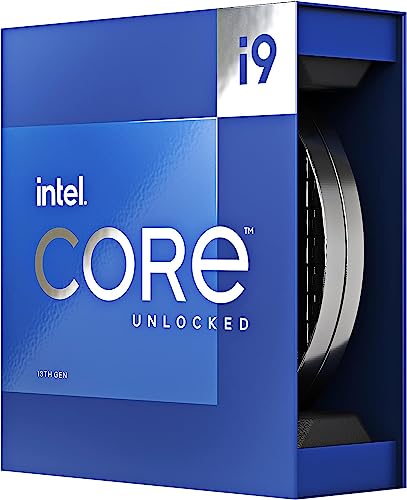

Intel Core i9-13900K vs Intel Core i9-14900KS at a Glance
| Feature | Intel Core i9-13900K | Intel Core i9-14900KS |
|---|---|---|
| Processor Series | Core i9 | Core i9 |
| Cores and Threads | 24 cores (8 P-cores + 16 E-cores), 32 threads | 24 cores (8 P-cores + 16 E-cores), 32 threads |
| Maximum Processor Speed | Up to 5.8 GHz | 6.2 GHz |
| Processor Base Power | 125 watts | 150 watts |
| Secondary Cache | 32 MB | 36 MB |
| Total Installed Cache | 36 MB | 36 MB |
| Socket Compatibility | LGA 1700 | LGA 1700 |
| Integrated Graphics | Intel UHD Graphics 770 | Intel UHD Graphics 770 |
| Memory Architecture Support | DDR5 and DDR4 | DDR5 and DDR4 |
| Best For | Standard high-end desktop builds | Uncompromising peak frequency systems |
13900K vs 14900KS Clock Speed and Frequency Scaling
Peak processor frequency dictates how fast a single core completes urgent instructions, directly influencing instantaneous system responsiveness and frame timing in high-load scenarios. The Intel Core i9-13900K reaches a maximum unlocked ceiling of 5.8 GHz, relying on automated performance algorithms including Intel Thermal Velocity Boost, Intel Adaptive Boost Technology, and Intel Turbo Boost Max Technology 3.0 to hit its upper limits when operating temps allow. This ceiling provides exceptional compute responsiveness across both light tasks and intensive workloads.
In contrast, evaluating the 13900K vs 14900KS clock speed shows where Intel pushed silicon boundaries. The Core i9-14900KS ships with a listed processor speed of 6.2 GHz, backed by up to 5.9 GHz via Turbo Boost Max Technology 3.0. Reaching 6.2 GHz without manual tuning gives the 14900KS a measurable edge in raw instructions executed per second over short bursts. When comparing previous generation hardware in an intel core i9-13900k vs i9-14900k analysis, each bump in factory binning narrows the timing margins, but the special-edition KS badge guarantees the most aggressive factory clock curves available on the LGA 1700 socket.
Capitalizing on this higher frequency ceiling requires strict motherboard power delivery and low operating temperatures. When thermal limits are reached, both chips throttle back to safe parameters, meaning the 400 MHz delta on paper narrows if system cooling fails to match the demand. However, with identical architectural foundations, the 14900KS extracts higher clock speeds under load whenever environmental conditions permit.
Edge: Intel Core i9-14900KS takes the win with its factory-rated 6.2 GHz speed that surpasses the 5.8 GHz ceiling of the 13900K.
14900KS vs 13900K TDP and Power Consumption
Base power specifications determine the baseline electrical draw and cooling capacity needed to run a processor without triggering emergency clock throttling. Looking at the 14900KS vs 13900K TDP profile reveals a fundamental platform division. The Core i9-13900K operates with a 125W Processor Base Power rating, making it viable for conventional 280mm or 360mm all-in-one liquid setups and high-airflow premium air coolers without straining motherboard voltage regulator modules.
The Core i9-14900KS increases the processor base power to 150W. Evaluating i9-13900K vs 14900KS power consumption shows that this 25W jump in baseline power draw exists specifically to maintain stability at higher operating voltages and frequencies. Understanding these elevated requirements is critical when reading an intel core i9-14900k vs i9-14900ks breakdown, as higher base wattage forces power supplies and motherboard VRMs to work harder across every heavy computing session.
For builders, this 25W difference creates real physical constraints. Operating a 150W base processor demands high-capacity power supplies and extreme cooling loops if you intend to run sustained workloads without immediate thermal throttling. The 13900K produces substantial heat in its own right, but its 125W baseline offers far more headroom inside standard chassis configurations before thermal boundaries are crossed.
Edge: Intel Core i9-13900K wins on power efficiency by maintaining a 125W base power profile that is easier to cool and manage.
Intel Core i9-13900K or i9-14900KS for Gaming
Modern gaming performance hinges on a combination of raw single-core speed, thread scheduling efficiency, and rapid memory access. Both processors share an identical hybrid architecture consisting of 24 physical cores (8 Performance cores and 16 Efficient cores) alongside 32 concurrent threads. Furthermore, both chips integrate Intel UHD Graphics 770, which provides diagnostic display output and quick-sync utility regardless of your discrete graphics card.
When deciding between the Intel Core i9-13900K or i9-14900KS for gaming, the clock frequency delta becomes the main differentiator. The 14900KS pushes up to 5.9 GHz with Turbo Boost Max Technology 3.0 and caps out at 6.2 GHz overall, delivering fractional latency reductions in CPU-bound competitive titles at high refresh rates. Much like the differences examined between the intel core i9-14900ks vs amd ryzen 9 9950x3d, top-end clock rates translate directly into maximum frame consistency when paired with ultra-fast graphics cards.
Nevertheless, the Core i9-13900K with its 5.8 GHz ceiling remains an absolute gaming powerhouse. In titles running at high graphical resolutions where the discrete GPU handles the primary rendering burden, the real-world gap between 5.8 GHz and 6.2 GHz narrows significantly. Both chips fully support DDR5 and DDR4 memory standards, letting users build around low-latency RAM kits to extract smooth frame delivery on either platform.
Edge: Intel Core i9-14900KS secures the advantage for enthusiast gaming by delivering higher clock frequencies that improve peak frame output.
Intel Core i9-13900K or i9-14900KS for Rendering
Sustained production tasks such as 3D ray tracing, video transcoding, and massive asset compiling saturate every compute thread for minutes or hours at a stretch. Deciding between the Intel Core i9-13900K or i9-14900KS for rendering tasks requires examining not just core counts, but internal memory structure and thermal endurance. Both units feature 24 cores and 32 threads, as well as 36 MB of total cache memory installed.
A notable technical divergence lies in the secondary cache specifications listed by the manufacturer. The Core i9-13900K lists a 32 MB secondary cache, whereas the Core i9-14900KS listing specifies a larger 36 MB secondary cache. This extra pool of local low-latency cache enables the 14900KS to hold larger instruction sets and data arrays closer to the execution cores, mitigating latency penalties during complex computational passes. Looking back at historical platform steps like the intel core i7-13700k vs i9-13900k, expanded cache pools consistently aid workstation reliability.
However, rendering exposes the thermal challenge of the 14900KS. When all 24 cores run flat out, the 150W base power rating means heat accumulates rapidly. If cooling cannot keep pace, thermal throttling drops operational frequencies down toward baseline levels, nullifying some of the silicon binning advantages. The 13900K, sitting at a 125W base rating, maintains steady multi-threaded output with less aggressive cooling demands over marathon rendering sessions.
Edge: Intel Core i9-14900KS earns the edge in rendering throughput due to its larger 36 MB secondary cache and elevated all-core potential.
Platform Compatibility and System Integration
Motherboard compatibility and operating system integration determine how smoothly a CPU integrates into a new or existing custom computer. Both processors utilize the LGA 1700 processor socket and interface seamlessly with Intel 700-series motherboards as well as Intel 600-series chipsets, though 600-series boards might require a firmware BIOS update prior to posting. Both models also incorporate modern PCIe 5.0 and PCIe 4.0 interconnect pathways for fast storage and expansion add-in cards.
There are minor differences in the documented platform environments between the two models. The Core i9-13900K listing confirms official compatibility spanning Windows 11, Windows 10, and Mac OS X El Capitan 10.11. The Core i9-14900KS listing specifically identifies Windows 11 as its supported operating system platform. Users evaluating parts in comparison guides like intel core i7-14700k vs i9-14900ks must account for motherboard VRM quality, because while both fit the same physical socket, the 150W draw of the KS requires heavy-duty power phases.
Because both processors support both DDR4 and DDR5 memory modules, builders have the flexibility to reuse older high-speed DDR4 kits or adopt new high-bandwidth DDR5 setups. However, pairing a 14900KS with a budget 600-series board is risky due to heat and electrical stress, whereas the 13900K functions comfortably across a much broader spectrum of mainstream LGA 1700 motherboards.
Edge: Intel Core i9-13900K holds the edge here thanks to broader listed operating system support and more flexible board requirements.
Pros and Cons
Intel Core i9-13900K
Pros
- Lower 125W base power rating
- Broad OS support including Windows 10
- 24 cores and 32 threads multitasking power
- Integrated Intel UHD Graphics 770
Cons
- Lower 5.8 GHz maximum clock speed
- Smaller 32MB secondary cache size
View Intel Core i9-13900K on Amazon
Intel Core i9-14900KS
Pros
- Higher peak clock speeds up to 6.2 GHz
- Larger 36MB secondary cache
- Powerful 24-core 32-thread 14th Gen architecture
- Integrated Intel UHD Graphics 770
Cons
- Demanding 150W processor base power
- Platform listing limited to Windows 11
View Intel Core i9-14900KS on Amazon
Who Should Buy Each One
Choose the Intel Core i9-13900K If

- You want a flagship 24-core processor while staying within a manageable 125W base power limit.
- You plan to use a standard 280mm or 360mm liquid cooler or a top-tier air cooler inside a normal chassis.
- You need verified operating system compatibility with Windows 10 alongside Windows 11 environments.
- You want high-tier workstation and gaming performance without overstressing motherboard voltage regulators.
Choose the Intel Core i9-14900KS If

- You demand absolute peak single-core performance with factory boost capabilities reaching up to 6.2 GHz.
- You have an enthusiast-grade custom liquid loop or elite 360mm/420mm cooling setup built for 150W+ loads.
- You want the performance advantage of an expanded 36 MB secondary cache for intensive production workflows.
- You run a premium 700-series motherboard designed specifically to handle sustained extreme power delivery.
Final Verdict
When synthesizing any comprehensive Intel Core i9-13900K review alongside an Intel Core i9-14900KS review, the verdict favors balance for the majority of builders. The Intel Core i9-13900K delivers 24 cores, 32 threads, a rapid 5.8 GHz ceiling, and DDR4/DDR5 compatibility on a 125W base power design. It gives power users nearly all the compute strength the LGA 1700 platform can offer while fitting into conventional PC cooling configurations.
Deciding if the is i9-14900KS worth it comes down to whether you belong to the elite enthusiast tier. The 14900KS achieves a blistering 6.2 GHz maximum speed and expands secondary cache to 36 MB, making it an extraordinary showpiece processor. However, considering the heavy 150W baseline draw and extreme thermal demands, an i9-14900KS upgrade from 13900K is difficult to justify for casual users, remaining an exclusive pick for extreme overclockers and high-refresh competitive gamers.
FAQ
What is the main difference in 13900K vs 14900KS clock speed?
The Core i9-13900K boosts up to a maximum frequency of 5.8 GHz, whereas the Core i9-14900KS reaches a top speed of 6.2 GHz, providing a 400 MHz advantage in peak single-core burst operations.
Is the i9-14900KS upgrade from 13900K worthwhile for everyday users?
For most users, upgrading between these two models is unnecessary because both share identical 24-core and 32-thread layouts. The 14900KS delivers higher boost clocks and a larger secondary cache, but demands far more cooling capacity to sustain those gains.
How do the 14900KS vs 13900K TDP ratings differ?
The Core i9-13900K features a Processor Base Power of 125W, whereas the Core i9-14900KS is rated at 150W Processor Base Power. This 25W difference means the 14900KS requires more heavy-duty cooling solutions to avoid thermal throttling under full load.
What cache differences exist between the 13900K and 14900KS?
Both processors provide 36 MB of total installed cache memory, but the secondary cache specification lists 32 MB for the Core i9-13900K and 36 MB for the Core i9-14900KS, giving the latter a slight edge in data throughput.
Can both processors run on Intel 600 series motherboards?
Yes, both processors use the LGA 1700 socket and are compatible with both Intel 700-series and Intel 600-series chipsets. However, 600-series motherboards will likely require a BIOS firmware update before the processors can boot successfully.
Do both CPUs include integrated graphics?
Yes, both the Core i9-13900K and Core i9-14900KS come equipped with integrated Intel UHD Graphics 770, allowing the system to display video output without requiring a dedicated graphics card.


