The fundamental choice between the iRobot Roomba 105 Vac and the iRobot Roomba i3+ centers on whether you prioritize active LiDAR navigation with adjustable high-suction floor control or an automated self-emptying base system that minimizes routine dustbin maintenance. While the newer 105 Vac introduces a dense laser-mapping array and a multi-level suction architecture, the established i3+ platform leans into hands-off dirt evacuation and bundled floor-care automation.
Choose the Roomba 105 Vac if your home features mixed floor surfaces that demand intense carpet agitation, precise boundary mapping, and custom room-cleaning power profiles. Choose the Roomba i3+ if you want an automated cleaning routine backed by a dedicated dirt disposal tower that stores months of collected debris without manual intervention.

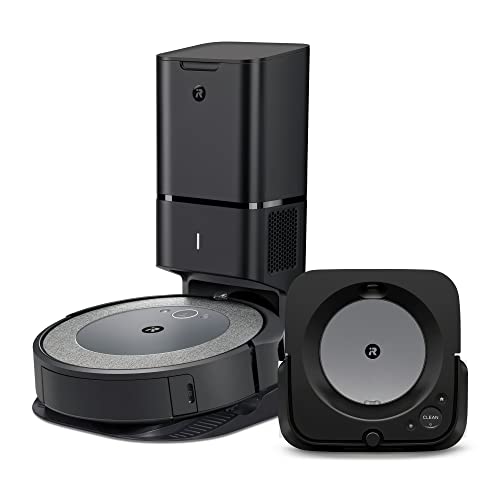
iRobot Roomba 105 Vac vs Roomba i3+ at a Glance
| Feature / Specification | iRobot Roomba 105 Vac | iRobot Roomba i3+ |
|---|---|---|
| Navigation System | ClearView LiDAR Navigation | Smart Mapping Sensors (Neat Rows) |
| Suction Multiplier | 70X Power-Lifting Suction (vs 600 Series) | 10X Power-Lifting Suction (vs 600 Series) |
| Power Levels | 4 Levels | 3 Levels |
| Dirt Disposal Method | Manual Bagless Bin | Clean Base Automatic Dirt Disposal |
| Debris Bag Capacity | Not listed | Up to 60 Days (Enclosed Allergen Bag) |
| Run Time | Up to 200 Minutes | Up to 180 Minutes |
| Boundary Controls | Keep-Out Zones via Roomba Home App | Room-by-Room Directing (No Keep-Out Zones listed) |
| Voice Assistants | Alexa, Siri, Google Assistant | Alexa, Google Assistant |
| Bundled Components | Stand-alone Robot Vacuum | Robot Vacuum, Clean Base, Braava jet m6 Robot Mop |
| Best For | High-Traffic Homes Needing Precise Room Control | Hands-Off Automated Cleaning with Self-Emptying |
Navigation and Mapping Technology
Navigational architecture determines how systematically an autonomous vacuum traverses a home, maneuvers around furniture legs, and honors household boundaries. The Roomba 105 Vac integrates ClearView LiDAR, a sensor technology that emits light pulses to capture the precise geometry of rooms in real time. Because LiDAR does not rely on ambient room lighting, the 105 Vac creates floor maps quickly upon deployment, allowing owners to assign designated room boundaries, adjust cleaning passes, and establish custom keep-out zones directly inside the Roomba Home App. This real-time spatial awareness prevents the robot from venturing into tangled electronics cords or pet feeding stations.
In contrast, the Roomba i3+ relies on an optical sensor cluster and floor-tracking components to calculate straight-line movement patterns. While it navigates intelligently back and forth in tidy rows rather than randomly bouncing off walls, its Imprint Smart Mapping platform functions differently from top-mounted laser guidance. The i3+ learns your home over multiple runs to enable room-by-room dispatching, but its listing does not include digital keep-out zones. For readers studying our analysis of the irobot roomba 105 vac vs j7, the distinction between laser precision and optical tracking remains a pivotal factor in floor plan management.
The practical difference is noticeable in homes with complex structural layouts. The Roomba 105 Vac LiDAR mapping provides instantaneous visual feedback in the app, giving users exact estimates of cleaning times and immediate perimeter enforcement. The i3+ effectively covers wide open rooms in organized lanes, but it lacks the granular zone exclusion that keeps a laser-guided machine out of trouble areas without physical barriers.
Edge: iRobot Roomba 105 Vac for its ClearView LiDAR sensor array, rapid mapping generation, and integrated keep-out zones.
Suction Power and Carpet Cleaning Performance
Deep cleaning capability depends heavily on suction generation, roller agitation, and airflow dynamics through carpet pile. The Roomba 105 Vac is engineered around an intensive 3-stage cleaning system delivering 70X more power-lifting suction compared to standard Roomba 600 series machines. Managed across four adjustable power levels, this substantial vacuum draw pulls fine silt, heavy grit, and embedded dirt out of low-pile and medium-pile floor coverings. Combined with an edge-sweeping brush and a specialized bristle brush, the 105 Vac can be tuned up for high-traffic entryways or dropped into an energy-conserving Eco Mode for light bare-floor dusting.
The Roomba i3+ features a Premium 3-Stage Cleaning System rated for 10X the power-lifting suction of the Roomba 600 series, managed across three operating power levels. While 10X suction delivers dependable maintenance for everyday surface debris, it does not match the deep-pull airflow of the 105 Vac. The i3+ compensates with dual multi-surface rubber rollers that flex to maintain continuous contact with hardwood and carpet textures, dislodging settled dust without hair tangling tightly around a traditional bristle core.
When assessing the Roomba 105 Vac or i3+ for carpet, suction metrics separate the two machines significantly. As detailed in our review of the irobot roomba 105 vac vs s9+, higher air wattage pulls fine sand and trapped micro-debris from carpet backing far more efficiently. The Roomba 105 Vac suction power gives it a decided advantage when dealing with plush rugs, heavy door mats, and high-pile carpets that trap fine particulate matter beyond the reach of standard roller agitation.
Edge: iRobot Roomba 105 Vac due to its 70X suction rating and four customizable power levels compared to the 10X baseline of the i3+.
Dirt Disposal and Maintenance Convenience
The dirt disposal routine represents the single largest operational difference in this i3+ vs iRobot Roomba 105 Vac matchup. The Roomba i3+ listing includes the Clean Base Automatic Dirt Disposal dock, an automated docking tower equipped with an internal vacuum motor. Each time the i3+ concludes its cleaning run or fills its internal compartment, it docks and automatically transfers collected debris into an enclosed, multi-layer bag. This sealed bag holds up to 60 days of cleanings and captures 99% of particles as small as 0.7 microns, preventing dust clouds from escaping back into the living area during disposal.
The Roomba 105 Vac takes a traditional, manual approach. It utilizes a bagless internal dustbin that owners must slide out, unlatch, and shake over a household trash receptacle after cleaning cycles. While a bagless bin eliminates the recurring need to replenish disposable dock bags, it exposes sensitive users to loose dust and requires frequent hands-on maintenance. In larger homes with heavy shedding or shedding pets, a manual dustbin may reach full capacity before an entire level has finished cleaning.
When buyers ask is Roomba i3+ worth it, the Clean Base is almost always the determining element. For shoppers who also study our comparison between the irobot roomba i3+ vs j7, the ability to leave a robot vacuum unattended for up to two full months provides an unmatched quality-of-life benefit that completely removes daily floor maintenance from a busy homeowner schedule.
Edge: Roomba i3+ for its Clean Base Automatic Dirt Disposal system that holds up to 60 days of debris in a sealed allergen-trapping bag.
Pet Hair Pick Up and Filtration
Managing pet fur, dander, and tracked litter requires a balanced combination of mechanical brush agitation, strong airflow, and comprehensive allergen containment. When weighing the Roomba 105 Vac or i3+ for pet hair, both models incorporate specialized components designed to manage heavy shedding. The Roomba 105 Vac leverages its intense 70X power-lifting suction and dedicated spot-cleaning mode, which allows the robot to repeatedly scour a focused five-foot area for up to five minutes to clear pet food spills or hair accumulation around animal beds.
The Roomba i3+ counters with intelligent software integration and enclosed filtration. Powered by iRobot Genius, the i3+ actively tracks historical cleaning data and issues automated scheduling suggestions during seasonal pet shedding or high-pollen periods. Furthermore, the dual rubber brush rollers on the i3+ reduce the long pet-hair tangles that commonly wrap around standard bristled brush bars. In our evaluation of the irobot roomba 105 vac vs i7+, enclosed disposal bags proved critical for pet owners, and the i3+ Clean Base system keeps accumulated dog and cat hair sealed away from family living spaces.
While the 105 Vac delivers greater raw suction to yank stubborn pet hair out of dense carpet fibers, the i3+ handles the disposal and filtration loop far better. The manual dustbin of the 105 Vac can fill rapidly when vacuuming shedding undercoats, necessitating frequent bin dumps that release dander back into the room. The i3+ seals those allergens inside an enclosed dock bag that isolates dander particles down to 0.7 microns.
Edge: Roomba i3+ due to its enclosed allergen-sealing disposal bag, anti-tangle rubber roller mechanics, and seasonal shedding reminders.
Battery Life, Coverage, and Smart Ecosystem
Runtime and smart home integration dictate how smoothly a robot vacuum operates in expansive residential floor plans. The Roomba 105 Vac delivers an impressive battery life of up to 200 minutes per charge via its lithium-ion cell, operating on 2.4 GHz Wi-Fi networks. It features broad smart assistant connectivity, taking voice prompts through Amazon Alexa, Siri, and Google Assistant. If the 105 Vac encounters an exceptionally broad floor plan and exhausts its charge, it automatically returns to its base, recharges, and resumes cleaning right where it paused.
The Roomba i3+ offers a substantial runtime of up to 180 minutes, supported by a 3.7-volt lithium-ion battery. It also possesses automatic recharge-and-resume logic, ensuring that multi-room environments are fully covered even if a midday charging session is required. Voice control on the i3+ covers Amazon Alexa and Google Assistant devices, though Siri integration is not explicitly detailed in its listing data. As seen across evaluations like our irobot roomba 105 vac vs irobot roomba combo j9+ guide, ecosystem cohesion and extended runtimes ensure comprehensive floor coverage.
The Roomba 105 Vac gains a 20-minute battery margin over the i3+, providing 200 continuous minutes of runtime versus 180 minutes. Coupled with faster route calculations enabled by LiDAR mapping, the 105 Vac sweeps through large spaces with lower cycle times. Its inclusion of Apple Siri compatibility alongside Alexa and Google Assistant also offers broader cross-platform voice convenience for smart-home enthusiasts.
Edge: iRobot Roomba 105 Vac for its longer 200-minute runtime and expanded voice support spanning Alexa, Siri, and Google Assistant.
Pros and Cons
Irobot Roomba 105 Vac

Pros
- 70X power-lifting suction motor
- ClearView LiDAR navigation with keep-out zones
- 200-minute maximum battery runtime
- Four adjustable suction power levels
Cons
- Lacks an automatic self-emptying base
- Manual dustbin emptying required regularly
View iRobot Roomba 105 Vac on Amazon
Irobot Roomba i3+

Pros
- Clean Base holds up to 60 days of debris
- Enclosed bag captures 99% of 0.7-micron particles
- Includes Braava jet m6 robot mop bundle
- Automated suggestions during pet shedding season
Cons
- 10X suction versus 70X on the 105 Vac
- No custom keep-out zone support listed
- Slightly shorter 180-minute runtime
View iRobot Roomba i3+ on Amazon
Who Should Buy Each One
Choose the iRobot Roomba 105 Vac If
- You want high-precision ClearView LiDAR navigation that maps rooms instantly and operates in low light.
- You need custom in-app keep-out zones to protect pet bowls, cables, or fragile furniture.
- You have thick rugs or high-traffic carpets requiring intense 70X power-lifting suction.
- You use Apple Siri alongside Alexa or Google Assistant to manage your smart home appliances.
Choose the Roomba i3+ If
- You want a completely hands-off cleaning system with a Clean Base that stores up to 60 days of dirt.
- You suffer from seasonal allergies or pet dander sensitivity and need an enclosed 0.7-micron bag system.
- You prefer a complete automated floor care package that includes the bundled Braava jet m6 robot mop.
- You appreciate smart schedule recommendations that automatically adjust cleaning frequency during pet shedding seasons.
Final Verdict
For buyers evaluating this head-to-head comparison, the iRobot Roomba 105 Vac stands out as the superior vacuum engine and navigator. Its ClearView LiDAR sensor array unlocks precision mapping, real-time boundary enforcement, and virtual keep-out zones that prevent troublesome hang-ups. Backed by 70X power-lifting suction, four selectable power levels, and a 200-minute runtime, the 105 Vac delivers deep agitation and debris removal across mixed hard floors and stubborn carpets.
Conversely, the Roomba i3+ remains the definitive choice for homeowners who despise emptying dustbins. The inclusion of the Clean Base Automatic Dirt Disposal tower eliminates manual contact with accumulated grime for up to two months, locking allergens inside an enclosed multi-layer bag. If absolute convenience, automated debris containment, and bundled hard-floor mopping from the Braava jet m6 outweigh the need for laser mapping and peak carpet suction, the Roomba i3+ provides an exceptional hands-free cleaning setup.
FAQ
Does the Roomba 105 Vac include an automatic self-emptying base?
No, the listing specifies that the Roomba 105 Vac features a bagless, manual-empty dustbin on the robot itself. It returns to a standard charging dock to replenish its battery, but it does not come with an auto-empty Clean Base tower.
How does ClearView LiDAR on the 105 Vac differ from the navigation on the i3+?
The ClearView LiDAR system on the 105 Vac utilizes active laser pulses to map room perimeters immediately, work effectively in dark spaces, and support virtual keep-out zones in the app. The Roomba i3+ uses integrated optical and floor sensors to navigate in neat back-and-forth rows and supports room selection, but its listing does not provide custom keep-out zones.
Is the Roomba i3+ worth it for households with shedding pets?
Yes, the Roomba i3+ is particularly suited for pet owners because its Clean Base captures shed fur and dander in an enclosed bag holding up to 60 days of debris. This system captures 99% of particles down to 0.7 microns, preventing pet allergens from escaping during dustbin emptying.
Which vacuum provides stronger suction for deep carpet cleaning?
The Roomba 105 Vac provides significantly higher suction, delivering 70X power-lifting suction across four adjustable power levels compared to the standard Roomba 600 series. The Roomba i3+ provides 10X power-lifting suction across three power settings.
Can both models resume cleaning after recharging?
Yes, both the Roomba 105 Vac and the Roomba i3+ feature recharge-and-resume capabilities. When battery reserves run low during an extended cleaning routine, each robot returns to its dock to charge and then resumes cleaning at the exact spot where it paused.
What Wi-Fi network frequencies do these vacuums support?
The Roomba 105 Vac explicitly operates on a 2.4 GHz Wi-Fi network for initial setup and regular operation, though your smartphone can switch back to a 5 GHz band after pairing is complete. The Roomba i3+ listing confirms Wi-Fi connectivity for app scheduling and smart platform features.


