The single difference that decides the choice between Ninja and Cosori is their core engineering philosophy: Ninja builds high-wattage, multi-functional appliances designed to replace several countertop tools with aggressive speed and power, whereas Cosori produces specialized, precision-engineered appliances tailored for quiet operation, meticulous thermal control, and food-grade stainless steel surfaces.
Choose Ninja if you need high-output machinery for rapid batch processing, multi-stage meal prep, and indoor high-heat searing. Choose Cosori if your cooking demands exact temperature regulation down to the single degree, plastic-free boiling, and whisper-quiet operation during extended countertop tasks.


Ninja vs Cosori at a Glance
| Feature | Ninja | Cosori |
|---|---|---|
| Primary Design Focus | High-output multi-functional systems | Specialized precision countertop tools |
| Motor and Heating Wattage | 1500W motor bases; 500°F cyclonic air | 600W drying motors; rapid-boil elements |
| Operating Sound Profile | Standard high-output acoustic profile | Brushless motor operation under 48 dB |
| Thermal and Timer Control | Doneness presets with dual sensors; 5 speeds | 95°F-165°F down to the degree; 48-hour timer |
| Food-Contact Materials | BPA-free plastic containers; steel blades | Food-grade stainless steel; borosilicate glass |
| Multi-Function Capability | 4 to 6 functions per machine (Blend, Crisp, Grill) | Dedicated single-purpose precision systems |
| Accessory Inclusions | Multiple pitchers, bowls, cups, and blade stacks | Stackable steel trays, mesh sheets, recipe books |
| Manufacturer Warranty | 1-year limited warranty | 2-year manufacturer warranty |
| Best For | High-capacity family cooking and heavy meal prep | Methodical food preservation and clean boiling |
Motor Power and Wattage Performance
Countertop appliances rely heavily on their electrical engineering to determine what ingredients they can handle without motor strain. In any head-to-head evaluation of Ninja versus its competitors, motor torque and raw heating capacity stand at the forefront of the brand’s identity. The flagship blending platforms from Ninja demonstrate this through extreme electrical ratings, utilizing a 1500-watt, 2-horsepower motor base capable of turning solid ice into snow within seconds. This level of power is engineered specifically to eliminate motor bogging when processing dense mixtures or turning whole frozen fruit into smooth purees. Similarly, their countertop cooking platforms deploy powerful cyclonic heating elements that push internal temperatures up to 500°F for rapid searing.
In contrast, Cosori approaches wattage with an emphasis on thermal efficiency and steady, long-duration stability rather than sheer torque. When analyzing ninja vs cosori wattage, Cosori devices are engineered around targeted electrical loads. For instance, the brand equips its dedicated food dehydrators with a 600-watt heating and fan assembly, which is purposefully calibrated to maintain steady airflow across multiple tiers without creating hot spots or running up excessive energy bills over two straight days of runtime. Their boiling appliances focus on rapid water heating, utilizing precision Strix thermostats to boil two cups of water in under three minutes while preventing overheating. Those researching blenders often compare high-wattage alternatives in guides like our ninja bl660 vs tb401 breakdown to see how these motor ratings impact daily texture.
The practical result of this difference is straightforward: Ninja provides brute force that cuts through hard prep work in seconds, while Cosori delivers calibrated, sustained heat designed for delicate, uniform transformations over longer periods. If your kitchen routine involves dense mixtures, crushing ice, or high-heat searing, Ninja holds a distinct mechanical advantage. However, for steady thermal tasks that run for hours at low wattages, Cosori avoids unnecessary power consumption and heat degradation.
Edge: Ninja. Ninja provides substantially higher motor wattage and aggressive thermal output, making it superior for heavy crushing and high-load kitchen tasks.
Multi-Functional Versatility vs Dedicated Precision
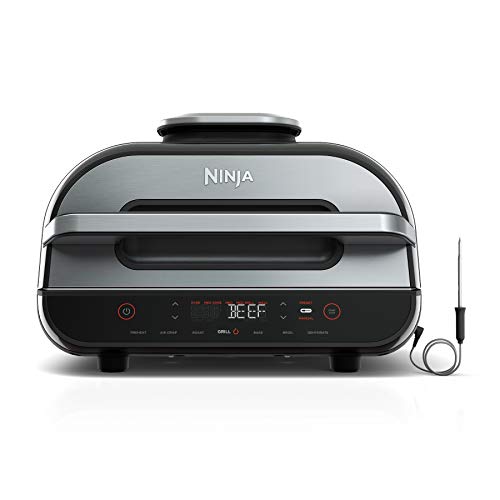
Countertop appliances either attempt to solve multiple culinary tasks in one footprint or dedicate their entire engineering package to mastering a single operation. Any comprehensive ninja appliances review will highlight the brand’s devotion to all-in-one multi-cooking versatility. The Ninja FG551 Foodi Smart XL 6-in-1 Indoor Grill and Air Fryer exemplifies this methodology by housing six distinct cooking modes inside a single chassis: cyclonic indoor grilling, air crisping, roasting, baking, broiling, and dehydrating. Instead of buying individual appliances for high-heat charring and low-heat moisture removal, cooks can execute both on the same counter space. Similarly, the Ninja Mega Kitchen System combines a 72-ounce pitcher, an 8-cup food processor bowl, and two personal travel cups on a single base.
Cosori takes the opposite philosophical approach by building master-of-one culinary tools that deliver granular control. The Cosori Food Dehydrator does not attempt to air fry or bake; instead, it provides digital temperature control that can be adjusted between 95°F and 165°F down to the exact degree, accompanied by an integrated 48-hour digital timer. This tight window of control is critical for making delicate fruit leathers, curing jerky safely, or drying sensitive medicinal herbs without scorching essential enzymes. A thorough cosori appliances review will always point out that what Cosori loses in multi-tool flexibility, it regains in thermal precision and user control.
The trade-off between these brands directly impacts how you interact with your countertop. Choosing Ninja consolidates multiple machines into one housing, which is an enormous benefit for small kitchens, though its multi-function dehydrating or baking modes lack the finite single-degree temperature settings of standalone units. Cosori requires you to commit countertop space to an appliance built specifically for one process, but it rewards you with unmatched accuracy. For readers weighing multi-cooker consolidation against dedicated appliances, reading our analysis of ninja vs instant pot systems offers further insight into how multi-use designs manage heat distribution.
Edge: Tie. Ninja wins for cooks wanting to replace three or four machines with one multi-cooker, while Cosori wins for cooks who demand single-degree temperature precision.
Cooking Capacity and Batch Meal Prep
Capacity determines whether a kitchen appliance can support an entire household in a single cooking cycle or whether it forces the cook into repetitive, time-consuming batches. When evaluating ninja or cosori for meal prep, the size and layout of the cooking vessels matter immensely. Ninja designs its appliances around expansive volumetric capacities. The Mega Kitchen System features a massive 72-ounce total crushing pitcher with a 64-ounce maximum liquid capacity alongside an 8-cup food processing bowl that can mix up to two pounds of dense dough in just 30 seconds. On the cooking side, the Foodi Smart XL grill provides an expansive interior grate that accommodates up to six steaks or 24 hot dogs simultaneously, supported by a 4-quart air fry basket to handle side dishes.
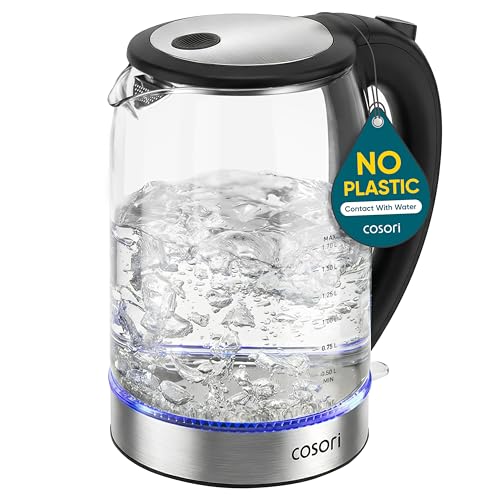
Cosori prioritizes usable surface area and continuous flow rather than deep vertical capacity. The CP267-FD dehydrator maximizes horizontal space by providing six food-grade stainless steel trays totaling 6.5 square feet of flat drying real estate. This allows cooks to lay out dozens of uniform jerky strips or apple slices without overlapping, supported by horizontal airflow from a rear-mounted fan that ensures every tray dries at the exact same rate. In liquid tasks, the Cosori Electric Kettle offers a 1.7-liter capacity with clear level markings, designed to rapidly supply boiling water for family-sized tea services or large-batch pour-over brewing.
For cooks who regularly batch-prep lunches and dinners, Ninja excels at handling high-volume liquids, chopped vegetables, and protein-heavy main dishes. It drastically reduces meal prep time by processing family-sized portions of food all at once. Cosori provides substantial horizontal space for preservation tasks, but it lacks the deep, multi-quart cooking vessels needed to prepare full family meals in a single pass. For those comparing basket-style airflow and volume, our guide on the ninja dz401 vs af300 illustrates how large-capacity platforms manage heat circulation during busy cooking routines.
Edge: Ninja. Ninja provides larger liquid capacities and higher-volume protein cooking surfaces, making it significantly more effective for high-volume family meal prep.
Build Quality, Materials, and Acoustics
The materials that make contact with your food and the noise level produced during operation represent two major factors in long-term kitchen satisfaction. Analyzing ninja vs cosori build quality reveals distinctly different priorities regarding materials and acoustics. Ninja utilizes rugged, impact-resistant BPA-free plastics for its large blender vessels and processor bowls, accented by brushed stainless steel housings on its premium cooking platforms. The mechanical components, such as the patented Total Crushing blade towers and Pro Extractor assemblies, are forged from heavy-duty stainless steel. However, because Ninja relies on 1500-watt motors and rapid cyclonic convection fans, its appliances produce substantial operational noise that can dominate a kitchen during heavy processing or high-heat grilling cycles.
Cosori puts material purity and whisper-quiet operation at the center of its build philosophy. Its CP267-FD dehydrator is constructed with a full food-grade stainless steel housing and includes six solid stainless steel drying trays, ensuring that hot air circulates exclusively over metal rather than warm plastic. Furthermore, Cosori integrates an advanced brushless motor that keeps operating noise strictly below 48 decibels. This whisper-quiet acoustic profile allows the machine to run overnight in an open-concept living space without disrupting sleep. Similarly, the Cosori Electric Kettle features a 304 food-grade stainless steel inner lid, filter, and borosilicate glass body, guaranteeing zero plastic contact with boiling water.
If you value clean-material construction and quiet performance, Cosori clearly outpaces Ninja. While Ninja’s thick plastic pitchers are durable and shatterproof, some cooks prefer keeping heated food and boiling liquids completely away from synthetic polymers. Furthermore, the acoustic difference is night and day: Ninja commands the room with aggressive motor power, whereas Cosori operates in the background. Comparing build characteristics against other high-end blenders in our vitamix vs ninja comparison demonstrates how material choices alter durability and balance over years of use.
Edge: Cosori. Cosori uses food-grade stainless steel food-contact surfaces and integrates ultra-quiet brushless motors operating below 48 dB.
Countertop Footprint and Cleaning Workflow
An appliance that is difficult to clean or too large to fit under standard cabinets quickly becomes a chore to use. When considering ninja or cosori for countertop cooking, the day-to-day workflow must be evaluated. The Ninja Foodi Smart XL measures 15.75 inches deep by 16.54 inches wide by 11.1 inches high, requiring dedicated counter space and substantial overhead clearance when the grill hood is opened. In terms of maintenance, Ninja blenders and cookers feature removable, dishwasher-safe components, including the 72-ounce pitcher, personal cups, and processor bowls. However, the multi-tiered stacked blade assemblies are razor-sharp, requiring extreme care when washing by hand or handling around the sink.
Cosori appliances are engineered with streamlined maintenance and ergonomic daily handling in mind. The electric kettle features a wide-mouth design with a dual-angle lid that opens partially at the press of a button to prevent steam splashes, or opens fully to allow an entire hand inside for effortless descaling and wiping. The CP267-FD dehydrator features flat, completely removable stainless steel trays that slide directly into the dishwasher without occupying excessive vertical rack space. Because the interior walls are flat stainless steel and the fan is rear-mounted, wiping out the interior requires only a quick pass with a damp cloth once dehydration is complete.
In routine maintenance, Cosori offers a less stressful experience because it avoids intricate, razor-sharp multi-blade columns and complex multi-layered lids. Ninja’s parts are undeniably dishwasher safe on the top rack, but handling the stacked blade assemblies requires constant caution to avoid accidental cuts during post-meal cleanup. Readers exploring compact cooking platforms can review our analysis of the ninja af101 vs dz401 to see how countertop dimensions affect kitchen workflow across different form factors.
Edge: Cosori. Cosori provides simpler cleaning workflows with wide-mouth openings, flat stainless steel trays, and no hazardous multi-tier blade assemblies to navigate.
Pros and Cons
Ninja
Pros
- High-power motors up to 1500 watts
- All-in-one multi-functional appliance designs
- Integrated smart cooking sensors and presets
- Large-capacity pitchers and family-sized cooking surfaces
Cons
- Shorter one-year limited warranty
- Multiple blade assemblies demand cautious handling
- Bulky multi-piece components require substantial storage
View Ninja BL770 Mega Kitchen System 1500W on Amazon
Cosori
Pros
- Extended two-year manufacturer warranty
- Food-grade stainless steel interiors eliminate plastic contact
- Ultra-quiet operation under 48 decibels
- Accurate digital controls for delicate low-temperature tasks
Cons
- Dedicated single-task designs lack hybrid versatility
- Lower wattage ceilings than heavy-duty multi-cookers
View Cosori Electric Kettle No Plastic Contact on Amazon
Who Should Buy Each One
Choose the Ninja If

- You want high-wattage power to crush ice, pulverize frozen fruit, or knead two pounds of dough in 30 seconds.
- You prefer an all-in-one kitchen system that combines a full-sized blender, food processor, and single-serve smoothie maker.
- You need multi-functional cooking capabilities that allow you to indoor grill at 500°F and air crisp proteins in the same appliance.
- You regularly cook large batches of food for a busy household and need expansive 72-ounce pitchers and wide grill grates.
Choose the Cosori If

- You demand exact temperature control between 95°F and 165°F down to the single degree for delicate dehydrating and jerky making.
- You prioritize clean food-contact materials and insist on zero plastic contact with your boiling water or drying foods.
- You require whisper-quiet operation under 48 dB so you can run extended cooking cycles overnight without disruption.
- You prefer master-of-one dedicated countertop tools protected by an extended two-year manufacturer warranty.
Final Verdict
For the vast majority of busy households, Ninja is the better investment because it directly solves the daily bottlenecks of meal preparation. By combining heavy-duty 1500-watt motor bases, multi-tiered crushing blades, and 6-in-1 cooking functionality, Ninja allows cooks to blend, process, air crisp, and grill without cluttering their cupboards with individual gadgets. While its machines are undeniably louder during operation and require careful handling around sharp blade assemblies, the sheer speed, batch capacity, and raw culinary power justify the footprint on your counter.
Cosori is the clear winner for detail-oriented home cooks who value precision, peaceful kitchen acoustics, and superior material construction. If your culinary goals involve slow food dehydration, perfectly steeped specialty teas, or plastic-free food preparation, Cosori delivers a level of refinement that high-wattage multi-cookers simply cannot match. With operating noise levels kept below 48 decibels, food-grade stainless steel drying racks, and precise single-degree temperature settings, Cosori proves that specialized, quiet precision is well worth the counter space. For additional single-basket airflow comparisons, check out our evaluation of the ninja af141 vs af161.
FAQ
Is Cosori worth it compared to Ninja for specialized cooking?
Yes, Cosori is worth it if your recipes require exact thermal control, quiet operation, and stainless steel food-contact surfaces. While Ninja excels at brute-force blending and high-heat multi-cooking, Cosori provides dedicated precision tools like dehydrators with single-degree temperature adjustments (95°F to 165°F) and glass kettles with zero plastic contact, making it the superior choice for specialized culinary tasks.
Ninja or Cosori for air frying: which brand performs better?
When choosing between ninja or cosori for air frying and countertop crisping, Ninja generally delivers higher velocity airflow and multi-function cooking versatility. Devices like the Ninja Foodi Smart XL combine air frying with 500°F cyclonic indoor grilling and integrated smart thermometers, making them better suited for high-heat protein searing and rapid crisping compared to dedicated single-purpose heating elements.
How does Ninja vs Cosori wattage affect performance and energy use?
Ninja builds high-draw appliances, such as 1500-watt motor bases, designed to deliver immediate bursts of high torque to crush ice and mix heavy dough in under a minute. Cosori calibrates its wattage for long-term thermal efficiency, utilizing 600-watt heating setups that distribute gentle, uniform horizontal airflow over a 48-hour period without driving up excessive electricity costs.
What differences exist in Ninja vs Cosori build quality and materials?
The primary difference in ninja vs cosori build quality lies in their food-contact surfaces. Ninja utilizes heavy-duty, BPA-free plastics for its large processing bowls and blenders alongside stainless steel exterior accents. Cosori prioritizes metal and glass, utilizing 304 food-grade stainless steel interior lids, borosilicate glass bodies, and all-stainless dehydrating racks that completely eliminate plastic contact with hot food or boiling water.
Ninja or Cosori for meal prep: which should you choose?
Ninja is generally the better option for weekly meal prep because of its massive volumetric capacities. With 72-ounce blender pitchers, 8-cup food processor bowls, and grill surfaces that cook six steaks at once, Ninja allows you to prepare large quantities of food rapidly. Cosori is ideal for specialty meal prep tasks, such as drying 6.5 square feet of bulk jerky or fruit snacks.
Are Ninja and Cosori parts dishwasher safe?
Yes, both brands provide dishwasher-safe components, but their maintenance workflows differ. Ninja’s pitchers, bowls, personal cups, and lids are dishwasher safe on the top rack, though handling their sharp stacked blade assemblies requires extreme caution. Cosori’s stainless steel dehydrator trays and accessories are fully dishwasher safe and flat, making them easier and safer to clean.


