Choosing between a percussion massager and a foam roller comes down to how mechanical force is applied to your muscle tissue: high-frequency motorized percussion delivered directly to an isolated knot versus broad bodyweight compression rolled across entire fascia lines.
Choose a percussion massager if you want effortless, pinpoint trigger point relief while relaxing in a chair; choose a foam roller if you want an active floor routine that opens up joint mobility, improves overall flexibility, and decompresses broad muscle sheets.

Percussion Massager vs Foam Roller at a Glance
| Feature | Percussion Massager | Foam Roller |
|---|---|---|
| Operating Mechanism | Motorized reciprocating linear strokes | Manual bodyweight compression and rolling |
| Weight | 1.95 to 2.2 lbs | 8.64 to 11.52 oz |
| Product Dimensions | 9.8 x 3.94 x 7.87 in to 5 x 8 x 10 in | 12.5 x 5.5 x 5.5 in |
| Surface / Attachments | 10 interchangeable heads or heated tip | 3 textured zones (palm, finger, thumb projections) |
| Power Source | Rechargeable lithium-ion or battery cell | None (entirely mechanical) |
| Core Construction | Brushless motor inside composite shell | BPA-free closed-cell EVA foam over EPP core |
| Primary Muscle Scope | Pinpoint trigger points and isolated deep tissue | Broad muscle chains, fascia sheets, thoracic spine |
| Target Areas Listed | Deep tissue, back, athletes, pain relief | Arm, back, body, feet, leg, shoulder, thigh |
| Best For | Targeted knot release without physical exertion | Full-body mobility, post-run flushing, and stretching |
Targeting Precision and Trigger Point Treatment
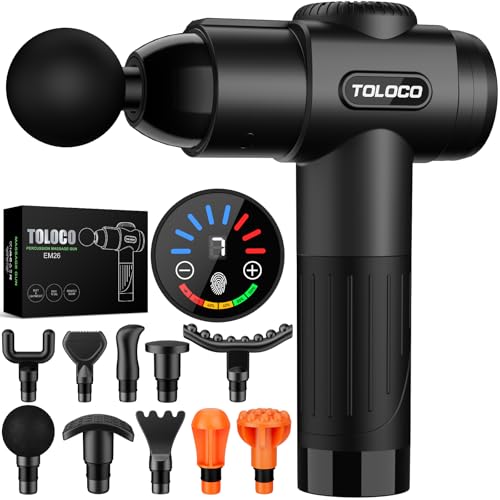
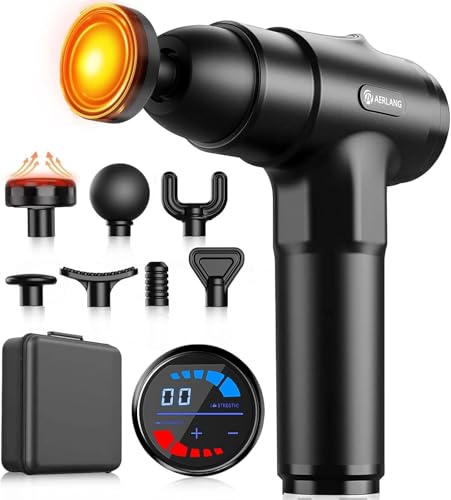
When evaluating a percussion massager vs foam roller, precision is the fundamental dividing line. A percussion device focuses all of its mechanical energy into a strike zone roughly the size of a coin. Devices like the TOLOCO Massage Gun come equipped with 10 interchangeable massage heads designed to isolate specific muscle bellies, tendons, and dense adhesions. The AERLANG Massage Gun incorporates thermal therapy directly at the contact point, allowing you to direct focused heat and rapid percussive strokes into a single stubborn knot without disturbing the surrounding tissue.
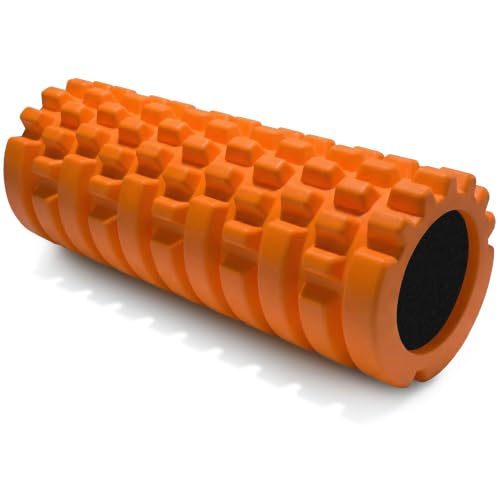
A foam roller distributes force across a wider surface area. The 321 STRONG Foam Roller Orange measures 12.5 inches in length and features patented 3-zone surface projections engineered to mimic physical therapy techniques. Its smallest ridges simulate therapist fingertips, while medium ridges mimic thumbs and wide planes emulate flat palms. While these variable contours help target painful adhesions, the minimum contact area remains substantially larger than any massage gun tip. The roller cannot slip between the scapula and the spine or isolate the suboccipital muscles at the base of the skull.
This difference dictates how effectively each tool addresses hyper-localized spasms. In any percussion massager review, the primary advantage highlighted is the ability to break up localized knots in the gluteus medius, piriformis, or upper trapezius. With a foam roller, attempting to isolate those tiny structures requires awkward balancing and shifts bodyweight across adjacent joints. The motorized head of a percussion tool drives directly into the knot while the rest of your body stays still.
Edge: Percussion massager because interchangeable strike heads isolate deep, localized trigger points that a cylindrical roller simply bridges over.
Physical Effort, Body Positioning, and Ease of Use
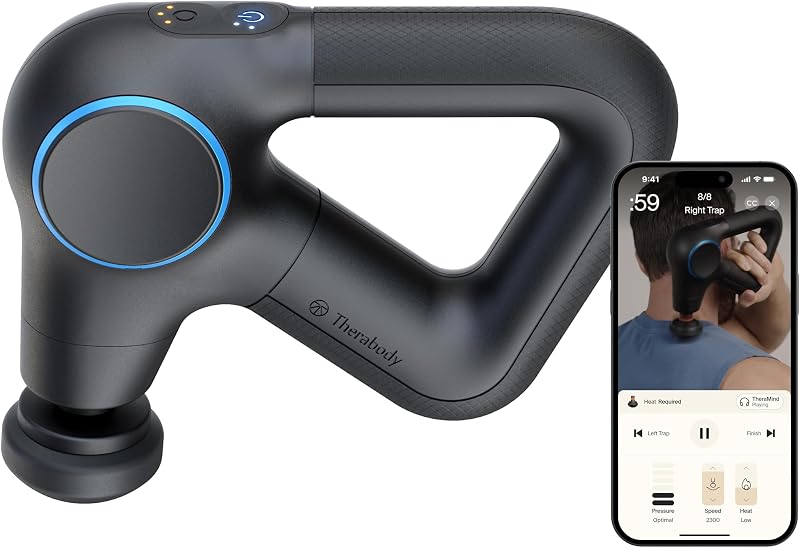
The physical exertion required to operate these recovery tools creates a dramatic contrast in day-to-day use. A percussion massager is a self-contained motorized unit powered by a silent brushless motor. You hold the handle, select your intensity, and let the motor do the work. Whether you are lounging on the sofa, sitting at an office desk, or riding in a passenger seat, you can address tight quads or sore forearms passively. Understanding this ergonomic advantage is central to evaluating theragun prime vs hypervolt 2 options, where motor balance dictates how easily you can treat hard-to-reach areas.
A foam roller requires active physical exertion and floor space. To roll your hamstrings, glutes, or thoracic spine on the 321 STRONG Foam Roller Black, you must lower yourself to the ground and support a significant percentage of your body weight on your hands, wrists, and core. For an exhausted athlete who has just completed a grueling marathon training session, holding a static plank position while rolling tight quadriceps can feel like an additional workout. For individuals with limited shoulder stability, wrist pain, or severe mobility limitations, getting down on the floor is impractical or uncomfortable.
That floor requirement also restricts where and when you can recover. A massage gun slips out of an athletic bag and delivers treatment right on a bench or sideline without you ever having to lie down. When considering a foam roller vs massage gun recovery routine, the massage gun consistently wins on user compliance because it demands zero core stabilization or awkward floor gymnastics.
Edge: Percussion massager because the motorized drive mechanism works without requiring core strength, floor space, or bodyweight planks.
Tissue Depth: Foam Roller Density vs Percussion Amplitude
Understanding tissue impact requires comparing foam roller density vs percussion amplitude. Percussion massagers rely on stroke depth-amplitude-and motor frequency to penetrate past the superficial fascia into deeper skeletal muscle. By striking the tissue dozens of times per second, the motorized head desensitizes the sensory nervous system and overcomes muscle guarding. This mechanical hammering stimulates immediate blood flow without requiring heavy downward pressure, a trait detailed in our hypervolt 2 vs 2 pro breakdown where motor stall force and stroke depth govern therapeutic depth.
Foam rollers produce depth strictly through passive material firmness and bodyweight compression. The 321 STRONG rollers feature a medium-firm density crafted from closed-cell EVA foam molded over an expanded polypropylene core. This construction is firm enough to resist collapsing under full bodyweight while offering sufficient cushion to protect healing tissues. However, the force is distributed along the cylinder, creating broad sustained compression rather than high-frequency oscillatory shockwaves.
This mechanical difference alters the physiological response of tight muscle bands. When asking whether a percussion massager or foam roller for sore muscles is superior, the percussion massager produces greater localized shear force inside dense myofascial tissues. The foam roller compresses the muscle against the bone beneath it, flattening the muscle belly. If your tightness stems from deep postural adhesions, a reciprocating motor penetrates those dense layers more effectively than broad surface compression.
Edge: Percussion massager because rapid linear stroke amplitude bypasses muscle guarding to penetrate deeper than static compressive contact.
Application Across Muscle Groups and Spinal Safety
The human body is not uniform, and different anatomical structures respond better to specific tool shapes. When comparing percussion massager vs foam roller back pain applications, safety considerations become critical. Percussion massagers generate sharp mechanical forces that must never strike bony landmarks, ribs, or the spinal column. Slipping off a tight erector spinae muscle and striking a vertebra with a hard massager head can cause severe discomfort and bone bruising. Using a massage gun across the neck and upper spine requires steady hands and careful aim.
A foam roller excels on the back because its wide cylinder bridges across the paraspinal muscles while supporting the skeletal structure. The 321 STRONG roller is explicitly designed to relieve back pain and calm tense muscles along the spine. Rolling your upper and mid-back across its 5.25-inch diameter promotes thoracic extension, reversing the hunched posture caused by prolonged desk work. The roller cradles the spine safely between its raised ridges, providing traction and passive decompression that no handheld percussion gun can duplicate.
Foam rollers also cover massive muscle bands with exceptional efficiency. Sweeping the entire length of the iliotibial band, quadriceps, or latissimus dorsi takes mere seconds on a 12.5-inch cylinder. Attempting to cover that same square footage with a 1-inch massage gun tip requires dozens of methodical, time-consuming passes. Comparing tools like the theragun prime vs hypervolt 2 pro illustrates how handheld devices prioritize targeted tracing over the broad, continuous strokes that come naturally to a roller.
Edge: Foam roller because its broad cylindrical shape allows safe thoracic spinal extension and rapid coverage of large muscle sheets like the lats and quads.
Mobility, Fascial Flushing, and Pre-Workout Preparation
Recovery is not solely about numbing a sore knot; it involves restoring fluid balance, fascial glide, and full joint range of motion. The manufacturer documentation for the 321 STRONG foam roller highlights clinical evidence showing that foam rolling for 20 minutes post-exercise, and again at 24 and 48 hours, reduces recovery time by 20%, increases joint flexibility by 10%, and decreases muscle soreness by up to 30%. This systematic rolling action acts like a squeegee, flushing metabolic waste and stagnant interstitial fluid out of the tissues.
Percussion massagers alter pain perception via the pain gate theory, overriding discomfort signals with rapid tactile vibrations. While this provides immediate relief and transient mobility gains, it does not physically stretch the overarching fascia in the same manner as dynamic rolling. Devices evaluated in our hypervolt 2 pro vs ekrin b37 analysis show exceptional ability to wake up dormant motor units before lifting, but they do not actively take joints through their end ranges of motion.
For runners and field athletes, incorporating a foam roller into a dynamic warmup flushes the lower extremities and prepares the connective tissues for elastic rebound. A dedicated foam roller review consistently emphasizes the structural benefits of long-axis rolling for restoring elasticity to the plantar fascia, gastrocnemius, and hamstrings. While a percussion massager treats an irritated spot, a foam roller addresses the complete mechanical kinetic chain.
Edge: Foam roller because long-axis compression flushes fluid through broad fascial sheets and delivers verified improvements in joint range of motion.
Portability, Durability, and Maintenance
Every motorized recovery tool introduces electronic complexity, battery management, and mechanical wear. The TOLOCO EM26 massager weighs 1.95 pounds and houses an electric brushless motor, while the AERLANG EM13 weighs 2.2 pounds and operates on a rechargeable lithium-ion battery. These handheld devices require power cables, wall outlets, and secure storage cases to protect the motor housing and assorted attachments from damage during travel. The electronic components also introduce potential failure points over years of heavy usage.
A foam roller is an indestructible, non-electric piece of equipment. The 321 STRONG Orange model weighs just 8.64 ounces, while the Black version weighs 11.52 ounces. Constructed from solid closed-cell EVA foam wrapped around an expanded polypropylene core, these rollers contain no moving parts to break, no circuitry to short out, and zero batteries that degrade over time. The material is completely free of BPA, PVC, lead, phthalates, and formamide, making it impervious to sweat and easy to wash clean with soap and water.
When traveling, you can pack a hollow foam roller into a checked suitcase and fill its internal cavity with gym clothes, adding virtually zero weight to your luggage. You never have to worry about airline lithium-ion battery restrictions or forgetting a proprietary charging brick in a hotel room. As seen in comparisons like the theragun pro vs hypervolt 2 pro, high-end motor units require careful handling, whereas a quality foam roller withstands extreme punishment indefinitely.
Edge: Foam roller because it weighs under 12 ounces, requires zero electricity or charging, and has no mechanical parts that can fail.
Pros and Cons
Percussion Massager

Pros
- Pinpoint motorized trigger point relief
- Passive recovery requiring no floor planks
- Multiple specialized massage heads included
- Brushless motor delivers deep percussive strokes
Cons
- Heavier unit weighing around two pounds
- Requires regular battery recharging
View TOLOCO Massage Gun Deep Tissue Back on Amazon
Foam Roller

Pros
- Ultralight build weighing under twelve ounces
- Patented 3-zone textured EVA surface
- Safe broad-surface thoracic spine extension
- Zero batteries or maintenance required
Cons
- Demands active bodyweight floor planks
- Cannot isolate small localized trigger points
View 321 STRONG Patented 3-Zone Massage Roller on Amazon
Who Should Buy Each One
Choose the Percussion Massager If
- You need pinpoint relief on stubborn, localized trigger points in the glutes, hips, piriformis, or upper back.
- You want to recover passively from a chair or bed without supporting your bodyweight in floor planks.
- You prefer customizable therapy using specialized attachments, such as the 10 heads on the TOLOCO or heated nodes on the AERLANG.
- You have wrist, shoulder, or mobility limitations that make getting down on the floor painful or difficult.
Choose the Foam Roller If
- You want an all-in-one tool to improve flexibility, decompress your thoracic spine, and mobilize your hips.
- You need to flush large muscle groups like the quadriceps, hamstrings, and IT bands quickly after running.
- You want an ultralight, non-electric recovery tool that weighs under a pound and never requires charging.
- You are building a comprehensive pre-workout warmup routine to enhance active joint range of motion.
Final Verdict
For most individuals dealing with localized muscle tightness, desk-bound stiffness, or isolated exercise soreness, the percussion massager is the overall winner. Its motorized brushless drive does the hard physical labor for you, delivering deep tissue percussion directly into dense trigger points that a roller bridges over. The ability to sit comfortably and target tight spots using specialized attachments-such as the 10 heads included with the TOLOCO or the thermal surface of the AERLANG-means you will actually use the device consistently without turning recovery into an exhausting core workout.
However, the foam roller remains indispensable for runners, yogis, and athletes focused on broad mobility and spinal health. A quality tool like the 321 STRONG roller provides full-body fascial flushing, opens up the thoracic spine safely, and delivers clinically proven improvements in joint flexibility. If your primary objective is rolling out wide muscle groups, mobilizing your spine, and traveling without worrying about battery chargers, the foam roller is the ultimate durable choice.
FAQ
Can you use a percussion massager and a foam roller together?
Yes, combining both tools provides a complete myofascial routine. A common protocol is using the foam roller first for several minutes to flush broad muscle groups and open up joint range of motion, followed by the percussion massager to target specific stubborn knots that did not release during rolling.
Is a percussion massager or foam roller better for runners?
Both serve distinct purposes for runners. The foam roller is exceptional for flushing large muscle groups like the quadriceps, calves, and hamstrings after long runs, while a percussion massager is superior for isolating tight gluteal trigger points, the piriformis, and plantar fascia adhesions under the foot.
Is a foam roller worth it if you already own a massage gun?
Yes, a foam roller is well worth adding because a massage gun cannot safely replicate thoracic spinal extension or broad-surface fascial compression. A foam roller provides passive structural traction along the spine and covers expansive areas like the lats and quads in a fraction of the time.
Can a percussion massager cause damage if used incorrectly?
A percussion massager can cause bruising or soft tissue trauma if applied directly to bony prominences, the cervical spine, joint capsules, or major blood vessels. It is critical to float the device over muscle bellies and avoid driving the motorized head aggressively into bone or inflamed nerves.
How does foam roller density affect recovery compared to massage gun speed?
Foam roller density dictates the amount of compression exerted against your tissue under bodyweight, with medium-firm rollers like the 321 STRONG balancing comfort and deep pressure. Massage gun speed, measured in percussive pulses per minute, desensitizes neural pain pathways and breaks up adhesions through high-frequency mechanical vibration rather than static pressure.
Why is a foam roller safer for lower back pain than a massage gun?
A foam roller supports your body weight across a broad cylindrical plane, keeping direct pressure off individual vertebrae. In contrast, a percussion massager concentrates high-velocity strikes into a tiny area; if the head slips off the paraspinal muscles and impacts a lumbar process, it can trigger severe muscle guarding or bone bruising.
For athletes managing chronic tension, pairing a foam roller for broad mobility with a percussion gun for targeted knots often yields the best results. If active floor routines or handheld tools feel too labor-intensive, reviewing our Massage Chair Verdict provides useful insight into whether hands-free recovery equipment suits your space and budget better. Consistency ultimately matters more than the specific mechanism you choose.