The core difference between a pressure cooker and a slow cooker is the thermal mechanism used to transfer heat into food: an electric pressure cooker locks liquid into a sealed chamber to generate superheated steam that cooks meals up to 70 percent faster, while a traditional slow cooker uses low-wattage, radiant heating to gently braise ingredients over six to eight hours. Choosing between them depends primarily on whether your daily routine benefits more from rapid, last-minute meal preparation or true hands-off, all-day simmering.
Choose a pressure cooker if you want rapid weeknight dinners, versatile multi-cooker functions like one-pot sautéing and grain steaming, and the ability to cook tough meats tender in under an hour. Choose a slow cooker if you prefer loading whole cuts into an oval stoneware dish before leaving for the day and arriving home to an aromatic, ready-to-serve braise.


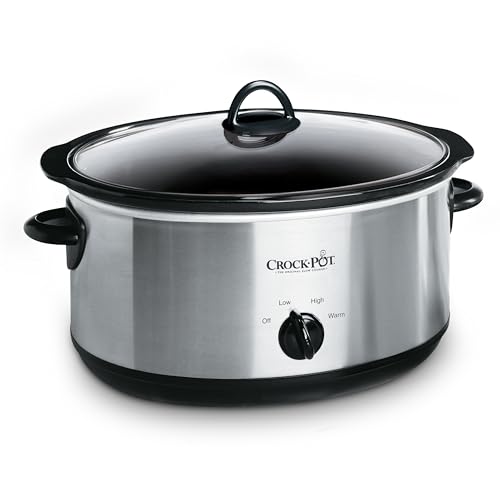
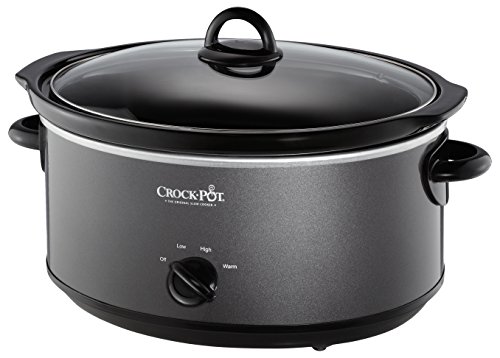
Pressure Cooker vs Slow Cooker at a Glance
| Feature | Pressure Cooker | Slow Cooker |
|---|---|---|
| Primary Cooking Method | Pressurized steam chamber | Low-temperature radiant simmer |
| Relative Cooking Speed | Up to 70% faster than slow cooking | Standard 4 to 8 hour gentle simmer |
| Standard Power Wattage | 700W to 1000W | 210W to 1500W |
| Vessel Capacity Options | 3-quart (2.8L) or 6-quart (5.7L) | 7-quart (serves 8 to 9+ people) |
| Inner Vessel Material | 18/8 tri-ply stainless steel | Glazed removable stoneware |
| Vessel Shape | Round vertical cylinder | Wide oval shape |
| Cooking Modes | 7-in-1 multi-cooking programs | 3 manual settings (High, Low, Warm) |
| Integrated Sauté Function | Yes, built-in high-heat searing | No, requires separate stove pan |
| Oven Safe Insert | Not listed | Yes, stoneware safe up to 400°F |
| Safety Features | Over 10 safety mechanisms and lid lock | Manual controls, cool-touch handles |
| Best For | Fast weeknight meals and multi-use versatility | Unattended all-day braising and large roasts |
Cooking Speed and Meal Planning
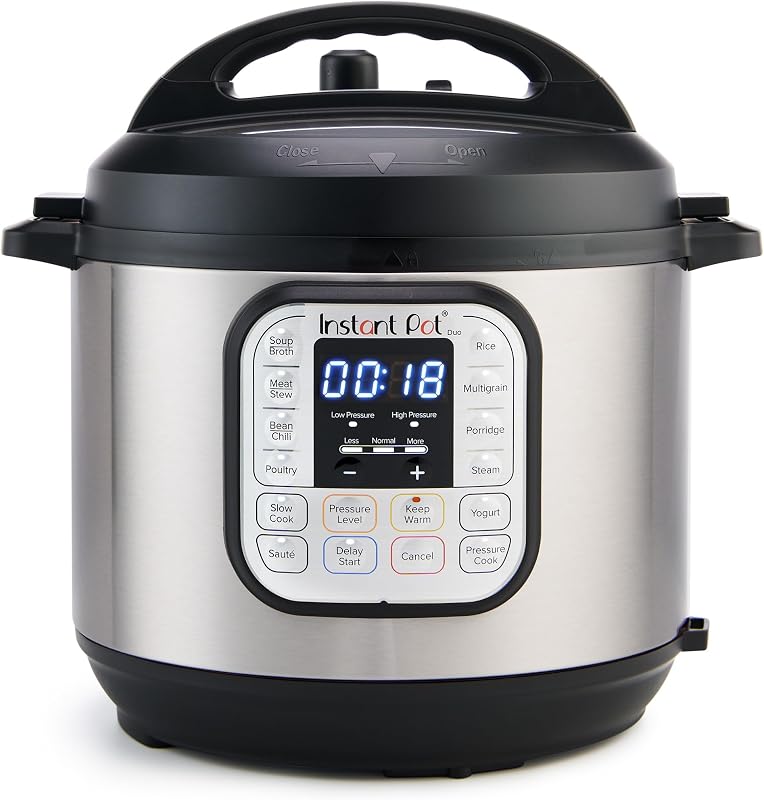
The operational rhythm of your kitchen dictates whether a slow cooker vs pressure cooker matches your lifestyle. When comparing pressure cooker vs slow cooker cooking time, the appliances occupy polar ends of meal planning. A modern electric pressure cooker, exemplified by the Instant Pot Duo 6-Quart, uses internal pressure to elevate the boiling point of liquid beyond normal atmospheric limits, completing stews, beans, and shredded meats up to 70 percent faster than conventional or low-heat methods. Dense root vegetables cook in minutes, and unsoaked dry legumes soften completely in roughly half an hour, making spontaneous weeknight dinners effortless.
By contrast, an appliance like the Crock-Pot 7-Quart Manual Slow Cooker works on an extended timeline designed around unattended all-day braising. You prepare ingredients in the morning, dial the mechanical knob to Low, and let the meal simmer steadily over a six to eight-hour window while you work or run errands. There is no rapid heating cycle; the appliance relies on continuous low-level thermal transfer through its heavy ceramic basin to slowly break down food fibers without burning or drying them out.
This fundamental split determines how you manage your day. The pressure cooker rescues dinner when you arrive home to unthawed meat and an empty pot, finishing a full family meal inside 45 minutes. The slow cooker requires forethought and morning prep, but rewards that planning with a ready-to-eat dinner the second you walk through the front door, without any post-work kitchen assembly required.
Edge: Pressure cooker, because its rapid turnaround time handles last-minute meal preparation while retaining the capacity to emulate slow cooking when needed.
Culinary Versatility and Pre-Cooking Preparation
Versatility is another major differentiator when evaluating a pressure cooker review against everyday kitchen needs. Electric pressure cookers operate as comprehensive culinary stations rather than single-purpose vessels. For instance, the Instant Pot Duo Mini 3-Quart and its 6-quart sibling integrate seven distinct appliance profiles into one footprint: pressure cooker, slow cooker, rice cooker, steamer, sauté pan, yogurt maker, and warmer. The built-in sauté mode uses the tri-ply 18/8 stainless steel base to brown onions, sear meat, or reduce sauces right in the inner pot before initiating a pressurized cycle, eliminating the need to wash a separate skillet on the stove. If you are comparing versatile counter appliances, you might also look at our ninja vs instant pot comparison for alternative multi-cooker configurations.
Dedicated slow cookers take a much more minimalist approach to meal prep. Units like the manual Crock-Pot offer three simple settings: High, Low, and Warm. There is no integrated browning element or high-heat searing cycle. If a recipe calls for caramelizing onions or rendering beef fat to develop deep fond before the braise, you must perform that step on your stovetop in an external pan and transfer the contents over. This adds an extra step to food preparation and creates additional cookware to scrub.
The slow cooker does offer a distinct advantage once cooking concludes: its removable stoneware crock is rated oven-safe up to 400°F and can even go into a microwave. This allows you to finish a braised dish under the broiler or reheat leftovers inside the original vessel without moving food to a casserole dish. However, for sheer menu variety across rice, yogurt, steamed vegetables, and braises in a single pot, the pressure cooker provides significantly wider range.
Edge: Pressure cooker, due to its seven-in-one programming, automated cooking routines, and built-in sauté function that prevents dirtying extra pans.
Meat Texture and Dish Performance
Cooking dense proteins presents unique textural differences between these two appliances, prompting cooks to debate whether to use a pressure cooker or slow cooker for pot roast, braised ribs, or pulled pork. In a pressure cooker, superheated steam forces humidity through connective tissues under high psi, melting tough collagen into gelatin in roughly 45 to 60 minutes. The rapid hydraulic penetration produces exceptionally tender shredded beef or chicken without boiling the juices out of the muscle strands.
A slow cooker takes the opposite path to achieve tenderness. When evaluating a sous vide vs slow cooker approach to low-and-slow cooking, steady heat application plays a critical role. A traditional oval crock warms meat gradually over six to eight hours, allowing natural enzymes to break down proteins while simmering in a shallow pool of broth. When asking which appliance to pick: pressure cooker or slow cooker for tender meat, both yield fork-tender results, but the slow cooker allows flavors from aromatic vegetables, herbs, and spices to meld deeply into the cooking liquid over the course of an entire afternoon.
Recipe types also demand different moisture controls. When deciding between a pressure cooker or slow cooker for chili, the slow cooker maintains a slight, steady release of steam around its non-clamped lid, allowing the chili sauce to slowly thicken and concentrate over several hours. In a pressure cooker, the hermetically sealed gasket traps every drop of liquid inside, requiring cooks to reduce added stocks so the chili does not end up soupy. Both appliances produce deeply flavorful stews, but the slow cooker provides classic thick consistency without mandatory cornstarch slurries or post-cook reductions.
Edge: Tie, as the pressure cooker creates fork-tender meat in a fraction of the time, while the slow cooker delivers richer sauce reduction and deep flavor integration for stews.
Capacity, Vessel Shape, and Roast Fitting
Vessel architecture determines how efficiently an appliance handles large, intact cuts of meat. The Crock-Pot 7-Quart Charcoal Slow Cooker features a wide, horizontal oval profile measuring 16.5 inches across. This elongated format is purpose-built for entertaining, family-style batch cooking, and fitting 6-pound or 7-pound whole beef chuck roasts, pork shoulders, or even whole poultry without forcing you to butcher the protein into small chunks beforehand.
Pressure cookers, including the standard 6-quart Instant Pot Duo (5.7-liter capacity) and the 3-quart Mini (2.8-liter capacity), utilize cylindrical, vertically oriented pots. The round footprint is a functional necessity: circular pressure vessels distribute internal steam pressure symmetrically against the side walls to prevent stress fractures. However, this vertical shape creates a narrower cooking surface at the base. Fitting a long rack of ribs, a flat beef brisket, or an elongated whole bone-in roast into a 6-quart cylinder often requires cutting the meat into smaller segments or coiling it against the internal rim.
For serving dynamics, the slow cooker stoneware lifts out by two heavy handles to sit directly on a dining table or buffet spread, maintaining gentle heat retention for hours. Kitchen countertop footprint also matters when balancing space against form factor, an issue explored when reviewing an air fryer vs toaster oven setup. If your primary cooking style involves roasting large, un-cut family cuts or setting out party food for eight to nine guests, the oval slow cooker provides a far more accommodating vessel shape.
Edge: Slow cooker, because its wide oval stoneware vessel fits large, intact roasts and transitions smoothly from kitchen counter to buffet table.
Energy Consumption and Power Draw
Understanding the difference in pressure cooker vs slow cooker wattage helps clarify the true operational efficiency of each appliance. Electric pressure cookers rely on high-wattage heating elements to rapidly boil liquid and build chamber pressure. The 6-quart Instant Pot Duo draws 1000 watts of power at 120 volts (while the 3-quart Mini draws 700 watts). However, because these multi-cookers reach target pressure quickly and hold it with tight insulation, the high-draw element cycles on and off, completing an entire meal in 30 to 50 minutes of active cooking time.
Conversely, the 7-quart stainless steel Crock-Pot operates on an ultra-low baseline of just 210 watts at 120 volts (though specialized models like the charcoal version list alternative electrical specs). This modest 210-watt element runs continuously on High or Low for six to eight hours. Similar to evaluating motor loads in an electric vs gas pressure washer, peak wattage does not tell the whole story; total kilowatt-hours over the entire run time determine real electrical consumption.
When you calculate total energy used, a 1000-watt pressure cooker running for 40 minutes consumes approximately 0.67 kilowatt-hours. A 210-watt slow cooker operating over a standard seven-hour cycle uses roughly 1.47 kilowatt-hours. While both configurations cost very little to operate per meal, the pressure cooker completes its thermal work with less total power consumption because its closed-loop system minimizes heat escape into the room.
Edge: Tie, as the slow cooker draws exceptionally low instantaneous wattage, while the pressure cooker finishes cooking so rapidly that its overall energy footprint remains equally modest.
Safety Mechanisms and Daily Maintenance
Early stove-top pressure pots carried an intimidating reputation, but modern electric pressure cookers feature comprehensive automated safeguards. The Instant Pot Duo series integrates over ten safety mechanisms, including overheat protection, internal pressure regulation, thermal fuses, and an automatic safety lid lock that physically prevents the chamber from being opened while internal pressure remains. The dedicated steam release switch routes venting steam safely away from hands, giving users controlled depressurization options.
Slow cookers maintain a simpler mechanical build. With no pressure buildup inside the stoneware basin, there are no locking lids, relief valves, or pressure sensors to maintain. You can lift the glass lid at any point during cooking to stir ingredients, taste sauces, or add delicate herbs. However, slow cookers carry their own handling requirements: the heavy glazed stoneware pot is susceptible to thermal shock, meaning placing a chilled crock straight into a preheated oven or running cold tap water into a piping hot ceramic vessel can cause hairline cracks.
For post-meal cleanup, both appliances simplify maintenance by providing dishwasher-safe removable vessels and lids. The pressure cooker utilizes an 18/8 food-grade stainless steel pot with a tri-ply bottom, eliminating concerns about chipping, cracking, or non-stick coating degradation. The silicone lid gasket and anti-block shield on the pressure cooker lid require periodic removal and rinsing to prevent lingering food odors, whereas the slow cooker features a basic glass lid that washes clean in seconds.
Edge: Pressure cooker, thanks to its indestructible stainless steel inner pot and advanced network of over ten redundant safety locks.
Pros and Cons
Pressure Cooker
Pros
- Up to 70 percent faster cooking times
- Seven built-in cooking functions including sauté and steam
- Durable tri-ply 18/8 stainless steel cooking pot
- Over ten certified safety mechanisms and lid lock
Cons
- Round pot shape restricts long meat cuts
- Cannot open lid mid-cycle under active pressure
View Instant Pot Duo 6 Qt 7-in-1 on Amazon
Slow Cooker

Pros
- Spacious oval design fits six to seven-pound roasts
- Removable stoneware insert is oven-safe to 400°F
- Low 210-watt draw for all-day gentle simmering
- Simple manual dial controls with warm setting
Cons
- No internal browning or sautéing mechanism
- Heavy ceramic insert vulnerable to thermal shock
View Crock-Pot 7-Quart Manual Slow Cooker Family on Amazon
Who Should Buy Each One
Choose the Pressure Cooker If
- You need fast weeknight dinners prepared from start to finish in under an hour.
- You want multi-functional flexibility to sauté, cook rice, steam vegetables, and make yogurt in one appliance.
- You routinely prepare dry beans, stocks, and tough meat cuts without hours of advance soaking or simmering.
- You prefer a rugged, dishwasher-safe 18/8 stainless steel cooking pot that will never chip or crack.
Choose the Slow Cooker If
- You prefer setting ingredients to simmer in the morning and returning home to a fully cooked meal.
- You regularly cook large, uncut family proteins like a 6-pound or 7-pound whole roast or whole poultry.
- You want an oval ceramic vessel that is oven-safe up to 400°F and doubles as a buffet serving dish.
- You favor simple manual dial controls with High, Low, and Warm settings over digital programming menus.
Final Verdict
For most households, the electric pressure cooker is the more versatile, time-efficient investment. Its ability to perform seven kitchen tasks in one footprint-most notably browning meats with built-in sauté modes and accelerating cooking cycles by up to 70 percent-solves the daily challenge of weeknight dinner prep. The durable tri-ply stainless steel pot handles metal utensils without wear, and modern digital programming with over ten safety mechanisms removes the complexity historically associated with pressurized cooking.
However, the traditional slow cooker remains the undisputed champion of true hands-off convenience and large-cut entertaining. If your cooking strategy centers on batch preparation before the workday begins, or if you regularly prepare 6-pound to 7-pound whole roasts that demand the elongated shape of an oval stoneware dish, a dedicated Crock-Pot delivers effortless results that multi-cookers struggle to fit. Match your pick to your schedule: choose the pressure cooker for dynamic speed and versatility, or the slow cooker for steady, set-it-and-forget-it braising.
FAQ
Is a pressure cooker worth it if I already own a slow cooker?
Yes, asking is a pressure cooker worth it usually comes down to meal timing and culinary versatility. While your slow cooker excels at extended braises, an electric pressure cooker can prepare the exact same meal in under an hour, cook unsoaked dry beans, steam grains, and sauté aromatics directly in the pot without dirtying additional pans on the stove.
Is a slow cooker worth it for working households?
Asking is a slow cooker worth it makes sense for anyone who works away from home during the day. Its low 210-watt heating cycle allows ingredients to safely simmer unattended for six to eight hours, meaning dinner is ready the moment you walk through the door without any evening prep or cooking stress.
What is the difference between a pressure cooker or slow cooker for pot roast?
When choosing a pressure cooker or slow cooker for pot roast, the primary differences are vessel shape and cooking time. A slow cooker features an oval stoneware basin that easily accommodates a flat 6-pound or 7-pound chuck roast with vegetables around it, simmering gently over eight hours. A pressure cooker breaks down the meat’s collagen into gelatin in roughly 45 to 60 minutes, though large roasts may need to be cut in half to fit the round vertical pot.
Which appliance should I use: pressure cooker or slow cooker for chili?
Deciding between a pressure cooker or slow cooker for chili depends on how thick you like the sauce. A slow cooker allows steam to gradually escape around its lid over several hours, naturally thickening the chili base and melding spices. A pressure cooker traps all liquid inside, cooking the chili rapidly but requiring less added broth to keep the final dish from turning thin.
Which appliance is better: pressure cooker or slow cooker for tender meat?
When comparing a pressure cooker or slow cooker for tender meat, both appliances produce fork-tender results by breaking down tough connective tissue into rich gelatin. The pressure cooker uses superheated steam to force moisture into muscle fibers in under an hour, whereas the slow cooker relies on low, steady heat over a full afternoon to achieve the same tenderness.
What does a slow cooker review highlight compared to a pressure cooker review?
A typical slow cooker review focuses on ease of use, manual dial reliability, buffet-friendly serving capacity, and the convenience of oven-safe stoneware inserts. In contrast, a modern pressure cooker review highlights smart digital presets, multi-function utility such as yogurt making and sautéing, and the critical time savings achieved by high-pressure steam cycles.


