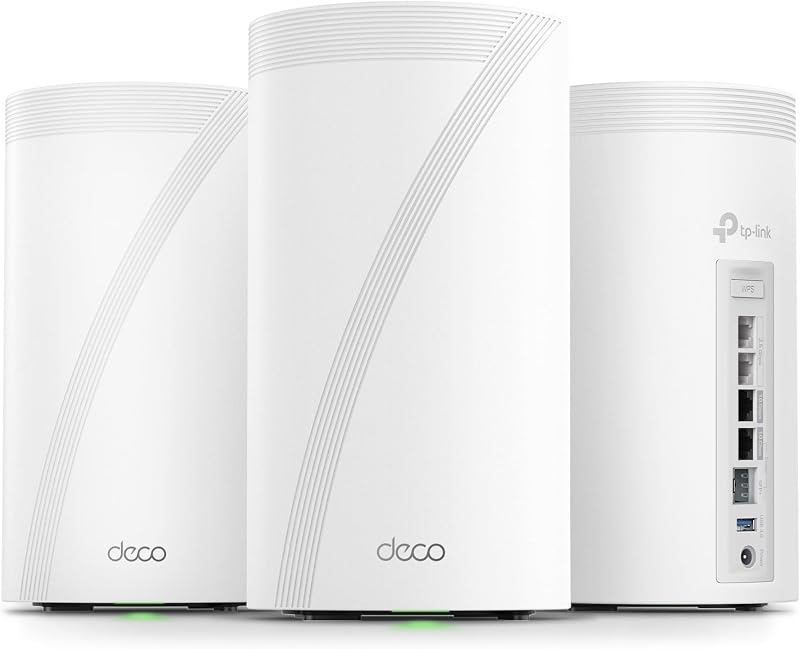
The core difference deciding between the QNAP TS-464 and the UGREEN DXP2800 GT is whether your workflow prioritizes multi-drive storage capacity or raw network throughput. The TS-464 provides four 3.5-inch drive bays suited for multi-disk redundancy and scalable storage pools, whereas the DXP2800 GT pairs a compact two-bay chassis with native 10GbE connectivity, an 8-thread AMD processor, and enterprise U.2 NVMe SSD drive support for ultra-fast local workflows.
Choose the QNAP TS-464 if you want a proven four-bay enclosure designed to maximize capacity across multiple hard drives for shared business files and comprehensive home backups. Choose the UGREEN DXP2800 GT if your daily work requires direct high-speed editing over a 10-gigabit network connection, high compute ceiling for virtual machines, and rapid flash storage access.
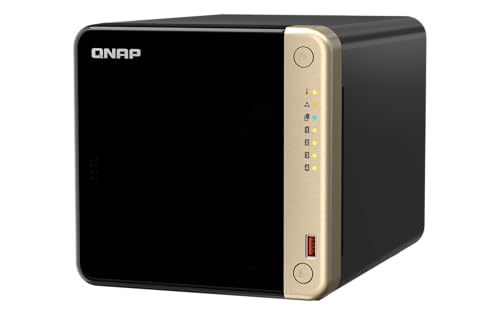

QNAP TS-464 vs UGREEN DXP2800 GT at a Glance
| Feature | QNAP TS-464 | UGREEN DXP2800 GT |
|---|---|---|
| Drive Bays | 4 x 3.5-inch SATA 6 Gb/s (Hot-swappable) | 2 x SATA (Compatible with U.2 NVMe SSDs) |
| M.2 Slots | 2 x M.2 PCIe Gen3x2 NVMe SSD slots | 2 x M.2 NVMe SSD slots |
| Maximum Listed Capacity | The listing does not specify | Up to 80TB (32TB per bay + 16TB M.2) |
| Processor | Intel Celeron N5105/N5095 (4 cores, 4 threads, up to 2.9 GHz) | AMD Ryzen Embedded R2514 (4 cores, 8 threads, up to 3.70 GHz) |
| Memory (Base / Max) | 8GB DDR4 (Expandable up to 16GB) | 8GB DDR4 (Expandable up to 64GB; ECC upgrade supported) |
| Networking Ports | Dual 2.5GbE (2.5G/1G/100M) | 10GbE |
| USB Connectivity | Multiple USB 3.2 Gen 2 Type-A (up to 10Gb/s) | The listing does not specify |
| Security & Encryption | Intel AES-NI hardware encryption engine | TLS/SSL, RSA, AES, SHA-512, Security Manager |
| Surveillance Integration | The listing does not specify | Surveillance Center (ONVIF/RTSP IP cameras) |
| Best For | Multi-drive RAID storage pools and shared backups | Direct-from-NAS editing, 10GbE workflows, and heavy virtualization |
Network Throughput and Transfer Speeds
Local network bandwidth dictates how quickly files transfer between client workstations and your centralized storage appliance. In modern creative environments and office networks, standard gigabit connections quickly choke on multi-gigabyte video files, database backups, and disk image archives. Moving from standard interfaces to multi-gigabit connections reduces transfer bottlenecks, making the difference between waiting minutes for an asset export and handling the pipeline in seconds. When weighing the UGREEN DXP2800 GT vs QNAP TS-464 on bandwidth, you are evaluating two distinct tiers of Ethernet architecture.
The TS-464 features QNAP TS-464 dual 2.5GbE interfaces capable of auto-negotiating speeds at 2.5G, 1G, and 100M. These dual ports accelerate file sharing across mixed networks of desktop PCs, laptops, and mobile devices. Having two independent 2.5GbE links allows network administrators to segregate traffic or streamline large file transfers across office workstations. In contrast, the DXP2800 GT steps into high-speed networking with native UGREEN DXP2800 GT 10GbE speed. A 10GbE port provides four times the theoretical single-lane throughput of a 2.5GbE connection, allowing high-performance transfers that match the data throughput of internal solid-state storage pools.
While the dual ports on the TS-464 offer balanced connectivity for multiple standard devices, they cannot match the sheer unconstrained speed of a single 10GbE pipeline on the DXP2800 GT for one-to-one workstation operations. Readers comparing multi-drive setups against newer hardware architectures in our qnap ts-464 vs ugreen dxp4800 plus breakdown will recognize that native 10-gigabit networking transforms the appliance into an active workspace rather than merely an archive vault.
Edge: UGREEN DXP2800 GT. The built-in 10GbE port delivers vastly superior single-client transfer speeds compared to dual 2.5GbE links.
Drive Bay Expansion and Storage Architecture
Storage architecture determines not only how much data your appliance holds today, but also how your storage pool can withstand drive failures without downtime. Multi-bay enclosures allow users to deploy redundancy configurations where a single mechanical failure does not result in catastrophic data loss. The physical bay count also governs your overall cost per terabyte, as larger multi-bay setups allow you to group smaller, more economical hard drives into a single unified volume without sacrificing failure protection.
The QNAP TS-464 4-bay capacity represents a classic multi-drive footprint. It provides four hot-swappable 3.5-inch drive trays supporting 7200 rpm SATA 6 Gb/s mechanical hard drives, supplemented by dual M.2 PCIe Gen3x2 NVMe SSD slots. These M.2 bays can be utilized for cache acceleration to speed up random read/write cycles or configured as standalone high-speed SSD storage pools. Having four primary SATA bays allows users to set up advanced redundancy where one or even two drives can fail safely, leaving plenty of room to expand volume size over time.
The DXP2800 GT takes a fundamentally different approach with its 2-bay enclosure. It supports 2 SATA drives up to 32TB each, but uniquely specifies that those same two bays are also compatible with enterprise-grade U.2 NVMe SSDs. In addition, the DXP2800 GT houses dual M.2 SSD slots supporting up to 16TB, bringing total system capacity up to 80TB. However, with only two main bays, mechanical storage pools are restricted to RAID 1 mirroring or striping. While the U.2 compatibility offers unprecedented solid-state transfer capability for a two-bay unit, buyers seeking massive capacity built from traditional hard drives will find the four bays on the TS-464 far more versatile. For another perspective on how four-bay appliances handle long-term expansion, see our synology ds923+ vs qnap ts-464 comparison.
Edge: QNAP TS-464. Four hot-swappable 3.5-inch bays offer superior multi-drive redundancy configurations and storage pool flexibility over a two-bay enclosure.
Processing Performance and Memory Scalability
Network-attached storage devices have evolved from simple disk enclosures into versatile compute servers. The central processing unit and system memory determine how well the unit handles heavy background tasks, encrypted file systems, Docker microservices, and multiple concurrent user connections. When a NAS runs out of compute headroom or RAM, system responsiveness plummets and background indexing drags file transfers to a crawl.
In any rigorous QNAP TS-464 review, the Intel Celeron N5105/N5095 quad-core processor stands out as an established platform. Featuring 4 cores, 4 threads, and burst clocks reaching up to 2.9 GHz, it includes an integrated Intel AES-NI hardware encryption engine that protects confidential business files without impacting read and write speeds. The TS-464 ships with 8GB of DDR4 memory and supports expansion up to 16GB. This configuration handles file sharing, media organization, and light containerized services reliably, but the 16GB RAM limit sets a firm boundary for heavy multi-tasking.
The DXP2800 GT pushes performance much further into workstation territory. It is powered by an AMD Ryzen Embedded R2514 processor featuring 4 cores and 8 threads with clock speeds boosting up to 3.70 GHz. More importantly, while it ships with 8GB of pre-installed DDR4 RAM, the memory ceiling extends up to 64GB. The hardware also supports an ECC RAM upgrade, allowing users to install error-correcting memory to detect and fix data corruption during long-term continuous operation. Those wondering is UGREEN DXP2800 GT worth it for heavy background processing will appreciate this headroom. Similar compute enhancements are examined in our ugreen dxp2800 gt vs terramaster f4-425 analysis.
Edge: UGREEN DXP2800 GT. The 8-thread AMD Ryzen processor, 64GB memory ceiling, and optional ECC RAM support dramatically outclass the Celeron platform.
Video Editing and Content Creation Workflows
Choosing between the QNAP TS-464 or UGREEN DXP2800 GT for video editing requires understanding how project files travel between storage drives and desktop non-linear editors. Video editors working with high-bitrate footage, 4K scrubbing, and complex timelines cannot tolerate frame drops or latency spikes caused by slow network interfaces or constrained bus lanes. An editing NAS must deliver sustained, low-latency reads and writes continuously during timeline playback.
The TS-464 assists creative workflows through its dual M.2 PCIe Gen3x2 NVMe SSD slots and multiple external USB 3.2 Gen 2 Type-A ports capable of 10Gb/s speeds. These fast USB ports make it easy to attach rapid external expansion enclosures or dump footage quickly from external drives. Furthermore, the internal M.2 SSDs can be configured as a cache acceleration layer to speed up file browsing and random access for creative libraries. However, because client workstation connectivity relies on 2.5GbE ports, real-time multi-stream editing directly from the NAS over the network remains constrained by network bandwidth.
The DXP2800 GT is specifically highlighted for direct-from-NAS editing. By combining a 10GbE network connection with high-speed SSD expansion-including support for fast U.2 NVMe SSDs in the main drive bays and dual M.2 NVMe drives-it allows creative professionals to edit video projects straight off the shared volume. Freelancers and content creators avoid the need to copy working assets back and forth to their local machine before starting work. If direct timeline scrubbing over Ethernet is your primary requirement, the DXP2800 GT delivers the physical throughput necessary to make it seamless. Those considering entry-level hardware alternatives will find useful context in our qnap ts-233 vs ugreen dxp2800 gt guide.
Edge: UGREEN DXP2800 GT. Native 10GbE connectivity paired with U.2 and M.2 SSD support enables true direct-from-NAS timeline editing.
Media Streaming and Home Ecosystem Management
Centralized data hubs must also excel at cataloging media collections, backing up mobile devices, running smart home integrations, and hosting automated home security systems. When deciding between the QNAP TS-464 or UGREEN DXP2800 GT for Plex or general media streaming, the underlying operating system software and app ecosystem play a defining role in day-to-day usability.
The TS-464 is purpose-built to centrally store and organize personal or family photos, music, and video collections across Mac, PC, laptops, smartphones, and tablets. Its Intel quad-core processor provides solid multimedia processing capability, and the platform easily accommodates home media libraries while serving as a secure central backup hub. The unit’s multiple 10Gb/s USB 3.2 Gen 2 ports also allow quick ingestion of personal media archives from portable storage drives.
A comprehensive UGREEN DXP2800 GT review reveals a very competitive modern software suite. Operating on UGOS Pro, the DXP2800 GT provides an intuitive management interface with photo organization, smart global search, and built-in support for Docker, virtual machines, and SAN Manager. The listing highlights seamless expansion with Plex, Emby, Jellyfin, and Home Assistant. Additionally, it features a built-in Surveillance Center that connects to compatible ONVIF and RTSP IP cameras for 24/7 video recording and event reviews. Multi-layer data protection-including TLS/SSL, RSA, AES, and SHA-512 encryption paired with Security Manager-keeps local files and security footage securely under your personal control. To see how UGOS Pro scales across multi-bay enclosures, explore our ugreen dxp2800 gt vs dxp4800 plus coverage.
Edge: Tie. Both platforms deliver robust media cataloging, containerized app management, and extensive home streaming support.
Pros and Cons
QNAP TS-464

Pros
- Four hot-swappable 3.5-inch SATA drive bays
- Dual 2.5GbE network connectivity
- Multiple 10Gb/s USB 3.2 Gen 2 ports
- Dual M.2 PCIe Gen3x2 NVMe SSD slots
- Integrated Intel AES-NI hardware encryption engine
Cons
- Memory expansion capped at 16GB DDR4
- Lacks native 10GbE network interface
- Only two drive bays fewer than large enterprise towers
UGREEN DXP2800 GT
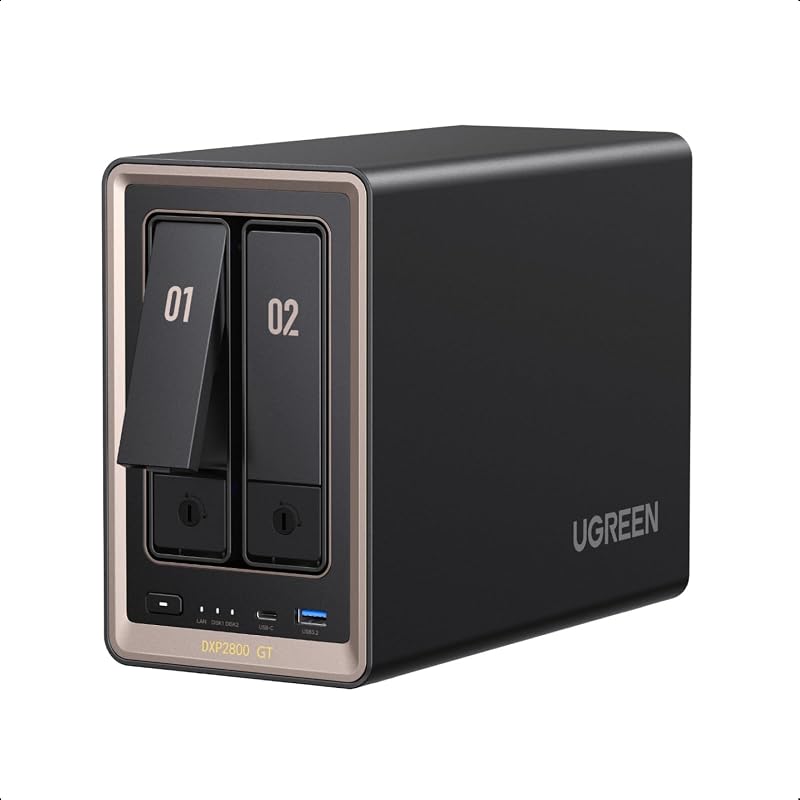
Pros
- High-speed native 10GbE networking
- AMD Ryzen Embedded 4-core 8-thread processor
- Expandable up to 64GB with ECC RAM support
- Drive bays compatible with enterprise U.2 NVMe SSDs
- Integrated Surveillance Center for ONVIF and RTSP cameras
Cons
- Only two main SATA drive bays
- Pre-installed 8GB memory is non-ECC
View UGREEN DXP2800 GT on Amazon
Who Should Buy Each One
Choose the QNAP TS-464 If
- You need four 3.5-inch SATA bays to build large, fault-tolerant RAID storage pools.
- You want dual 2.5GbE network links to distribute file traffic across multiple computers and office devices.
- You frequently ingest media using multiple 10Gb/s USB 3.2 Gen 2 Type-A external drives.
- You prefer an established hardware platform built around an Intel Celeron architecture with hardware AES-NI encryption.
Choose the UGREEN DXP2800 GT If
- You need 10GbE network throughput for high-speed file transfers and direct-from-NAS video editing.
- You run compute-heavy Docker containers, virtual machines, and require RAM expansion up to 64GB with ECC support.
- You want advanced flash storage flexibility with dual M.2 NVMe slots and U.2 NVMe SSD compatibility in the primary bays.
- You plan to use your NAS as a dedicated Surveillance Center for ONVIF and RTSP security camera recording.
Final Verdict
For users whose primary objective is reliable, scalable storage volume, the QNAP TS-464 remains the practical selection. Its four hot-swappable 3.5-inch drive bays allow you to configure expansive, fault-tolerant storage pools that protect large digital archives across multiple mechanical hard drives. Backed by dual 2.5GbE networking, twin M.2 PCIe Gen3x2 NVMe SSD slots, and fast USB 3.2 Gen 2 connectivity, it covers all the fundamentals required for centralized office file sharing and family backups.
However, for content creators, power users, and virtualization enthusiasts, the UGREEN DXP2800 GT is the superior high-performance appliance. With an 8-thread AMD Ryzen Embedded processor, memory expansion scaling up to 64GB with ECC support, native 10GbE networking, and U.2 NVMe compatibility, it shatters the transfer bottlenecks common to traditional desktop storage. If your daily workflow demands direct timeline editing over the network and rapid computational muscle, the DXP2800 GT provides hardware capabilities that the TS-464 cannot match.
FAQ
Can the UGREEN DXP2800 GT edit 4K video directly over the network?
Yes. The UGREEN DXP2800 GT is explicitly designed for direct-from-NAS editing, utilizing its native 10GbE networking interface alongside fast NVMe and U.2 SSD storage support to deliver the high sustained throughput required for timeline playback.
How much memory can be installed in each NAS?
The QNAP TS-464 comes with 8GB of DDR4 memory and supports expansion up to 16GB. The UGREEN DXP2800 GT also ships with 8GB of DDR4 RAM but can be expanded up to 64GB, and it supports an optional upgrade to ECC RAM.
Does the UGREEN DXP2800 GT include ECC RAM out of the box?
No. The pre-installed 8GB memory module is non-ECC RAM. While the motherboard and AMD Ryzen processor support ECC error correction to protect against data corruption during continuous operation, you must purchase and install compatible ECC RAM separately to activate that feature.
How do the M.2 SSD slots differ between the TS-464 and DXP2800 GT?
Both models feature dual M.2 SSD slots. The QNAP TS-464 provides dual M.2 PCIe Gen3x2 NVMe slots designed for cache acceleration or dedicated SSD storage pools. The UGREEN DXP2800 GT features dual M.2 NVMe slots supporting up to 16TB of solid-state capacity, which can be combined with SATA or U.2 drives for an overall system capacity of up to 80TB.
Can both appliances run Plex and Docker applications?
Yes. The QNAP TS-464 supports containerized applications and central media organization, while the UGREEN DXP2800 GT features UGOS Pro with native support for Docker containers, virtual machines, and media streaming apps including Plex, Emby, and Jellyfin.
Which NAS offers better physical drive fault tolerance?
The QNAP TS-464 offers better multi-drive fault tolerance because its four 3.5-inch drive bays allow for multi-disk RAID configurations that can protect your data against one or more simultaneous drive failures. The two-bay physical design of the UGREEN DXP2800 GT limits mechanical drive redundancy to two-disk mirroring.