The primary factor separating the Ryobi PCL206B from the Ryobi PSBDD02 is motor architecture paired with chassis volume: the PCL206B delivers a standard brushed drive train with known, heavy-duty torque metrics, whereas the PSBDD02 utilizes a compact brushless motor engineered for tight spaces and reduced user fatigue.
Choose the PCL206B if you require verified driving torque, extensive clutch versatility, and an onboard LED for routine workshop construction. Choose the PSBDD02 if you prioritize an ultra-lightweight 2.4-pound brushless tool built to navigate tight framework and overhead angles without straining your arms.

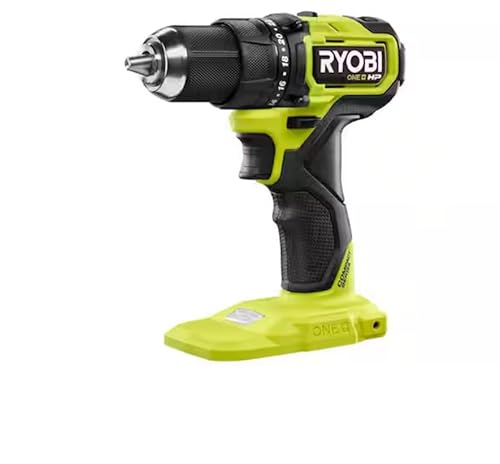
Ryobi PCL206B vs Ryobi PSBDD02 at a Glance
| Feature | Ryobi PCL206B | Ryobi PSBDD02 |
|---|---|---|
| Motor Type | Standard (Brushed) | ONE+ HP Brushless |
| Maximum Torque | 515 in-lb | Not listed |
| Maximum Speed | 1,750 RPM | Not listed |
| Gearbox Speeds | 2-speed | Not listed |
| Clutch Positions | 24 settings | Not listed |
| Chuck Size & Type | 1/2 in. keyless ratcheting | 1/2 in. compact |
| Tool Weight | Not listed | 2.4 pounds |
| Integrated LED Light | Yes | Not listed |
| Housing Material | Metal and Plastic/Composite | ABS Plastic |
| Best For | General DIY, heavy driving, benchtop tasks | Confined spaces, cabinetry, overhead drilling |
Motor Technology and Efficiency
Motor design influences how an 18-volt cordless tool draws energy from a lithium-ion cell, sustains rotational speed under mechanical resistance, and holds up over continuous cycles. The PCL206B runs on a standard motor configuration producing up to 600 watts of maximum power. This traditional architecture uses carbon brushes to deliver current directly to the rotating armature. It offers reliable, predictable power delivery during standard drilling tasks, but internal friction from the brushes inevitably creates thermal buildup and electrical resistance during extended workloads.
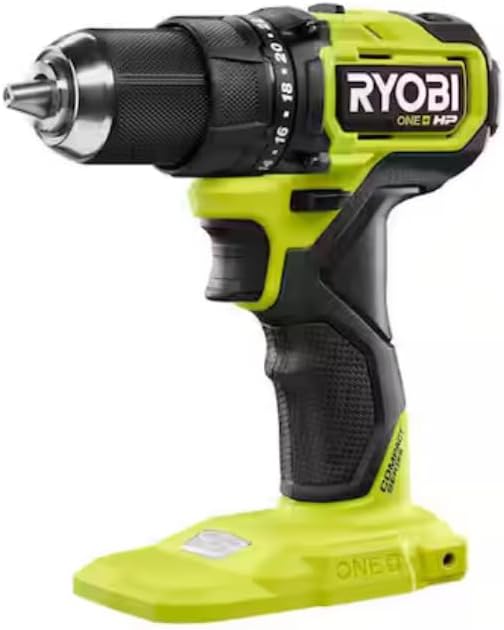
In contrast, the PSBDD02 incorporates the Ryobi ONE+ HP brushless motor platform. Brushless engineering replaces physical friction contacts with electronic commutators, adjusting power draw dynamically based on the resistance the drill bit encounters. When examining the ryobi psbdd02 vs pbldd01 family of tools, brushless motors typically maintain higher energy efficiency per battery charge. By eliminating carbon brushes, the PSBDD02 minimizes heat accumulation inside the casing, extending runtimes per amp-hour and reducing internal component degradation over years of operation.
For high-frequency users, the efficiency gains of the Ryobi PSBDD02 brushless motor translate directly into fewer trips to the battery charger during day-long projects. The brushed drive in the PCL206B provides dependable punch for sporadic DIY repairs, but it lacks the thermal optimization and frictionless longevity found in the brushless HP lineup.
Edge: Ryobi PSBDD02 due to its frictionless ONE+ HP brushless motor architecture that maximizes battery efficiency and thermal longevity.
Torque Output and Drilling Capability
Rotational force, measured in inch-pounds, determines the diameter of holes a drill can bore and the length of structural fasteners it can sink without bogging down. The Ryobi PCL206B torque spec is clearly documented by the manufacturer at an impressive 515 in-lb, complemented by an operating ceiling of 1,750 RPM. This substantial twisting power is backed by a 600-watt motor that gives the tool a rated 0.5-inch drilling capacity in solid metal as well as a 0.5-inch capacity in lumber. These verified numbers ensure that the PCL206B can easily drive wide-gauge construction screws, spade bits, and twist drills through dense stock without stalling.
When conducting a thorough Ryobi PSBDD02 review, concrete torque numbers are notably absent from the official specifications. While designated as an 18V ONE+ HP tool, the manufacturer listing does not specify the maximum inch-pounds of torque, motor wattage, or maximum rotational speed. In practical trades, this leaves buyers guessing whether the compact brushless motor is tuned primarily for nimble, low-torque assembly or heavier structural boring. You can evaluate similar platform trade-offs in our detailed look at the ryobi pcl206b vs psbdd01, where transparent output numbers play a critical role in heavy framing tasks.
If your workload involves boring clean half-inch holes into steel channel or setting structural lag bolts, having verified torque specifications is essential for job planning. The PCL206B leaves no ambiguity regarding its muscle, delivering up to 515 in-lb to conquer demanding household and shop jobs.
Edge: Ryobi PCL206B because of its documented 515 in-lb torque capacity and confirmed 0.5-inch metal and wood drilling limits.
Size, Weight, and Maneuverability
The external dimensions and overall mass of a cordless drill dictate where it can physically operate and how long an operator can handle it before experiencing hand, wrist, or shoulder fatigue. The Ryobi PSBDD02 compact size is the marquee engineering trait of the tool. With an official bare-tool weight of just 2.4 pounds and an ABS plastic chassis designed for tight clearance, this drill easily fits between floor joists, inside pre-assembled under-sink cabinetry, and between narrow wall stud cavities where standard drills cannot turn a straight bit.
The PCL206B utilizes a more standard, robust form factor. The listing does not specify its exact weight, but its construction incorporates metal components alongside plastic composites, inevitably resulting in a heavier, bulkier presence in the hand. While the added mass can help steady the drill during high-torque horizontal driving, it works against the user when driving drywall screws into ceilings or hanging electrical boxes overhead for hours at a time. Readers looking at other models in this weight class can check the ryobi psbdd02 vs psbdd01 breakdown to see how compact shells alter handling dynamics.
For cramped mechanical installations, plumbing rough-ins, or tasks where working in tight angles is non-negotiable, the PSBDD02 holds an undeniable advantage. Its 2.4-pound profile reduces physical strain, making it the superior pick for extended above-shoulder operation.
Edge: Ryobi PSBDD02 thanks to its verified 2.4-pound featherweight design and compact chassis suited for tight access.
Clutch Control and Chuck Mechanics
Fastening control protects workpieces from damage by disengaging the motor before screw heads countersink too deeply or strip out soft wood threads. The PCL206B is equipped with an advanced 24-position adjustable clutch coupled with a dedicated 2-speed mechanical gearbox. This extensive range allows users to dial back resistance for small cabinet screws or lock out the clutch for maximum boring power. Furthermore, the PCL206B boasts a 1/2-inch (12.7 mm) keyless ratcheting chuck. The internal ratcheting mechanism bites down firmly on bit shanks, minimizing frustrating bit slippage when drilling high-resistance metals.
The PSBDD02 is also cataloged with a 1/2-inch chuck, ensuring compatibility with standard round and hex-shank accessories up to half an inch. However, the listing does not specify whether the PSBDD02 includes a dual-speed gearbox, a single variable-speed trigger, or the exact count of clutch resistance positions. As seen in comparisons like the ryobi pcl206b vs pbldd01, having a dedicated two-speed gearbox allows an operator to instantly switch between high-speed drilling and low-speed, high-torque driving.
When evaluating the Ryobi PCL206B or PSBDD02 for DIY fastening, the 24 clutch settings on the PCL206B provide superior precision for delicate sheet-metal and carpentry tasks. The positive ratcheting action of its 1/2-inch chuck keeps tooling secure under alternating motor loads.
Edge: Ryobi PCL206B due to its clearly defined 24-position clutch and keyless ratcheting chuck mechanism.
Workspace Illumination and Housing Durability
Jobsite conditions often require working in dimly lit corners, utility closets, or unpowered construction shells where localized illumination is vital. The PCL206B integrates an on-board LED work light directly into the tool housing, casting light straight toward the chuck and fastener tip to eliminate drill-shadows. In terms of physical construction, the PCL206B utilizes a blend of metal and plastic/composite materials, delivering extra rigidity around the gear case to withstand the mechanical shocks typical of busy workshop tables.
The PSBDD02 features an all-ABS plastic body in classic Ryobi Green. ABS plastic offers high impact resistance and keeps weight down, but the product data for the PSBDD02 does not specify whether an on-board LED work light is present. Users comparing different compact Ryobi tools, such as in the ryobi pbldd01 vs psbdd01 analysis, know that losing on-tool lighting requires holding a separate work light or wearing a headlamp in dark workspaces.
The combination of composite and metal materials on the PCL206B gives it an industrial, hard-wearing feel, while the integrated LED provides immediate visual clarity in dark closets. Without confirmation of lighting features on the PSBDD02, the PCL206B stands out as the more practical option for poorly lit job environments.
Edge: Ryobi PCL206B because of its integrated LED work light and rugged metal-and-composite housing.
Pros and Cons
Ryobi PCL206B

Pros
- 515 in-lb maximum torque
- 24-position clutch control
- 1/2-inch keyless ratcheting chuck
- Integrated LED work light
Cons
- Standard brushed motor platform
- Bare tool weight not listed
Ryobi PSBDD02
Pros
- ONE+ HP brushless motor
- Lightweight 2.4-pound tool weight
- Compact body for tight areas
Cons
- Torque output not listed
- Clutch settings not specified
Who Should Buy Each One
Choose the Ryobi PCL206B If
- You need a verified 515 in-lb torque output to power through stubborn framing materials and half-inch steel plate.
- You drive diverse fastener sizes and require 24 distinct clutch settings to prevent over-driving or stripping screw heads.
- You regularly work inside dark closets or crawlspaces where an onboard LED work light is essential.
- You want a heavy-duty 1/2-inch keyless ratcheting chuck that actively prevents drill bits from slipping loose.
Choose the Ryobi PSBDD02 If
- You need a featherweight 2.4-pound tool to minimize forearm fatigue during all-day overhead installations.
- You work in cramped spaces such as pre-hung kitchen cabinets, HVAC ducts, or between narrow wall studs.
- You prefer the battery runtime efficiency, lower operating heat, and long life of a ONE+ HP brushless motor.
- You already own high-torque drills and desire a lightweight, compact secondary tool for quick driving jobs.
Final Verdict
The choice between these two 18V drill/drivers hinges on your specific operational priorities. In any comprehensive Ryobi PCL206B review, this model proves itself as the more well-rounded and transparently documented workhorse. With 515 in-lb of torque, a 2-speed gearbox, a 24-position clutch, an on-board LED, and a ratcheting 1/2-inch chuck, it provides everything necessary for general DIY, deck repairs, and workshop fabrication. Is Ryobi PCL206B worth it for the typical homeowner? Yes, because its published specs leave zero uncertainty about its capabilities across wood and metal tasks.
On the other side of the Ryobi PSBDD02 vs PCL206B matchup, the PSBDD02 is uniquely suited for users who prioritize ergonomics and maneuverability over brute force. Is Ryobi PSBDD02 worth it for cabinetmakers and finish installers? Absolutely. If your daily routine includes drilling inside confined assemblies or holding tools over your head, its ONE+ HP brushless motor and 2.4-pound chassis offer maneuverability that bulky drills cannot match. For general-purpose DIY versatility, the PCL206B takes the overall win, but the PSBDD02 remains the premier choice for tight, fatigue-sensitive applications.
FAQ
Are batteries interchangeable between the Ryobi PCL206B and the PSBDD02?
Yes. Both the PCL206B and the PSBDD02 belong to the Ryobi ONE+ 18V battery platform. Any 18-volt ONE+ lithium-ion battery will slide into and power either bare tool, allowing you to swap battery packs freely across your existing collection of Ryobi cordless tools.
What type of motor does the Ryobi PSBDD02 have?
The Ryobi PSBDD02 features a ONE+ HP brushless motor. This design uses electronic controls instead of mechanical carbon brushes, which lowers internal friction, reduces operating temperatures, and delivers better energy efficiency per charge.
What is the maximum torque rating of the Ryobi PCL206B?
The Ryobi PCL206B delivers up to 515 in-lb of torque. It also features an 18-volt motor generating up to 600 watts of power and top speeds of 1,750 RPM, making it well-suited for moderate to heavy drilling operations.
What size chuck is installed on these two Ryobi drills?
Both drills feature a 1/2-inch chuck. The PCL206B specifically includes a keyless ratcheting 1/2-inch (12.7 mm) chuck engineered for rapid bit changes and firm bit retention, while the PSBDD02 listing indicates a compact 1/2-inch chuck configuration.
How much does the Ryobi PSBDD02 weigh without a battery?
According to the official manufacturer product data, the Ryobi PSBDD02 weighs exactly 2.4 pounds as a bare tool. The listing for the PCL206B does not specify its exact weight.
Does the Ryobi PCL206B include an integrated LED light?
Yes, the Ryobi PCL206B comes equipped with an on-board LED work light designed to illuminate dim work surfaces and improve drilling accuracy. The product listing for the PSBDD02 does not state whether an integrated work light is included.
What materials are used to construct the housings of these tools?
The Ryobi PCL206B housing is constructed from a combination of metal and plastic/composite materials, providing extra durability around mechanical wear points. The Ryobi PSBDD02 is constructed from ABS plastic, keeping the total tool weight down to 2.4 pounds.


