Choosing between these two dynamic broadcast packages comes down to whether your recording space demands surgical acoustic tailoring on a single flagship vocal capsule or an immediate out-of-the-box dual-microphone setup with integrated boom arms. The primary technical divider centers on sound personalization and deployment scope: one configuration supplies dual rear acoustic shaping switches for adapting to diverse voice types in solo studios, whereas the competing alternative delivers a pre-tuned, high-output broadcast profile packaged as an entire two-host recording station.
Broadcasters, solo streamers, and commercial voice actors who require fine-grained frequency tuning and precision monitoring should invest in the Shure SM7B. Creators launching an interview show, co-hosted stream, or two-person vocal workspace who need two durable microphones with pre-routed cabling should choose the Rode PodMic.
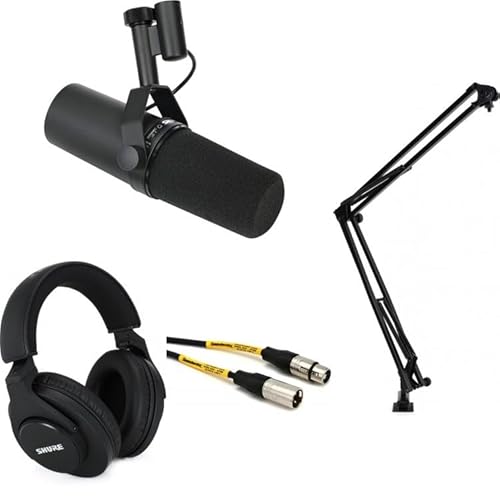

Shure SM7B vs Rode PodMic at a Glance
| Feature | Shure SM7B | Rode PodMic |
|---|---|---|
| Transducer Principle | Dynamic | Dynamic |
| Polar Pattern | Unidirectional | Unidirectional |
| Chassis Construction | Stainless Steel | Solid Metal |
| Acoustic Tone Controls | Two Selectable Voicing Settings | Not listed (Factory Voiced) |
| High-Frequency Extension | Not listed | 13 KHz |
| Impedance | Not listed | 320 ohm |
| Signal-to-Noise Ratio | 75 dB | Not listed |
| Internal Plosive Protection | Large Diaphragm Capsule Housing | Built-In Internal Pop Filter |
| Boom Arm Reach and Mounting | 32.25″ Reach with 2.17″ Clamp Range | 35″ Reach with Secure Desk Mount Clamps |
| Monitoring Gear Included | 1x Shure SRH440A Studio Headphones | 2x Closed-Back Studio Monitor Headphones |
| Package Configuration | Single Microphone Solo Bundle | Two Microphone Co-Host Bundle |
| Best For | Critical Voiceover, Studio Broadcast, and Solo Streaming | Dual-Host Podcasting, Interviews, and Multi-Voice Production |
Vocal Tone Customization and Frequency Response
Dynamic microphones rely on moving-coil capsules that naturally resist room reflections, but how a microphone sculpts high and low frequencies dictates its versatility across different vocal timbres. The Shure SM7B review data confirms that this classic transducer includes two selectable onboard settings, giving engineers the ability to alter its frequency curve right at the rear plate. This dual-switch acoustic tailoring enables you to counteract boomy bass or inject intelligibility into darker voices before your signal ever touches an audio interface or digital audio workstation. Capturing voiceover, automated dialogue replacement, or broadcast radio demands a mic that adapts to whoever sits in front of the stand, and having two physical voicing modes provides a level of tonal flexibility that fixed-profile capsules cannot duplicate.
In contrast, the Rode PodMic provides a dedicated broadcast frequency response listed up to 13 KHz, purposefully tailored to emphasize voice presence and speech clarity without requiring manual switch adjustments. Instead of configurable tone toggles, the PodMic relies on a factory-tuned acoustic chamber that elevates spoken articulation while rolling off extreme high-frequency hiss. When evaluating Shure SM7B vs Rode PodMic frequency response, the SM7B provides a broad, uncolored canvas designed for natural vocal reproduction, whereas the PodMic pushes immediate broadcast bite right into the mix. Those evaluating dynamic alternatives might also compare the shure mv7 vs sm7b to see how newer hybrid capsules approach vocal tone, but within this comparison, the SM7B remains the definitive standard for deep acoustic versatility.
The practical difference in Shure SM7B vs Rode PodMic sound quality becomes immediately apparent during post-production processing. The SM7B posts a high 75 dB signal-to-noise ratio, ensuring that low-level spoken details stay clear of floor noise when high-gain preamplifiers push the signal. The PodMic, operating with a specified 320 ohm impedance, delivers robust output that drives speech straight through an interface with crisp presence, though its high-end roll-off at 13 KHz means it cannot capture ultra-airy overtones. For creators tracking single-speaker commercial voiceover where subtle nuance is paramount, the SM7B offers superior tonal shaping headroom.
Edge: Shure SM7B because its two onboard acoustic tailoring settings allow custom equalization adjustments to fit different speaking voices.
Studio Arm Reach and Cable Management
Dynamic broadcast microphones demand close physical proximity to achieve proper vocal body and isolate voice from environmental noise, which makes the mechanical stability and reach of the mounting arm a critical usability factor. The SM7B bundle features the SH-BROADCAST1 Deluxe Articulating Desktop Mic Boom Stand, which provides a 32.25-inch arm extension, full 360-degree rotation, and an integrated desktop clamp designed for surfaces up to 2.17 inches thick. The stand incorporates a dedicated exterior cable channel to keep the included 10-foot Cableworks Composer Series XLR cable organized along the exterior frame, ensuring smooth arm repositioning without snagging loose wiring during live broadcasts.
The PodMic package expands on mechanical deployment by supplying two complete H&A broadcast arms equipped with smooth internal springs and an extended 35-inch reach. Rather than relying on external channels or clip-on ties, these broadcast arms feature integrated 10-foot XLR cables that travel entirely inside the arm tubing. This internal routing design eliminates visual clutter across desk surfaces, which is particularly beneficial for camera-facing streaming desks and compact multi-host interview tables. Secure desk mount clamps keep both 35-inch arms anchored firmly during aggressive repositioning.
Choosing between these mechanical approaches comes down to studio scale and cable routing preferences. While the SH-BROADCAST1 arm on the SM7B offers a precise 2.17-inch clamp range and dependable external channel management, the PodMic bundle supplies two independent boom arms that each reach 35 inches with zero exposed wiring. If you are comparing broadcast arm ergonomics across other desktop setups, exploring the shure mv7 vs rode podmic reveals how dynamic capsules interact with studio mounting arms, but the PodMic bundle here clearly delivers greater mechanical reach and cleaner integrated cable runs.
Edge: Rode PodMic because the package includes two 35-inch reach boom arms featuring fully integrated internal XLR cables.
Chassis Durability and Capsule Shock Protection
Broadcasting environments subject equipment to accidental bumps, heavy handling, and harsh mechanical vibrations, making build materials and capsule isolation vital for uninterrupted audio capture. The SM7B utilizes a heavy-duty stainless steel enclosure and a large-diaphragm dynamic capsule architecture designed to withstand continuous studio punishment. Weighing in at 16 ounces, the microphone incorporates a mechanical 360-degree rotation bracket directly into its chassis, allowing you to swing the unit upside down or angle it across tight desk arrangements without straining the XLR connection or loosening capsule alignment.
The PodMic relies on a solid metal body construction matched with a rigid table array form factor. Built explicitly for the physical demands of high-traffic podcast studios, its all-metal shell provides structural rigidity that shrugs off drops, bumps, and accidental impacts. A primary advantage highlighted in the Rode PodMic review specifications is its built-in internal pop filter, which sits directly beneath the metal mesh grille to deflect sudden plosive bursts without demanding an awkward external screen. Creators curious about how newer digital hybrid versions handle hardware durability can examine the shure mv7+ vs rode podmic, but the original PodMic continues to stand out for sheer structural toughness.
While both microphones employ rugged metallic enclosures, their approach to mechanical shock and plosives differs in application. The SM7B relies on its stainless steel shell and classic broadcast housing to dampen handling resonance, though heavy plosive protection often benefits from close microphone technique. The PodMic integrates internal multi-stage pop filtering into a solid metal enclosure that allows podcasters to talk right against the grille without producing severe low-end thumps. Both units represent top-tier mechanical construction that easily outlasts plastic alternatives.
Edge: Tie because both microphones employ indestructible metallic housings, with the SM7B featuring stainless steel and the PodMic using a solid metal shell with an integrated internal pop filter.
Monitoring Accuracy and Headphone Hardware
Direct acoustic monitoring allows audio creators to identify unwanted mouth noise, monitor background rumble, and judge vocal dynamics in real time while tracking. The SM7B bundle equips creators with a single pair of Shure SRH440A closed-back studio headphones. These headphones feature professional 40mm neodymium dynamic drivers engineered to provide an accurate, linear audio response suitable for critical editing and mixing. The SRH440A includes a generous 9.84-foot straight cable terminated with a gold-plated adapter, giving creators ample room to move around a studio workstation without pulling on interface jacks.
The PodMic setup tackles headphone monitoring from a multi-user standpoint by including two separate pairs of Turnstile Audio closed-back studio monitor headphones. Engineered for two-person tracking, these headphones emphasize enhanced bass response and passive noise isolation to prevent headphone bleed from spilling into adjacent open capsules during dual-host recordings. While the listing does not specify the driver dimensions or cable compositions for these monitor headphones, supplying two matching closed-back units ensures that both interviewers and guests hear an isolated, clear signal simultaneously.
For audio engineers focused strictly on frequency accuracy and detailed acoustic analysis, the SRH440A headphones included with the SM7B represent a measurable step up in monitoring fidelity due to their 40mm neodymium driver architecture. The PodMic setup, however, solves an immediate logistical hurdle for dual-host shows by delivering two monitoring sets in one package. When deciding between precision mixing headphones and dual-seat tracking utilities, comparing setups like the shure sm7b vs rode podmic usb provides further context on hardware bundles, but for single-seat analytical monitoring, Shure provides the more capable headset.
Edge: Shure SM7B because the included SRH440A studio headphones feature precision 40mm neodymium drivers engineered for critical audio evaluation.
Application Suitability: Podcasting, Streaming, and Voiceover
Choosing between these two packages requires evaluating how their hardware configurations align with your specific content format. When evaluating the Shure SM7B or Rode PodMic for podcasting, studio format dictates the winner. A two-host podcast or guest-driven show benefits substantially from the PodMic bundle, which delivers two microphones, two arms, and two monitoring sets with a listed 20-channel handling capability on PC hardware platforms. Instead of purchasing secondary hardware piecemeal, co-hosts can immediately plug both units into a multi-channel interface and achieve matched vocal reproduction across both sides of the table.
When selecting the Shure SM7B or Rode PodMic for streaming, solo creators will find the SM7B offers a cleaner acoustic footprint. Live streamers operating in untreated rooms benefit from the SM7B’s tight unidirectional polar pattern, 75 dB signal-to-noise ratio, and rear acoustic switches that tame aggressive desk reflections and keyboard tapping. Furthermore, when assessing the Shure SM7B or Rode PodMic for voiceover, ADR, or commercial narration, the SM7B remains the unquestioned industry benchmark. The natural-sounding spoken vocal capture described in the SM7B listing ensures commercial reads translate across broadcast platforms without sounding artificially compressed or overly bright.
Creators weighing whether to step into USB-enabled alternatives can read the shure sm7b vs rode nt-usb+ comparison to see how standalone dynamic microphones stack up against all-in-one digital devices. Between the two models reviewed here, the SM7B wins hands-down for high-stakes solo voiceover and dedicated streaming booths, whereas the PodMic bundle provides unrivaled utility for co-hosted shows and dual-mic interviews.
Edge: Tie because the SM7B provides superior solo voiceover and streaming precision, while the PodMic package delivers a complete dual-microphone infrastructure for co-hosted podcasting.
Pros and Cons
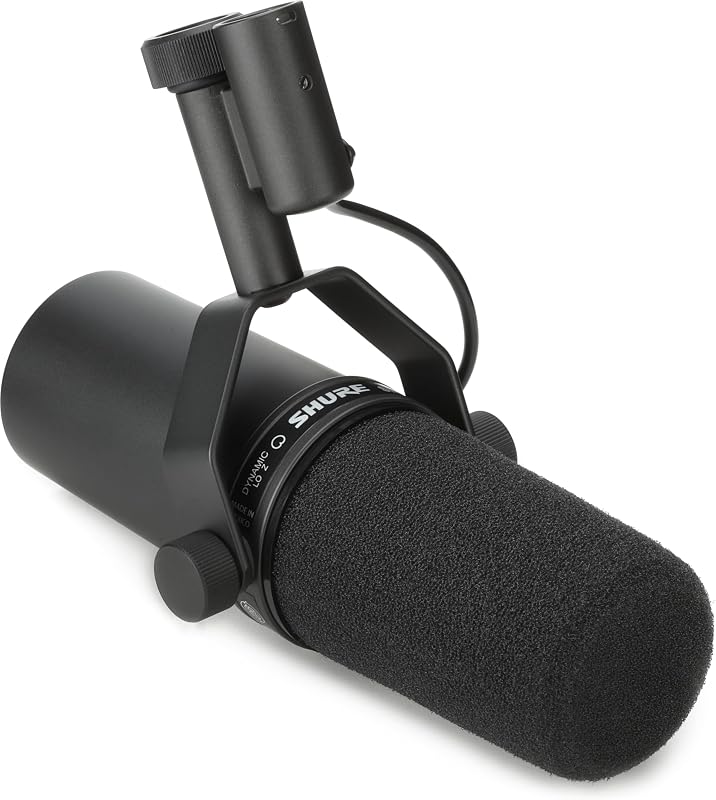
Shure SM7B
Pros
- Two selectable acoustic tone settings
- Durable stainless steel enclosure
- Includes SRH440A headphones with 40mm neodymium drivers
- High 75 dB signal-to-noise ratio
- Articulating arm with 360-degree rotation
Cons
- Single microphone bundle only
- Frequency range ceiling not listed
- Shorter 32.25-inch boom arm reach
Rode PodMic

Pros
- Complete dual-microphone broadcast setup
- Built-in internal pop filter
- Solid metal body construction
- Two 35-inch arms with internally routed cables
- Includes two closed-back monitor headphones
Cons
- High frequency response capped at 13 KHz
- Lacks onboard acoustic tone switches
- Signal-to-noise ratio not listed
Who Should Buy Each One
Choose the Shure SM7B If
- You produce commercial voiceover, audiobook narration, or ADR where natural vocal capture and fine acoustic tailoring are essential.
- You need a precision studio monitoring setup and want the included Shure SRH440A closed-back headphones with 40mm neodymium drivers.
- You want a single broadcast microphone with two selectable rear frequency switches to match different speaking voices.
- You record in a dedicated solo workspace that benefits from a 32.25-inch articulating arm with exterior cable channel routing.
Choose the Rode PodMic If
- You are building a two-person podcast or interview setup and need two matched dynamic microphones right out of the box.
- You want clean cable management with 35-inch reach broadcast arms that route XLR wiring entirely inside the frame.
- You require integrated internal pop filters to minimize plosive bursts without installing external clip-on screens.
- You need two pairs of closed-back studio monitor headphones to support simultaneous host and guest tracking.
Final Verdict
For solo broadcasters, commercial voice talent, and demanding content creators, the Shure SM7B remains the superior individual dynamic vocal microphone. Its stainless steel housing, dependable 75 dB signal-to-noise ratio, and two selectable rear tone-shaping switches give it an acoustic versatility that fixed-profile microphones cannot match. Paired with the Shure SRH440A closed-back headphones and their 40mm neodymium drivers, this single-microphone bundle is the definitive pick when your primary objective is uncompromised vocal fidelity in a solo recording environment.
The Rode PodMic bundle secures an undeniable victory whenever multi-person production is the goal. Providing two rugged all-metal microphones, two 35-inch broadcast boom arms with internal spring cable routing, and two closed-back monitor headphones, it offers a complete broadcast infrastructure in a single package. If you host an interview show, manage a dual-creator streaming desk, or need two plug-and-play broadcast mics that reject plosives with built-in internal pop filters, the PodMic pair represents an exceptionally practical recording solution.
FAQ
Is Shure SM7B worth it for voiceover work?
Yes, the SM7B is worth it for voiceover because its large-diaphragm dynamic capsule and two selectable acoustic switches allow you to capture natural, uncolored speech tailored to different vocal registers. Its 75 dB signal-to-noise ratio ensures that low-level narrations remain clean when amplified during post-production.
Is Rode PodMic worth it for a two-person podcast?
Yes, the PodMic bundle is worth it for dual-host podcasting because it includes two complete dynamic microphones, two articulating broadcast arms with integrated 10-foot XLR cables, and two closed-back monitor headphones, eliminating the need to source separate hardware for your co-host or guest.
What is the frequency response difference between the SM7B and PodMic?
The PodMic listing specifies a high-frequency response ceiling of 13 KHz tailored for broadcast presence and speech intelligibility. The SM7B listing does not specify a numerical frequency ceiling, but it features two physical tone switches that let creators adjust presence and low-frequency roll-off directly on the microphone body.
Do these microphones require an XLR audio interface?
Both the SM7B and the PodMic utilize standard 3-pin XLR connectivity and do not connect directly to a computer via USB without an intermediary audio interface or mixer. Both bundles include 10-foot XLR cables to link the microphones directly into your audio hardware.
Does the Rode PodMic need an external pop filter?
The PodMic listing highlights a built-in internal pop filter integrated directly into its solid metal body, designed to disperse vocal plosives without requiring an external screen. The SM7B listing features a large-diaphragm dynamic capsule housing, though creators frequently position dynamic capsules slightly off-axis for maximum plosive control.
What mounting accessories come with each microphone bundle?
The SM7B bundle includes one SH-BROADCAST1 Deluxe articulating boom arm featuring a 32.25-inch extension, a 2.17-inch desk clamp range, and a dedicated cable channel. The PodMic package includes two H&A broadcast arms with internal springs, a 35-inch reach, desk mount clamps, and integrated XLR cables traveling inside the arm frames.
Which bundle includes better studio monitoring headphones?
The SM7B bundle includes Shure SRH440A studio headphones equipped with documented 40mm neodymium dynamic drivers, a 9.84-foot straight cable, and a gold-plated adapter for critical studio tracking. The PodMic package includes two closed-back monitor headphones designed for dual-listener isolation and enhanced bass response.