The primary difference between a slicker brush and a deshedding tool centers on how their functional components interact with your dog’s coat: a slicker brush uses a wide bed of fine wire pins to detangle snarls, separate coat fibers, and remove surface debris, while a deshedding tool uses a dense stainless steel comb blade designed to reach beneath the guard hairs and extract loose, dead undercoat. Selecting the proper implement prevents common grooming problems like painful coat pulling, surface mat formation, and accidental skin abrasion.
Choose a slicker brush if your pet has a curly, wire, fleece, or mat-prone coat that requires daily detangling, volume building, and gentle knot removal. Choose a deshedding tool if your dog has a heavy double coat subject to seasonal blowouts and you need to strip shedding undercoat before it blankets your living space.


Slicker Brush vs Deshedding Tool at a Glance
| Feature | Slicker Brush | Deshedding Tool |
|---|---|---|
| Primary Purpose | Detangling mats, separating fibers, and fluffing hair | Extracting trapped, dead hair from the undercoat layer |
| Contact Mechanism | Fine stainless steel wire pins on a cushioned or solid base | Rigid stainless steel toothed blade with contoured edge |
| Target Coat Types | Curly, wavy, long, and single or double coats prone to knots | Dense double coats with a heavy undercoat layer |
| Cleaning Mechanism | One-click push button face plate or manual pin clearing | Integrated push-button ejector bar |
| Usage Frequency | Daily to several times weekly as maintenance | Weekly sessions as directed on double-coated breeds |
| Handle Materials | Molded plastic, non-slip rubber, or finished wood | Ergonomic metal core with rubber grip overlay |
| Skin Protection | Beaded safety tips or angled pins set in flexible pads | Smooth edge teeth designed to pass topcoat without skin contact |
| Best For | Preventing mats, daily styling, and gentle knot release | Reducing household shedding from dense double coats |
Coat Type Compatibility and Shedding Patterns
Matching your grooming tool to the physical structure of your dog’s fur is the most critical decision in establishing an effective home grooming routine. Single-coated breeds, drop-coated breeds, and curly-coated hybrids possess hair that grows continuously, making them susceptible to friction knots and surface tangles rather than undercoat buildup. The Chris Christensen Big G Dog Slicker Brush exemplifies the slicker category by catering specifically to thick, curly, and cottony coats found on Poodles, Goldendoodles, Labradoodles, and Bichons. These coats do not shed out seasonally in thick clumps; instead, individual shed strands get caught in the surrounding curls, requiring the long, angled pins of a slicker brush to lift and separate the fibers before they weave themselves into solid mats.
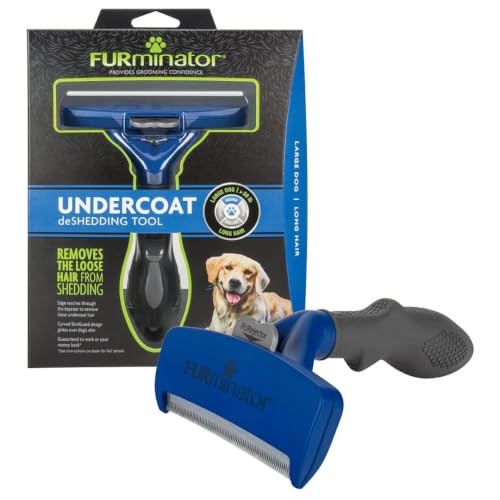
In contrast, double-coated breeds possess a harsh outer layer of guard hairs paired with a soft, dense insulating undercoat that molts heavily during seasonal climate shifts. When evaluating a furminator deshedding vs chris christensen brush matchup, coat architecture dictates tool effectiveness. The FURminator Large Dog Undercoat deShedding Tool for Long Hair is built specifically for dogs weighing over 50 pounds with dense, double-layered coats. When pet owners debate choosing a slicker brush or deshedding tool for double coat maintenance, the deshedding blade targets the trapped molting undercoat directly. Using a deshedding tool on a single-coated breed with no undercoat offers no functional benefit and risks irritating the dermis, while basic slicker models like the Depets Self Cleaning Slicker Brush explicitly note in their specifications that they are non-applicable for curly-haired, wire-haired, or hairless pets.
Understanding these distinct physical coat traits saves considerable grooming time and prevents coat damage. A slicker brush functions across a wider variety of coat textures for general conditioning, whereas a specialized undercoat tool is restricted to animals that actually carry a true dual-coat structure. Attempting to manage a heavy seasonal blowout on a Siberian Husky using only a light slicker brush requires dozens of repetitive strokes that barely skim the topcoat, while dragging a dense deshedding comb through curly doodle coat fleece can shear delicate hairs or cause painful mechanical snagging.
Edge: Slicker Brush because its flexible pin format accommodates a broader spectrum of coat textures, from silky drop coats to dense curly fleeces.
Matting and Tangle Removal Efficiency
Dealing with existing tangles requires a tool engineered to tease knotted fibers apart gradually rather than slicing or forcefully pulling through them. When assessing a slicker brush or deshedding tool for matted hair, the mechanics of wire pins make the slicker brush the clear choice. The Big G model from Chris Christensen features 30 percent more pins than standard slickers, mounted inside a flexible cushioned pad. This cushioned foundation allows the angled stainless steel pins to flex dynamically as they encounter resistance, gently separating tangled knots near the skin, shaping legs, and fluffing toplines without tearing hair follicles out by the root.
Deshedding tools are neither designed nor equipped to untangle existing mats. The dense stainless steel teeth of the FURminator long-hair tool are arranged in a static, immovable row along an oblong head. If these rigid teeth hit a tight mat, they cannot flex or weave between tangled strands. Forcing a deshedding tool through matted hair pulls directly against the animal’s skin, creating severe discomfort and potentially abrading the cutaneous layer. When dense mats form, groomers regularly turn to heavy-duty prep tools, as explored in our comparison of the andis ultraedge vs chris christensen brush, to clip or thoroughly loosen problem zones before attempting undercoat work.
For routine maintenance and early-stage knot prevention, slicker brushes provide the mechanical action needed to keep individual hairs aligned. The Depets slicker utilizes needles bent at a 60-degree angle, allowing the wire ends to glide through coat layers, catch shedding mats and loose dander, and pull surface knots free. While a deshedding tool excels at dead hair extraction, it must only ever be introduced on a coat that has already been combed or brushed free of tangles and mats.
Edge: Slicker Brush due to its flexible, cushioned wire pins that tease apart knots and mats without shearing coat fibers.
Undercoat Removal and Shedding Reduction
When dead undercoat accumulates inside a thick double coat, loose hair inevitably ends up on rugs, clothing, and furniture. In an undercoat deshedding tool vs slicker comparison focusing purely on dead hair extraction volume, the deshedding tool is purpose-built to solve this problem. The FURminator undercoat deShedding tool is engineered to reach directly through the outer guard coat, gathering loose undercoat hair to reduce shedding by up to 90 percent with regular weekly use. Its closely spaced stainless steel teeth act as a fine rake that traps shedding undercoat fibers that standard brushes simply glide over.
Slicker brushes also gather dead hair, but their primary action is surface clearing and strand alignment rather than deep undercoat stripping. The Chris Christensen Big G utilizes extra-long angled pins to reach deep into heavy coats to remove trapped undercoat with fewer strokes, functioning as a viable shedding brush for double-coated breeds during active molting periods. Similarly, the Depets brush listing highlights undercoat removal and dander clearing as standard benefits. However, because slicker pins must remain spaced apart to allow fiber detangling, they let a significant portion of fine, downy undercoat pass between the wires on each pass.
Dog owners questioning whether a deshedding tool is worth it will find the answer in the sheer volume of dead fiber extracted during seasonal coat shifts. Reviewing the mechanics in our furminator deshedding vs oster a5 breakdown illustrates why mechanical de-shedders are vital for shedding management: they strip out the suffocating dead layer that traps moisture against the skin. When deciding between a slicker brush or deshedding tool for shedding control on a double-coated dog, the deshedding tool removes significantly more volume per stroke, cutting grooming duration substantially.
Edge: Deshedding Tool because its dense, precision-toothed stainless steel blade extracts up to 90 percent of loose undercoat hair far faster than wire pins.
Teeth Architecture and Skin Safety
The interface between grooming tool and canine epidermis determines whether grooming is an enjoyable massage or an uncomfortable chore. The Depets slicker brush addresses skin safety through stainless steel needles manufactured with protective round beads at every tip. These beads prevent sharp wire points from scratching delicate skin, while the 60-degree wire bends flex under pressure to massage the animal and stimulate blood circulation. In professional-tier models like the Chris Christensen Big G, rounded beads are omitted in favor of precision-ground, highly polished angled pins seated within a supple rubber cushion pad, which absorbs excess downward force and lets the pins glide smoothly through curly and dense fur.
Deshedding tools rely on rigid geometry rather than cushioned flexibility to protect the pet. The FURminator deShedding tool features a curved edge that matches the natural oblong contours of a large dog’s body. The listing specifies that its stainless steel teeth reach through the topcoat to remove loose hair without cutting skin or damaging guard hairs when used strictly as directed. However, because the steel comb has zero flex, applying excessive downward pressure or making repeated passes over bony areas-such as hips, hocks, and spine-can quickly cause brush burn or skin irritation.
Proper technique varies dramatically between these architectures. A slicker brush allows for continuous brushing motions, line brushing, and light surface strokes across sensitive body parts like the chest, neck, and tail. As detailed in our guide on the wahl bravura vs chris christensen brush, high-pin-count slickers rely on pin deflection to safeguard tissue. A deshedding tool, conversely, requires short, controlled strokes following the direction of hair growth, requiring pet owners to exercise vigilance regarding pressure and stroke repetition.
Edge: Slicker Brush because its cushioned pad and angled or bead-tipped wire pins provide a wider margin of safety against skin irritation.
Cleaning Mechanisms and Maintenance
Removing packed pet fur from grooming tools can be tedious, leading manufacturers to engineer quick-release ejection systems. The Depets self-cleaning slicker brush features an integrated one-click cleaning button. When the stainless steel pins fill with hair, pressing the button extends the flat faceplate forward, instantly pushing all accumulated fur, dander, and dirt off the wires in a single solid sheet. Furthermore, the Depets unit is completely washable, enabling pet owners to rinse away accumulated grease and environmental grime under running water to keep the tool hygienic.
The FURminator deshedding tool counters with its proprietary FURejector button. As you groom, dead undercoat packs tightly between the fine stainless steel teeth. Pushing the integrated ejector button drives an internal plastic cleaning bar down across the teeth, clearing trapped fur effortlessly so you can resume brushing without picking hair out by hand. Its stainless steel blade and metal-reinforced housing provide exceptional structural rigidity, making the tool straightforward to wipe down and sanitize between grooming sessions.
Manual clearing remains common on specialized professional slickers. The Chris Christensen Big G does not include an automatic ejector plate; groomers remove the hair blanket manually or lift it away using a metal comb. However, the Big G offsets this with premium structural materials, utilizing a durable curved wooden body and rubberized non-slip grip that withstands heavy salon use, similar to the durable construction highlighted in our oster a5 vs chris christensen brush analysis. Between self-cleaning slicker variants and blade ejector buttons, both product types offer well-engineered solutions for fast fur removal.
Edge: Tie as both grooming categories offer reliable, one-click fur release systems that eliminate manual hair picking.
Ergonomics and Grooming Fatigue
Grooming large dogs or detangling dense coats requires repetitive arm and wrist motions that can lead to physical fatigue over extended sessions. The Chris Christensen Big G is engineered around an extreme curved back design that provides grooming leverage and fluid wrist movement. Weighing just 0.01 ounces (listed as 0.2 grams in product specifications) despite its generous 8 x 4 x 2.5-inch rectangular head, its lightweight wooden handle and ergonomic rubberized grip significantly reduce hand, wrist, and arm strain during lengthy detangling and fluffing routines.
Slicker brushes designed for daily consumer use also prioritize handle comfort. The Depets slicker incorporates a comfort-grip, non-slip handle that includes textured massaging elements for the user’s hand, ensuring the brush remains secure even if hands become damp during post-bath brushing. Because slicker brushes glide lightly through coats when used with proper line-brushing mechanics, they demand less downward muscle exertion from the groomer.
Deshedding tools feature a noticeably different balance profile. The FURminator Large Dog tool has an item weight of 0.26 kilograms (over 9 ounces) due to its heavy-duty metal handle core and solid stainless steel blade assembly. While its molded ergonomic handle provides excellent grip security and leverage, the tool’s physical weight and the resistance generated when drawing a dense steel comb through heavy undercoat require greater hand strength. For brief weekly sessions the weight feels substantial and durable, but during prolonged grooming marathons, the extra heft is noticeable.
Edge: Slicker Brush because its lighter weight profile and curved handle designs minimize wrist strain during extended grooming sessions.
Pros and Cons
Slicker Brush

Pros
- Detangles fine knots and mats
- Flexible pins glide on cushioned pad
- One-click push button simplifies cleaning
- Fluffs and volumizes curly coats
- Safe for daily coat maintenance
Cons
- Takes longer to clear heavy undercoat
- Not suitable for wire or hairless breeds
View Depets Self Cleaning Slicker Brush Dog on Amazon
Deshedding Tool

Pros
- Reduces shedding up to 90 percent
- Reaches through topcoat without cutting skin
- FURejector button quickly clears hair
- Contoured blade matches body curves
Cons
- Cannot detangle tight mats or knots
- Limited to weekly use on double coats
View FURminator Large Dog Undercoat deShedding Tool on Amazon
Who Should Buy Each One
Choose the Slicker Brush If
- Your dog has a curly, wavy, or cottony coat, such as a Poodle, Goldendoodle, Labradoodle, or Bichon, that requires regular fluffing and volumizing.
- Your pet develops frequent friction mats, tangles, or snarls behind the ears, under the legs, or across the tail that need gentle separation.
- You need a daily or multi-weekly maintenance tool to remove surface dirt, dander, and loose hairs safely without scratching sensitive skin.
- You prefer an ultra-lightweight brush with an ergonomic wooden or massage-grip handle to minimize wrist and forearm fatigue.
Choose the Deshedding Tool If
- Your dog possesses a true double coat, such as a German Shepherd, Siberian Husky, Golden Retriever, or Alaskan Malamute, that molts heavily.
- Your primary grooming objective is capturing massive amounts of loose undercoat to reduce shedding around the house by up to 90 percent.
- Your dog’s coat is already completely detangled, combed out, and free of stubborn knots or surface mats.
- You want a durable tool with a contoured stainless steel edge and an integrated FURejector button for rapid weekly de-shedding sessions.
Final Verdict
For the majority of pet households, the slicker brush stands as the most versatile, essential daily grooming instrument. Its ability to glide through various coat types, separate delicate fibers, fluff curls, and break down early-stage mats makes it an indispensable baseline tool. Whether you opt for a professional fluffing brush like the Chris Christensen Big G with its deep-reaching angled pins and cushioned pad, or a practical push-button design like the Depets brush with protective bead tips, a slicker brush fulfills the daily maintenance requirements that keep canine coats clean and pain-free.
The deshedding tool wins convincingly when managing high-shedding, double-coated breeds facing seasonal blowouts. Models like the FURminator Large Dog tool achieve what wire pins cannot: stripping dense, trapped undercoat from deep beneath guard hairs before it sheds onto household surfaces. If you share your home with a heavy-shedding double-coated dog, the ideal grooming setup actually pairs both tools: use a slicker brush first to detangle the coat and remove debris, then follow with a deshedding tool once per week to extract the dead undercoat safely and efficiently.
FAQ
Can I use a deshedding tool on a dog with mats?
No, you should never run a deshedding tool through matted hair. The rigid stainless steel teeth of a deshedding tool cannot flex around knots, which causes the tool to catch painfully, pull the skin, and potentially tear the hair out. Always use a slicker brush or dedicated detangling comb to loosen and remove all mats before using a deshedding tool.
Can a slicker brush replace a deshedding tool on a double-coated dog?
A slicker brush can remove loose undercoat-especially models with extra-long pins like the Chris Christensen Big G-but it will not strip undercoat as quickly or thoroughly as a dedicated deshedding tool. A deshedding tool features tight tooth spacing engineered specifically to trap and pull out fine dead undercoat, reducing seasonal household shedding by up to 90 percent.
How often should I use a deshedding tool compared to a slicker brush?
A slicker brush can be used daily or several times per week to detangle, remove surface dirt, and keep hair fibers separated. A deshedding tool like the FURminator should generally be used only once per week on double coats, as excessive use can damage the topcoat or irritate your dog’s skin through repeated friction.
Will a slicker brush scratch my dog’s skin?
A slicker brush will not scratch your dog’s skin if designed properly and used with appropriate technique. Many consumer slicker brushes, such as the Depets model, incorporate round beads on the wire tips to massage the skin and prevent scratches. Professional models without beads utilize flexible cushioned pads and angled pins that flex away under pressure, but pet owners should always avoid pressing down forcefully against the skin.
Can I use a deshedding tool on short-haired or single-coated dogs?
A deshedding tool should only be used on dogs that possess a genuine undercoat. Single-coated breeds like Poodles, Maltese, and Yorkies do not have an undercoat layer to remove; using a deshedding comb on them provides no grooming benefit and can scrape their skin or damage their topcoat. For single-coated pets, stick to a slicker brush or pin brush.
How do self-cleaning buttons work on slicker brushes and deshedding tools?
Self-cleaning mechanisms vary slightly by tool category. On slicker brushes like the Depets brush, pressing the button extends the front faceplate past the wire pins, lifting the hair away from the base so it falls off in a neat sheet. On deshedding tools like the FURminator, pressing the FURejector button pushes an ejector bar down along the stainless steel blade to clear trapped undercoat instantly.