The fundamental divide between the Sony WH-1000XM6 and the Sennheiser Momentum 4 rests entirely on whether you prioritize class-leading acoustic isolation or endurance, as Sony leans on a 12-microphone array with dedicated processing to eliminate environmental noise while Sennheiser delivers double the playback time on a single charge.
Choose the Sony WH-1000XM6 if you spend hours navigating bustling commuter trains and loud flights where total sonic silence and advanced processing are paramount. Opt for the Sennheiser Momentum 4 if you demand an audiophile-tuned sound profile and a colossal 60-hour battery that can power through multiple weeks of work without touching a charging outlet.


Sony WH-1000XM6 vs Sennheiser Momentum 4 at a Glance
| Feature | Sony WH-1000XM6 | Sennheiser Momentum 4 |
|---|---|---|
| Noise Cancellation Hardware | HD NC Processor QN3, 12 Microphones, Adaptive NC Optimizer | Adaptive Noise Cancellation and Transparency Mode |
| Playback Battery Life | Up to 30 hours | Up to 60 hours |
| Acoustic Drivers and Tuning | Mastered by audio engineers, DSEE Extreme | 42mm transducers, signature audiophile tuning |
| High-Resolution Codecs | LDAC High-Resolution Audio Wireless | aptX Adaptive |
| Microphone Configuration | 6-microphone AI beamforming system | 4 digital beamforming microphones |
| Wireless Technology | Bluetooth 5.3 (10m range) | Bluetooth controller (version not listed) |
| Physical Weight | 8.96 ounces | Not listed |
| Included Audio Cables | Headphone cable (approx. 1.2m, 3.5mm jack) | 3.5mm to 2.5mm audio cable |
| In-Flight Adapter | Not listed | Airplane adapter included |
| Best For | Frequent travelers requiring maximum silence | Marathon listeners seeking audiophile acoustics |
Active Noise Cancellation and Acoustic Isolation
Active noise cancellation performance determines how well a pair of wireless headphones can transform a chaotic commute into a private listening lounge. In real-world travel, low-frequency engine rumbles and shifting cabin pressures require immediate algorithmic adjustment, while mid-frequency chatter in an open office demands dense microphone coverage. When evaluating the Sennheiser Momentum 4 vs Sony WH-1000XM6 on acoustic shielding, the hardware architecture reveals two distinctly different approaches to signal isolation.
The Sony WH-1000XM6 utilizes a dedicated HD Noise Canceling Processor QN3 paired with an expansive 12-microphone sensing network. This system runs Sony’s Adaptive NC Optimizer, which continuously measures not just external environmental sounds, but also atmospheric air pressure and the physical seal against your head. This setup allows the WH-1000XM6 to adapt dynamically when you shift positions or when air pressure changes during long-haul flights. In our broader evaluation of the market, such as the sony wh-1000xm6 vs bose quietcomfort ultra matchup, dedicated cancellation processors consistently demonstrate faster response times against sharp ambient transients.
In contrast, the Sennheiser Momentum 4 provides Adaptive Noise Cancellation alongside a dedicated Transparency Mode, driven by the Smart Control Plus app. Sennheiser’s system handles continuous low rumbles smoothly and allows quick shifts into situational awareness via touch controls or app toggles. However, the listing specifies a four-microphone digital beamforming array across the Momentum 4 rather than an extensive dual-digit sensor layout. When comparing the Sony WH-1000XM6 noise cancelling performance against Sennheiser’s adaptive configuration, Sony’s 12-microphone grid captures a wider spectrum of ambient sound before it leaks into your ear cups.
Edge: Sony WH-1000XM6 due to its 12-microphone sensing array, dedicated QN3 processor, and real-time atmospheric pressure optimization.
Battery Life and Playback Longevity
Battery longevity determines how frequently your travel routine or workday is interrupted by the search for a charging cable. For road warriors, international travelers, and forgetful charging habits, a headset that survives multiple days without an outlet provides tremendous peace of mind. A direct look at the Sony WH-1000XM6 battery life vs Momentum 4 shows the starkest specification contrast between these two devices.
The Sennheiser Momentum 4 stands out as an endurance powerhouse, boasting up to 60 hours of continuous playback on a single charge. This figure represents roughly double the lifespan found on most modern premium noise-canceling headsets. Sennheiser pairs this marathon capacity with fast-charging technology, allowing listeners to recover hours of playback in minimal wall time. For users comparing alternatives in our bose quietcomfort ultra vs sennheiser momentum 4 breakdown, Sennheiser’s runtime remains unmatched in the high-tier ANC category, easily surviving weeks of standard office use.
The Sony WH-1000XM6 delivers up to 30 hours of battery life with quick-charging capability. While 30 hours is plenty for the longest international flights, daily commuters will need to replenish the battery twice as often compared to Sennheiser. Sony balances this lower endurance ceiling by providing rapid charging speeds over USB, ensuring a short top-off before leaving the house gets you through a commute. Nevertheless, if avoiding the charging stand is your chief priority, the Momentum 4 creates an insurmountable barrier for Sony to overcome.
Edge: Sennheiser Momentum 4 because its 60-hour playback duration is exactly double Sony’s runtime.
Sound Quality, Drivers, and Codec Support
A headphone’s acoustic foundation determines whether music sounds flat and compressed or dynamic and expansive. While tuning signatures remain subjective, driver hardware and high-resolution wireless transmission codecs provide objective indicators of raw sound reproduction potential. Both models feature distinct engineering philosophies aimed at audiophiles and casual listeners alike.
Sennheiser engineered the Momentum 4 around large 42mm transducers paired with an audiophile-inspired signature sound. To feed these oversized dynamic drivers, the headset supports Qualcomm’s aptX Adaptive codec, which dynamically balances streaming bitrates to prevent dropouts while preserving high-definition clarity. The Smart Control Plus companion app supplements this hardware with an integrated equalizer, customizable presets, and specialized sound modes. When evaluating overall Sennheiser Momentum 4 sound quality, the combination of 42mm dynamic drivers and aptX Adaptive processing delivers deep, immersive bass notes and clear high-frequency separation.
The Sony WH-1000XM6 relies on an acoustic architecture co-created with studio mastering audio engineers, operating with an impedance of 48 ohms. Rather than relying solely on driver size, Sony emphasizes digital precision by supporting LDAC High-Resolution Audio Wireless alongside DSEE Extreme. LDAC transmits roughly three times more data than standard Bluetooth codecs, while DSEE Extreme uses real-time processing to restore harmonics and detail lost during lossy digital compression. As observed when charting generations in our sony wh-1000xm4 vs wh-1000xm6 guide, Sony’s audio focus emphasizes surgical vocal clarity and controlled bass response, though Sennheiser’s 42mm transducers offer more inherent physical impact.
Edge: Sennheiser Momentum 4 for its large 42mm transducers and dynamic, audiophile-inspired default tuning.
Call Clarity and Voice Microphone Performance
A premium noise-canceling headset must double as an effective communications device for work conferences, phone calls, and outdoor voice assistant commands. The effectiveness of a call system depends heavily on microphone positioning, computational isolation of human speech, and structural defense against moving air.
Sony equipped the WH-1000XM6 with a six-microphone AI beamforming system engineered specifically to isolate your voice from background chaos. The machine-learning algorithm filters out surrounding office chatter, keyboard clatter, and street traffic while keeping speech clear and legible. Furthermore, Sony integrates hands-free convenience through Speak-to-Chat, a feature that automatically pauses your media and activates ambient sound when you begin speaking. In our detailed Sony WH-1000XM6 review of features, this automated speech detection makes transitions between telephone calls and desk conversations effortless.
The Sennheiser Momentum 4 utilizes four digital beamforming microphones tuned for vocal pickup and wind noise suppression. Sennheiser’s array does an admirable job shielding calls from light breezes outdoors, ensuring voice assistants and callers can interpret your words without clipping. However, when deciding whether to grab the Sony WH-1000XM6 or Sennheiser Momentum 4 for calls, Sony’s dedicated six-mic layout provides greater redundancy and tighter directional isolation than Sennheiser’s four-mic setup, giving the WH-1000XM6 the advantage in loud open-concept offices.
Edge: Sony WH-1000XM6 thanks to its 6-microphone AI beamforming system that targets speech over ambient background noise.
Design, Portability, and Traveling Comfort
Long listening sessions can quickly turn sour if a headset applies excessive clamping force, lacks headband padding, or fails to fold down neatly into carry-on luggage. Physical dimensions, headband contouring, and included travel accessories all shape the everyday travel experience.
The Sony WH-1000XM6 weighs in at 8.96 ounces and features a newly engineered, wider synthetic-leather headband built to distribute downward pressure evenly across the crown. The over-ear ear cups fold inwards, sliding neatly into a compact carrying case that slips easily into backpacks and briefcases. Sony also includes a 1.2-meter 3.5mm analog cable for wired listening when wireless connections are restricted. Evaluating design progressions like those in the sony wh-1000xm5 vs wh-1000xm6 generational updates reveals that Sony has prioritized subtle ergonomics to reduce hot spots during long commutes.
Sennheiser builds the Momentum 4 around a cushioned headband and plush over-ear pads, featuring a foldable architecture and a protective zip-up travel case. While the listing does not specify the exact weight of the Momentum 4, the build feels sturdy and balances well on adult head shapes. Where Sennheiser clearly caters to the frequent flyer is inside the box: alongside a USB-C charging cable and a 3.5mm to 2.5mm audio cable, Sennheiser includes a dedicated airplane adapter. Choosing between the Sony WH-1000XM6 or Sennheiser Momentum 4 for travel comes down to Sony’s lightweight 8.96-ounce build versus Sennheiser’s travel-ready in-flight adapter.
Edge: Sony WH-1000XM6 for its specified 8.96-ounce lightweight profile and engineered wider synthetic-leather headband.
Smart Controls and Companion App Ecosystem
Day-to-day usability relies heavily on how easily you can switch between devices, alter listening profiles, and adjust playback volume without pulling your phone out of your pocket. Both manufacturers offer companion mobile software, but their physical control interfaces use different operating mechanics.
The Sennheiser Momentum 4 relies on an intuitive touch control interface across the ear cups, alongside voice control support. Sennheiser’s Smart Control Plus mobile application provides firmware updates and allows users to customize their audio via graphic equalization and personalized sound presets. Uniquely, Sennheiser includes a software-based touchpad off switch within the app, preventing accidental track skipping or volume shifts when resting your head against a travel pillow. Shoppers asking is Sennheiser Momentum 4 worth it often point to these granular interface safeguards as a major quality-of-life win, a theme also noted in our bose quietcomfort 45 vs sennheiser momentum 4 examination.
The Sony WH-1000XM6 interfaces with the Sony Sound Connect app, operating over modern Bluetooth 5.3 with a 10-meter wireless range. Sony’s ecosystem focuses on smart automation through Auto Ambient Sound and multipoint Bluetooth connectivity, enabling seamless switching between a smartphone and a laptop. Additionally, Speak-to-Chat removes the need to touch any controls at all when ordering coffee or acknowledging a coworker. While Sony delivers exceptional automation, Sennheiser provides more physical interface control by letting you deactivate the touch sensors entirely.
Edge: Tie, as Sony excels in conversational automation like Speak-to-Chat while Sennheiser offers superior physical touch customizability with its touchpad shutoff toggle.
Pros and Cons
Sony WH-1000XM6

Pros
- 12-microphone Adaptive NC Optimizer
- HD Noise Canceling Processor QN3
- LDAC High-Resolution Audio support
- 6-microphone AI beamforming system
- Lightweight 8.96-ounce build
Cons
- Half the battery life of Momentum 4
- Airplane adapter not included in box
View Sony WH-1000XM6 on Amazon
Sennheiser Momentum 4
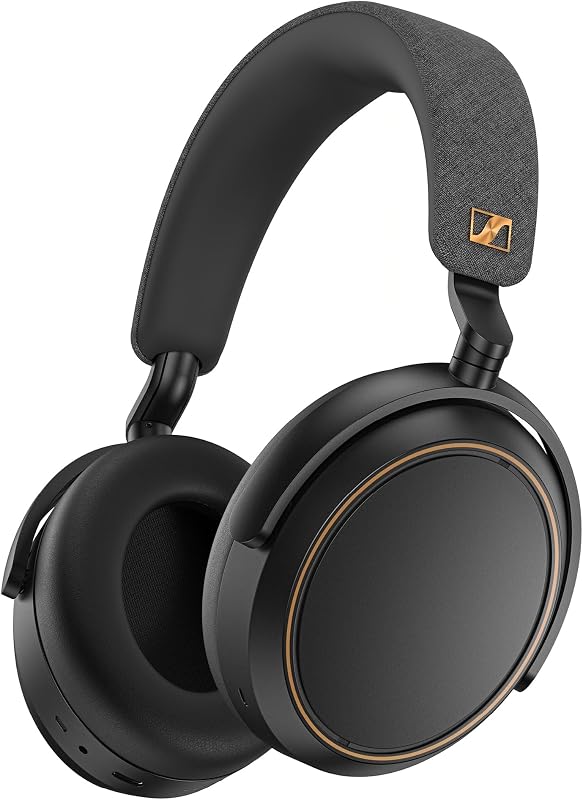
Pros
- 60-hour maximum playback runtime
- 42mm audiophile transducers
- AptX Adaptive wireless codec
- Airplane adapter included in box
- Touchpad off switch via app
Cons
- Fewer total noise cancelling microphones
- Headphone weight not listed in specs
View Sennheiser Momentum 4 on Amazon
Who Should Buy Each One
Choose the Sony WH-1000XM6 If
- You travel frequently on airplanes and require an Adaptive NC Optimizer with 12 microphones to eliminate cabin pressure changes and engine drone.
- You take frequent business calls in noisy office environments and need a 6-microphone AI beamforming system to isolate your voice.
- You prioritize a lightweight design, benefiting from the WH-1000XM6’s verified 8.96-ounce build and wider synthetic-leather headband.
- You own high-resolution audio sources and want LDAC wireless playback paired with DSEE Extreme digital audio restoration.
Choose the Sennheiser Momentum 4 If
- You despise frequent recharging and need a massive 60-hour battery life that easily handles weeks of daily use.
- You favor dynamic, audiophile-inspired music playback driven by large 42mm dynamic transducers and Qualcomm aptX Adaptive support.
- You frequently fly on older commercial aircraft and need the convenience of an included airplane adapter right out of the box.
- You want complete control over your interface, including the ability to toggle off the ear cup touch controls via the Smart Control Plus app.
Final Verdict
For the majority of listeners, the choice hinges on whether your daily environment is characterized by noise or by duration. If you spend significant time in transit, the Sony WH-1000XM6 represents the superior tool. Its dedicated HD Noise Canceling Processor QN3, 12-microphone sensing network, lightweight 8.96-ounce chassis, and 6-microphone voice array make it an extraordinary shield against everyday chaos. Sony has built a headset that prioritizes silence, call intelligibility, and seamless automated listening.
However, the Sennheiser Momentum 4 wins handily for marathon desk sessions and dedicated music lovers. Delivering a class-shattering 60 hours of playback, the Momentum 4 frees you from cable anxiety while providing deep, immersive acoustics courtesy of its 42mm transducers and aptX Adaptive codec. If your daily listening demands high-fidelity audio, customizable EQ profiles, and a battery that simply refuses to die, the Momentum 4 is the clear victor.
FAQ
Can the Sennheiser Momentum 4 be used with an airplane entertainment system?
Yes. The Sennheiser Momentum 4 includes an airplane adapter along with a 3.5mm to 2.5mm audio cable in the box, allowing you to connect directly to dual-prong commercial in-flight entertainment jacks.
Does the Sony WH-1000XM6 support high-resolution wireless streaming?
Yes. The Sony WH-1000XM6 supports LDAC High-Resolution Audio Wireless, which allows compatible sources to transmit high-bitrate audio, while DSEE Extreme upscales compressed digital tracks.
How does the battery life compare between the Sony WH-1000XM6 and Sennheiser Momentum 4?
The Sennheiser Momentum 4 delivers up to 60 hours of playback on a full charge, whereas the Sony WH-1000XM6 provides up to 30 hours of battery life. Both headphones feature fast-charging capabilities.
Can you disable the touch controls on the Sennheiser Momentum 4?
Yes. Through the Sennheiser Smart Control Plus mobile application, you can activate a touchpad off switch to prevent accidental playback inputs while relaxing or traveling.
What Bluetooth version does the Sony WH-1000XM6 use?
The Sony WH-1000XM6 operates on Bluetooth 5.3 and supports multipoint connectivity with a standard wireless operating range of up to 10 meters.
Do both headphones fold down for travel?
Yes. Both the Sony WH-1000XM6 and the Sennheiser Momentum 4 feature foldable designs and come equipped with dedicated protective travel cases for safe transport.


