Choosing between a stand mixer and a hand mixer comes down to a fundamental trade-off between motorized mechanical endurance and everyday handheld convenience. A stand mixer uses high-torque stationary gearing, anchored counter stability, and high-capacity mixing bowls to handle heavy yeast doughs and large multi-batch bakes without demanding physical intervention. In contrast, an electric hand mixer provides lightweight portability, nimble speed control, and instant cabinet storage for everyday tasks like whipping cream, folding cake batters, and mashing potatoes in whichever bowl you already have on the counter.
Bakers who frequently tackle artisan bread dough, multi-layer celebration cakes, or massive holiday cookie batches should invest in a stationary countertop stand mixer. Home cooks who prioritize drawer storage, quick cleanup, and rapid whisking for weekday meals and casual desserts should choose a versatile handheld mixer instead.


Stand Mixer vs Hand Mixer at a Glance
| Feature | Stand Mixer | Hand Mixer |
|---|---|---|
| Motor Power | 300W (OLIXIS) to 325W (KitchenAid Artisan) continuous | 60W (KitchenAid 5-Speed) to 250W peak (Hamilton Beach) |
| Speed Control | 10 distinct speed settings with rotary dial knobs | 5 to 6 speeds with push-button or sliding dial controls |
| Mixing Action | Planetary motion (up to 59 bowl touchpoints) | Dual rotating beaters directed manually by the cook |
| Bowl Capacity | 5.0 to 6.3 quarts dedicated stainless steel bowl | Not restricted; works with any bowl or pot |
| Included Tools | Dough hook, flat beater, wire whisk, specialized lid | Traditional or Turbo beaters, wire whisk, storage case |
| Operation Style | Hands-free operation with locking tilt-head design | Continuous manual handheld operation required |
| Footprint & Dimensions | 9.3″D x 14.3″W x 14″H up to 13.9″D x 7.6″W x 12.3″H | 8″D x 3.5″W x 6″H (compact drawer-ready profile) |
| Weight & Housing | Heavy-duty metal/composite base with anti-skid feet | Lightweight handheld plastic housing with quick-eject spindle |
| Best For | Dense doughs, large batches, and hands-free baking | Everyday light mixing, small batches, and compact kitchens |
Motor Power and Heavy Dough Performance
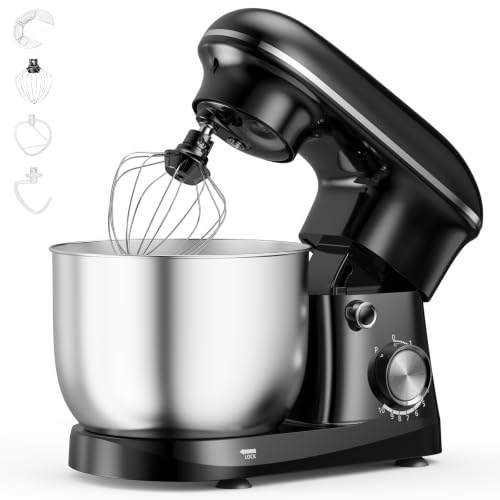
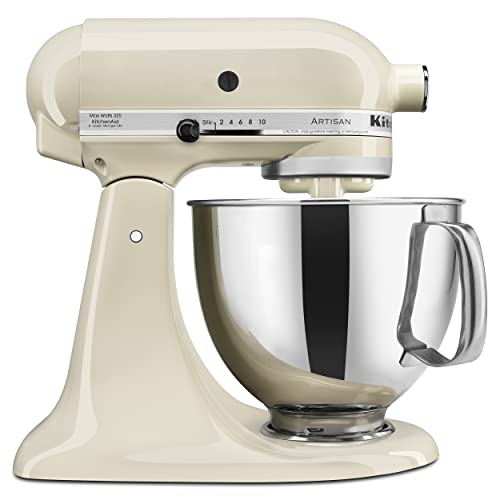
Motor engineering forms the most critical operational gap when comparing stand mixer models against handheld alternatives. Stand mixers are built with internal gear assemblies calibrated for sustained torque. When kneading dense flour mixtures, high resistance pushes back against the motor shaft. An appliance like the KitchenAid Artisan uses a 325-watt motor connected to a solid planetary gear train that produces 59 touchpoints around the bowl perimeter, providing consistent kneading without stalling. Similarly, the OLIXIS model incorporates a 300-watt motor governed across 10 speed settings, generating the rotational drive necessary to push a spiral dough hook through stiff pizza crusts or sandwich bread mixtures.
A handheld unit approaches power from a different design objective. In an electric hand mixer such as the Hamilton Beach 6-Speed, the manufacturer provides a 250-watt peak-power motor paired with a QuickBurst button to break through unmixed clumps. However, this power rating measures peak burst output rather than continuous low-speed mechanical torque. The KitchenAid 5-Speed Ultra Power Hand Mixer utilizes an efficient 60-watt direct-current motor specifically tuned to spin its stainless steel Turbo Beater accessories through softened butter and cookie dough without burning out. While this efficiency is ideal for blending batters, handheld motors lack the thermal mass, gear reduction, and stabilization required to knead gluten networks for extended periods.
When assessing a stand mixer or hand mixer for bread dough, the stand appliance is functionally unmatched. Running a handheld motor through a dense, low-hydration bread dough forces the user to absorb twisting forces through their wrist while risking motor overheating. The anchored weight and planetary rotation of a dedicated countertop machine handle heavy doughs effortlessly, leaving handheld tools to excel at light emulsions and airy whip tasks. Understanding how motor drive translates to bowl work is similar to evaluating larger commercial platforms, as seen when comparing the kitchenaid artisan vs bowl-lift 7 qt models for serious batch capacities.
Edge: Stand mixer, because dedicated high-torque motors and metal planetary gear systems handle heavy yeast doughs without bogging down or transferring physical strain to the cook.
Bowl Capacity and Batch Volume
Capacity limits define whether an appliance speeds up your baking routine or forces you into repetitive batch cycles. Stand mixers rely on deep, dedicated mixing bowls engineered to mate directly with the machine base. The OLIXIS stand mixer provides an expansive 6.3-quart stainless steel bowl, while the KitchenAid Artisan features a 5-quart handled stainless bowl rated to mix up to nine dozen standard 28-gram cookies in a single operating cycle. These massive single-bowl volumes let home bakers prepare three or four loaves of bread dough, large holiday cake batters, or double batches of heavy brownie dough without splashing ingredients over the sides.
Hand mixers invert this paradigm by eliminating the integrated bowl entirely. Because there is no fixed mounting collar, a hand unit can be lowered into any vessel in your kitchen, including wide-mouth ceramic bowls, narrow 1-quart glass measuring cups, or wide stainless saucepans sitting directly on an unheated stovetop. This open-ended flexibility proves enormously convenient when whipping a single cup of heavy cream, smoothing out a lump-filled gravy, or blending pancake mix for two people. However, when tackling high-volume tasks, a hand mixer lacks the perimeter depth to keep large mixtures contained, and working double batches requires manually guiding the beaters through deep mixtures for prolonged stretches.
For batch-focused bakers questioning whether a stand mixer vs hand mixer capacity matches their routine, scale remains the deciding factor. If your baking sessions routinely produce dozens of cookies for events, seasonal gifts, or large households, a deep fixed bowl with 5 to 6.3 quarts of capacity saves tremendous preparation time. Smaller households making standard weeknight cakes or small batches of cookies will find the free-floating vessel utility of a handheld tool more than adequate. For bakers debating intermediate capacity steps within stationary lineups, looking into comparisons like the kitchenaid artisan vs artisan mini helps illuminate how bowl volume alters routine prep work.
Edge: Stand mixer, because 5.0 to 6.3-quart integrated bowls accommodate high-volume holiday batches and massive cookie yields that overwhelm handheld beaters.
Storage, Portability, and Kitchen Footprint
The space an appliance occupies on your counter or inside your cabinetry plays a massive role in how often you actually reach for it. Hand mixers are the uncontested winners of spatial efficiency. The KitchenAid 5-Speed measures just 8 inches deep, 3.5 inches wide, and 6 inches tall, allowing it to slip easily into a shallow kitchen drawer alongside whisks and spatulas. Taking organization further, the Hamilton Beach 6-Speed model includes a dedicated snap-on storage case that clips securely beneath the motor housing. This snap-on compartment encloses the power cord, the pair of traditional beaters, and the wire whisk, eliminating the perpetual frustration of loose beaters rattling around in dark utensil drawers.
Stand mixers demand significant, semi-permanent kitchen real estate. The KitchenAid Artisan measures 9.3 inches deep, 14.3 inches wide, and 14 inches high, constructed with a dense metal body engineered to prevent the machine from walking across the counter during high-speed operation. The OLIXIS model spans 13.9 inches deep, 7.6 inches wide, and 12.3 inches high, utilizing integrated anti-skid suction feet to lock the appliance in place. Due to their solid construction and hefty physical profiles, lifting a stand mixer out of a base cabinet onto the counter requires noticeable physical effort, meaning most owners must sacrifice a dedicated patch of countertop space beneath upper cabinets.
For kitchens with limited work surfaces, small apartment layouts, or bakers who prioritize clear countertops, a hand mixer provides instant accessibility without clutter. You can retrieve it, mix a quick batter, rinse the beaters, and store everything away inside two minutes. A full-sized stand mixer only earns its permanent footprint on the counter if your baking frequency justifies leaving a heavy, tall machine out seven days a week. Cooks evaluating compact footprints against larger stationary designs often weigh similar spatial concerns when studying the kitchenaid artisan mini vs pro 5 plus.
Edge: Hand mixer, thanks to its tiny drawer-friendly footprint, lightweight handling, and all-in-one snap-on accessory storage.
Workflow, Hands-Free Operation, and Cleanup
The operational experience of running each tool fundamentally alters kitchen workflow. A stand mixer provides true hands-free operation. With a tilt-head locking mechanism, such as those found on both the KitchenAid Artisan and the OLIXIS 10-speed unit, you lock the motor head down into the bowl, select your speed dial setting, and walk away. While the machine whips egg whites into stiff meringue peaks or kneads a soft brioche dough, you can measure dry ingredients, butter cake pans, chop nuts, or clean mixing bowls. Furthermore, the OLIXIS incorporates a specialized lid that integrates an egg separator, measuring cup, scale markings, and slicer, helping minimize the secondary kitchen tools needed during prep.
Hand mixers require continuous manual engagement from start to finish. You must grip the handle, balance the body, and actively guide the rotating blades through the batter to ensure uniform incorporation. This manual guidance grants immediate tactile control over texture, allowing you to chase unmixed flour pockets around bowl edges. Modern hand units introduce smart ergonomic details to ease this process: the KitchenAid 5-Speed hand mixer features a lockable swivel cord that keeps the power cord aimed away from your ingredients, while the Hamilton Beach incorporates a molded Bowl Rest indentation on its underside so you can pause mixing and rest the machine upright over the bowl rim without messy drips coating the counter.
Cleanup highlights a sharp practical contrast. When finished with a hand mixer, pressing the single-handed eject button releases the beaters directly into the sink or dishwasher, leaving only two slender metal rods to clean. A stand mixer requires dismounting a large, heavy stainless steel bowl, detaching substantial beaters or dough hooks, and wiping down the splash shield, motor neck, and locking hinge. If you value multitasking during elaborate recipes, the stand mixer pays enormous dividends; if you prioritize an effortless three-minute cleanup after a quick batch of brownies, the hand mixer shines.
Edge: Tie. The stand mixer delivers invaluable hands-free multitasking for complex bakes, while the hand mixer offers unmatched simplicity with rapid two-piece cleanup.
Attachment Ecosystem and Recipe Versatility
Assessing overall baking versatility requires looking past the basic motor to examine what attachments each format supports. Hand mixers are purpose-built blending tools equipped with interchangeable wire attachments. The Hamilton Beach includes two traditional beaters designed for creaming fats and folding batters, alongside a specialized wire whisk attachment for incorporating air into egg whites and heavy whipping creams. The KitchenAid hand mixer comes equipped with dishwasher-safe stainless steel Turbo Beater accessories designed with thin, rounded wire frames that slice through dense mix-ins like chocolate chips and nuts without clogging or bending.
Countertop stand mixers function as comprehensive culinary workstations. Standard out-of-the-box configurations for both the OLIXIS and KitchenAid Artisan include three distinct tools: a large wire whisk for high-volume aerating, a broad flat beater for creaming butter and sugar, and a heavy-duty dough hook for stretching gluten. These attachments cover every phase of baking from delicate sponge cakes to stiff bagels. The OLIXIS augments this with its multi-function splash lid, keeping fine powdered sugar and flour clouds sealed inside the bowl while mixing.
Beyond standard baking tasks, premium stand platforms transform into multi-use food prep centers. The KitchenAid Artisan features a front-mounted universal power hub that operates over 10 optional attachments, converting the mixer motor into a pasta roller, vegetable spiralizer, meat grinder, or slow juicer. This mechanical expansiveness makes a stand unit capable of anchoring an entire scratch kitchen, whereas a hand mixer remains strictly dedicated to light bowl-mixing duties. Cooks considering higher-end attachment-ready appliances frequently analyze power delivery across product lines, such as in the kitchenaid pro 5 plus vs professional 600 breakdown.
Edge: Stand mixer, due to its heavy-duty trio of standard baking tools and broad expandability into hub-powered culinary tasks.
Pros and Cons
Stand Mixer

Pros
- Hands-free tilt-head mixing operation
- Large 5.0 to 6.3 quart bowl capacities
- High continuous torque handles bread dough
- 10 speed settings with planetary action
- Front hub supports versatile culinary attachments
Cons
- Demands permanent countertop real estate
- Heavy housing difficult to store in cabinets
- More parts and larger bowls to clean
View OLIXIS 6.3 Qt Stand Mixer 10-Speed on Amazon
Hand Mixer

Pros
- Compact footprint fits easily in drawers
- Includes snap-on storage cases or swivel cords
- Fast cleanup with single-button beater eject
- Directly compatible with any kitchen bowl or pot
- Lightweight manual guidance for quick recipes
Cons
- Cannot knead stiff yeast bread doughs
- Requires constant handheld guidance during mixing
- Struggles with large multi-batch cookie yields
View Hamilton Beach 6-Speed Electric Hand Mixer on Amazon
Who Should Buy Each One
Choose the Stand Mixer If
- You bake crusty breads, bagels, or pizza crusts regularly and require a dough hook with motorized continuous kneading torque.
- You frequently prepare double or triple batches of cookies and cakes that fill a 5-quart or 6.3-quart bowl.
- You value hands-free kitchen multitasking that lets you prep ingredients while the machine whips or creams unattended.
- You want a durable, semi-permanent countertop appliance that can expand via front-hub culinary attachments.
Choose the Hand Mixer If
- You have limited kitchen counter space and need an appliance that fits neatly inside a standard utility drawer.
- Your typical baking tasks revolve around quick cake mixes, small-batch cookies, whipped creams, and mashed potatoes.
- You prefer mixing directly in various vessels like small glass measuring cups, wide pans, or pots.
- You want effortless cleanup with dishwasher-safe beaters that eject at the press of a single button.
Final Verdict
For devoted home bakers, sourdough enthusiasts, and large households, the stand mixer is clearly worth the counter space. Its robust 300 to 325-watt motor assemblies, stable tilt-head metal engineering, and spacious 5.0 to 6.3-quart stainless steel bowls solve the hardest physical challenges in the kitchen. Having a machine that can knead stiff dough for ten uninterrupted minutes or whip nine dozen cookies’ worth of batter without wrist fatigue transforms demanding weekend baking into a smooth, hands-free process. If baking represents a central culinary passion and you have the counter footprint to spare, a stand mixer is the undisputed heavyweight anchor for your kitchen.
Nevertheless, the electric hand mixer remains an essential, practical tool that no busy home cook should overlook. For quick everyday mixing-such as whipping two egg whites for a breakfast topping, beating a standard birthday cake mix, or blending softened butter into creamy mashed potatoes-hauling out a heavy stand mixer is often unnecessary overkill. Models like the KitchenAid 5-Speed and the Hamilton Beach with its integrated snap-on case offer rapid setup, nimble handheld steering, and three-minute cleanups that fit seamlessly into fast-paced weeknight routines. For small kitchens, occasional bakers, and everyday convenience, the hand mixer is the ultimate balance of utility and compact storage.
FAQ
Is a stand mixer worth it for casual bakers?
A stand mixer is worth the counter investment if you plan to make yeast doughs, artisan breads, or large cookie batches at least once or twice a month. If your baking is strictly limited to boxed cake mixes, occasional holiday cookies, and whipped toppings, a reliable 5-speed or 6-speed hand mixer provides all the mixing capability you need without consuming valuable kitchen workspace.
Can you use a hand mixer or stand mixer for bread dough?
You should always choose a stand mixer for dense bread dough. Stand mixers feature high-torque gear reduction and dedicated spiral or C-shaped dough hooks engineered to stretch gluten without overheating the motor. A hand mixer lacks the low-end torque and structural rigidity for stiff yeast doughs, and attempting to knead bread with handheld beaters can cause motor burnout and severe wrist strain.
Which is better: hand mixer or stand mixer for cookies?
Both styles handle cookie dough, but your batch size determines the best choice. A hand mixer easily creams butter and sugar for standard batches yielding one to two dozen cookies. However, when mixing heavy chocolate chips, nuts, and rolled oats into large yields, a stand mixer-such as the KitchenAid Artisan rated for up to nine dozen cookies-powers through stiff mixtures without stalling or splattering.
How does stand mixer vs hand mixer power compare in real use?
Stand mixer motors (typically 300W to 325W) deliver sustained rotational torque through heavy metal gears and planetary drive systems designed for continuous operation under heavy loads. Hand mixers (ranging from 60W efficient direct-current motors to 250W peak units) are designed for shorter bursts of high-speed rotation, making them ideal for light aeration, whipping, and fluid batters rather than heavy physical resistance.
Is a hand mixer worth it if I already own a stand mixer?
Yes, many avid bakers keep both in their kitchen. A hand mixer is invaluable for small, fast culinary jobs-such as beating three eggs, smoothing lump-free gravies directly on the stove, or whipping a single cup of cream-where washing a heavy 5-quart stand mixer bowl and splash guard would create unnecessary cleanup work.
Can a stand mixer whisk small quantities like a single egg white?
Large stand mixer bowls can struggle to whisk a single egg white because the wire whisk attachment may not reach the absolute bottom curve of a 5-quart or 6.3-quart bowl without manual adjustment. A hand mixer is significantly more effective for very small quantities because you can tilt any small cup or ramekin to keep the rotating beaters fully submerged in the liquid.
How do the noise levels compare between stand and hand mixers?
Modern stand mixers are engineered with heavy housing that dampens vibration; for example, the OLIXIS stand mixer listing specifies a moderate 60-decibel operating level. Hand mixers feature smaller, higher-RPM motors situated directly in a lightweight handheld shell, which can produce a higher-pitched whirring sound during use, though both are well within comfortable kitchen thresholds for short runtimes.
Long baking projects often require hours on your feet, making counter ergonomics just as critical as motorized power. If your kitchen prep station causes posture fatigue while kneading or decorating, checking height recommendations from Standing Desk Judge can help optimize your workspace. Matching the right mixer with a comfortable working height ensures your culinary routines stay pain-free.