The deciding difference between these two memory configurations is capacity headroom for background applications and upcoming game releases versus baseline execution for dedicated gaming. While 16GB memory setups satisfy the minimum operational threshold for standard desktop titles, 32GB kits prevent system paging bottlenecks when running modern asset-heavy games alongside web browsers, communication software, and streaming tools.
Choose the 16GB RAM configuration if you focus strictly on running individual gaming titles without background applications on mainstream or legacy hardware. Choose the 32GB RAM configuration if you run modern memory-intensive titles, broadcast gameplay, or demand future-proof headroom for multitasking workflows.


16GB RAM vs 32GB RAM at a Glance
| Feature | 16GB RAM | 32GB RAM |
|---|---|---|
| Total Memory Capacity | 16 GB | 32 GB |
| Kit Module Configuration | 2x8GB dual-channel kits | 2x16GB dual-channel kits |
| Supported Memory Generations | DDR3 and DDR4 | DDR4 |
| Maximum Listed Data Rate | 3200 MHz (25,600 MB/s) | 3200 MT/s |
| Primary CAS Latency | CL11 (DDR3) or CL16 (DDR4) | CL16 (16-18-18-38) |
| Operating Voltage | 1.35V / 1.5V (DDR3L) or 1.35V (DDR4) | 1.35V |
| Overclocking Profile Support | Intel XMP 2.0 supported | Intel XMP 2.0 supported |
| Physical Pin Count | 240-pin (DDR3) or 288-pin (DDR4) | 288-pin (DDR4) |
| Form Factor | UDIMM / DIMM | UDIMM / DIMM |
| Best For | Pure gaming on standard settings | Heavy multitasking, streaming, and modern titles |
Gaming Performance and Frame Rate Stability
Random access memory serves as the high-speed cache where your gaming PC stores immediate game assets, level geometry, engine textures, and character data. When a game demands more active capacity than your physical modules provide, your operating system moves overflow data to virtual memory located on your storage drive. This secondary paging process introduces measurable frame rate dips, micro-stutters, and unstable 1% low frame times. Analyzing 32GB RAM vs 16GB RAM gaming performance reveals that while average frame rates often match when memory limits are not breached, minimum frame rate consistency shifts noticeably once asset allocation exceeds standard boundaries.
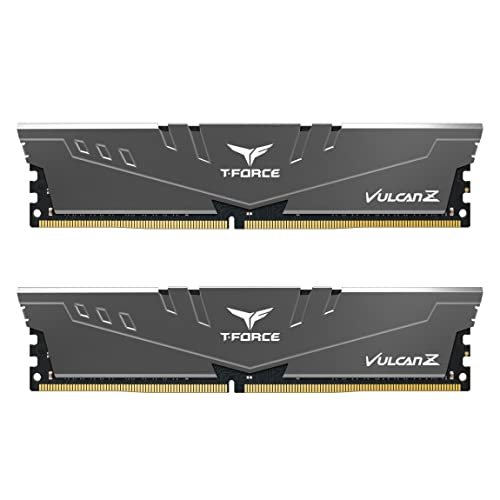
When evaluating if 16GB or 32GB RAM for gaming fits modern titles, 16GB remains capable of running traditional esports releases and standard action titles without immediate capacity exhaustion. A modern configuration like the TEAMGROUP T-Force Vulcan Z 16GB RAM kit delivers a fast 3200MHz data transfer rate of 25,600 megabytes per second, ensuring responsive asset streaming when dedicated entirely to a single application. However, modern simulation games, dense open-world titles, and poorly optimized game engines frequently allocate between 12GB and 14GB of physical capacity independently. Once Windows system processes take their necessary baseline share, a 16GB configuration operates near full saturation, leaving zero margin for sudden asset loads or memory leaks.
Equipping a 32GB configuration provides the memory allocation buffer necessary to maintain smooth frame pacing during extended gaming sessions. Complex modern releases cache expansive texture libraries and physics data directly into memory to prevent texture pop-in and loading pauses. When paired with high-performance graphics configurations like an AMD RX 6700 XT vs 6950 XT setup, a 32GB pool ensures that high-resolution assets stream freely without exhausting memory buffers. Modern releases avoid aggressive garbage collection routines when ample RAM exists, resulting in smoother frame delivery across demanding open-world areas.
Edge: 32GB RAM. The doubled capacity eliminates virtual memory paging bottlenecks and stabilizes 1% low frametimes in demanding modern titles.
Multitasking and Background Application Headroom
Modern gaming setups rarely operate in isolation. PC gamers frequently maintain multiple browser windows, voice communication servers, recording utilities, and hardware monitoring applications simultaneously. The physical capacity of your memory pool dictates whether these secondary tools run smoothly in parallel or degrade primary gaming performance. Evaluating 16GB vs 32GB RAM multitasking capabilities reveals the stark operational boundary between maintaining single-task focus and enabling full-featured desktop productivity.
Operating a 16GB configuration requires strict resource management if you plan to broadcast gameplay or maintain heavy background utilities. The Windows operating system typically reserves between 3GB and 4GB of capacity for system background tasks, leaving approximately 12GB available for user programs. When deciding between 16GB or 32GB RAM for streaming, a 16GB memory footprint leaves little room to balance Open Broadcaster Software (OBS), chat overlay panels, web browser tabs, and a modern title simultaneously. Running up against the 16GB barrier forces the system to compress memory or swap inactive tasks to the drive, introducing stutter to both the game and the outgoing video stream.
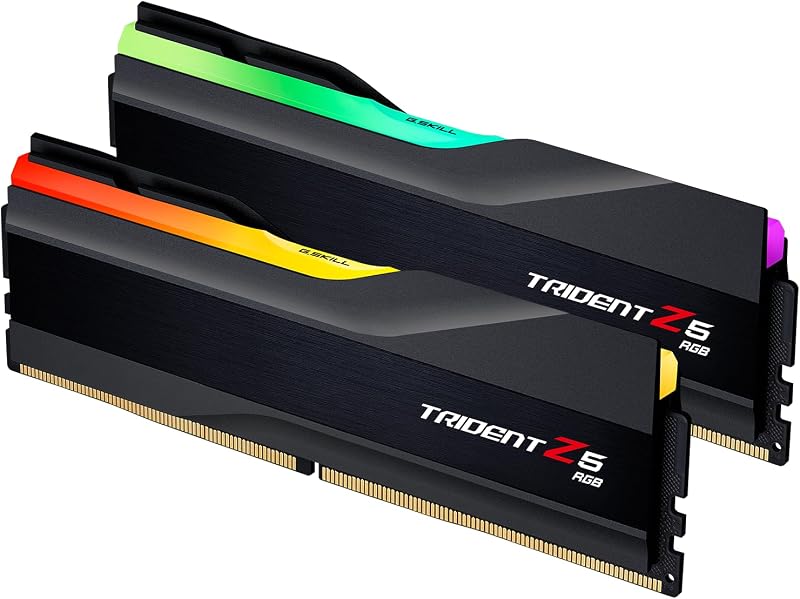
Upgrading to a 32GB configuration, represented by kits like the G.SKILL Ripjaws V 32GB RAM kit, doubles the available memory volume to 32GB via two matched 16GB modules. This capacity comfortably accommodates a 16GB game allocation alongside 8GB of active web tabs, streaming encoders, and communication software without approaching system limits. For power users wondering about system boundaries, our comparison of 32GB vs 64GB RAM highlights that 32GB represents the ideal operational sweet spot for combined gaming and desktop multitasking workflows before entering professional workstation requirements.
Edge: 32GB RAM. The expanded 32GB capacity effortlessly hosts broadcast software, browser windows, and voice communications alongside high-demand games.
Generational Compatibility and Platform Architecture
Physical motherboard hardware and memory module architecture dictate platform compatibility across desktop builds. Memory form factors, pin configurations, and operational voltages determine which generation of hardware can accept specific memory kits. Choosing between these capacities involves understanding how memory standards align with your current processor and motherboard layout.
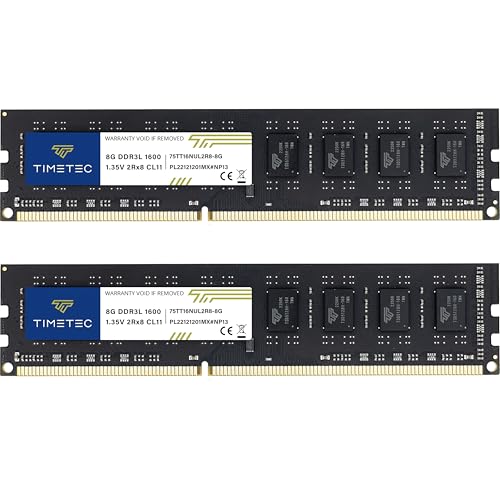
The 16GB capacity spans multiple hardware generations, offering solutions for both legacy upgrades and mainstream contemporary systems. For older computing platforms, options such as the Timetec 16GB DDR3 Kit feature 240-pin unbuffered DIMMs operating at 1600MHz on dual-voltage 1.35V or 1.5V configurations with dual-rank module organization. Meanwhile, modern 16GB configurations feature 288-pin DDR4 DIMMs operating at 1.35V with 3200MHz frequencies. This dual-generation availability makes 16GB an adaptable capacity for restoring older desktop systems or assembling streamlined budget platforms without motherboard constraints.
By contrast, 32GB kits in the mainstream consumer desktop category focus overwhelmingly on modern architectures. Best-selling 32GB kits utilize 288-pin DDR4 UDIMM layouts engineered specifically for modern Intel and AMD platforms. System builders evaluating memory architecture should review single rank vs dual rank ram configurations, as higher-capacity 16GB individual sticks frequently implement dual-rank architecture that can enhance memory interleaving performance on modern memory controllers. The listed 32GB kits supply two matched 16GB modules that fully populate dual-channel paths without requiring four individual DIMM slots.
Edge: Tie. 16GB spans legacy DDR3 and modern DDR4 platforms, while 32GB delivers optimized dual-channel density for modern desktop motherboards.
Memory Overclocking, Latency, and System Tuning
Memory latency and operational frequency determine how quickly the central processing unit exchanges data with your system RAM. Column Address Strobe (CAS) latency, listed in clock cycles, measures the delay between a memory controller request and the delivery of stored data. When tuning systems for optimal responsiveness, balancing raw speed against memory timings is critical for gaming efficiency.
Looking at 16GB vs 32GB DDR4 gaming configurations, DDR4 kits across both capacities exhibit comparable timing profiles. The 16GB TEAMGROUP Vulcan Z module features a CAS latency rating of CL16 running at 3200MHz (PC4-25600) with a 1.35V profile supported by Intel XMP 2.0. Similarly, the G.SKILL Trident Z RGB 32GB RAM kit and G.SKILL Ripjaws V kit operate at 3200 MT/s with identical primary CL16 latency (CL16-18-18-38 timings) at 1.35V. For deeper insights into memory tuning variations, our analysis of crucial ballistix ddr4 vs patriot viper steel ddr4 showcases how sub-timings interact with processor memory controllers across gaming workloads.
Both capacities utilize Intel XMP 2.0 presets to apply rated overclock frequencies directly through motherboard BIOS menus without manual timing calculation. Manufacturer product documentation emphasizes that achieving maximum rated frequency depends heavily on the CPU integrated memory controller (IMC) and motherboard BIOS compatibility. Operating two 8GB sticks in a 16GB setup presents a lightweight electrical load for system memory controllers. However, modern desktop platforms handle matched 2x16GB dual-rank configurations equally well, allowing 32GB users to engage full 3200 MT/s speeds without sacrificing timing integrity.
Edge: Tie. Both capacities provide identical 3200MHz frequency ratings and CL16 primary latency through standardized Intel XMP 2.0 profiles.
Long-Term System Longevity and Upgrade Value
Building or updating a gaming personal computer requires evaluating how component specifications will hold up against evolving software demands. As game developers utilize modern rendering pipelines, high-resolution geometry, and detailed physics assets, system memory requirements continue an upward trajectory. Deciding whether 32GB vs 16GB RAM for gaming is necessary involves assessing operational longevity and the practical considerations of future upgrades.
A comprehensive 16GB RAM review indicates that while 16GB has served as the baseline standard for years, modern gaming titles are pushing this capacity to its absolute limit. Running an intensive gaming release while maintaining basic utility software can push 16GB systems into 95% utilization. Furthermore, attempting to double your capacity later by purchasing a secondary 16GB kit introduces hardware stability hazards. Manufacturer guidelines from G.SKILL explicitly warn against mixing memory kits, noting that memory modules are sold in factory-matched pairs designed to operate together. Mixing separate kits, even of identical speed ratings, can lead to boot failure, timing mismatches, and system instability.
In contrast, a 32GB RAM review demonstrates clear advantages for system longevity. High-end PC components, such as those evaluated in our look at the Nvidia RTX 5080 vs 5090, are built to power demanding graphical experiences that benefit directly from unconstrained system RAM pools. Purchasing a factory-tested 32GB kit (2x16GB) provides immediate operational peace of mind, eliminating the need to install mismatched memory modules later. The additional headroom ensures your gaming rig will manage unoptimized game launches and next-generation titles without requiring immediate hardware modifications.
Edge: 32GB RAM. A unified 32GB kit provides long-term capacity headroom and eliminates the stability hazards associated with combining mismatched memory modules down the road.
Pros and Cons
16GB RAM

Pros
- Available in DDR3 and DDR4
- Low memory controller load
- Sufficient for competitive esports
- Includes lifetime manufacturer warranty
Cons
- Near saturation in modern games
- Limited multitasking and streaming headroom
View Timetec 16GB KIT(2x8GB) DDR3L DDR3 1600MHz on Amazon
32GB RAM

Pros
- Full 32GB capacity prevents paging
- Matched kits ensure system stability
- Supports intensive streaming and multitasking
- Standardized Intel XMP 2.0 support
Cons
- Requires modern DDR4 desktop motherboard
- Unnecessary capacity for pure esports
View G.SKILL RipjawsV Series DDR4 RAM (XMP) on Amazon
Who Should Buy Each One
Choose the 16GB RAM If
- You play esports and competitive multiplayer titles that do not exceed standard memory requirements.
- You run a dedicated gaming environment and consistently close background applications before launching games.
- You are upgrading or repairing an older desktop platform requiring legacy 240-pin DDR3 memory architecture.
- You prioritize baseline system assembly and do not broadcast or record your gaming sessions.
Choose the 32GB RAM If
- You play modern open-world, simulation, or heavily modded PC titles that demand extensive asset caching.
- You stream gameplay via OBS, manage Discord voice chat, and maintain open web browser tabs simultaneously.
- You want a factory-matched dual-channel setup that avoids system instability caused by mixing memory kits.
- You plan to retain your current motherboard and processor configuration for several years without memory bottlenecks.
Final Verdict
For most desktop PC builders and gamers entering modern titles today, 32GB RAM represents the superior, future-proof selection. While 16GB established itself as the historical benchmark, modern titles increasingly saturate 12GB to 14GB of memory on their own. Equipping a matched 2x16GB kit running at 3200 MT/s with CL16 latency ensures your desktop eliminates virtual memory stuttering, maintains smooth 1% low frame rates, and accommodates essential background tools like Discord and broadcast software without constraint.
The 16GB configuration remains a functional, practical option for gamers with focused computing routines or legacy equipment. If your gaming library centers around competitive esports titles, or if you need dual-voltage 240-pin DDR3 modules to keep an older desktop operational, a 16GB kit delivers dependable performance. However, if you are building a modern DDR4 gaming machine intended to handle upcoming game engines without memory bottlenecks, investing directly in 32GB provides the stability and operational longevity your rig demands.
FAQ
Is 16GB RAM enough for gaming in modern releases?
A 16GB memory configuration remains functional for standard gaming titles and competitive esports, but it operates near maximum utilization in recent releases. When a modern game allocates 12GB or more, the remaining capacity must support the operating system and background tasks, creating potential stutter when physical memory limits are reached.
Is 32GB RAM worth it for gaming if you only play esports titles?
If you exclusively play competitive esports games like tactical shooters or multiplayer arenas without background software open, 32GB RAM is generally not required. Esports titles are engineered to run efficiently on modest hardware, making a 16GB configuration running at 3200MHz fully capable of delivering high frame rates.
Should you choose 16GB or 32GB RAM for streaming on Twitch or YouTube?
You should select 32GB RAM for live streaming workflows. Broadcasting tools like OBS Studio, video encoding buffers, chat overlay windows, and voice communication tools consume substantial system memory, making a 16GB pool too constrained to support both the broadcast software and modern games simultaneously.
Does 32GB RAM improve FPS compared to 16GB RAM?
Upgrading to 32GB RAM typically does not increase maximum average frame rates if the game already fits entirely within 16GB. However, 32GB significantly improves 1% low frame times and frame pacing consistency by preventing your operating system from shifting active game assets into drive-based virtual memory paging files.
Can you upgrade from 16GB to 32GB by adding two more sticks?
While motherboards with four DIMM slots physically accept additional modules, memory manufacturers explicitly warn against mixing memory kits. Memory kits are sold as factory-tested, matched sets; combining modules from separate packages can cause timing mismatches, failure to boot at XMP speeds, and general system instability.
How does DDR4 memory speed impact 16GB vs 32GB configurations?
Both 16GB and 32GB DDR4 configurations in this comparison operate at identical 3200MHz (3200 MT/s) speeds with CL16 latency. Because frequency and primary timings match, memory responsiveness remains consistent across both capacities, leaving total volume headroom as the primary operational differentiator.