The single difference that decides the choice between a 2.0Ah battery and a 5.0Ah battery is the balance between operating runtime and physical pack weight. Ampere-hours determine fuel tank capacity: a 5.0Ah pack holds two and a half times the energy reserve of a 2.0Ah unit at identical voltage, but it achieves that endurance by housing double the lithium-ion cells, adding noticeable bulk to the base of your tool.
You should pick a 2.0Ah battery if your workflow involves overhead drywall fastening, light cabinet assembly, or delicate drilling where shaving off every ounce prevents wrist fatigue. You should pick a 5.0Ah battery if you depend on high-draw power tools, cut dense lumber continuously, or operate cordless outdoor power equipment that exhausts compact packs in minutes.
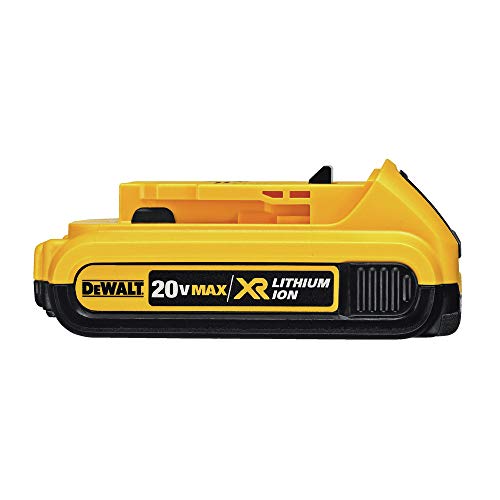


2.0Ah Battery vs 5.0Ah Battery at a Glance
| Attribute | 2.0Ah Battery | 5.0Ah Battery |
|---|---|---|
| Rated Capacity | 2.0 Amp-hours | 5.0 Amp-hours |
| Typical Pack Weight | 14.08 oz to 16 oz (0.88 to 1.0 lb) | 1.4 lbs (18V) to 5.0 lbs (56V) |
| Cell Architecture | Single row (typically 5 cells) | Dual row (typically 10 cells) or high-capacity array |
| Recharge Time Range | 35 minutes (fast) to 60 minutes | 45 minutes (fast) to extended bench charging |
| Charge Level Indicators | 3-LED fuel gauge or bar indicator | Integrated multi-segment L.E.D. fuel gauge |
| Manufacturer Warranty | 3-year limited warranty | 3-year limited warranty |
| Thermal Protection | Standard electronic control | Advanced phase cooling and overload management |
| Best For | Overhead drilling, trim work, quick repairs | Demolition saws, lawn equipment, framing |
Runtime and Energy Capacity
Understanding the difference between 2.0Ah and 5.0Ah battery options begins with calculating total energy storage. Ampere-hours (Ah) measure the electric charge delivered at a specified current over one hour. In direct terms, a 5.0Ah pack provides 150 percent more continuous capacity than a 2.0Ah pack on the same platform. While a compact unit supplies two amps of current continuously for one hour before cell depletion, the larger option provides five amps over that identical hour, or two amps for two and a half hours. In dynamic jobsite applications, this theoretical 2.5x multiplier frequently widens because lower-capacity cells suffer increased voltage sag under load, forcing the tool motor to work less efficiently and tripping low-voltage cutoffs sooner.
When measuring 2.0Ah vs 5.0Ah battery runtime in active woodworking, metal fabrication, or property maintenance, the practical gap changes how a project flows. On an 18-volt platform, a Makita BL1850B-2 18V LXT Lithium-Ion 5.0Ah Battery, 2/pk, Black system delivers up to 65 percent more run time per charge compared to traditional 3.0Ah cells, letting an installer complete hundreds of standard framing fasteners or multiple linear feet of subfloor cutting without walking back to the charger. Conversely, a compact pack such as the DEWALT 20V MAX Battery, Compact 2.0Ah (DCB203) provides up to 33 percent more capacity than base standard packs, yet it exhausts its cells significantly faster during high-repetition tasks. For users evaluating runtimes on demanding portable blowers, contrasting battery systems like those highlighted in our milwaukee 2724-20 vs echo pb-580t comparison shows how runtime ceilings dictate daily operational planning.
For tradespeople working away from active wall outlets, continuous power delivery makes the difference between maintaining momentum and losing working hours. Running multiple small packs demands constant swapping, charging management, and tracking pack temperatures. The extended energy pool of the larger pack absorbs demanding repetitive workloads without faltering mid-cut.
Edge: 5.0Ah battery because it provides two and a half times the energy capacity and prevents frequent work stoppages.
Size, Pack Weight, and Tool Ergonomics
Ergonomics and weight distribution dictate how long an operator can use a handheld tool before experiencing muscle strain or shoulder fatigue. The physical 2.0Ah vs 5.0Ah battery weight contrast is driven entirely by internal cell count. A 2.0Ah pack uses a single parallel string of small lithium-ion cells, maintaining a flat profile and a scale weight around 14 to 16 ounces. The DEWALT DCB203 weighs 16 ounces, while the WORX 20V 2.0Ah Lithium-ion Battery 1 pc, WA3669.J registers at 14.08 ounces with dimensions of just 4.6 by 3 by 1.7 inches. These compact units preserve tool balance, creating a neutral center of gravity that feels natural during precision tasks.
By comparison, a 5.0Ah unit typically stacks two full rows of cells in parallel. On standard 18V systems, the Makita BL1850B weighs approximately 1.4 pounds, adding nearly half a pound of bulk right beneath the handle. In higher-voltage platforms, the disparity becomes immense: the EGO POWER+ Battery 56V, 5.0Ah – BA2800T weighs 5 pounds and measures 6.89 by 8.07 by 3.93 inches. Adding multiple pounds to a handheld power tool transforms its handling dynamics, demanding significantly more forearm engagement to control tip plunge and balance.
When selecting 2.0Ah or 5.0Ah for drill operations, the choice relies on work orientation. Boring holes through cabinet faces, driving hinge hardware, or working at shoulder height benefits immensely from the featherweight 2.0Ah configuration. Fastening screws under kitchen sinks or inside wall cavities demands a compact physical footprint that clears internal framing studs. Similar ergonomic considerations between pack mass and handling appear across portable electronics, such as the weight trade-offs discussed in our akko 5075b plus vs epomaker th80 v2 layout assessment. Securing a 5.0Ah battery to a light drill turns a handy assembly tool into a bottom-heavy apparatus that resists agile maneuvering.
Edge: 2.0Ah battery thanks to its slender footprint, lower center of gravity, and reduced pack weight that limits user fatigue.
Heavy-Duty Demands and High-Draw Cordless Tools
High-draw cordless tools place extreme operational demands on power packs that extend beyond basic endurance. When an impact wrench breaks loose a rusted lug, or a circular saw chews through pressure-treated lumber, the motor draws intense peak amperage. In a single-string 2.0Ah battery, every individual cell must deliver that peak current alone, triggering heat buildup, rapid voltage drop, and electronic safety shutdowns. A dual-string 5.0Ah pack splits that demanding current draw across parallel rows, reducing electrical resistance, operating temperatures, and thermal stress on the internal chemistry.
This reality directly settles the debate of 2.0Ah or 5.0Ah for lawn mower and outdoor equipment selection. Walk-behind mowers, commercial string trimmers, and chainsaws require unrelenting power delivery to maintain blade RPM through heavy brush. A 2.0Ah pack will either trigger thermal shutdown within minutes or fail to supply the current needed to prevent motor stalling. Equipment like the EGO BA2800T relies on 56 volts and 5.0Ah capacity, incorporating Keep-Cool cell technology and an arc-lithium layout specifically engineered to handle intense draw while operating in ambient temperatures from 32°F up to 104°F. Outdoor gear comparisons, including our stihl bga 57 vs worx wg520 analysis, consistently demonstrate that high-resistance outdoor chores require robust power cells to avoid continuous thermal cutoffs.
Even in daily workshop driving tasks, deciding whether to use 2.0Ah or 5.0Ah for impact driver jobs comes down to fastener resistance. Driving standard three-inch wood screws into soft pine works smoothly with a 2.0Ah unit. However, driving six-inch structural lag screws into green ledger boards generates severe resistance that bogs down a 2.0Ah pack. The 5.0Ah battery provides the necessary current headroom to keep the impact mechanism hammering without burning out its internal battery cells.
Edge: 5.0Ah battery because its multi-string cell construction handles severe amp draw and thermal strain without shutting down.
Charging Downtime and Productivity Cycles
Maintaining continuous workflow requires comparing replenishment speeds against pack consumption. Smaller lithium-ion batteries hold fewer cells and require less total electrical current to achieve maximum voltage. As documented in product specifications, the DEWALT DCB203 achieves a complete recharge in a rapid 35 minutes, while the WORX WA3669.J reaches full capacity in 60 minutes when paired with matching fast-charging units like the WA3881 or WA3884. With two compact packs on rotation, a tradesperson can work through light fastener runs continuously, placing one pack on the bench stand while running the other.
Extended-capacity packs take longer to recharge their deeper cell banks, although modern rapid chargers have closed that gap considerably. The Makita BL1850B-2 platform reaches a complete charge in 45 minutes or less when connected to a smart rapid charger, which monitors temperature and cell balance throughout the process. However, high-voltage, large-format packs such as the 5-pound EGO 56V 5.0Ah unit require dedicated heavy-duty charging stations, and cooling down hot cells before acceptance extends the full turnaround window. Proper cell maintenance and charging management follow strict operational rules, much like the monitoring cycles evaluated in our noco gb40 vs genius5 charging hardware overview.
Because the 2.0Ah battery drains faster, it cycles through chargers more frequently throughout a working day. That rapid cycling gradually accumulates heat inside the pack if dropped straight onto a fast charger without a rest period. Both DEWALT and Makita incorporate zero-memory lithium-ion chemistry that resists self-discharge during long storage, ensuring packs remain ready on the shelf. Nevertheless, the swift 35-minute recharge of a 2.0Ah unit minimizes standby time when working with limited backup equipment.
Edge: 2.0Ah battery due to rapid 35 to 60 minute charge turnarounds that restore drained packs quickly.
Thermal Management and Long-Term Durability
Heat is the primary enemy of lithium-ion battery longevity. When a cordless pack delivers power, electrical resistance inside the cells generates internal heat. In high-demand scenarios, 5.0Ah batteries excel because their architecture includes advanced thermal dissipation features and distributes electrical loads across more individual cells. The EGO BA2800T, for example, integrates Keep-Cool technology and a patented power management system specifically configured to shield cells from overheating, over-discharging, and severe jobsite weather extremes. These engineering barriers ensure cells operate within safe thresholds during sustained heavy-load cutting.
Compact 2.0Ah packs feature fewer physical components and simpler internal heat sinks. Because a 2.0Ah battery operates closer to its maximum discharge threshold under moderate tool loading, its single row of cells runs hotter during continuous use. While units like the WORX WA3669.J feature durable push-button releases and sturdy casings that share compatibility across 20V and 40V systems, continuous heavy loads force the battery management system to shut down output to avoid thermal damage. Examining thermal handling and sustained endurance mirrors the runtime dynamics explored in our stihl bga 57 vs echo pb-580t equipment comparison.
Both capacities utilize state-of-charge monitors to help users prevent deep-discharge damage. DEWALT integrates a 3-LED fuel gauge system directly onto the DCB203, while Makita builds an L.E.D. battery charge indicator into the BL1850B. Makita also implements Star Protection Computer Controls, an electronic protocol that enables the tool and battery to exchange data in real time, safeguarding against overloading, over-discharging, and overheating. Because larger 5.0Ah packs disperse current over more surface area, they withstand repeated deep cycles with less thermal degradation over their operational lifespan.
Edge: 5.0Ah battery due to superior internal heat dissipation, advanced cell protections, and lower per-cell thermal strain.
Platform Versatility and Overall Value
When assessing a 2.0Ah battery review against a 5.0Ah battery review, overall utility on your chosen tool platform plays a central role. Cordless tool ecosystems often share battery interfaces across dozens of distinct tools. A single 20V or 18V pack might power an impact driver in the morning, an oscillating multi-tool at noon, and a compact trim router in the afternoon. Within shared platforms, the WORX PowerShare system demonstrates this flexibility by using its 20V 2.0Ah packs individually or pairing them in tandem to power 40V tools, providing versatile multi-tool options.
Is a 5.0Ah battery worth it for a general homeowner or professional contractor? In terms of equipment compatibility, the 5.0Ah capacity serves as the universal sweet spot. It provides sufficient current to operate high-draw tools like circular saws, reciprocating saws, rotary hammers, and leaf blowers without tripping overload protection. Simultaneously, it remains compact enough to mount onto a drill or impact wrench for ground-level construction work. While a 2.0Ah pack struggles on continuous high-draw tools, a 5.0Ah pack can run every tool across the manufacturer’s lineup reliably.
When analyzing 5.0Ah vs 2.0Ah battery utility across an entire tool collection, the larger capacity delivers greater overall operational scope. It eliminates the risk of an underpowered tool stalling during critical tasks. In specialized systems like EGO’s 56V ecosystem, the 5.0Ah BA2800T serves as the standard baseline capacity required to run mowers, hedge trimmers, and chainsaws effectively. Buying into higher amp-hour batteries establishes a flexible power foundation that scales alongside your growing tool collection.
Edge: 5.0Ah battery because it powers everything from compact drills to demanding outdoor power equipment without capacity bottlenecks.
Pros and Cons
2.0Ah Battery

Pros
- Lightweight construction reduces user fatigue
- Fast 35 to 60 minute recharge times
- Compact footprint fits into confined spaces
- Integrated fuel gauge on major models
Cons
- Significantly shorter runtime per charge
- Struggles to sustain heavy-draw outdoor equipment
View DEWALT 20V MAX Battery Compact 2.0Ah on Amazon
5.0Ah Battery

Pros
- Substantial runtime for uninterrupted work
- Maintains higher sustained power output
- Built-in thermal and overload protection systems
- Ideal for high-draw saws and mowers
Cons
- Heavier physical pack weight
- Bulkier profile limits tight-quarter maneuverability
View EGO POWER+ Battery 56V 5.0Ah – on Amazon
Who Should Buy Each One
Choose the 2.0Ah Battery If
- You primarily perform overhead tasks like drywall fastening, electrical conduit hanging, or ceiling fixture installation where every ounce of weight savings matters.
- Your projects center around lightweight driving, finish carpentry, cabinet hardware installation, or detailed craft assembly.
- You work in cramped spaces, such as inside cabinet boxes or between wall studs, where the compact casing profile of packs like the WORX WA3669.J fits easily.
- You prefer rapid 35-minute charging rotations to keep a lightweight tool moving without managing heavy packs on your tool belt.
Choose the 5.0Ah Battery If
- You regularly operate high-draw power tools including circular saws, angle grinders, rotary hammers, and reciprocating demo saws.
- You power outdoor yard equipment like lawn mowers, leaf blowers, or chainsaws that demand high current and continuous runtimes.
- You need all-day runtime on busy framing or decking jobsites without stopping to swap batteries at a distant charging station.
- You require robust internal thermal protection and advanced power management to handle high-temperature outdoor work conditions.
Final Verdict
For most tradespeople, serious woodworkers, and general contractors, the 5.0Ah battery is the superior overall investment. Its combination of deep energy reserves, 2.5x runtime advantage, and dual-string cell layout unlocks the full potential of modern brushless tools. High-draw applications like framing saws and outdoor yard equipment cannot function reliably on compact single-string packs. Models like the Makita BL1850B-2 and EGO BA2800T supply the heavy current draw and thermal endurance needed to drive through demanding jobs without constant battery swapping.
The 2.0Ah battery remains essential whenever tool ergonomics, maneuverability, and arm comfort take priority. Installing drywall, assembling cabinetry, or driving hundreds of small screws into overhead tracks turns a heavy 5.0Ah battery into a severe physical strain. Packs like the DEWALT DCB203 and WORX WA3669.J keep tools nimble, balance perfectly in hand, and recharge in as little as 35 minutes. If your toolkit focuses on precision assembly and lightweight fastening, compact 2.0Ah packs deliver unmatched agility; for everything else, step up to 5.0Ah.
FAQ
Can I use a 5.0Ah battery on a tool that originally came with a 2.0Ah battery?
Yes, as long as both batteries belong to the same manufacturer and share the exact same voltage platform. Cordless tools draw only the electrical current they require from the pack. Connecting an 18V or 20V 5.0Ah battery to a drill that came bundled with a 2.0Ah pack will simply extend its operating runtime and provide better resistance against stalling under heavy loads.
Will a 5.0Ah battery make my cordless drill more powerful than a 2.0Ah battery?
A 5.0Ah battery can deliver noticeable performance gains under heavy workloads. Because a 5.0Ah pack uses parallel rows of cells, it suffers less voltage drop under heavy torque demands than a compact 2.0Ah battery. While peak no-load motor speed remains nearly identical, the drill maintains its rotational speed and driving torque much better when boring large spade bits or driving thick lag bolts.
Is a 2.0Ah battery adequate for running a cordless lawn mower?
A 2.0Ah battery is generally inadequate for cordless walk-behind lawn mowers. Cordless mowers encounter dense grass that creates intense continuous electrical draw, quickly triggering thermal protection or low-voltage shutoffs on small packs. Large-format systems, such as the 56-volt EGO platform, utilize 5.0Ah or higher packs like the BA2800T to supply sufficient current and sustain realistic yard-cutting runtimes.
Does a 5.0Ah battery take much longer to charge than a 2.0Ah battery?
A 5.0Ah battery takes longer to recharge than a 2.0Ah pack, but rapid-charging technology keeps the difference manageable. The DEWALT DCB203 2.0Ah pack charges in roughly 35 minutes, while the Makita BL1850B 5.0Ah pack recharges in approximately 45 minutes on a compatible rapid charger. On standard basic chargers without cooling fans, however, a 5.0Ah pack can take well over an hour to reach full capacity.
Can I leave my 2.0Ah or 5.0Ah battery plugged into the charger after it finishes?
Modern lithium-ion batteries from major brands incorporate internal monitoring circuitry that prevents overcharging. Once the pack reaches maximum voltage, the smart charger switches over to maintenance or sleep mode. However, storing batteries off the charger in a temperature-controlled, dry room once charging concludes is best practice to avoid unnecessary heat exposure and protect cell health over long storage intervals.
How does the weight difference impact daily overhead work?
The weight difference significantly affects shoulder and wrist fatigue during overhead work. A compact 2.0Ah pack weighs around one pound, keeping the tool agile and balanced. Upgrading to a dual-row 5.0Ah pack adds half a pound to two pounds depending on the voltage system, which rapidly strains forearm muscles when driving fasteners into ceilings, hanging conduit, or working on ladders all day.


