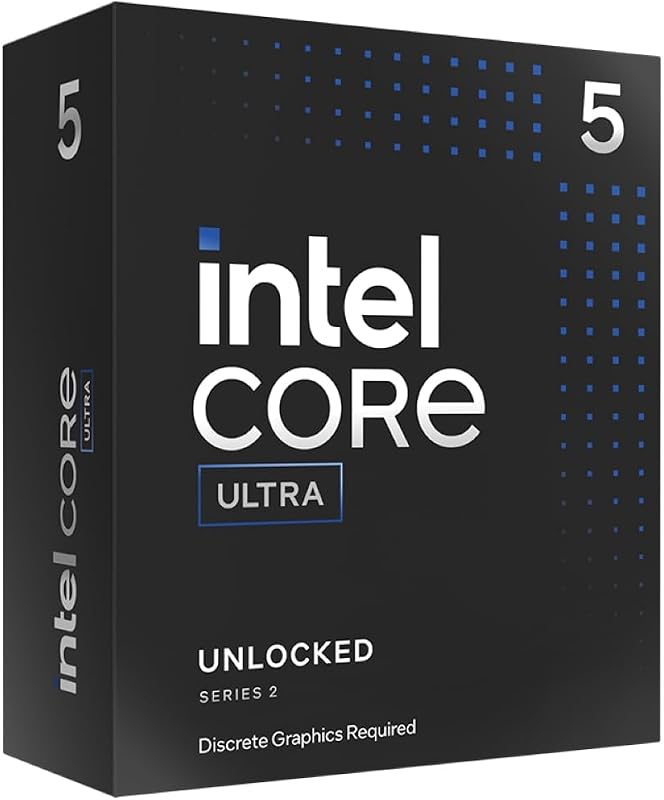
The core distinction separating the AMD Ryzen 7 7800X3D 8-Core, 16-Thread Desktop Processor from the AMD Ryzen 7 7700X 8-Core, 16-Thread Unlocked Desktop Processor is the choice between specialized 3D V-Cache memory expansion and higher raw frequency clock speeds. While both central processing units share the same 5 nm Zen 4 architecture and an 8-core, 16-thread physical design on Socket AM5, the 7800X3D incorporates a vertically stacked cache die to slash data latency in gaming, whereas the 7700X provides higher base and boost clock rates that accelerate general desktop applications and raw compute workflows.
Choose the 7800X3D if your desktop build is centered around competitive gaming frame rates and maximizing 3D V-Cache efficiency. Choose the 7700X if you require a faster 5.4 GHz maximum boost frequency for mixed desktop productivity and compute-heavy production tasks alongside solid gaming capability.


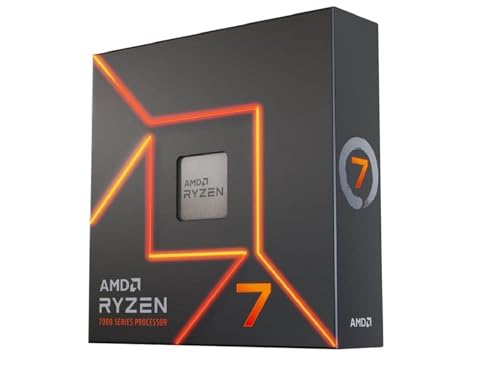
7800X3D vs 7700X at a Glance
| Feature | AMD Ryzen 7 7800X3D | AMD Ryzen 7 7700X |
|---|---|---|
| Architecture | Zen 4 (5 nm) | Zen 4 (5 nm) |
| Cores / Threads | 8 Cores / 16 Threads | 8 Cores / 16 Threads |
| Base Clock Speed | 4.2 GHz | 4.5 GHz |
| Max Boost Clock Speed | 5.0 GHz | 5.4 GHz |
| L2 Cache | 8 MB | 8 MB |
| L3 Cache | 96 MB (104 MB Combined L2+L3) | 32 MB |
| Default Thermal Design Power (TDP) | 120 Watts | 105 Watts |
| Maximum Operating Temperature (Tjmax) | 89°C | Not listed |
| Integrated Graphics | AMD Radeon Graphics (2200 MHz) | AMD Radeon Graphics |
| Socket Compatibility | Socket AM5 | Socket AM5 |
| Supported Operating Systems | Windows 10, Windows 11 | Windows, Linux |
| Bundled Thermal Solution | Cooler not included | Cooler not included |
| Best For | Pure High-Refresh Gaming | Balanced Productivity and Gaming |
L3 Cache Architecture and Memory Latency
The primary battleground in the Ryzen 7 7800X3D vs Ryzen 7 7700X comparison is memory subsystem topology. A processor relies on its internal cache hierarchy to store instructions and assets close to the execution cores, bypassing the relatively slow round trip to system RAM. AMD revolutionized this concept by stacking additional silicon directly on top of the compute die. In any detailed 7800X3D review, the spotlight inevitably falls on the 7800X3D 96MB L3 cache, which pairs with 8 MB of secondary L2 cache to deliver 104 MB of total high-speed memory pool directly on-chip. By comparison, the standard 7700X features a traditional planar layout offering 32 MB of L3 cache alongside its 8 MB L2 cache.
This tripling of the Level 3 cache pool completely transforms instruction pipelining for workloads sensitive to data starvation. When an application requests an asset that fits within 96 MB, the 7800X3D achieves a cache hit within nanoseconds. The 7700X, restricted to a 32 MB L3 pool, must reach out to external DDR5 memory far more often. Similar memory latency dynamics were highlighted in our comparison of the amd ryzen 5 5600x vs ryzen 7 5800x3d, proving that expanding the on-die buffer shields the processing cores from bus bottlenecks. For applications that recycle extensive datasets, the enlarged buffer compensates heavily for lower clock ceilings.
However, physical silicon stacking introduces thermal insulation over the compute cores. AMD engineered the 3D V-Cache layer atop the compute core die (CCD), which inhibits direct heat dissipation into the integrated heat spreader. To ensure structural reliability and prevent heat degradation, the manufacturer strictly regulates peak operating voltages on the 7800X3D. The 7700X does not face this stacked barrier, allowing its single-layer silicon to run standard operational voltages and sustain simpler cooling dynamics across continuous desktop operations.
Edge: AMD Ryzen 7 7800X3D, because its massive 96MB L3 cache eliminates frequent RAM retrieval cycles and significantly reduces execution latency.
Clock Speed and Frequency Scaling
While the X3D part dominates on-die storage capacity, clock velocity tells an entirely different story in this 7700X vs 7800X3D matchup. The 7700X establishes an assertive advantage in pure frequency parameters, boasting a base clock of 4.5 GHz and a maximum boost clock reaching up to 5.4 GHz. In contrast, the 7800X3D operates with a conservative 4.2 GHz base frequency and tops out at a 5.0 GHz maximum boost speed. That represents a 300 MHz deficit at baseline and a 400 MHz gap when processing cores demand maximum single-core throughput.
This frequency disparity stems directly from the packaging constraints of stacked cache. Because the 3D V-Cache layer cannot endure extreme voltage spikes without risking heat accumulation, the processor cannot ramp up to the 5.4 GHz limits enjoyed by non-X3D Zen 4 hardware. In a comprehensive 7700X review, this higher clock frequency demonstrates superior instructions-per-cycle execution when handling computational routines that do not fit into cache or that do not benefit from expanded L3 pools. This clock dynamic mirrors the trade-offs explored in our analysis of the amd ryzen 7 5800x3d vs ryzen 9 5900x, where clock-boosted processors hold firm against specialized gaming silicon.
For operations driven by pure single-thread frequency-such as dynamic scripting, standard code parsing, interactive web tools, and unthreaded photo manipulation filters-the 5.4 GHz ceiling of the 7700X completes tasks faster. The 7800X3D relies entirely on cache hits to overcome its clock deficit. When software does not gain efficiency from the extra 64 MB of stacked cache, the 7700X delivers uninterrupted operational advantages simply through its faster clock cycle velocity.
Edge: AMD Ryzen 7 7700X, due to its substantial 400 MHz lead in maximum boost frequency and 300 MHz higher base clock speed.
Gaming Frame Rates and Frame Consistency
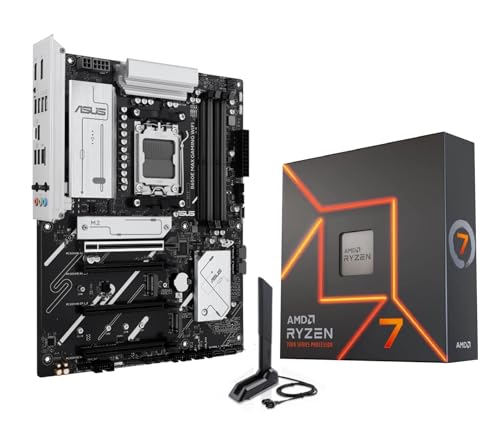
When PC enthusiasts ask whether to choose the 7800X3D or 7700X for gaming, the real metric is not just average frames per second, but frame time stability. Modern game engines operate on extensive draw calls, dynamic simulation loops, spatial audio calculations, and complex enemy artificial intelligence scripts. These gaming routines access memory randomly rather than sequentially. The listing for the 7700X advertises dependable 100+ FPS performance in major gaming releases, and its 5.4 GHz boost handles conventional game pipelines with remarkable speed. Pre-built hardware packages such as the MICRO CENTER AMD 7700X Processor with ASUS B650E MAX Gaming WF Motherboard demonstrate how ready the platform is for high-end graphics setups.
Nevertheless, the 7800X3D alters gaming dynamics completely. By holding game world geometry, engine physics variables, and immediate player data inside the 96 MB L3 cache, the 7800X3D prevents the micro-stutters that occur when a core stalls while waiting for DDR5 system memory to return an asset. The result is not merely higher maximum frame rates in cache-sensitive titles like strategy simulations and open-world role-playing games, but dramatically improved 1% low frame rates. System configurations pairing modern platforms, like the Micro Center AMD 7800X3D Processor with GIGABYTE B850 Gaming WF Motherboard, supply gamers with the seamless frame delivery required for high-refresh competitive displays.
Is 7800X3D worth it for gaming exclusively? The specification differences provide a definitive affirmative answer. Although the 7700X easily sustains high frame rates in modern titles, games that bog down standard CPUs during dense multiplayer scenarios or large simulated environments execute smoothly on the 7800X3D. The stacked cache keeps execution units constantly fed, making the 7800X3D the definitive gaming engine among eight-core AM5 processors.
Edge: AMD Ryzen 7 7800X3D, as its massive L3 cache drastically smooths frame times and minimizes system latency during intensive gaming.
Productivity and Multithreaded Processing
Evaluating the 7800X3D or 7700X for productivity presents an inverse result from gaming benchmarks. General desktop productivity covers a wide array of computational behaviors: video transcoding, 3D scene rendering, file archiving, code compilation, and raster graphics synthesis. While both chips feature identical Zen 4 octa-core silicon layouts supporting 16 concurrent threads on the Socket AM5 platform, productivity tasks interact with CPU hardware differently than video games do.
Many professional content creation suites stream continuous blocks of sequential data through the processor cores. These predictable memory access patterns allow the integrated memory controller and CPU prefetchers to anticipate data needs accurately, rendering an oversized 96 MB L3 cache largely redundant. In tasks like Cinebench rendering, Blender scene compilation, and continuous video encoding, raw compute frequency dictates completion times. Here, the 7700X leverages its 5.4 GHz boost and 4.5 GHz base frequency to maintain higher sustained processing speeds across all 16 execution threads. Readers evaluating workstation compute demands can review our breakdown of the intel core i9-14900k vs amd ryzen 9 7950x3d to observe how high clock speeds scale in multi-threaded production software.
Because the 7800X3D is limited to a 5.0 GHz ceiling, multithreaded rendering engines finish exports slightly slower. The 3D V-Cache provides negligible benefits when data sets exceed cache capacity entirely and flood into system RAM anyway. When asking is 7700X worth it for general productivity, the processor proves its value by using its unrestricted clock speeds to power through sustained compute-intensive workflows with greater operational haste.
Edge: AMD Ryzen 7 7700X, because its 5.4 GHz boost ceiling and unrestricted frequency scaling finish rendering and sustained multithreaded jobs faster.
Power Specifications, Thermal Envelopes, and Platform Compatibility
Power consumption and thermal management represent critical factors in modern system planning. The product data reveals an interesting contrast: the 7800X3D lists a default thermal design power of 120 watts alongside a specified maximum operating temperature (Tjmax) of 89°C. Conversely, the 7700X carries a listed default TDP of 105 watts. Neither processor ships with a bundled thermal solution, meaning builders must supply an aftermarket heatsink or liquid cooler. The 7800X3D product details explicitly recommend liquid cooling to handle heat extraction through the stacked cache layer.
The lower Tjmax limit of 89°C on the 7800X3D reflects the delicate thermal boundaries of 3D V-Cache silicon, requiring proactive cooling to prevent thermal throttling under extended loads. Meanwhile, standard Zen 4 non-X3D silicon is engineered to scale aggressively toward standard thermal targets under heavy compute operations. Both chips require DDR5 system memory and integrate AMD Radeon Graphics running at 2200 MHz, providing display output capabilities without demanding a discrete GPU. Users familiar with desktop platform differences, such as those analyzed in our overview of f suffix vs non-f intel cpu models, will recognize the utility of integrated graphics for diagnostic troubleshooting.
From an architectural standpoint, both processors share the modern Socket AM5 interface, ensuring long-term motherboard compatibility. Both chips support DDR5-5200 memory speeds natively and incorporate PCIe 5.0 lanes for high-speed storage and future add-in cards. While next-generation options exist, as discussed in our look at the intel core ultra 7 265k vs amd ryzen 7 9800x3d, the AM5 X3D vs non-X3D choice within the 7000 series comes down to managing the 120W TDP and 89°C thermal limit on the 7800X3D versus the 105W TDP of the 7700X.
Edge: Tie, as the 7700X offers a lower 105W default TDP, while both processors share the Socket AM5 ecosystem, DDR5 memory requirements, and lack bundled coolers.
Pros and Cons
7800X3D Processor

Pros
- Massive 96 MB 3D V-Cache
- 104 MB combined L2 and L3 memory
- Superior frame time stability in games
- Modern Socket AM5 and DDR5 support
- Integrated AMD Radeon graphics controller
Cons
- Lower 5.0 GHz max boost frequency
- 89°C maximum operating temperature limit
- Requires aftermarket thermal cooling solution
View AMD Ryzen 7 7800X3D 8-Core 16-Thread on Amazon
7700X Processor

Pros
- Higher 5.4 GHz maximum boost frequency
- Faster 4.5 GHz baseline clock speed
- Lower 105-watt default TDP specification
- Faster sustained multithreaded rendering performance
- Documented Linux and Windows operating system support
Cons
- Standard 32 MB L3 cache pool
- Higher frame time latency variance in games
- Bundled CPU cooler not included
View AMD Ryzen 7 7700X 8-Core 16-Thread on Amazon
Who Should Buy Each One
Choose the 7800X3D If
- You primarily use your desktop setup to run modern gaming titles at high or competitive refresh rates.
- You play open-world, simulation, or multiplayer titles that suffer from frame rate drops due to memory latency.
- You have an existing liquid cooling solution or high-performance aftermarket cooler capable of keeping the 89°C Tjmax limit in check.
- You want 104 MB of combined high-speed cache memory to maximize 1% low frame stability.
Choose the 7700X If
- Your typical workload emphasizes 3D rendering, video encoding, code compilation, and sustained compute tasks.
- You want higher raw clock frequencies featuring a 4.5 GHz base clock and a 5.4 GHz max boost.
- You desire an octa-core Socket AM5 processor with a lower 105-watt default TDP profile.
- You need Linux operating system compatibility directly noted in the manufacturer specifications alongside Windows support.
Final Verdict
For users designing a modern desktop system predominantly focused on entertainment and competitive gaming, the AMD Ryzen 7 7800X3D is the superior selection. Its 96 MB of stacked L3 3D V-Cache overcomes the limitations of standard memory buses, delivering elite frame consistency, higher minimum frame rates, and smooth delivery across graphically intensive titles. Even though it gives up raw clock speed compared to standard Zen 4 silicon and requires robust cooling to stay beneath its 89°C threshold, its architectural optimization provides tangible benefits inside game engines that no frequency boost can replicate.
The AMD Ryzen 7 7700X remains the better choice for content creators, software developers, and general power users who divide their desktop time between productivity workloads and casual gaming. Its 5.4 GHz boost clock provides a direct performance dividend in rendering, file processing, and single-threaded operations that do not scale with enlarged cache. If your computer spends more time compiling software, exporting video files, and executing raw compute calculations than pushing competitive frame rates, the higher operating frequencies of the 7700X deliver the balanced performance profile you need.
FAQ
Can the 7800X3D and 7700X use the same motherboard?
Yes. Both the 7800X3D and the 7700X utilize Socket AM5. They are compatible with AM5 motherboard platforms supporting AMD Ryzen 7000 series processors, including B650, B650E, and B850 boards, and both require DDR5 system memory.
Do either of these processors come with a heatsink or cooler in the box?
No. Neither the 7800X3D nor the 7700X includes a thermal cooling solution in the package. Builders must provide their own cooling hardware, with liquid cooling specifically recommended for the 7800X3D listing to handle its thermal characteristics.
Does the 7700X have integrated graphics for video output?
Yes. Both the 7700X and the 7800X3D feature integrated AMD Radeon Graphics. This allows you to connect displays directly to motherboard video outputs for setup, office work, or troubleshooting without installing a discrete graphics card.
Why does the 7800X3D have lower clock speeds than the 7700X?
The 7800X3D features a base clock of 4.2 GHz and a boost clock of 5.0 GHz, compared to 4.5 GHz and 5.4 GHz on the 7700X. The lower frequencies on the 7800X3D protect the physically stacked 3D V-Cache layer, which has stricter thermal limits and an 89°C maximum operating temperature.
How much more cache does the 7800X3D have compared to the 7700X?
The 7800X3D features 96 MB of L3 cache plus 8 MB of L2 cache for a total of 104 MB of combined on-chip cache. The 7700X contains 32 MB of L3 cache and 8 MB of L2 cache, giving the 7800X3D three times the Level 3 cache capacity.
Which operating systems are supported by these processors?
The 7800X3D listing confirms compatibility with Windows 10 and Windows 11 64-bit editions. The 7700X specifications list support for both Windows and Linux operating systems.