The single difference that decides the choice between a 6 core processor and an 8 core processor for gaming is whether your PC build is focused purely on running games or needs the extra computing headroom to manage intensive background multitasking like live streaming, recording, and communication tools at the same time. Modern video games are optimized to utilize between four and six physical execution cores, meaning extra cores beyond that threshold often sit idle during pure gaming sessions unless background software demands their resources.
Choose a 6 core processor if you want an energy-efficient chip that delivers high frame rates in mainstream titles without requiring heavy thermal hardware or high power capacity. Choose an 8 core processor if you run heavy multitasking setups, encode live video streams while playing, or want extra thread capacity to handle background operating system tasks without introducing gameplay stutter.


6 Core Processor vs 8 Core Processor at a Glance
| Feature | 6 Core Processor | 8 Core Processor |
|---|---|---|
| Physical Cores | 6 | 8 |
| Concurrent Threads | 12 | 16 |
| Maximum Boost Frequency | 4.2 GHz to 4.6 GHz | 4.4 GHz to 4.7 GHz |
| Total Cache Pool | 19 MB to 35 MB | 32 MB to 36 MB |
| Thermal Design Power (TDP) | 65 watts | 65 watts to 105 watts |
| Bundled Thermal Solution | AMD Wraith Stealth cooler included | AMD Wraith Prism LED cooler or none included |
| Memory Specification | DDR4-3200 support | DDR4-3200 support |
| Motherboard Socket | Socket AM4 | Socket AM4 |
| Best For | Dedicated gaming rigs and power efficiency | Gaming combined with streaming and background tasks |
Gaming Performance and Frame Rates
When looking strictly at 6 core vs 8 core gaming performance, the primary drivers of frame rate are clock speeds, architectural efficiency, and on-chip cache rather than raw core volume alone. Mainstream games divide their rendering pipeline across a main game thread, physics engines, and asset streaming, which rarely scale beyond six physical cores. A capable six-core chip like the AMD Ryzen 5 5600X achieves boost speeds up to 4.6 GHz with 35 MB of total cache, delivering elite 100+ FPS output in popular competitive titles. In pure gaming scenarios where background applications are closed, modern game engines fully saturate these twelve available threads without showing performance deficits.
Stepping up to an eight-core unit like the AMD Ryzen 7 5800X raises the clock speed ceiling to 4.7 GHz and expands cache memory to 36 MB. This frequency bump gives the eight-core configuration a modest advantage in single-threaded responsiveness and CPU-bound titles where higher clock speeds directly translate into faster frame rendering. However, comparing Ryzen 5 vs Ryzen 7 gaming performance shows that the extra two physical cores do not automatically produce massive frame rate gains in games that only draw upon six worker threads. The frame rate boost is largely the product of that 100 MHz clock advantage and refined architectural tuning rather than the additional silicon cores.
Understanding how execution cores handle game logic also explains why modern CPU architectures distribute tasks differently across processing hardware. If you evaluate how core types divide rendering duties, reviewing p cores vs e cores shows how specialized threads isolate high-priority game loops from background clutter. In traditional symmetrical designs, an 8 core processor ensures the primary game engine commands six dedicated cores while the remaining two cores effortlessly process operating system routines, preventing micro-stutters during intense scenes.
Edge: 8 Core Processor. The slightly higher clock speeds of up to 4.7 GHz provide higher peak frame rates in CPU-bound games, even though the extra cores themselves remain partially unutilized by the game engine.
Multitasking, Streaming, and Background Workloads
The real performance divide emerges when evaluating a 6 core or 8 core for gaming and streaming workflows. A six-core chip provides 12 concurrent threads, which is adequate for running a game alongside a voice chat application like Discord. However, when software-based video encoding, open browser tabs, recording software, and streaming dashboards run simultaneously, thread contention begins. The entry-level AMD Ryzen 5 5500, operating with 6 cores, 12 threads, and a 4.2 GHz boost clock, must allocate its processing threads across both the game client and encoding software, which can result in frame drops or encoding lag if resource usage peaks.
An eight-core option like the AMD Ryzen 7 3700X delivers 16 concurrent processing threads, fundamentally altering multitasking stability. With 16 threads available, four full threads can remain assigned to video broadcasting software, audio mixers, and web browser windows without competing against the twelve threads assigned to the game engine. This multithreaded headroom keeps gameplay smooth and ensures that high-bitrate video streams broadcast without dropped frames caused by CPU bottlenecks.
For builders assessing multi-thread scaling across hardware tiers, similar trade-offs appear when comparing intel core i5-12400f vs i5-13400f setups where thread count differences shape multitasking behavior. If your gaming routine includes streaming to external audiences or keeping complex background utilities running across secondary monitors, the extra four threads on an 8 core processor deliver an essential buffer against performance dips.
Edge: 8 Core Processor. With 16 concurrent threads, the 8-core design isolates background streaming and encoding tasks from the primary game client to eliminate micro-stutter.
Power Consumption, Thermals, and Operating Temperatures
Analyzing 6 core vs 8 core power consumption reveals a distinct advantage for the six-core architecture in terms of thermal efficiency and power draw. Both the Ryzen 5 5600X and the Ryzen 5 5500 operate within a strict 65-watt thermal design power (TDP) envelope. This lower wattage profile means these processors draw less current from the motherboard voltage regulator modules and generate less overall heat during prolonged gaming sessions. For users operating compact enclosures or basic desktop cases with modest airflow, a 65-watt processor prevents heat accumulation and keeps internal component temperatures manageable.
The eight-core category exhibits greater variance in power and thermal requirements. While the older Ryzen 7 3700X maintains an efficient 65-watt TDP with a maximum operating temperature of 95°C, higher-tier eight-core chips like the Ryzen 7 5800X step up to a 105-watt TDP. This higher power limit is necessary to sustain 4.7 GHz boost speeds across eight physical cores, but it results in substantially more thermal output. Dissipating 105 watts of continuous heat requires a chassis with strong exhaust ventilation and a robust power delivery configuration on the motherboard.
Similar thermal boundaries define mainstream component choices, as seen in evaluations like the intel core i5-13400f vs i5-14400f comparison where power profiles directly affect thermal management. Gamers who prioritize lower energy draw, quiet fan profiles, and minimal heat output inside their gaming rooms will find the consistent 65-watt operation of six-core options far simpler to integrate into everyday builds.
Edge: 6 Core Processor. The uniform 65-watt power specification generates less system heat and requires less power from the desktop power supply during heavy gaming.
Cooling Hardware and Setup Complexity
The practical complexity of assembling a gaming PC varies considerably between these two processor tiers due to the cooling hardware supplied in the retail box. Both the Ryzen 5 5600X and the Ryzen 5 5500 come bundled with the AMD Wraith Stealth cooler. This compact air cooler is designed specifically to handle the 65-watt thermal output of six-core silicon, allowing builders to assemble their system immediately without purchasing aftermarket cooling hardware or managing specialized liquid cooling brackets.
In contrast, cooling an eight-core processor requires careful hardware selection. While the Ryzen 7 3700X includes the AMD Wraith Prism cooler featuring color-controlled LED support, the higher-performance Ryzen 7 5800X does not include a cooler in the package. The 5800X listing explicitly notes that a cooler is not included and a high-performance cooler is recommended to manage its 105-watt power draw. Builders choosing the faster eight-core chip must account for an aftermarket thermal solution, which increases the total component count and installation time.
When selecting core components, hardware compatibility and included thermal solutions play a major role in setup speed, mirroring considerations found when reviewing intel core i5-12400f vs i5-14400f configurations. The 6-core processors provide a straightforward, self-contained package that eliminates cooling guesswork, making them significantly more accessible for builders seeking a fast, plug-and-play assembly.
Edge: 6 Core Processor. Every 6-core model includes a matched stock cooler in the box, avoiding the need to select and mount separate aftermarket cooling equipment.
Platform Longevity and Future-Proofing
Assessing a 6 core vs 8 core future proof strategy requires examining how gaming software and hardware ecosystems evolve over time. Both product tiers share the advanced Socket AM4 platform, support DDR4-3200 system memory, and leverage PCIe 4.0 connectivity on X570 and B550 motherboards (supported on the 5600X, 3700X, and 5800X listings). This shared foundation ensures that both configurations support fast solid-state drives and modern graphics cards on the same generation of system boards.
However, an 8 core processor review reveals that modern home consoles feature eight-core processor architectures, leading game developers to design cross-platform game engines around eight physical cores and sixteen threads. Over a multi-year horizon, game engines are expected to offload more computational tasks-such as real-time physics, procedural world generation, and advanced artificial intelligence-to secondary threads. The 36 MB cache memory and 16 concurrent threads of an eight-core processor give it extra headroom to absorb these future computational requirements without throttling gameplay.
Long-term upgrade planning often mirrors the decisions seen when analyzing higher-tier desktop parts like the intel core i5-14400f vs i5-13600k platform choices. While a six-core processor handles all mainstream titles with ease today, an eight-core chip offers a wider computational margin as future game updates and background OS processes demand more simultaneous thread capacity.
Edge: 8 Core Processor. The 16-thread capacity and larger cache allocation match the core layouts of modern game development, providing better architectural resilience for upcoming software cycles.
Pros and Cons
6 Core Processor
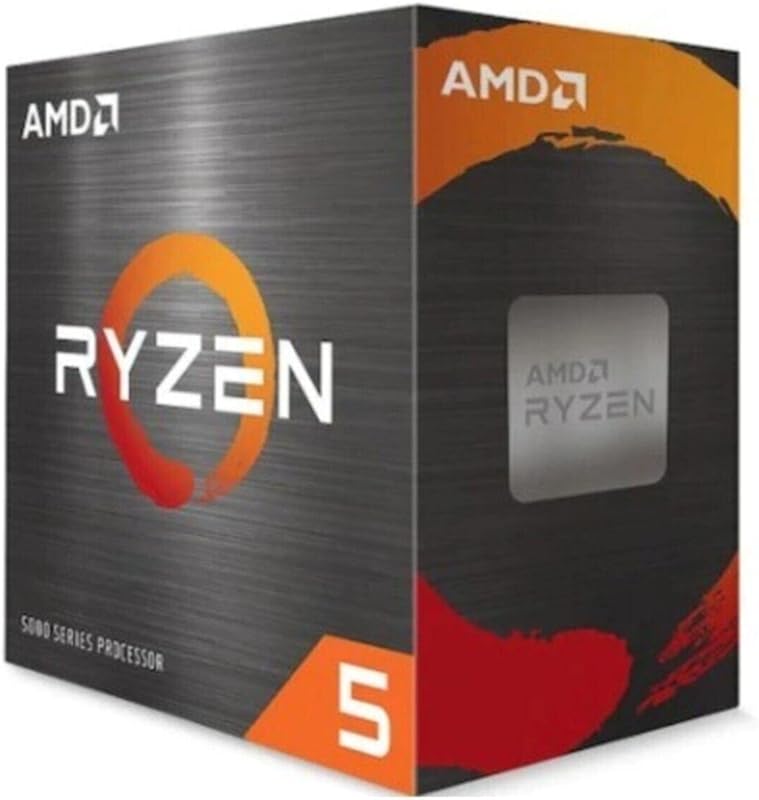
Pros
- Consistent 65-watt power efficiency
- Includes Wraith Stealth air cooler
- 12 threads handle modern titles
- Up to 4.6 GHz boost speeds
Cons
- Fewer threads for background streaming
- Lower maximum boost clock ceiling
View AMD Ryzen 5 5600X 6-core 12-thread on Amazon
8 Core Processor

Pros
- 16 concurrent processing threads
- Higher boost clocks up to 4.7 GHz
- Substantial multitasking and streaming headroom
- Up to 36 MB total cache
Cons
- Higher 105-watt power consumption on select models
- Retail cooler omitted from select models
View AMD Ryzen 7 3700X 8-Core 16-Thread on Amazon
Who Should Buy Each One
Choose the 6 Core Processor If
- You want a dedicated gaming computer focused on achieving 100+ FPS in mainstream games without background streaming
- You prefer an out-of-the-box build experience that includes a capable AMD Wraith Stealth cooler in the retail box
- You want to maintain a strict 65-watt power limit to keep chassis heat and cooling noise to a minimum
- You are pairing the CPU with a discrete graphics card for focused gaming on Socket AM4 motherboards
Choose the 8 Core Processor If
- You actively stream your gameplay to online audiences while running OBS, Discord, and multiple web browser tabs
- You demand maximum single-core boost clock speeds up to 4.7 GHz for competitive, high-refresh-rate gaming
- You run productivity tasks such as video rendering or scientific data processing alongside gaming
- You are comfortable selecting and installing an aftermarket high-performance cooler to manage up to 105 watts of thermal output
Final Verdict
For dedicated gamers who want smooth, high-frame-rate performance without excessive heat or build complexity, a 6 core processor is the most balanced choice. Modern games are engineered to extract optimal performance from six physical cores, meaning chips like the Ryzen 5 5600X deliver elite 100+ FPS gaming without drawing more than 65 watts. Because these six-core processors come complete with the AMD Wraith Stealth cooler and drop directly into Socket AM4 motherboards, they provide an efficient, complete package for pure gaming setups.
However, an 8 core processor is the definitive winner when your gaming routine involves background broadcasting or future-focused computing demands. With 16 concurrent threads and clock speeds reaching up to 4.7 GHz, models like the Ryzen 7 5800X prevent background applications from interfering with your rendering pipeline. If you broadcast to Twitch, run voice chat and hardware monitors across secondary screens, or want a system architecture aligned with eight-core console design, the investment in an eight-core CPU and a high-performance cooler provides the multithreaded headroom you need.
FAQ
Do you need 8 cores for gaming?
You do not need an 8 core processor strictly for running modern games. Most current titles run at their full potential on a 6 core processor with 12 threads, delivering 100+ FPS when paired with a capable discrete graphics card. Eight cores only become necessary if you run demanding background applications like streaming encoders, recording software, or heavy browser sessions while gaming.
Is an 8 core processor worth it over a 6 core model?
An 8 core processor is worth the extra consideration if you actively stream your gameplay, edit video, or keep multiple background applications open on secondary displays. If your PC is used exclusively for playing games without broadcasting or multitasking, the performance difference between six and eight cores in most games is minor, as both can achieve 100+ FPS output.
What is the difference in 6 core vs 8 core power consumption?
The six-core models listed operate at a steady 65-watt TDP, resulting in modest power draw and lower thermal output. The eight-core options range from 65 watts on the Ryzen 7 3700X up to 105 watts on the Ryzen 7 5800X. The higher-wattage eight-core processors require more power and generate higher temperatures, necessitating stronger case ventilation and higher-performance cooling.
Can a 6 core processor handle gaming and streaming at the same time?
A 6 core processor with 12 threads can handle basic game streaming, particularly if video encoding is handled by a discrete graphics card rather than software CPU encoding. However, if you rely on CPU-based software encoding while running Discord, overlays, and web browsers, a 6-core chip may experience thread saturation that leads to dropped frames in either the stream or the game.
Does an 8 core processor offer better future proofing for gaming?
An 8 core processor provides greater future-proofing because modern gaming consoles feature eight-core processor configurations. As game developers build newer titles around more parallel execution threads, having 16 concurrent threads and up to 36 MB of cache ensures your system can handle increasing multi-threaded demands in upcoming gaming releases.
How does Ryzen 5 vs Ryzen 7 gaming performance compare?
Ryzen 5 processors, such as the 5600X and 5500, offer 6 cores and 12 threads with boost clocks between 4.2 GHz and 4.6 GHz, delivering over 100 FPS in popular titles. Ryzen 7 processors, such as the 3700X and 5800X, offer 8 cores, 16 threads, and boost clocks up to 4.7 GHz. The Ryzen 7 delivers slightly higher maximum frame rates in CPU-bound games due to higher clock frequencies, but both series provide high-speed gaming capabilities.