The fundamental distinction between P cores (Performance cores) and E cores (Efficient cores) centers on microarchitectural specialization: P cores feature larger physical footprints and higher clock frequencies engineered to maximize single-thread execution speed, whereas E cores use compact, power-optimized microarchitectures designed to pack dense multi-threaded throughput and handle background system tasks.
Gamers chasing maximum frame rates and users running latency-sensitive foreground software should prioritize configurations with high-frequency P cores, while creators and multi-application power users handling background exports, encoding, and intensive parallel rendering will benefit significantly from an expanded array of E cores.



P Cores vs E Cores at a Glance
| Attribute | P Cores | E Cores |
|---|---|---|
| Primary Architectural Role | High-frequency single-threaded execution | Dense multi-threaded throughput and background tasks |
| Peak Boost Clock Rates | Up to 5.5 GHz to 5.7 GHz | Lower frequency profile sharing thermal envelope |
| Silicon Footprint Density | Larger physical die area per core | Compact physical footprint packed in multi-core clusters |
| Foreground vs Background Focus | Active foreground apps, physics, gaming pipelines | Background syncing, encoding, OS housekeeping |
| Thread Execution Model | Single thread (Core Ultra) or 2 threads (14th Gen) | Single thread per core across all generations |
| Base Power Envelope Allocation | Draws primary portion of 125W base power under load | Optimized for lower wattage efficiency across clusters |
| Typical Desktop Core Allotment | 6 to 8 physical cores per desktop package | 4, 12, or 16 physical cores per desktop package |
| Best For | High-frame-rate gaming and single-thread bursts | Background multitasking and thread-heavy productivity |
Architecture and Core Microarchitecture Design
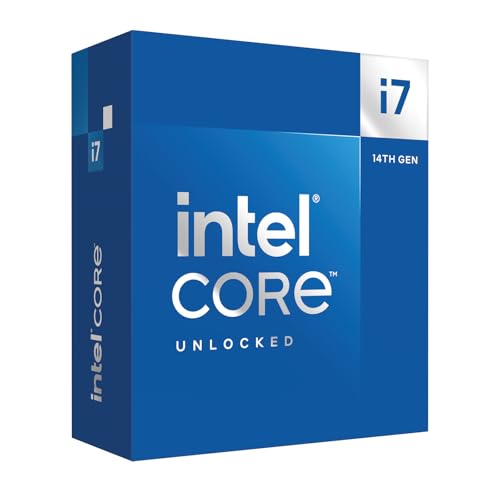
The structural philosophy of modern hybrid processors divides computing tasks between two entirely different physical core types built on the same silicon die. Performance cores are engineered with wide execution pipelines, deeper instruction windows, and sophisticated branch predictors. Because their physical footprint is large, desktop processors generally feature a set number of them-such as the 8 P-cores found inside the Intel Core Ultra 7 265K. These cores prioritize absolute speed per cycle, ensuring that immediate compute spikes and time-critical foreground jobs execute without latency.
Efficient cores take the opposite approach by shrinking the physical execution pipeline to maximize silicon space efficiency. By using a compact microarchitecture, chip designers can place an entire cluster of four E cores into the die area that would otherwise be occupied by a single P core. In the Intel Core Ultra 9 285K, this architectural efficiency allows Intel to pack 16 E-cores alongside 8 P-cores for a total of 24 physical cores. While E cores feature narrower execution pipelines and lack hyper-threading, their collective density delivers immense computational power for operations that easily scale across multiple threads.
Understanding this structural split is crucial when examining intel core ultra 7 265k vs amd ryzen 7 9800x3d or evaluating how hybrid computing divides die resources. The microarchitectures do not attempt to do the same job at different power levels; rather, they are physically specialized tools. P cores manage the deep instruction-level parallelism required by complex, unpredictable software, while E cores provide linear, power-efficient throughput for throughput-bound tasks.
Edge: P Cores. Their physically wider execution pipelines and advanced branch prediction deliver the immediate responsiveness and computational depth required for latency-critical processing.
Clock Speeds and Single-Thread Performance
Operating frequency directly dictates how many calculations a core completes each second, and the p cores vs e cores clock speed difference is the most noticeable specification on paper. Performance cores are specifically built to tolerate high voltages and push extreme boost frequencies using specialized hardware routines. In an intel p core single thread performance evaluation, P cores reach clock speeds that smaller cores cannot sustain without generating excessive heat, providing the foundation for rapid operating system response and snappy application behavior.
The top-tier Intel Core Ultra 9 285K pushes its P cores up to a maximum unlocked frequency of 5.7 GHz, while the 14th Gen Intel Core i7-14700K achieves up to 5.6 GHz using Turbo Boost Max Technology 3.0. In contrast, E cores operate within a conservative frequency bracket. Because single-thread applications-such as web browsers, code compilers during linear link phases, and older simulation programs-rely entirely on the clock rate and instructions per cycle of a single execution unit, relying on an E core for these tasks would result in sluggish performance compared to a 5.7 GHz P core.
When comparing intel core i7-13700k vs i7-14700k across frequency-dependent workloads, the high boost ceiling of the P cores determines the winner. While E cores assist in background execution, they cannot substitute for the sheer clock frequency generated by dedicated performance silicon. The architectural focus of the P core is to boost as high as thermally possible to finish single-threaded calculations in the shortest possible window.
Edge: P Cores. Substantial clock speed advantages reaching up to 5.7 GHz give P cores total dominance in single-threaded velocity and latency-sensitive instructions.
Multi-Threaded Throughput and Scalability
Multi-threaded workloads demand aggregate processing volume rather than raw single-core speed, shifting the balance toward core density. A thorough e cores review demonstrates that attempting to build a 24-core processor using exclusively P cores would result in an enormous die size and extreme power draw far beyond the standard 125-watt base power rating. By integrating compact E cores, hybrid architecture cpu performance scales dramatically without pushing thermal designs beyond manageable consumer cooling limits.
Consider the core distribution across modern lineups: the Intel Core Ultra 7 265K integrates 12 E-cores alongside its 8 P-cores, delivering 20 total cores and 20 threads. On the Intel Core i7-14700K, you receive 12 E-cores and 8 P-cores, which yield 28 concurrent threads due to hyper-threading support on that generation’s P cores. Even a mainstream processor like the Intel Core i5-14400F includes 4 E-cores alongside 6 P-cores to achieve 16 threads, vastly expanding compute capacity over legacy single-architecture layouts.
Analyzing benchmarks such as intel core i5-14400f vs i5-13500 illustrates how adding E cores multiplies rendering and video encoding capacity. When software packages like 3D ray tracers, video compressors, and file archivers distribute chunks of data across every available pipeline, an array of 12 or 16 E cores matches or surpasses the aggregate throughput of multiple full-sized P cores while occupying a fraction of the silicon area.
Edge: E Cores. Dense clustering allows desktop processors to pack up to 16 efficiency cores on a single package, driving massive parallel throughput in multi-threaded workflows.
Gaming Performance and Frame Rate Consistency
Choosing p cores or e cores for gaming is a common consideration when configuring a high-performance desktop rig. Modern video game engines rely heavily on a primary execution thread that manages frame pacing, game logic, physics calculations, and graphical draw calls dispatched to the GPU. Because these calculations require low latency and high frequency, games demand the maximum possible single-thread capability, making P cores the primary engine behind high frame rates.
The 5.6 GHz boost potential of the Intel Core i7-14700K and the 5.5 GHz to 5.7 GHz ceilings found on the Core Ultra series ensure that the main render loop never bottlenecks high-refresh-rate monitors. However, E cores still contribute to gaming smoothness. In an unmanaged system without E cores, background applications like Discord, antivirus scanners, game client updates, and streaming encoders compete directly with the game for execution cycles on primary cores, causing frame drops and 1% low stutter.
Examining differences in gaming configurations, such as comparing the intel core i7-13700k vs i7-14700kf, shows that gaming stability relies on isolating the game to P cores while offloading operating system overhead. When deciding whether to prioritize p cores or e cores for productivity and gaming, the direct rendering and frame pacing work falls strictly on the P cores, while E cores provide background stability.
Edge: P Cores. Direct in-game frame rates and frame-time pacing are dictated by the raw clock speeds and architectural depth of high-frequency P cores.
Multitasking, Background Workloads, and System Efficiency
Daily computing involves simultaneous background processes that can clutter system resources if not properly managed. This dynamic answers the common buyer question: are e cores worth it? Modern operating systems like Windows 11 feature tight integration with processor hardware schedulers to prioritize and distribute workloads dynamically. High-priority foreground tasks are assigned directly to P cores, while intel e core background multitasking handles system telemetry, cloud synchronization, music playback, and browser tabs.
Processors like the Intel Core Ultra 7 265K and Intel Core Ultra 9 285K are explicitly built around this performance hybrid architecture, integrating two core microarchitectures to improve both performance and efficiency so the system can run cooler, quieter, and quicker within a 125-watt base power rating. When you render a video file in the background while browsing the web or working on a document, the system delegates the encoding threads to the E-core cluster, leaving the P cores completely uninhibited for real-time input responsiveness.
In mid-range systems, comparisons like the intel core i5-12400f vs i5-13400f highlight how adding a small 4-core E-core cluster changes everyday multitasking. Rather than suffering micro-stutters when windows update or virus scans run during active work, E cores absorb low-priority cycles invisibly, keeping overall system thermals and fan noise within reasonable levels.
Edge: E Cores. Their compact, energy-conscious design allows computers to absorb background operating system noise and secondary tasks without degrading primary application responsiveness.
Platform Compatibility and Thermal Requirements
Because P cores and E cores reside together on the same physical chip package, their thermal, socket, and memory requirements are shared across the processor. The Intel Core Ultra 7 265K and Intel Core Ultra 9 285K feature 36MB and 40MB of cache respectively, utilize the LGA 1851 socket, require Intel 800 series chipset-based motherboards, and run exclusively on DDR5 memory with PCIe 5.0 and 4.0 support. Neither processor includes a thermal solution in the box, requiring an aftermarket cooler capable of handling a 125-watt base power rating.
In contrast, 14th Gen hybrid processors provide broader platform backwards compatibility. The Intel Core i7-14700K and Intel Core i5-14400F are compatible with Intel 600-series (with a potential BIOS update) and 700-series chipset-based motherboards. Furthermore, they support both DDR4 and DDR5 memory configurations. Thermal demands also vary significantly across models; while the unlocked 125W i7-14700K ships without a cooler, the 65W processor base power Core i5-14400F includes an Intel Laminar RM1 thermal solution in the box.
Evaluating e cores vs p cores within these platforms demonstrates that hardware requirements are determined by total core count and target clock frequency rather than core type alone. Both core architectures benefit from high-bandwidth DDR5 memory to feed their execution units, and both dump heat into the same integrated heat spreader during combined heavy workloads.
Edge: Tie. Both core architectures are permanently integrated onto the same silicon die, sharing the exact same socket, chipset, memory standards, and thermal constraints.
Pros and Cons
P Cores

Pros
- Clock speeds reaching up to 5.7 GHz
- Superior single-thread gaming responsiveness
- Turbo Boost Max Technology 3.0 support
- Large microarchitecture execution pipelines
Cons
- Higher power consumption under full load
- Lower physical core density per die
View Intel Core Ultra 7 Desktop Processor on Amazon
E Cores

Pros
- High multi-core density up to 16 cores
- Excellent background multitasking efficiency
- Compact physical footprint per core cluster
- Maintains 125W base power efficiency
Cons
- Lower peak clock frequencies
- Lacks simultaneous multi-threading support
View Intel® Core™ i7-14700K Gaming Desktop on Amazon
Who Should Buy Each One
Choose P Cores If
- You prioritize maximum frame rates in competitive eSports and AAA games that depend on high clock speeds up to 5.7 GHz.
- Your everyday software suite consists of single-threaded CAD tools, emulation, audio workstations, or legacy business software.
- You demand instant application loading and snappy user-interface responsiveness without thread scheduling delays.
- You want peak single-thread burst capability backed by Intel Turbo Boost Max Technology 3.0.
Choose E Cores If
- You run heavy parallel workloads including 3D rendering, video compression, and batch photo processing that scale across 20 or 24 cores.
- You stream gameplay to live platforms while running chat clients, recording software, and browser tabs concurrently.
- You want a system that handles background OS maintenance and file synchronization without stuttering your active foreground programs.
- You need maximum multi-threaded processing density while remaining within a manageable 125-watt processor base power envelope.
Final Verdict
For mainstream desktop users, office workers, and dedicated gamers, P cores remain the fundamental baseline of daily system performance. As confirmed in any p cores review, individual clock frequency and single-thread throughput dictate how snappy the operating system feels, how quickly complex programs launch, and how smoothly game engines maintain high frame rates. Without strong P cores boosting beyond 5.5 GHz, real-time computing responsiveness suffers across everyday tasks.
However, E cores are what elevate modern hybrid processors into true productivity workhorses. By offloading system housekeeping and scaling multi-threaded computational density up to 20 or 24 total cores, E cores prevent performance degradation during heavy multitasking. If your workflow involves heavy media creation, multi-app workstation use, or game streaming, choosing a processor with a generous allocation of E cores alongside robust P cores provides the ideal computational balance.
FAQ
What is the main difference between P cores and E cores?
P cores (Performance cores) are physically larger units clocked at high frequencies (up to 5.7 GHz) designed to maximize single-thread speed in games and active programs. E cores (Efficient cores) are physically smaller, power-tuned units designed to pack dense multi-threaded capacity and handle background system tasks.
Can games run exclusively on E cores?
While an operating system can technically assign game threads to E cores, game engines are not optimized to run primarily on low-frequency efficiency cores. Doing so would significantly decrease frame rates and introduce stutter compared to running on high-frequency P cores.
Do E cores support Intel Hyper-Threading technology?
No, E cores execute exactly one thread per physical core across all generations. Hyper-threading is restricted to P cores on select generations, such as the Intel Core i7-14700K, whereas newer Core Ultra processors feature single-thread execution across both P cores and E cores.
How does Windows know whether to use P cores or E cores?
Modern operating systems like Windows 11 communicate directly with hardware-level scheduling technology built into hybrid processors. This hardware-software coordination automatically prioritizes foreground interactive tasks on P cores while routing background services to E cores.
Are E cores worth it for everyday productivity?
Yes, E cores are well worth it for productivity because they absorb background OS tasks, cloud file backups, antivirus scans, and file downloads. This keeps the high-frequency P cores free from interruptions, maintaining smooth and responsive foreground computing.
Why do modern Intel processors not feature only P cores?
Building a chip with 20 or 24 full-sized P cores would create an excessively large silicon die that would draw extreme amounts of electrical power and generate unmanageable heat. Combining a cluster of P cores with compact E cores delivers high multi-threaded scaling within a standard 125-watt base power envelope.
Do P cores and E cores share the same cache memory?
Yes, both P cores and E cores share access to the processor’s centralized pool of high-speed cache memory, such as the 36MB cache on the Core Ultra 7 265K or the 40MB cache on the Core Ultra 9 285K, ensuring rapid inter-core data sharing.