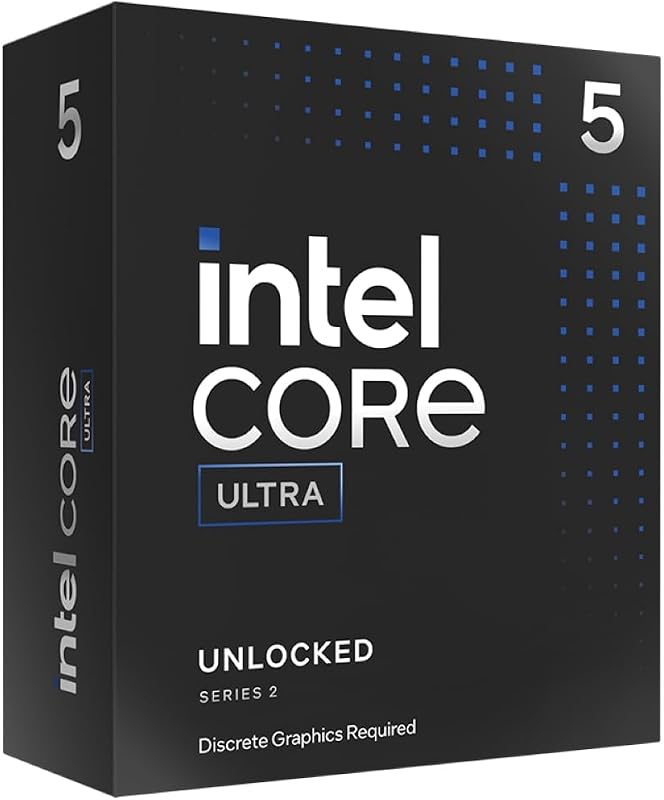
When choosing between the Intel Core i5-12400F and the Intel Core i5-13600K, the deciding factor for most builders is whether they need the massive multithreaded headroom of Intel’s 14-core hybrid architecture or the streamlined simplicity of a dedicated 6-core gaming processor. The Core i5-13600K delivers 14 cores, 20 threads, integrated graphics, and a maximum clock speed of 5.1 GHz, while the Core i5-12400F focuses strictly on six performance cores operating at a modest 65W base power draw with a bundled thermal cooler.
Choose the Core i5-12400F if you are constructing an efficient, dedicated gaming machine with a discrete graphics card and want capable performance without needing an expensive cooler. Choose the Core i5-13600K if your daily workload demands heavy multitasking, content creation throughput, unlocked frequencies, or integrated display output.


Intel Core i5-12400F vs Intel Core i5-13600K at a Glance
| Feature | Intel Core i5-12400F | Intel Core i5-13600K |
|---|---|---|
| Processor Generation | 12th Gen Intel Core | 13th Gen Intel Core |
| Total Cores | 6 (6 P-cores, 0 E-cores) | 14 (6 P-cores, 8 E-cores) |
| Total Threads | 12 | 20 |
| Maximum Turbo Frequency | Up to 4.4 GHz | Up to 5.1 GHz |
| Secondary Cache Size | 18 MB | 24 MB |
| Processor Base Power | 65W | 125W (181W listed maximum) |
| Integrated Processor Graphics | None (Discrete GPU required) | Intel UHD Graphics 770 |
| Included Thermal Solution | Intel Laminar RM1 included | No thermal solution included |
| Motherboard Chipset Compatibility | Intel 600 Series | Intel 600 Series & 700 Series |
| Best For | Streamlined 65W gaming builds | Heavy multithreading and high-tier rigs |
Core Architecture and Multithreaded Processing
The structural layout of execution cores represents the most substantial engineering shift between these two processors. The Core i5-12400F is built on a traditional homogeneous design, housing six Performance cores (P-cores) that handle 12 concurrent processing threads. For standard computing, everyday gaming, and baseline office tasks, this symmetric layout provides consistent latency and straightforward execution across all cores without requiring complex OS thread scheduling. When examining an intel core i5-12400f vs i5-13400f setup or comparing standard 6-core options, the i5-12400F remains a pure expression of dedicated gaming muscle.
In contrast, the Core i5-13600K deploys Intel’s Performance Hybrid Architecture, incorporating six Performance cores alongside eight Efficient cores (E-cores) for a combined total of 14 cores and 20 threads. This hybrid structure is designed to separate high-priority foreground duties from background workloads. The P-cores take charge of high-intensity tasks like 3D render viewports and active game loops, while the E-cores absorb background tasks such as video encoding, discord calls, browser tabs, and archiving utilities. Readers studying an intel core i5-13400f vs i5-13600k trajectory will note that the additional E-cores on the 13600K yield significant multithreaded capacity.
This stark difference in the i5-12400F vs i5-13600K core count dictates performance under multi-application stress. In heavily threaded productivity suites, video compression tools, and complex code compilation, the 20 threads of the 13600K outmuscle the 12 threads of the 12400F by a substantial margin. The 12400F handles standard multitasking without hesitation, but it lacks the parallel computing throughput offered by the eight supplemental E-cores on the 13600K.
Edge: Intel Core i5-13600K due to its 14-core hybrid design that offers eight additional cores and eight additional threads for demanding multithreaded production.
Clock Speeds and Gaming Performance
Clock frequency and cache capacity directly govern frame rates in modern titles. The Core i5-12400F operates with a base frequency listed at 2.0 GHz to 2.5 GHz and accelerates up to a maximum turbo frequency of 4.4 GHz. It pairs these operational frequencies with an 18 MB cache pool. For the vast majority of modern PC games running at 1080p or 1440p resolutions with mainstream graphics cards, 4.4 GHz provides smooth frame rates and rapid instruction processing without introducing severe system bottlenecks.
The Core i5-13600K raises these ceilings significantly, boasting an unlocked architecture that reaches up to 5.1 GHz right out of the box. Alongside its higher peak frequency, the 13600K expands its cache size to 24 MB and incorporates Turbo Boost Max Technology 3.0 to push primary cores to their highest stable states. When evaluating the intel core i5-12400f vs amd ryzen 5 7600 or assessing i5-12400F vs i5-13600K gaming performance, the 700 MHz clock speed advantage and expanded cache give the 13600K higher maximum frame rates and stronger minimum frame stability in CPU-bound competitive games.
Choosing between the Intel Core i5-12400F or i5-13600K for gaming ultimately hinges on your target display refresh rate and companion graphics hardware. The 12400F delivers consistent, playable performance across all modern genres when paired with balanced discrete GPUs. However, for high-refresh-rate esports configurations running at 240Hz or higher, the superior IPC and 5.1 GHz clock ceiling of the unlocked 13600K make it the more capable gaming engine.
Edge: Intel Core i5-13600K because of its unlocked 5.1 GHz boost ceiling and larger 24 MB cache.
Power Consumption and Cooling Demands
Power specifications reveal how each processor impacts your system’s thermal and electrical requirements. The Core i5-12400F features a conservative 65W processor base power. Because it draws modest wattage under sustained workloads, it produces relatively little heat. Conveniently, Intel bundles its Laminar RM1 thermal solution right in the box, allowing builders to assemble a fully functional desktop without needing to acquire an aftermarket air or liquid cooler.
On the other hand, the Core i5-13600K operates in a much higher thermal bracket. Its listing outlines a 125W processor base power alongside a specification rating of 181 watts. Pushing 14 cores up to 5.1 GHz generates considerable thermal output. Furthermore, the 13600K ships with no thermal solution included in the box. Anyone selecting the 13600K must supply their own high-performance dual-tower air cooler or an all-in-one liquid cooling system, adding hardware considerations to the overall build.
In analyzing i5-12400F vs i5-13600K power consumption, the Core i5-12400F represents an approachable, low-maintenance component ideal for compact enclosures or modest power supplies. The Core i5-13600K demands a robust power delivery configuration and aggressive chassis ventilation to sustain its turbo frequencies under full computational load.
Edge: Intel Core i5-12400F due to its efficient 65W profile and the inclusion of the Intel Laminar RM1 cooler in the package.
Integrated Graphics and Display Output
The graphics capabilities of these two processors represent a fundamental functional divide. The “F” suffix in the Core i5-12400F denotes that it ships without processor graphics. For video output, the processor relies entirely on a dedicated PCIe graphics card. If you attempt to boot a 12400F system without a discrete GPU installed, the motherboard display ports will remain inactive, eliminating the option to run a headless setup or troubleshoot video problems using onboard display pathways.
The Core i5-13600K includes integrated Intel UHD Graphics 770. This onboard graphics engine supports high-resolution display outputs directly through compatible motherboard I/O panels without requiring a secondary graphics card. For office workstation setups, initial system assembly, or troubleshooting a malfunctioning discrete graphics card, having an active integrated graphics chip can be invaluable. Even when comparing platforms like the intel core i5-14400f vs i5-13600k, the presence of the UHD 770 graphics unit remains a major practical advantage.
Furthermore, Intel UHD Graphics 770 features integrated media engines that support dedicated hardware video decoding and Quick Sync capabilities. Video editors and streamers benefit from having onboard silicon handle background encoding tasks while the discrete GPU focuses exclusively on rendering 3D assets or complex effects.
Edge: Intel Core i5-13600K because it includes integrated Intel UHD Graphics 770, whereas the i5-12400F requires a discrete graphics card.
Platform Compatibility and Memory Architecture
Both chips share Intel’s LGA 1700 desktop socket, ensuring a shared foundation across modern motherboard architectures. Both the 12400F and 13600K offer native compatibility with DDR4 and DDR5 system memory alongside PCIe Gen 5.0 and 4.0 expansion lanes. This allows builders to choose between cost-effective DDR4 memory configurations or faster DDR5 data rates on either processor line.
However, motherboard chipset and feature support display subtle distinctions. The Core i5-12400F was launched alongside Intel 600 series chipset motherboards. The Core i5-13600K expands official support to both Intel 700 series and Intel 600 series chipset motherboards, though pairing a 13th Gen chip with an older 600 series board may require a preliminary BIOS update. The 13600K also provides explicit support for Intel Optane Memory and incorporates an unlocked multiplier for manual tuning on Z-series chipsets.
For builders assessing i5-12400F vs 13600K specs, both processors preserve long-term utility across standard PCIe 5.0 storage and graphics interfaces. When weighing options like the intel core i5-12400f vs i5-13500, the shared LGA 1700 pinout gives both chips access to a broad ecosystem of hardware, but the unlocked 13600K extracts greater utility from enthusiast-class motherboards.
Edge: Intel Core i5-13600K due to native 700-series motherboard compatibility, unlocked tuning support, and Intel Optane Memory functionality.
Pros and Cons
Intel Core i5-12400F
Pros
- Laminar RM1 cooler included in box
- Low 65W base power consumption
- Supports PCIe 5.0 and DDR5 memory
Cons
- No integrated graphics requires dedicated GPU
- Lower 4.4 GHz top turbo frequency
- Fewer cores and threads
View Intel Core i5-12400F on Amazon
Intel Core i5-13600K
Pros
- 14 cores and 20 threads for heavy multitasking
- Higher 5.1 GHz unlocked boost clock
- Integrated Intel UHD Graphics 770
- Larger 24 MB cache
Cons
- No cooler included in box
- Higher 181W maximum power draw
View Intel Core i5-13600K on Amazon
Who Should Buy Each One
Choose the Intel Core i5-12400F If

- You are building a dedicated gaming desktop paired with a discrete graphics card and want an efficient 65W foundation
- You prefer a complete boxed package that includes the Intel Laminar RM1 cooler to avoid purchasing third-party thermal gear
- Your computational tasks focus primarily on modern gaming and typical office software rather than heavy multithreaded rendering
- You intend to install your processor directly onto an Intel 600 series motherboard without worrying about BIOS compatibility updates
Choose the Intel Core i5-13600K If

- You execute demanding multithreaded workloads like video rendering, code compiling, or live streaming that leverage 14 cores and 20 threads
- You want peak gaming frame rates driven by high 5.1 GHz boost frequencies and an expanded 24 MB cache
- You require integrated Intel UHD Graphics 770 for display output, video transcoding tasks, or system troubleshooting
- You own or plan to purchase a robust aftermarket liquid or dual-tower cooler capable of managing up to 181 watts
Final Verdict
The Intel Core i5-13600K is the superior processor across nearly all computational criteria. By uniting six high-frequency Performance cores with eight Efficient cores, it reaches 5.1 GHz and handles 20 concurrent threads. Its larger 24 MB cache, integrated Intel UHD Graphics 770, unlocked multiplier, and high-frequency throughput make it an exceptional engine for heavy multitasking, production workloads, and high-refresh-rate gaming setups.
However, the Intel Core i5-12400F remains a compelling option for builders who want an efficient, low-maintenance gaming processor. Drawing only 65W at base power and shipping with an Intel Laminar RM1 cooler in the box, it delivers solid gaming performance across modern titles when paired with a discrete graphics card. If your workloads do not require integrated graphics or the parallel horsepower of 14 cores, the i5-12400F provides a capable, balanced foundation without demanding heavy-duty thermal hardware.
FAQ
Can the Intel Core i5-12400F output display without a discrete graphics card?
No, the Intel Core i5-12400F does not feature integrated graphics. The product specifications clearly note that discrete graphics are required. You must install a dedicated graphics card in your computer to output a display signal to your monitor.
Does the Intel Core i5-13600K include a CPU cooler in the box?
No, the Intel Core i5-13600K does not include a thermal solution in the packaging. Because the processor features a 125W base power and is rated up to 181 watts, you must supply an aftermarket air cooler or liquid cooling system to manage its operating temperatures.
Do both the i5-12400F and i5-13600K fit the same motherboard socket?
Yes, both processors use the Intel LGA 1700 socket. They are compatible with Intel 600 series motherboards, though 13th Gen processors like the i5-13600K may require a BIOS update when installed on certain 600 series boards. The 13600K is also officially compatible with Intel 700 series chipsets.
Can I use DDR4 memory with the Intel Core i5-13600K?
Yes, the Intel Core i5-13600K supports both DDR5 and DDR4 memory standards. Your memory type is determined by the specific LGA 1700 motherboard you install, allowing you to select either memory generation based on your preference.
Does the Intel Core i5-12400F feature Efficient cores?
No, the Intel Core i5-12400F features six Performance cores and zero Efficient cores (6P + 0E). It operates purely on six dedicated physical cores with 12 execution threads, unlike the hybrid design found in the 13600K.
Is the Intel Core i5-13600K unlocked for overclocking?
Yes, the Intel Core i5-13600K is an unlocked desktop processor reaching up to 5.1 GHz. When paired with a compatible motherboard chipset that supports overclocking, its frequency multipliers can be adjusted.
What cooler comes included with the Intel Core i5-12400F?
The Intel Core i5-12400F includes the Intel Laminar RM1 thermal solution inside the box, designed to handle the processor’s standard 65W base power output without requiring an aftermarket purchase.