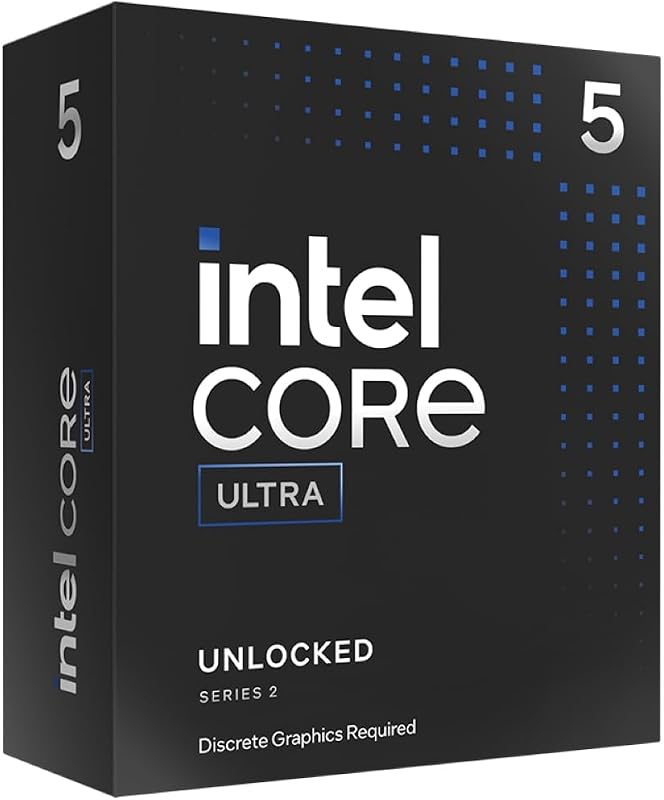
The primary distinction deciding the choice between these two 14th-generation desktop processors comes down to core layout and thermal overhead: the unlocked processor packs 14 physical cores reaching frequencies up to 5.3 GHz alongside a 125W base power profile, while the mainstream option provides 10 physical cores reaching up to 4.7 GHz within a 65W processor base power limit.
Builders putting together an energy-efficient desktop with bundled cooling should choose the Intel Core i5-14400F, while heavy multitaskers and workstation users needing maximum multi-threaded performance should select the Intel Core i5-14600K.

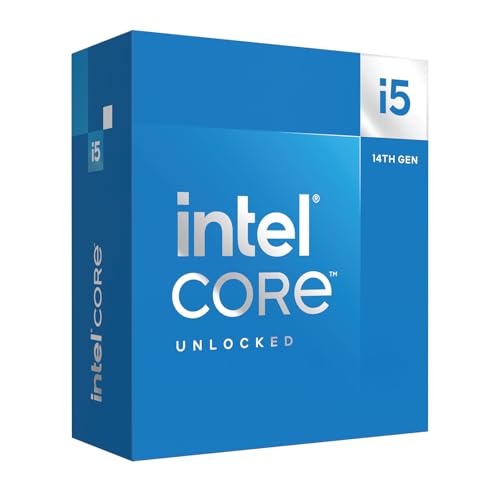
Intel Core i5-14400F vs Intel Core i5-14600K at a Glance
| Feature | Intel Core i5-14400F | Intel Core i5-14600K |
|---|---|---|
| Total Cores | 10 Cores (6 P-cores + 4 E-cores) | 14 Cores (6 P-cores + 8 E-cores) |
| Concurrent Threads | 16 Threads | Not listed |
| Maximum Boost Clock | Up to 4.7 GHz | Up to 5.3 GHz |
| Base Operating Clock | Not listed | 3.5 GHz |
| Processor Cache | 20 MB Secondary Cache | Not listed |
| Power Specifications | 65W Base / 148W Maximum | 125W Core CPU Power |
| Integrated Graphics | Discrete graphics required | Not listed |
| Thermal Solution Included | Intel Laminar RM1 included | Not listed |
| Socket Compatibility | LGA 1700 | LGA 1700 |
| Best For | Low-draw gaming and daily computing | Heavy multi-threaded productivity and high-frame-rate gaming |
Core Count and Multi-Threaded Architecture
Modern desktop tasks rely heavily on hybrid core design to divide background operations from high-priority foreground applications. The physical structure of a hybrid CPU pairs standard Performance cores (P-cores) with smaller Efficient cores (E-cores). When comparing Core i5-14400F vs Core i5-14600K architecture, the primary mechanical difference sits squarely in the secondary cluster. The i5-14400F features 10 cores organized as 6 P-cores and 4 E-cores, supporting 16 concurrent threads. This layout allows the operating system to send demanding gaming logic to the performance modules while delegating background discord chats, system services, and client updates to the efficiency modules.
The i5-14600K steps ahead by offering 14 physical cores, pairing 6 P-cores with 8 E-cores. By doubling the efficient core pool from 4 to 8, the unlocked chip expands the execution resources available for parallel workloads. Anyone asking whether to get the intel core i5-14400f vs i5-13600k class of multi-threading or step directly to the 14th-generation unlocked tiers will find that multi-core rendering, code compilation, and video encoding scales noticeably with extra worker cores. When evaluating the i5-14600K or i5-14400F for video editing suites that chew through timeline renders, those 4 extra E-cores keep playback responsive while exports process in the background.
In routine multitasking or pure web browsing, the 10-core array of the i5-14400F rarely runs out of headroom. However, dense multi-threaded loads will saturate 16 threads much faster than the expanded configuration on the 14-core alternative. The additional E-core density gives the larger chip an undeniable structural upper hand when heavy parallel tasks run concurrently.
Edge: Intel Core i5-14600K due to its 14 physical cores and higher thread density providing superior computational capacity.
Clock Speed and Frequency Scaling
Clock speeds dictate how rapidly individual processor cores complete instruction cycles, making peak frequency one of the most critical factors for bursty applications and game frame rates. An i5-14400F vs 14600K clock speed comparison shows a significant divergence in ceiling velocity. The i5-14400F reaches a maximum clock speed of up to 4.7 GHz, delivering steady frame pacing for high-refresh gaming displays without pushing core frequencies toward extreme voltage levels.
The i5-14600K operates at a listed 3.5 GHz base frequency and scales up to 5.3 GHz under turbo conditions, establishing a substantial 600 MHz advantage at peak operation. When evaluating the intel core i5-14600k vs amd ryzen 5 7600x or competing mid-tier chips, sustained single-core frequency remains a defining benchmark metric for physics calculations, simulation titles, and high-frequency trading applications. In an i5-14400F vs i5-14600K benchmark matchup focused on single-core throughput, that extra clock velocity translates directly into higher minimum frame rates in CPU-bound competitive games.
The i5-14600K listing also confirms that it is an unlocked processor, enabling manual tuning, frequency stepping adjustments, and custom profile pairing on compatible motherboards. The i5-14400F listing does note unlocked up to 4.7 GHz within its description headers, but it operates within a locked performance curve that prevents traditional upward multiplier overclocking. For buyers wondering if the i5-14400F or i5-14600K for gaming is the better single-core choice, the 5.3 GHz ceiling of the K-series component holds the clear performance lead.
Edge: Intel Core i5-14600K because its 5.3 GHz maximum boost frequency provides a noticeable 600 MHz single-core advantage.
Power Consumption and Thermal Requirements
Every watt consumed by a modern desktop CPU translates directly into heat that must be exhausted from the chassis. A detailed review of i5-14400F vs 14600K power consumption reveals very different chassis and cooling demands. The i5-14400F is engineered with a 65W processor base power specification and lists a maximum wattage ceiling of 148 watts. Crucially, the listing notes that the i5-14400F includes the Intel Laminar RM1 thermal solution inside the box, meaning builders do not need to source an external cooler to get their system operational.
The i5-14600K lists a core CPU power rating of 125W at base operation, nearly double the baseline draw of its locked sibling. Under full compute loads across all 14 cores, high-wattage power spikes generate substantial heat that requires robust cooling hardware. The listing for the i5-14600K does not specify an included heatsink or fan, requiring system builders to factor in a separate dual-tower air cooler or closed-loop liquid cooling system. Comparing historical thermal trends against older generations, such as an intel core i5-13400f vs i5-14400f evaluation, shows how well the 65W class maintains system silence inside smaller cases.
For compact enclosures, standard mid-tower setups, or builds where low power supply draw is essential, the 65W/148W operating profile of the i5-14400F makes it far simpler to deploy. The i5-14600K demands serious thermal management and heavier power delivery components, making system assembly considerably more demanding.
Edge: Intel Core i5-14400F thanks to its efficient 65W base power profile and bundled Intel Laminar RM1 cooler.
Integrated Graphics and Display Output
Display flexibility and system troubleshooting often hinge on whether a desktop processor includes an integrated graphics processing unit. The product specifications for the i5-14400F specifically highlight that it comes “without processor graphics” and clearly notes that “discrete graphics required.” The “F” designation signifies that the internal display pipeline is physically fused off or deactivated, meaning the computer will not output any visual signal to a monitor without a dedicated add-in graphics card installed in a motherboard expansion slot.
For standard desktop troubleshooting, driver reinstalls, or interim operation while waiting for a graphics card delivery, having integrated display silicon can prevent workflow interruptions. While the provided listing data for the i5-14600K does not explicitly detail the onboard graphics configuration or model number, it lacks the discrete-graphics-only warning that defines the 14400F listing. Any Intel Core i5-14400F review must account for the mandatory installation of a dedicated graphics accelerator during the initial boot sequence.
For dedicated gaming computers where an external discrete GPU is installed from day one, the missing onboard graphics on the i5-14400F creates no operational bottleneck. However, the complete lack of standalone display capability restricts system flexibility in office environments or diagnostic scenarios where a discrete graphics card is unavailable.
Edge: Tie because the i5-14400F confirms discrete graphics are mandatory, while the i5-14600K listing data is silent on display silicon specifications.
Platform Compatibility and Memory Support
Long-term upgrade paths and memory support determine how versatile a CPU remains across different motherboard generations. Both the i5-14400F and the i5-14600K utilize the LGA 1700 socket, ensuring physical compatibility across modern Intel desktop platforms. Both listings confirm explicit support for Intel 700-series and Intel 600-series chipset-based motherboards, with the i5-14400F listing properly noting that 600-series boards may require a potential BIOS update before the 14th-generation chip will initialize.
Furthermore, both processors maintain dual-standard memory flexibility, with support for both legacy DDR4 memory kits and modern DDR5 modules. This dual compatibility allows builders looking at an intel core i5-13600kf vs i5-14600k upgrade or an intel core i5-12400f vs i5-14400f transition to retain existing DDR4 RAM sticks if desired, or adopt higher-bandwidth DDR5 kits. Both listings also verify support for both PCIe 5.0 and PCIe 4.0 expansion lanes, ensuring high-speed data paths for modern solid-state storage and graphics cards.
Where the platforms diverge in practice is motherboard power delivery pairing. The 65W base power draw of the i5-14400F runs smoothly on entry-level motherboards with standard voltage regulator modules. Conversely, the 125W power demand and unlocked nature of the i5-14600K benefit substantially from higher-tier motherboards equipped with heavy VRM heatsinks and robust power phases to sustain maximum turbo frequencies.
Edge: Tie as both processors share the LGA 1700 platform, PCIe 5.0/4.0 standards, DDR4/DDR5 support, and 600/700-series chipset compatibility.
Pros and Cons
Intel Core i5-14400F

Pros
- Included Intel Laminar RM1 cooler
- Efficient 65W processor base power
- 10 cores and 16 concurrent threads
- DDR4 and DDR5 memory flexibility
Cons
- Discrete graphics card required
- Lower 4.7 GHz boost clock limit
View Intel Core i5-14400F on Amazon
Intel Core i5-14600K

Pros
- 14 physical cores for heavy workloads
- High boost clock up to 5.3 GHz
- Unlocked for performance tuning
- DDR5 and DDR4 memory support
Cons
- Higher 125W base power requirement
- No bundled thermal solution listed
View Intel Core i5-14600K on Amazon
Who Should Buy Each One
Choose the Intel Core i5-14400F If
- You are assembling a dedicated gaming PC equipped with an add-in discrete graphics card.
- You prefer a complete boxed package that includes the Intel Laminar RM1 thermal solution.
- You want to minimize chassis heat and system power consumption with a 65W processor base power limit.
- You run standard everyday productivity tasks, gaming, and streaming that fit comfortably within a 10-core, 16-thread ceiling.
Choose the Intel Core i5-14600K If
- You regularly execute heavily threaded workloads like video rendering, compiling, or complex 3D asset generation that benefit from 14 physical cores.
- You want high boost clock speeds reaching up to 5.3 GHz to drive high-refresh competitive gaming displays.
- You already possess an enthusiast-grade aftermarket air cooler or liquid cooling setup capable of handling a 125W base processor draw.
- You want an unlocked processor to fine-tune frequencies on an enthusiast-grade motherboard.
Final Verdict
For most desktop gamers and general home users, the i5-14400F represents the more practical, well-balanced selection. With 10 physical cores, 16 processing threads, boost speeds up to 4.7 GHz, and an efficient 65W base power profile, it handles modern gaming workloads without requiring high-end chassis ventilation or supplementary cooler investments. The inclusion of the Intel Laminar RM1 cooler in the box and dual support for DDR4 and DDR5 memory makes deploying a dependable LGA 1700 machine remarkably straightforward.
However, when asking is i5-14600K worth it for demanding professional workflows, the higher-tier silicon justifies itself completely. The leap to 14 cores, 8 efficiency cores, and a swift 5.3 GHz maximum boost clock gives the i5-14600K a distinct computational advantage in heavy multi-threaded productivity and demanding simulation gaming. If your system priorities focus on video editing, 3D rendering, or pushing maximum possible frame rates, the i5-14600K is the definitive performance choice-provided you pair it with adequate aftermarket cooling.
FAQ
Does the Intel Core i5-14400F include a CPU cooler in the box?
Yes, the listing confirms that the Intel Laminar RM1 thermal solution is included in the box with the i5-14400F processor.
Does the Intel Core i5-14600K come with a bundled thermal solution?
The listing does not specify an included cooler for the i5-14600K, meaning builders should plan to provide their own compatible LGA 1700 cooling solution.
Can the Intel Core i5-14400F run a monitor without a graphics card?
No, the i5-14400F listing states that it comes without processor graphics and that discrete graphics are strictly required to output video to a display.
What socket do both of these 14th-generation processors use?
Both processors utilize the LGA 1700 socket and are compatible with Intel 600-series (with a potential BIOS update) and 700-series chipset motherboards.
Can I use DDR4 memory with the Intel Core i5-14600K?
Yes, the listing states that the i5-14600K supports both DDR5 and DDR4 memory technologies, depending on the specific motherboard selected.
What is the maximum clock speed difference between these two chips?
The i5-14400F reaches a maximum frequency of up to 4.7 GHz, whereas the i5-14600K reaches up to 5.3 GHz, giving the i5-14600K a 600 MHz boost clock advantage.
How do the power requirements differ between these processors?
The i5-14400F has a 65W processor base power and 148W maximum wattage, while the i5-14600K lists a core CPU power rating of 125W.