The primary difference between these two AM4 desktop processors comes down to core resources and boost frequencies: the AMD Ryzen 7 5800XT delivers an 8-core, 16-thread configuration with clock speeds reaching up to 4.8 GHz Max Boost, while the AMD Ryzen 5 5600 provides a 6-core, 12-thread setup operating at up to 4.4 GHz within a significantly lower thermal envelope.
Mainstream builders focused purely on efficient standard gaming and general computing should choose the Ryzen 5 5600, whereas power users handling demanding background tasks, heavier productivity, and simultaneous streaming will gain more from the expanded capability of the Ryzen 7 5800XT.


AMD Ryzen 5 5600 vs AMD Ryzen 7 5800XT at a Glance
| Feature | AMD Ryzen 5 5600 | AMD Ryzen 7 5800XT |
|---|---|---|
| Processor Series | Ryzen 5 | Ryzen 7 |
| Physical Cores | 6 | 8 |
| Concurrent Threads | 12 | 16 |
| Clock Speed | 4.4 GHz | 3.8 GHz Base / 4.8 GHz Max Boost |
| Total Cache Memory | 35 MB (32 MB Secondary Cache) | 36 MB (4 MB Secondary Cache) |
| Thermal Design Wattage | 65 watts | 105 watts |
| Bundled Air Cooler | AMD Wraith Stealth | AMD Wraith Prism with RGB LED |
| Socket Compatibility | Socket AM4 | Socket AM4 |
| Overclocking Status | Unlocked | Unlocked |
| Supported Memory Specification | Not listed | DDR4-3200 |
| Best For | Mainstream gaming and efficient daily productivity | Demanding multitasking, streaming, and heavy multithreaded loads |
Core and Thread Multitasking Capacity
The fundamental gap between these chips lies in core allocation and concurrent thread processing. The Ryzen 5 5600 contains 6 cores and 12 processing threads, which represents a balanced baseline for modern computing. For everyday applications, web multitasking, and modern games, six Zen 3 cores distribute instruction threads effectively without bottlenecks. However, when users run complex background routines-such as software encoding, local game recording, active voice compression, or heavy file compression-a 6-core design begins allocating cycles away from the primary task.
By contrast, the Ryzen 7 5800XT steps up to 8 physical cores and 16 concurrent processing threads. That represents a 33 percent increase in available cores and threads. In multithreaded production tasks, such as video rendering or raw batch image processing, that additional processing silicon handles simultaneous compute demands without stalling. When evaluating the Ryzen 5 5600 vs Ryzen 7 5800XT core count, those two extra cores grant the system meaningful overhead. Comparing options like the amd ryzen 5 5600 vs ryzen 7 5700x highlights how valuable that eight-core threshold is for sustained compute stability.
For individuals deciding between the AMD Ryzen 5 5600 or AMD Ryzen 7 5800XT for streaming, the 5800XT offers an evident mechanical advantage. Streaming software requires steady CPU execution to avoid dropping frames while a game simultaneously demands high instruction throughput. The 16 threads on the 5800XT permit smoother allocation across operating system tasks, capture suites, and active gaming binaries without micro-stutters.
Edge: AMD Ryzen 7 5800XT due to its 8-core, 16-thread structure delivering greater multithreaded bandwidth for heavy production and background workloads.
Clock Frequencies and Gaming Performance
Clock speeds dictate how rapidly individual processor cores execute instructions, serving as a primary driver of gaming responsiveness. The Ryzen 5 5600 operates at an advertised speed of 4.4 GHz. Built around high-efficiency Zen 3 silicon, this frequency delivers sharp responsiveness across a massive library of PC titles. For competitive esports titles and major open-world games, 4.4 GHz provides the sustained instruction cycles necessary to feed mainstream graphics cards cleanly without erratic framerate dips.
The Ryzen 7 5800XT elevates clock frequency further, providing a 3.8 GHz baseline with an aggressive 4.8 GHz Max Boost clock. That 400 MHz advantage on maximum single-core burst operations gives the processor an edge in bursty single-threaded routines and high-refresh-rate gaming engines. In scenarios where titles depend heavily on primary render thread velocity, the higher ceiling of the 5800XT extracts additional frames per second when paired with top-tier hardware. When considering amd ryzen 5 5600 vs 5600x choices and higher-tier upgrades, clock frequency remains the clearest metric for pure execution velocity.
Looking at Ryzen 7 5800XT gaming performance against the 5600, both units benefit from fast architectural throughput, but the 5800XT maintains stronger frequency maintenance during sustained play sessions. While both chips feature unlocked multipliers that allow manual frequency tuning, the 5800XT leaves the factory with higher pre-configured frequency targets out of the box, rewarding gamers who want top out-of-the-box speeds without manual bios tweaking.
Edge: AMD Ryzen 7 5800XT because its 4.8 GHz Max Boost frequency yields a 400 MHz single-core clock advantage over the 5600.
Power Consumption and Thermal Requirements
Power specifications determine the thermal cooling investment and power supply capacity required to keep a PC running smoothly. The Ryzen 5 5600 is rated at 65 watts of operating power. This modest electrical demand makes it exceptionally manageable inside compact desktop cases or entry-tier chassis configurations. Motherboards with basic power delivery components and modest voltage regulator module cooling handle a 65W load without thermal distress, keeping overall system temperatures low during extensive operation.
Conversely, the Ryzen 7 5800XT carries a 105-watt rating. That higher wattage is the direct trade-off for driving eight performance cores up to 4.8 GHz. The extra 40 watts of draw under load translates directly into increased heat output inside the chassis. Builders selecting the 5800XT must ensure their desktop case provides ample intake and exhaust airflow so warm air does not pool around internal components, especially when paired with a high-draw discrete graphics card.
From an efficiency standpoint, the 5600 operates closer to the sweet spot of the underlying silicon, requiring less electrical throughput per frame rendered in standard workloads. The 5800XT requires an enclosure and power delivery subsystem engineered for sustained higher-wattage operation. For minimal acoustic noise, lower ambient exhaust temperatures, and modest electrical load, the 5600 presents a simpler operational profile.
Edge: AMD Ryzen 5 5600 thanks to its modest 65-watt power rating that produces less heat and places lower strain on power delivery hardware.
Included Thermal Solutions
The cooling hardware bundled inside the retail packaging creates a stark practical contrast between these two offerings. The Ryzen 5 5600 includes the AMD Wraith Stealth cooler. The Wraith Stealth is a low-profile aluminum heatsink with a central downward-firing fan. Because the 5600 generates only 65 watts, the Wraith Stealth is physically adequate for keeping the processor within acceptable temperature boundaries during standard desktop usage and casual gaming.
In contrast, the Ryzen 7 5800XT includes the significantly more robust AMD Wraith Prism cooler featuring programmable RGB LED lighting. The Wraith Prism is a premium stock thermal solution engineered with direct-contact copper heat pipes, a dense aluminum fin stack, and an integrated thermal switch for selectable fan profiles. This cooling unit is built specifically to address the thermal demands of 105-watt processors, dissipating heat much faster than the smaller aluminum block of the Stealth.
Beyond thermal heat capacity, the Wraith Prism provides a noticeable aesthetic upgrade with its ring and blade RGB lighting, which can be synchronized with compatible motherboard software. For users looking to run a complete build straight out of the package, the cooling hardware included with the 5800XT represents a higher level of functional engineering and visual appeal. Examining an amd ryzen 5 5600x vs amd ryzen 7 5800xt comparison reveals a similar dynamic where premium cooling inclusion reduces the immediate need for aftermarket cooler installations.
Edge: AMD Ryzen 7 5800XT for bundling the higher-capacity Wraith Prism heat pipe cooler with integrated RGB lighting instead of a basic low-profile heatsink.
Platform Architecture and Memory Implementation
Both processors are anchored on the mature AMD Socket AM4 platform, allowing users to install either chip onto a wide spectrum of AM4 motherboards across multiple generations of chipsets. Both processors also feature fully unlocked multipliers, providing enthusiasts with the option to engage in manual voltage, frequency, and memory timing optimization. Furthermore, both models leverage AMD Zen 3 microarchitecture, which eliminated inter-core latency penalties seen in earlier CPU generations by consolidating the execution cores onto unified cache complexes.
Cache configurations show slight variations between the listings. The Ryzen 7 5800XT advertises 36 MB of total cache memory (with 4 MB secondary cache explicitly designated), alongside native support for DDR4-3200 system memory and PCIe 4.0 data lanes. The Ryzen 5 5600 listing lists a 35 MB total installed cache figure, with 32 MB noted as secondary cache. In real-world processing, these cache capacities ensure that both processors retain quick access to frequently needed game assets and execution instructions, avoiding constant trips back to system RAM.
Additionally, the 5600 highlights AMD Ryzen VR-Ready Premium verification, assuring users of smooth hardware handshakes when tethering virtual reality headsets. In evaluating platform longevity, like when comparing an amd ryzen 7 5800xt vs amd ryzen 9 5900x build, remaining on AM4 with either of these processors grants immediate stability, wide operating system support (including Windows 10 and Windows 11), and deep memory stability across established DDR4 kits.
Edge: Tie, as both processors share the Socket AM4 infrastructure, unlocked multiplier capabilities, PCIe 4.0 compatibility, and Zen 3 microarchitectural advantages.
Pros and Cons
AMD Ryzen 5 5600
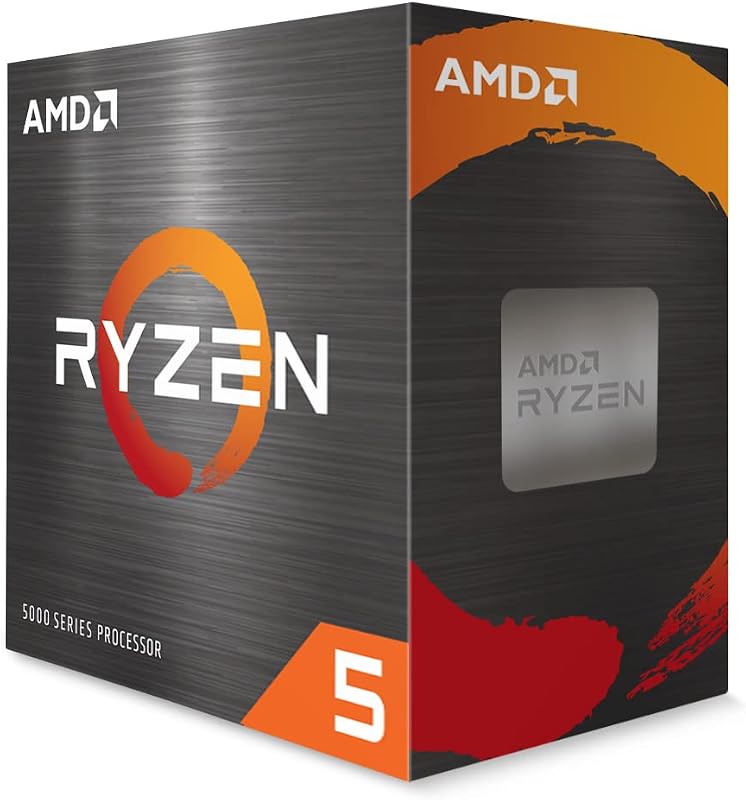
Pros
- Low 65W thermal power rating
- Efficient 6-core 12-thread Zen 3 design
- VR-Ready Premium certified
- Unlocked for user overclocking
- Bundled Wraith Stealth cooler included
Cons
- Lower 4.4 GHz maximum clock speed
- Fewer cores for heavy multitasking
View AMD Ryzen 5 5600 on Amazon
AMD Ryzen 7 5800XT

Pros
- 8 cores and 16 processing threads
- High 4.8 GHz Max Boost frequency
- Bundled Wraith Prism cooler with RGB LED
- DDR4-3200 and PCIe 4.0 support
- Unlocked multiplier for overclocking
Cons
- Higher 105W power consumption
- Generates more operating heat under full load
View AMD Ryzen 7 5800XT on Amazon
Who Should Buy Each One
Choose the AMD Ryzen 5 5600 If
- You want a capable 6-core processor that operates coolly within a 65-watt power limit.
- Your primary desktop objective is pure gaming where high thread saturation is unnecessary.
- You are assembling a system with a basic power supply or a compact chassis with limited ventilation.
- You prefer a balanced desktop setup tailored for general productivity, browsing, and VR-Ready experiences.
Choose the AMD Ryzen 7 5800XT If
- You need 8 physical cores and 16 threads for simultaneous gameplay, software streaming, and encoding.
- You want higher factory frequencies with boost speeds reaching up to 4.8 GHz out of the box.
- You appreciate having a premium stock cooling solution with RGB LED lighting and heat pipe technology included.
- You regularly execute multithreaded productivity software that scales directly across higher core counts.
Final Verdict
For the vast majority of mainstream PC builders and pure gamers, the AMD Ryzen 5 5600 represents the most practical and efficient choice. Its 6-core, 12-thread engine operates with excellent thermal efficiency, drawing just 65 watts while delivering strong 4.4 GHz performance across standard gaming and desktop applications. It keeps system temperatures modest, demands minimal power delivery hardware, and handles everyday multi-application demands without hesitation.
However, when workstation workloads, high-bitrate streaming, and demanding background multitasking enter the equation, the AMD Ryzen 7 5800XT is the superior processor. With 8 cores, 16 threads, a top boost clock of 4.8 GHz, and the beefier Wraith Prism RGB cooler bundled directly in the box, the 5800XT provides the headroom that dedicated creators and power users require on the AM4 socket. If your workflow pushes past basic gaming into thread-intensive productivity, the Ryzen 7 5800XT delivers the definitive edge.
FAQ
Can the AMD Ryzen 5 5600 and AMD Ryzen 7 5800XT use the same motherboard?
Yes, both the Ryzen 5 5600 and the Ryzen 7 5800XT utilize AMD Socket AM4. They are compatible with AM4 motherboards, though depending on the production date of the board, a firmware or BIOS update may be required for the board to recognize the processor upon initial installation.
Do either of these processors include integrated graphics?
Neither the Ryzen 5 5600 nor the Ryzen 7 5800XT features built-in integrated graphics. Both desktop processors require a discrete graphics card installed into your motherboard to output a display signal to your monitor.
Which processor is better for simultaneous gaming and live streaming?
The Ryzen 7 5800XT is noticeably better suited for simultaneous gaming and live streaming. With 8 physical cores and 16 threads compared to the 6 cores and 12 threads of the 5600, the 5800XT can dedicate surplus processing cores to stream encoding and broadcast software without diminishing in-game framerate stability.
What are the differences between the coolers included in each box?
The Ryzen 5 5600 includes the AMD Wraith Stealth, a compact aluminum cooler engineered for 65-watt processors. The Ryzen 7 5800XT includes the higher-grade AMD Wraith Prism cooler, which features direct-contact copper heat pipes, higher thermal dissipation capacity for 105-watt processors, and integrated RGB LED lighting.
Can both processors be overclocked?
Yes, both the Ryzen 5 5600 and the Ryzen 7 5800XT are officially listed as unlocked for overclocking. Users with compatible motherboards can adjust CPU multipliers, core voltages, and memory profiles to fine-tune system performance beyond factory specifications.
Is the 105-watt power consumption on the Ryzen 7 5800XT difficult to manage?
The 105-watt TDP of the 5800XT generates more heat than the 65-watt 5600, but it is manageable. Because AMD includes the high-performance Wraith Prism cooler in the box, users can maintain stable operating temperatures as long as the desktop case provides reasonable case airflow.