Deciding between the AMD Ryzen 7 5800XT and the AMD Ryzen 7 5800X comes down to two hardware distinctions: a 100 MHz boost clock frequency bump and the inclusion of a bundled thermal solution. While both processors share the proven Zen 3 architecture with eight physical cores and sixteen threads on Socket AM4, the 5800XT pushes the factory boost limit to 4.8 GHz and packages an AMD Wraith Prism cooler with RGB LED lighting in the retail box, whereas the original 5800X reaches a 4.7 GHz maximum boost clock and requires you to provide an aftermarket cooler. For shoppers evaluating the AMD Ryzen 7 5800XT vs 5800X, this practical packaging difference and modest clock uplift serve as the decisive buying factors.
Choose the 5800XT if you want an immediate out-of-the-box build experience complete with an integrated thermal solution and the highest factory clock speeds available on an eight-core Zen 3 part. Choose the 5800X if you already own a dedicated aftermarket cooler and need a high-performance eight-core processor for your existing AM4 motherboard.


AMD Ryzen 7 5800XT vs AMD Ryzen 7 5800X at a Glance
| Feature | AMD Ryzen 7 5800XT | AMD Ryzen 7 5800X |
|---|---|---|
| Processor Architecture | AMD Zen 3 | AMD Zen 3 |
| Physical Cores / Threads | 8 cores, 16 threads | 8 cores, 16 threads |
| Base Clock Speed | 3.8 GHz | Not listed |
| Max Boost Clock Speed | 4.8 GHz | 4.7 GHz |
| Cache Memory Installed Size | 36 MB | 36 MB |
| Secondary Cache | 4 MB | 4 MB |
| Thermal Design Power | 105 watts | 105 watts |
| Bundled Thermal Solution | AMD Wraith Prism Cooler with RGB LED included | Cooler not included (high-performance cooler recommended) |
| Socket Compatibility | Socket AM4 | Socket AM4 |
| Memory and PCIe Support | DDR4-3200, PCIe 4.0 | DDR-3200, PCIe 4.0 on X570 and B550 |
| Best For | Builders wanting a complete boxed package with factory cooling | Upgraders who already own a capable aftermarket cooler |
Clock Speeds and Processing Performance
Clock speed determines how rapidly a processor executes instructions across individual cores, making maximum boost frequencies an important metric for single-threaded tasks and gaming response. When looking at pure operating frequency, the newer 5800XT features a 3.8 GHz base clock and climbs to a 4.8 GHz maximum boost clock out of the box. In comparison, the 5800X listing cites a 4.7 GHz processor speed and max boost clock, giving the refreshed XT silicon a measurable 100 MHz frequency bump on peak loads.
In everyday productivity and desktop operations, this 100 MHz boost differential provides a marginal advantage in bursty, single-threaded processing. The refined binning on the Ryzen 5800XT clock speed profile allows individual cores to stretch slightly further when system temperatures allow. For users browsing through options like the amd ryzen 7 5800xt vs 5800x3d, the clock profile of the standard Zen 3 architecture offers high peak frequency without sacrificing general application compatibility. However, the foundational design remains identical across both chips, meaning heavy sustained multithreaded loads execute at very similar performance levels.
The practical result of this frequency difference is modest. A 100 MHz uplift represents roughly a two percent theoretical increase in peak core frequency, which rarely alters real-world workflow times in a perceptible way. You gain slight snappiness in single-core benchmarks and lightweight applications, but anyone expecting a generational leap will find that both chips operate within the same tier of computing capability.
Edge: AMD Ryzen 7 5800XT because its 4.8 GHz maximum boost clock provides a factory-set frequency advantage over the 4.7 GHz ceiling of the original model.
Thermal Design and Bundled Cooling Solution
Operating temperatures play a significant role in modern processor performance because AMD Zen 3 silicon automatically scales its clock speeds based on thermal headroom and power draw. Both of these processors share an identical 105-watt thermal design power rating. Dissipating 105 watts of heat requires a dedicated cooling setup to prevent thermal throttling under heavy multi-threaded production workloads, making thermal management a critical purchasing factor.
The primary physical differentiator between these two retail offerings is the cooling hardware included in the box. The 5800XT comes bundled with the AMD Wraith Prism cooler featuring addressable RGB LED lighting. This top-flow air cooler provides sufficient heat dissipation right out of the box, allowing you to install the CPU immediately without sourcing secondary thermal gear. In contrast, the original 5800X explicitly states that a cooler is not included and recommends a high-performance cooler. Those migrating from lower-wattage parts, such as shoppers reviewing the amd ryzen 5 5600x vs amd ryzen 7 5800xt, will recognize that a 105-watt rating demands much more cooling capability than 65-watt entry chips.
Choosing the 5800XT bundled cooler saves you the extra step of purchasing an aftermarket air or liquid cooling unit. While enthusiastic overclockers might still favor a large dual-tower air cooler or a liquid all-in-one setup, the Wraith Prism delivers functional, ready-to-use thermal performance for standard desktop operation. The 5800X requires you to plan ahead and install third-party cooling before powering on the machine.
Edge: AMD Ryzen 7 5800XT because it includes the capable AMD Wraith Prism RGB cooler directly in the package, eliminating the requirement to buy a separate cooling solution.
Gaming Performance and Frame Rates
Gaming workloads rely on high single-core frequencies and low-latency access to on-die cache to sustain high frame rates and maintain consistent frame pacing. In competitive esports titles and modern open-world games, processors must feed graphics cards quickly to prevent bottlenecks at high refresh rates. Looking at the specifications, both processors feature 8 cores, 16 threads, and 36 MB of total cache, ensuring ample processing headroom for modern game engines.
When analyzing 5800XT vs 5800X gaming scenarios, the architectural commonality dominates the outcome. The 5800X listing advertises elite 100+ FPS performance in the world’s most popular games, backed by its Zen 3 core layout. The 5800XT leverages that exact same layout while delivering powerful gaming performance with a slightly higher 4.8 GHz boost frequency. In comparison to mainstream offerings detailed in the amd ryzen 5 5600 vs ryzen 7 5800x comparison, both eight-core chips offer superior background task headroom when streaming or running background software while gaming.
Deciding whether to buy the 5800XT or 5800X for gaming ultimately hinges on whether the extra 100 MHz impacts your titles. At 1080p resolution with a top-tier graphics card, the 5800XT may show a minute frame rate advantage in CPU-bound titles. However, at 1440p or 4K resolutions where the workload shifts primarily to the graphics card, the gaming experience between the two is virtually indistinguishable.
Edge: AMD Ryzen 7 5800XT because its 4.8 GHz max boost delivers marginally higher peak frequency in CPU-limited gaming environments.
Platform Compatibility and Motherboard Integration
Platform longevity and upgrade flexibility dictate how smoothly a processor integrates into an existing desktop setup. Both processors utilize the established AMD Socket AM4 interface, ensuring compatibility across a wide selection of motherboards. Both chips natively support high-speed DDR4-3200 memory and feature PCIe 4.0 lane connectivity, allowing fast data transfers to modern solid-state drives and add-in graphics cards.
The 5800X product listing specifically points out PCIe 4.0 support across X570 and B550 motherboards. The 5800XT shares this broad Socket AM4 support, though as a later release, older AM4 motherboards may require a firmware or BIOS update to properly identify the chip. Those looking at comprehensive desktop builds, such as systems discussed in the amd ryzen 7 5800xt vs amd ryzen 9 5900x guide, will find that AM4 remains a remarkably flexible foundation for multiple computing needs.
In terms of operating system compatibility, the 5800XT listing highlights Windows 11 support, whereas the 5800X lists Windows 10 64-Bit Edition and Linux support. In practice, both processors utilize the standard Zen 3 instruction sets and function reliably across modern 64-bit Windows and Linux operating systems. Because the socket, memory specifications, and PCIe 4.0 capabilities match, neither CPU holds an architectural platform advantage.
Edge: Tie because both processors drop into Socket AM4 motherboards, support DDR4-3200 memory, and provide PCIe 4.0 connectivity.
Cache Configuration and Multithreaded Architecture
Heavy multitasking, video rendering, software development, and 3D modeling push physical cores to their limits, making core architecture and cache memory crucial metrics. Both the 5800XT and the 5800X feature an 8-core, 16-thread configuration based on AMD Zen 3 architecture. Each processor integrates 36 MB of total cache memory, including 4 MB of secondary cache, ensuring fast data availability for execution units.
Because the physical core count and cache layout are identical, multi-threaded efficiency scales almost identically across both units. In a thorough Ryzen 7 5800X review, the 8-core design proved capable of handling demanding multi-threaded workflows with stability. While higher-core options explored in the amd ryzen 7 5800x vs ryzen 9 5900x comparison target extreme production workstations, an eight-core Zen 3 processor represents a balanced sweet spot for consumer multitasking.
Both processors arrive unlocked for overclocking, granting users the freedom to adjust multipliers and tune voltages to extract extra performance. Because the 5800XT represents later Zen 3 production silicon, it may achieve its peak frequencies with slightly less voltage, but the fundamental compute potential and architectural cache depth remain matched across both models.
Edge: Tie because both processors feature 8 cores, 16 threads, 36 MB of total installed cache, and unlocked multipliers for manual tuning.
Overall Package Value and Upgrade Practicality
When selecting PC components, overall package value is determined by what arrives in the retail box and what extra hardware you must purchase to complete the build. If you are questioning whether the Ryzen 7 5800XT is worth it, the answer depends heavily on your current hardware inventory. Upgrading from entry-level hardware, as explored in the amd ryzen 5 5600 vs amd ryzen 7 5800xt breakdown, often involves considering whether your existing cooling gear can handle a 105W processor.
The AMD Ryzen 7 5800X vs 5800XT equation looks very different depending on whether you already have a cooler. If you already own a premium air cooler or liquid setup, the bundled Wraith Prism cooler on the 5800XT provides little added utility. In that case, the only tangible benefit of the 5800XT is its 100 MHz boost clock improvement. However, if you are building a system from scratch or upgrading from an older 65-watt chip with a basic stock cooler, the 5800XT delivers an all-in-one package that works immediately.
Taking in the broader picture of any Ryzen 7 5800XT review, the inclusion of an RGB-illuminated heatsink coupled with the highest factory clock speed on an AM4 eight-core processor makes the 5800XT a more complete retail package. The 5800X remains a functional, bare-chip alternative that relies entirely on your willingness to source separate cooling hardware.
Edge: AMD Ryzen 7 5800XT because the combination of a boxed thermal solution and maximum out-of-the-box clock speeds gives it superior standalone package value.
Pros and Cons
AMD Ryzen 7 5800XT

Pros
- 8 GHz maximum boost clock
- Wraith Prism RGB cooler included
- 8 cores and 16 processing threads
- PCIe 4.0 platform support
Cons
- 105-watt thermal power draw
- Requires AM4 motherboard platform
View AMD Ryzen 7 5800XT on Amazon
AMD Ryzen 7 5800X
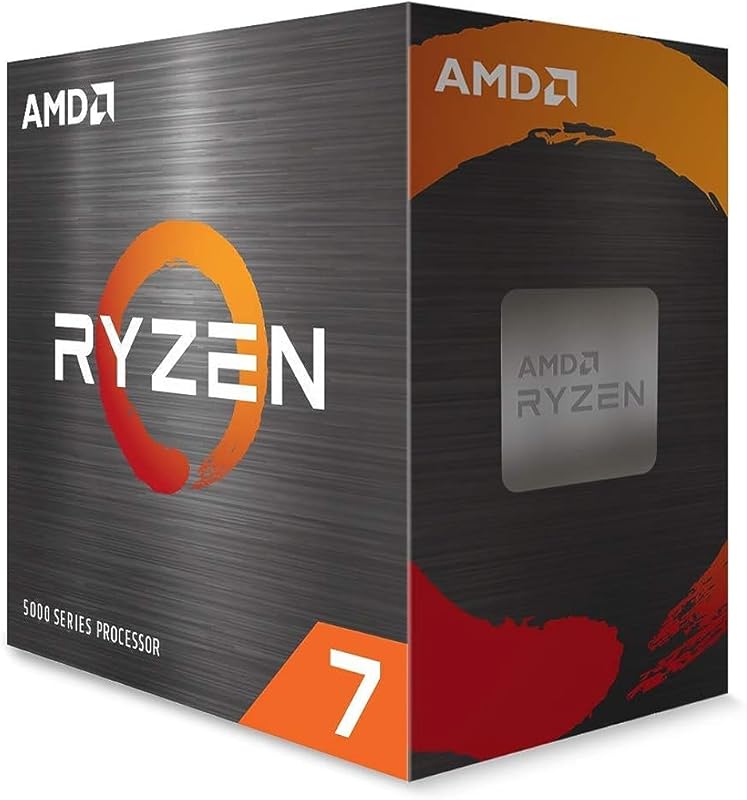
Pros
- 8 cores and 16 processing threads
- Proven Zen 3 gaming performance
- Unlocked multiplier for overclocking
- Broad Windows and Linux support
Cons
- No cooler included in retail box
- Lower 4.7 GHz maximum boost clock
View AMD Ryzen 7 5800X on Amazon
Who Should Buy Each One
Choose the AMD Ryzen 7 5800XT If
- You want an all-in-one package that includes the AMD Wraith Prism cooler with RGB LED lighting
- You prefer the highest factory boost clock available on a Zen 3 eight-core processor at 4.8 GHz
- You are assembling a new AM4 build and do not want to purchase a separate aftermarket cooler
- You want full out-of-the-box performance without needing manual overclocking or voltage adjustments
Choose the AMD Ryzen 7 5800X If
- You already own a high-performance air cooler or liquid cooling loop capable of handling 105 watts
- You run an existing X570 or B550 motherboard setup and want a straightforward eight-core drop-in upgrade
- You plan to use custom manual overclocking where the small 100 MHz factory boost gap is irrelevant
- You specifically need validated platform support for Windows 10 64-Bit Edition or Linux environments
Final Verdict
For most desktop builders looking to maximize their Socket AM4 setup, the 5800XT is the better overall package. The 100 MHz boost clock uplift to 4.8 GHz ensures you extract peak single-threaded performance from the Zen 3 architecture, while the bundled AMD Wraith Prism cooler provides capable out-of-the-box thermal management without requiring an extra hardware purchase. This complete retail bundle simplifies installation and provides a balanced configuration for gaming and everyday multitasking.
The 5800X remains an excellent alternative under specific build conditions. If you already possess an efficient aftermarket cooler or liquid cooling loop, the bundled heatsink with the 5800XT becomes redundant. In that scenario, the identical 8-core, 16-thread architecture, 36 MB cache size, and 105W TDP of the original 5800X will deliver virtually identical real-world processing power once installed in your system.
FAQ
Does the AMD Ryzen 7 5800XT include a CPU cooler?
Yes, the AMD Ryzen 7 5800XT retail package includes an AMD Wraith Prism air cooler equipped with addressable RGB LED lighting. This thermal solution comes ready in the box, allowing you to install and operate the 105-watt processor without purchasing a separate aftermarket cooler.
Does the AMD Ryzen 7 5800X come with a cooling fan in the box?
No, the AMD Ryzen 7 5800X does not include a cooler in the box. The product listing specifies that a cooler is not included and recommends pairing the processor with a high-performance aftermarket thermal solution to manage its 105-watt power output.
What is the clock speed difference between the 5800XT and 5800X?
The 5800XT features a maximum boost clock speed of 4.8 GHz and a listed base processor speed of 3.8 GHz. The 5800X listing specifies a 4.7 GHz processor speed and maximum boost clock, giving the 5800XT a 100 MHz clock frequency advantage under peak boost conditions.
Can both processors be used in the same motherboard socket?
Yes, both the 5800XT and 5800X utilize AMD Socket AM4. They are compatible with AM4 motherboards, including chipsets like the X570 and B550 that support PCIe 4.0 data lanes, though some older motherboards may require a BIOS update to recognize the newer 5800XT processor.
Are both processors unlocked for overclocking?
Yes, both the 5800XT and 5800X feature unlocked multipliers for overclocking. This allows users with compatible motherboards to adjust core ratios and voltage settings to tune processor performance beyond factory limits.
What type of system memory do these processors support?
Both processors support DDR4 memory architecture with official support for DDR4-3200 speeds. Installing matching DDR4-3200 RAM modules ensures stability and optimal memory bandwidth across both eight-core Zen 3 chips.


