The single deciding factor when choosing between the AMD Ryzen 7 5800X and the AMD Ryzen 7 5800X3D is whether your system demands higher operating clock frequencies with manual overclocking freedom or an expansive hardware memory pool engineered to eradicate frame rate bottlenecks in gaming. Both desktop microprocessors share an identical 8-core silicon layout built for the Socket AM4 platform, yet their architectural priorities diverge significantly. The Ryzen 7 5800X prioritizes sheer clock speeds with a 4.7 GHz Max Boost frequency and an unlocked multiplier, whereas the Ryzen 7 5800X3D introduces AMD 3D V-Cache technology that stacks a massive 96MB of L3 cache directly onto the compute die to reach a 100 MB total installed cache capacity.
Builders who prioritize manual frequency tuning, workstation productivity tasks, and versatile multithreaded processing across Windows and Linux should choose the Ryzen 7 5800X. Enthusiast gamers searching for maximum sustained frame rates and an uncompromising drop-in Socket AM4 upgrade should choose the Ryzen 7 5800X3D.


AMD Ryzen 7 5800X vs AMD Ryzen 7 5800X3D at a Glance
| Feature | AMD Ryzen 7 5800X | AMD Ryzen 7 5800X3D |
|---|---|---|
| Processor Series | AMD Ryzen 7 | Ryzen 7 |
| Core Count | 8 cores | 8 cores |
| Thread Count | 16 processing threads | 16 processing threads |
| Max Boost Clock | 4.7 GHz | 4.5 GHz |
| Total Installed Cache | 36 MB | 100 MB |
| 3D Stacking Technology | Not supported | AMD 3D V-Cache technology |
| Overclocking Support | Unlocked | Not listed |
| Thermal Design Power | 105 watts | 105 watts |
| Platform Support | Socket AM4 | Socket AM4 |
| Bundled Thermal Solution | Cooler not included | Cooler not included |
| Best For | Productivity, content creation, and overclocking | Dedicated high-refresh desktop gaming |
Cache Architecture and AMD 3D V-Cache Technology
The internal memory hierarchy represents the most profound physical divergence between these two microprocessors. In standard computing silicon, the processor relies on tiered cache levels to store active instructions close to the execution cores, preventing costly latency penalties caused by retrieving data from system RAM. The Ryzen 7 5800X utilizes a conventional layout featuring 36 MB of total cache, which includes 4 MB of secondary cache alongside its primary compute structure. For general computing and standard desktop workflows, this capacity provides ample buffer space to keep instruction queues populated without stalling execution cycles.
The Ryzen 7 5800X3D alters this paradigm entirely through the introduction of AMD 3D V-Cache technology, serving as the first gaming processor built with vertical 3D stacking technology. By bonding an additional physical SRAM slice directly above the processor die, AMD expanded the memory subsystem to feature a massive 96MB of L3 cache and a total installed cache pool of 100 MB. When evaluating the 5800X vs 5800X3D cache difference, the 5800X3D provides nearly triple the memory reservoir of its sibling. This vast hardware buffer allows complex simulation loops, draw calls, and asset physics to reside immediately adjacent to the execution cores rather than cycling out to external system memory.
For workloads sensitive to memory latency, having 100 MB of installed cache transforms processing flow. In an amd ryzen 5 5600x vs ryzen 7 5800x3d evaluation or direct eight-core comparisons, this stacked silicon structure mitigates memory bus bottlenecks, allowing execution pipelines to run uninterrupted. Any comprehensive AMD Ryzen 7 5800X3D review underlines that this structural innovation redefines how gaming code interacts with hardware, giving the 3D-stacked chip a clear technological superiority in instruction caching.
Edge: AMD Ryzen 7 5800X3D brings nearly triple the total cache capacity through its revolutionary 100 MB 3D V-Cache configuration.
Clock Frequencies and Manual Overclocking Capabilities
While cache architecture favors the newer stacked design, raw clock speed remains a vital operational metric for standard processor execution. The Ryzen 7 5800X holds a decisive advantage in base frequency dynamics, reaching a 4.7 GHz Max Boost speed right out of the box. Because its silicon is not capped by stacked cache thermal thresholds, the standard model runs its eight cores at aggressive clock curves, translating into snappy per-core instruction processing across routine operating system interactions and high-clock-dependent software.
In contrast, the Ryzen 7 5800X3D operates with a reduced 4.5 GHz Max Boost clock, trailing the standard model by 200 MHz at peak threshold. Furthermore, the listing notes that the Ryzen 7 5800X is fully unlocked for overclocking, shipping with support for the Simple and Powerful Overclocking Utility for AMD Ryzen processors. This configuration grants enthusiasts total freedom to calibrate manual multipliers, adjust per-core voltage behavior, and push compute frequencies well past factory parameters. In contrast, the Ryzen 7 5800X3D listing does not specify unlocked overclocking capabilities, highlighting a fixed, finely tuned frequency envelope tailored specifically around its vertical cache silicon.
For PC builders who derive value from hands-on hardware tuning, the unlocked multiplier on the 5800X provides unmatched flexibility. Users exploring an amd ryzen 5 5600 vs ryzen 7 5800x progression often favor the 5800X specifically for its manual clock ceiling and proven tuning headroom. Any detailed AMD Ryzen 7 5800X review confirms that for tasks demanding maximum sustained single-core clock frequencies, the unlocked 4.7 GHz boost ceiling delivers tangible operational benefits that the locked 5800X3D cannot match.
Edge: AMD Ryzen 7 5800X delivers a higher 4.7 GHz Max Boost clock alongside an unlocked multiplier for manual overclocking.
Gaming Frame Rates and Pipeline Performance
The divergence in architectural focus produces completely different results when evaluating AMD Ryzen 7 5800X or 5800X3D for gaming. The standard Ryzen 7 5800X is engineered to deliver elite 100+ FPS performance in the world’s most popular games, leaning on its 4.7 GHz clock speed and rapid instruction throughput to push fast rendering pipelines. In titles that depend strictly on high core clocks without saturating memory subsystems, the 5800X maintains smooth frame pacing and exceptional responsiveness across modern gaming environments.
However, the Ryzen 7 5800X3D is branded directly as the world’s fastest gaming desktop processor, leveraging its massive 96MB of L3 cache for gaming domination. In heavy 3D rendering engines, open-world simulations, and high-framerate multiplayer titles, the bottleneck rarely stems from execution units; it stems from cores stalling while waiting for data fetches from system RAM. By holding essential gaming assets and frame data within its 100 MB cache pool, the 5800X3D eliminates memory wait states. This structural efficiency dramatically elevates minimum and average frame rates, ensuring smoother gameplay during chaotic on-screen encounters.
When analyzing competitive 5800X3D vs 5800X benchmarks across modern game engines, prospective buyers frequently ask: is 5800X3D worth it? For pure gaming rigs, the answer is an overwhelming affirmative. The cache capacity neutralizes framerate dips far more effectively than a 200 MHz boost clock advantage ever could. While readers comparing an amd ryzen 7 5800x3d vs ryzen 9 5900x setup often weigh core counts against cache size, in dedicated gaming workloads, the 5800X3D stands undisputed at the top of the Socket AM4 generation.
Edge: AMD Ryzen 7 5800X3D dominates gaming workloads by eliminating memory fetch latency through its 96MB of dedicated L3 cache.
Productivity Workloads and Multithreaded Processing
Beyond entertainment, desktop processors serve as the workhorses for professional productivity, content rendering, and complex computational analysis. The Ryzen 7 5800X is marketed as AMD’s fastest 8 core processor for mainstream desktop with 16 processing threads. Designed for designing skyscrapers, compiling large codebases, or crunching scientific data, its raw 4.7 GHz boost clock and unlocked frequency headroom allow sustained computational throughput across multi-stage rendering and calculation workloads.
Evaluating Ryzen 5800X vs 5800X3D productivity reveals the structural trade-offs AMD made when engineering these chips. The Ryzen 7 5800X3D listing highlights its status as a one-of-a-kind processor fine-tuned for gamers, but its lower 4.5 GHz peak boost clock and absence of listed overclocking options limit its rendering acceleration. Non-gaming productivity applications rarely saturate large L3 cache pools in the same manner game engines do; instead, media encoding, file compression, and ray tracing scale linearly with raw operating frequencies and uninterrupted compute cycles. Furthermore, the 5800X listing explicitly validates both Windows and Linux operating systems, ensuring reliable deployment in specialized developer and workstation environments.
Users examining multithreaded compute solutions often consider the broader product ecosystem, including an amd ryzen 7 5800x vs ryzen 9 5900x upgrade path. However, when keeping to the 8-core configuration, the Ryzen 7 5800X delivers superior consistency in professional creative suites, code compilation, and data crunching due to its higher core frequencies and flexible tuning profile.
Edge: AMD Ryzen 7 5800X wins for productivity due to its superior 4.7 GHz clock speed and unrestricted compute capabilities across creative software.
Platform Compatibility, Memory Support, and Cooling Demands
Both microprocessors are built to integrate seamlessly into existing PC builds, sharing the long-standing Socket AM4 infrastructure. Each model supports high-speed PCIe 4.0 connectivity on advanced AMD X570 and B550 motherboards, unlocking full bandwidth for modern storage drives and high-end add-in graphics cards. Furthermore, both chips feature integrated memory controllers configured for high-speed DDR4-3200 memory modules, ensuring uniform system stability across standard desktop configurations.
When executing a Ryzen 7 5800X vs 5800X3D AM4 upgrade, power delivery and thermal management remain identical on paper. Both processors operate within a 105-watt thermal design envelope and share the exact same physical package dimensions measuring 1.57 inches long by 1.57 inches wide. Crucially, neither model includes a bundled thermal solution in the packaging. AMD explicitly notes on both product listings that a cooler is not included and a high-performance cooler is recommended. The concentrated heat density generated by eight high-performance cores running at full load requires an aftermarket liquid cooler or robust dual-tower air cooler to prevent thermal throttling.
Builders upgrading from an entry-level tier, such as those weighing an amd ryzen 5 5600x vs ryzen 7 5800x transition, will find that both the 5800X and 5800X3D drop into identical motherboards with identical power requirements. Because both processors utilize identical 105-watt power limits, the same Socket AM4 motherboards, PCIe 4.0 lanes, and DDR4-3200 memory support, neither holds a distinct platform advantage.
Edge: Tie. Both processors utilize the identical Socket AM4 platform, DDR4-3200 support, 105-watt TDP envelope, and high-performance cooling demands.
Pros and Cons
AMD Ryzen 7 5800X
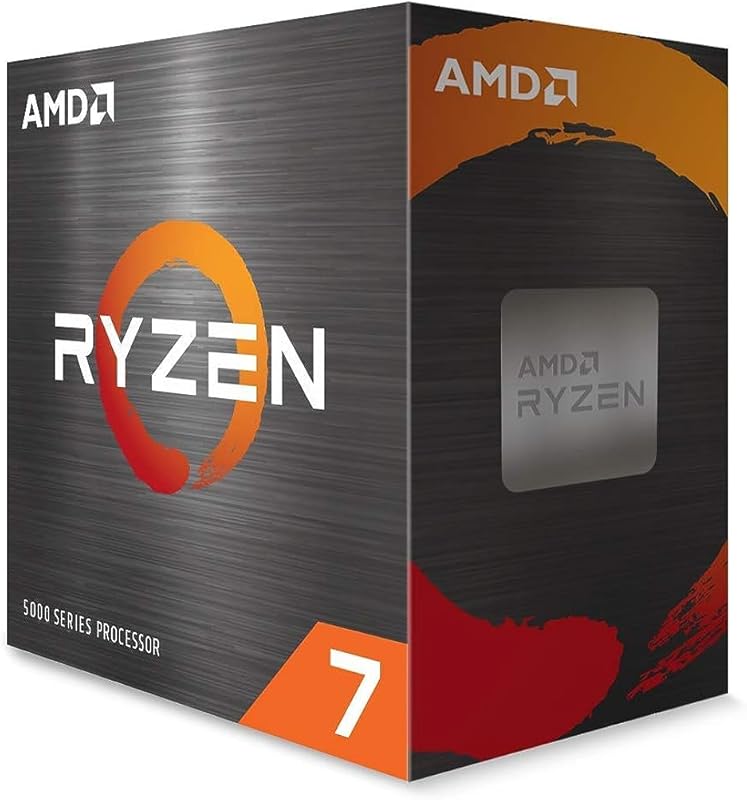
Pros
- Higher 4.7 GHz Max Boost frequency
- Fully unlocked for manual overclocking
- 36 MB cache for balanced productivity
- Supports Windows and Linux platforms
Cons
- Cooler not included in retail package
- Much smaller cache pool than 5800X3D
- Trails 3D V-Cache in gaming frame rates
View AMD Ryzen 7 5800X on Amazon
AMD Ryzen 7 5800X3D

Pros
- Massive 100 MB total installed cache
- Advanced 3D stacking V-Cache technology
- World-class gaming desktop frame rates
- Drop-in Socket AM4 platform upgrade
Cons
- Lower 4.5 GHz Max Boost speed
- Overclocking support is not listed
- Cooler not included in retail package
View AMD Ryzen 7 5800X3D on Amazon
Who Should Buy Each One
Choose the AMD Ryzen 7 5800X If
- You use your PC primarily for content creation, 3D design, scientific computing, or heavy code compilation that benefits from 4.7 GHz clock speeds.
- You enjoy manual hardware tuning and require an unlocked multiplier with support for AMD’s overclocking utility.
- You run dual-boot or dedicated Linux workstations alongside standard Windows operating systems.
- You want a proven 8-core, 16-thread powerhouse that balances elite gaming output with multi-application productivity.
Choose the AMD Ryzen 7 5800X3D If
- Your primary objective is squeezing every possible frame per second out of a dedicated gaming desktop.
- You play open-world, simulation, or competitive titles that frequently stutter due to memory latency limitations.
- You want the pinnacle of Socket AM4 gaming performance without needing to replace your X570 or B550 motherboard.
- You prefer factory-optimized performance with 100 MB of cache that delivers maximum results without requiring manual voltage or frequency tuning.
Final Verdict
The AMD Ryzen 7 5800X3D stands as the premier selection for desktop gamers looking to extract world-class frame rate performance from the mature Socket AM4 platform. By utilizing revolutionary 3D stacking technology to pack 100 MB of total cache into the compute die, the 5800X3D bypasses standard memory bottlenecks and elevates minimum frame rates in ways that raw clock frequency cannot achieve. For players focused on competitive multiplayer titles, vast open worlds, and simulation engines, the 3D V-Cache architecture represents an unparalleled architectural achievement that cements the 5800X3D as the definitive AM4 gaming champion.
On the other hand, the AMD Ryzen 7 5800X remains the superior, more balanced choice for builders whose daily routine balances gaming with intensive computational workloads. With its higher 4.7 GHz Max Boost frequency, unlocked multiplier for manual overclocking, and validated operating system flexibility across Windows and Linux, the standard 5800X excels in digital rendering, data processing, and creative workstation software. If your desktop is a tool for creation first and entertainment second, the raw frequency and unlocked potential of the Ryzen 7 5800X make it the smarter investment.
FAQ
Can the AMD Ryzen 7 5800X3D be overclocked like the Ryzen 7 5800X?
The AMD Ryzen 7 5800X listing explicitly states that it is unlocked for overclocking and supports the Simple and Powerful Overclocking Utility for AMD Ryzen processors. In contrast, the AMD Ryzen 7 5800X3D listing does not specify unlocked overclocking capabilities, operating within a fixed factory-tuned frequency profile to protect its stacked 3D V-Cache hardware.
What is the primary 5800X vs 5800X3D cache difference?
The primary difference lies in the total capacity and physical layering of the memory subsystem. The Ryzen 7 5800X features a standard 36 MB cache configuration with 4 MB of secondary cache. The Ryzen 7 5800X3D utilizes physical 3D stacking technology to add an expansive 96MB of L3 cache, bringing its total installed cache memory pool to 100 MB.
Do both processors require an aftermarket cooling solution?
Yes. Neither processor includes a thermal cooling solution in the packaging. The listings for both the Ryzen 7 5800X and Ryzen 7 5800X3D specify that a cooler is not included and that a high-performance cooler is recommended to manage their 105-watt thermal design power.
Will both processors work on X570 and B550 motherboards?
Yes. Both the Ryzen 7 5800X and Ryzen 7 5800X3D are engineered for the advanced Socket AM4 platform and explicitly support PCIe 4.0 connectivity on AMD X570 and B550 motherboards.
What memory speeds do these two processors support?
Both microprocessors support high-speed system memory out of the box. The Ryzen 7 5800X listing specifies DDR-3200 support, while the Ryzen 7 5800X3D listing specifies DDR4-3200 support, allowing both to utilize identical high-bandwidth memory kits on Socket AM4 motherboards.
Does the Ryzen 7 5800X hold an advantage over the 5800X3D in non-gaming tasks?
Yes. The Ryzen 7 5800X features a higher 4.7 GHz Max Boost clock compared to the 4.5 GHz Max Boost clock of the 5800X3D. This higher peak frequency, combined with unlocked multiplier tuning, gives the standard 5800X an advantage in scientific crunching, architecture design, and standard multithreaded productivity software that scales with raw core clocks rather than cache size.


