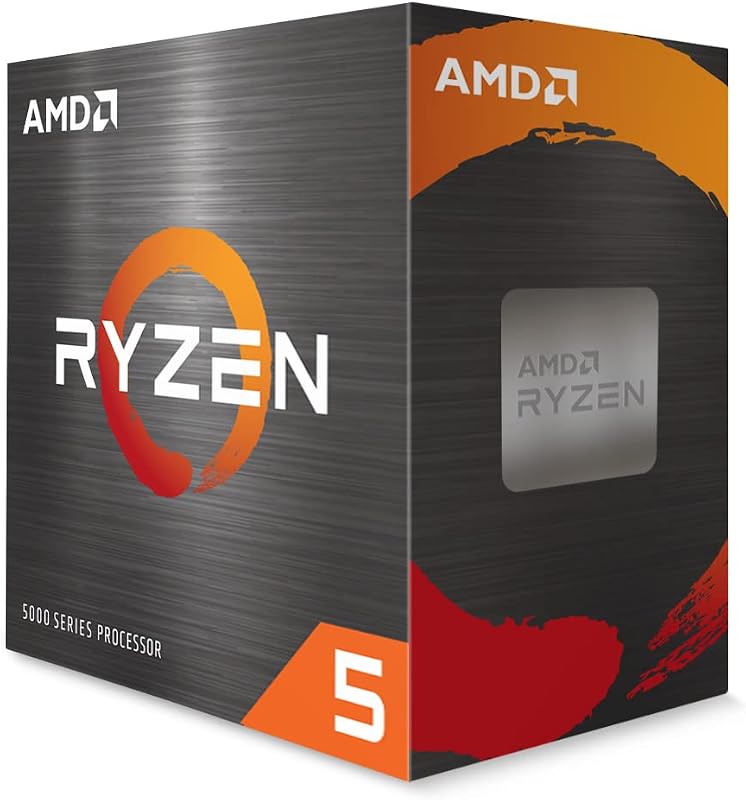
The core distinction that determines the winner in the AMD Ryzen 7 9700X vs 9800X3D matchup is the structural implementation of high-capacity memory versus maximum clock ceiling. While both desktop processors share AMD’s advanced Zen 5 microarchitecture and an 8-core, 16-thread configuration, the AMD Ryzen 7 9800X3D incorporates Next Gen 3D V-Cache with a dedicated 96MB L3 cache block tailored to eliminate game engine bottlenecks. In contrast, the AMD Ryzen 7 9700X trades this specialized 3D-stacked memory structure for a higher 5.5 GHz maximum boost frequency and a lower 105-watt power specification, appealing to creators and users running general-purpose tasks.
Buyers prioritizing raw frame rates and low latency in competitive gaming titles should choose the Ryzen 7 9800X3D. Builders seeking an efficient desktop processor with higher peak clock speeds and lower overall thermal demands should choose the Ryzen 7 9700X.

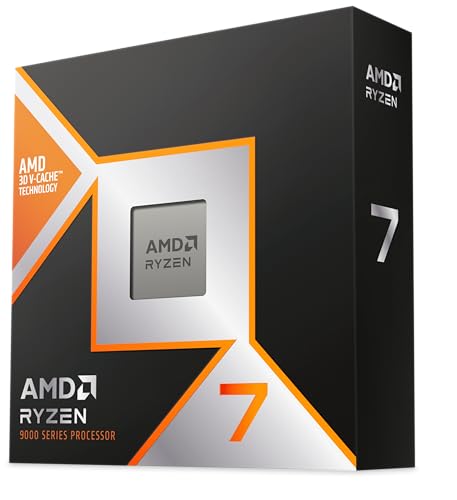
AMD Ryzen 7 9700X vs AMD Ryzen 7 9800X3D at a Glance
| Feature | AMD Ryzen 7 9700X | AMD Ryzen 7 9800X3D |
|---|---|---|
| Architecture | AMD Zen 5 | AMD Zen 5 |
| Cores / Threads | 8 Cores / 16 Threads | 8 Cores / 16 Threads |
| Processor Base Speed | 3.8 GHz | 4.7 GHz |
| Max Boost Clock | 5.5 GHz | 5.2 GHz |
| L3 Cache / Installed Cache | 40 MB Cache Installed | 96MB L3 Cache |
| Secondary Cache | 8 MB | 8 MB |
| Wattage Rating | 105 Watts | 140 Watts |
| Memory Support | DDR5-5600 | Not listed |
| Socket Compatibility | Socket AM5 | Socket AM5 |
| Cooling Included | Cooler not included | Cooler not included |
| Best For | Balanced productivity and power-conscious systems | Dedicated high-refresh-rate gaming rigs |
Cache Architecture and Gaming Memory Delivery
The 9800X3D vs 9700X cache difference serves as the primary technical partition dividing these two Zen 5 offerings. The 9800X3D utilizes AMD’s Next Gen 3D V-Cache, which layers a massive 96MB L3 cache directly within the processor package alongside 8 MB of secondary cache. When modern software requests game asset instructions or complex mathematical queries, this expansive on-die buffer retains instructions locally, preventing frequent round-trips to external system RAM. This architectural design directly minimizes memory latency penalties that often constrain modern graphics pipelines.
On the other side of this architecture split, the 9700X relies on an installed memory pool of 40 MB cache with an identical 8 MB secondary cache allocation. While this 40 MB cache layout handles routine computation effortlessly, it cannot hold entire game engine data loops in the same way the 96MB slab does. In scenarios where you consider an entry-level Zen 5 alternative like the amd ryzen 5 9600x vs ryzen 7 9800x3d, the 9800X3D continues to show the unmistakable benefit of specialized physical SRAM stacking.
This architectural variance means the 9800X3D bypasses standard memory bottlenecks during data-heavy computational operations. For titles heavily dependent on quick instruction dispatch, the 9700X must poll system memory more frequently, slightly limiting frame pacing under peak load. The 9800X3D delivers smoother frame consistency because critical instructions remain resident inside the 96MB L3 boundary.
Edge: AMD Ryzen 7 9800X3D because its massive 96MB Next Gen 3D V-Cache keeps critical gaming instruction sets on-die to slash latency.
Gaming Performance and Frame Pacing
Evaluating Ryzen 9700X vs 9800X3D gaming brings hardware-level execution into direct perspective. The 9800X3D listing highlights it as the world’s fastest gaming processor, pointing to an approximate 16 percent IPC uplift alongside Next Gen 3D V-Cache. High-refresh-rate monitors and competitive simulation titles rely on steady instruction dispatch to sustain high frames. By maintaining frame processing within on-die SRAM, the 9800X3D prevents sudden frame dips during complex multiplayer scenes or heavy particle simulations.
The 9700X remains a capable gaming engine, with its specification sheet confirming it can deliver fast 100+ FPS performance in the world’s most popular games. Its 8 cores and 16 processing threads effortlessly feed modern graphics cards across various standard resolutions. However, without the expanded 96MB L3 cache layer, the 9700X cannot achieve the same maximum frame ceiling in titles that specifically favor rapid cache lookups. For a broader view of competitive processor lines, seeing how platforms clash in our intel core ultra 7 265k vs amd ryzen 7 9800x3d comparison further illustrates how 3D V-Cache stands apart.
Gamers asking is Ryzen 7 9800X3D worth it must weigh their target refresh rates and preferred genres. In games limited by the graphics subsystem, both components offer solid output, but when the processor itself forms the performance ceiling, the 9800X3D extracts superior average frame rates and more consistent frame delivery times. The 9700X remains reliable for standard 100+ FPS gaming, yet it yields top-tier supremacy to the 9800X3D.
Edge: AMD Ryzen 7 9800X3D because its specialized cache hierarchy produces superior high-refresh stability and higher frame ceilings.
Clock Speeds and Single-Core Frequency Targets
Frequency dynamics tell an inverted story when reviewing the Ryzen 9700X vs 9800X3D specs. The 9700X features a 3.8 GHz base processor speed but ramps up to an impressive 5.5 GHz Max Boost frequency. This elevated 5.5 GHz ceiling provides a distinct speed advantage in workloads where an application executes tasks through a single dominant thread rather than distributing instructions across multiple cores or querying large cache pools.
Conversely, the 9800X3D features a higher base processor speed of 4.7 GHz, but reaches a lower maximum clock ceiling of up to 5.2 GHz. The physical presence of the 3D V-Cache layer traditionally imposes thermal and electrical constraints on maximum core frequency, though the listing highlights better thermal performance versus the previous generation to allow speeds up to 5.2 GHz. When contrasting these platforms against mid-range options such as the amd ryzen 5 9600x vs ryzen 7 9700x, the 9700X consistently maintains its role as a high-frequency workhorse.
The 300 MHz difference between the 5.5 GHz boost of the 9700X and the 5.2 GHz boost of the 9800X3D gives the 9700X a modest raw processing edge in legacy applications, script parsing, and quick single-threaded bursts. While the 9800X3D compensates in gaming through sheer cache capacity, pure frequency-dependent arithmetic benefits directly from the 9700X’s top-end speed profile.
Edge: AMD Ryzen 7 9700X due to its higher 5.5 GHz maximum boost clock, delivering greater top-end frequency for single-core tasks.
Thermal Footprint and Power Requirements
Energy consumption forms a noticeable point of divergence when examining the Ryzen 7 9700X vs 9800X3D power draw. The 9700X is rated at an efficient 105 watts, maintaining the Zen 5 architecture’s focus on sustainable operational efficiency. This modest 105W figure allows system builders to configure compact systems or utilize mid-sized cooling solutions without encountering extreme heat buildup inside the chassis.
In contrast, the 9800X3D carries a higher 140-watt rating. Supporting both high base clock speeds of 4.7 GHz and stacked 3D V-Cache requires extra power delivery through the AM5 socket. The product data explicitly notes that neither processor includes a bundled cooler; both require an external or aftermarket cooling unit. Those evaluating high-wattage desktop alternatives in our amd ryzen 7 9800x3d vs ryzen 9 9950x breakdown will recognize how increased thermal ratings demand robust cooling hardware.
Running a 140W chip requires a more aggressive cooling setup to sustain optimal performance without thermal throttling. The 9700X’s 105W package places less demand on your power supply and case fans, generating less ambient heat during prolonged workloads. For builders focused on thermal management, noise levels, and simple system upkeep, the 9700X provides a more relaxed operational environment.
Edge: AMD Ryzen 7 9700X because its 105-watt rating requires less power and generates less thermal overhead than the 140-watt design.
Productivity Workloads and Content Creation
Deciding between the 9700X or 9800X3D for productivity comes down to core scaling and frequency consistency. Both processors possess 8 cores and 16 concurrent processing threads fabricated on AMD’s Zen 5 architecture. They excel at multi-threaded tasks including video encoding, 3D modeling, code compilation, and multi-layered document processing. Furthermore, both chips support the Windows 11 platform natively to handle thread scheduling effectively.
The 9700X benefits productivity workflows through its higher 5.5 GHz boost clock and unlocked overclocking capability. Creative applications like photo processing, rendering engines, and compression suites often prefer raw core clock speed over specialized cache. While the 9800X3D delivers an estimated 16 percent IPC uplift, heavy non-gaming workloads do not always make use of the 96MB L3 cache, leaving the 9800X3D to run at its lower 5.2 GHz frequency cap. Users seeking maximum workstation throughput often compare these options against chips like the 9950X, as shown in the amd ryzen 7 9700x vs ryzen 9 9950x comparison, highlighting where 8-core processors fit within production environments.
Because productivity applications rarely utilize huge L3 cache pools as effectively as games, the 9800X3D’s stacked cache largely sits idle during many rendering tasks. The 9700X capitalizes on this scenario by leveraging its 5.5 GHz boost clock to handle creative workloads quickly, making it a reliable option for hybrid productivity rigs.
Edge: AMD Ryzen 7 9700X thanks to its higher 5.5 GHz peak boost clock and unlocked overclocking design for computational rendering and creative suites.
Platform Features and Motherboard Compatibility
The shared platform ecosystem is an area of absolute parity between these two desktop processors. Both chips seat directly into Socket AM5, giving users a stable motherboard platform with room for modern system upgrades. The 9700X specification explicitly details support for fast DDR5-5600 system memory, along with PCIe 5.0 capabilities on select motherboards. While the 9800X3D listing does not specify exact memory frequency ratings, it operates as a drop-in ready processor for proven Socket AM5 infrastructure.
Choosing an AMD Ryzen 7 9700X or 9800X3D ensures full access to modern connectivity, including high-speed M.2 NVMe storage and state-of-the-art expansion slots via the AM5 socket. Both processors utilize external cooling solutions and run on the 64-bit Windows 11 operating system without needing proprietary software layers to handle heterogeneous core configurations.
Because both units share the same 8-core, 16-thread Zen 5 topology, motherboard firmware requirements remain virtually indistinguishable between them. Neither processor has an architectural advantage in storage throughput, lane distribution, or operating system support, establishing complete feature parity across the platform level.
Edge: Tie as both processors share the Socket AM5 ecosystem, PCIe 5.0 capabilities, and Windows 11 compatibility.
Pros and Cons
AMD Ryzen 7 9700X

Pros
- Higher 5.5 GHz maximum boost clock
- Lower 105-watt power specification
- DDR5-5600 memory standard support
- Unlocked for user overclocking
- PCIe 5.0 support on select motherboards
Cons
- Lower 40 MB total installed cache
- Lower 3.8 GHz base processor speed
- No cooling solution included in box
View AMD Ryzen 7 9700X on Amazon
Who Should Buy Each One
Choose the AMD Ryzen 7 9700X If

- You need higher peak clock speeds up to 5.5 GHz for productivity and single-threaded operations.
- You want a lower 105-watt thermal footprint to match compact cases or mid-tier cooling systems.
- You want verified DDR5-5600 memory compatibility and unlocked overclocking capability.
- Your computing routine balances regular video editing, coding, and general tasks alongside standard 100+ FPS gaming.
Choose the AMD Ryzen 7 9800X3D If
- You want maximum frame rates and smoother frame pacing in demanding gaming titles.
- Your software library actively benefits from a massive 96MB L3 Next Gen 3D V-Cache pool.
- You run a high-refresh-rate monitor and want to remove CPU-bound performance bottlenecks.
- Your desktop configuration includes a robust cooling system capable of handling a 140-watt processor profile.
Final Verdict
For dedicated gamers seeking the highest possible frame rates, the AMD Ryzen 7 9800X3D is the superior choice. Its 96MB of Next Gen 3D V-Cache directly resolves memory latency constraints, establishing it as the faster gaming engine between the two. While it demands a higher 140-watt power envelope and operates at a slightly lower 5.2 GHz boost frequency, the performance gains delivered by its stacked L3 cache make it an outstanding gaming processor for the AM5 platform.
Conversely, the AMD Ryzen 7 9700X is the better fit for users who want balanced workstation performance and power efficiency. With its lower 105-watt power rating, a 5.5 GHz maximum boost speed, unlocked overclocking, and 40 MB installed cache, the 9700X offers snappy desktop performance across varied workflows. Unless your primary daily focus is competitive, high-refresh gaming, the 9700X provides an efficient, capable Zen 5 platform that keeps power consumption and heat under tight control.
FAQ
Does the AMD Ryzen 7 9700X include a cooler in the box?
No, the product listing explicitly confirms that a cooler is not included with the AMD Ryzen 7 9700X. Builders must acquire an external or aftermarket cooler compatible with Socket AM5 to cool its 105-watt processor package.
Does the AMD Ryzen 7 9800X3D include a cooler in the box?
No, the AMD Ryzen 7 9800X3D does not include a cooling solution in the package. An aftermarket external cooling unit is required to manage the thermal output of its 140-watt rating.
What is the base clock difference between these two processors?
The AMD Ryzen 7 9800X3D has a higher base processor speed of 4.7 GHz, while the AMD Ryzen 7 9700X operates at a base speed of 3.8 GHz according to the manufacturer specifications.
Can both processors be used on the same Socket AM5 motherboards?
Yes, both the 9700X and the 9800X3D utilize the Socket AM5 platform. The 9800X3D is drop-in ready for proven Socket AM5 infrastructure, while the 9700X also supports Socket AM5 with PCIe 5.0 capabilities on select motherboards.
What memory speed is officially listed for the Ryzen 7 9700X?
The listing for the AMD Ryzen 7 9700X specifies native support for DDR5-5600 system memory. The listing for the 9800X3D does not state an exact memory speed specification.
Why does the 9700X have a higher boost clock than the 9800X3D?
The 9700X reaches a 5.5 GHz Max Boost clock compared to the 9800X3D’s 5.2 GHz ceiling. The physical architecture of stacking 3D V-Cache on the 9800X3D requires specific thermal and electrical parameters, resulting in a slightly lower peak boost frequency than the standard Zen 5 design.
What operating system platform do both processors support?
According to their specifications, both the AMD Ryzen 7 9700X and AMD Ryzen 7 9800X3D list Windows 11 as their supported platform.