Choosing between high-end graphics cards often comes down to balancing high-resolution rendering capabilities against memory capacity, and in this matchup, memory bandwidth and frame buffer headroom dictate the outcome. The deciding difference between these two graphics cards rests on VRAM capacity and memory architecture: the 8 GB GDDR6X buffer and 1920 MHz memory clock speed of the Nvidia RTX 3070 Ti contrast sharply with the expansive 12 GB GDDR6X pool, 4000 MHz memory clock, and 19.5 Gbps memory speed delivered by the Nvidia RTX 3080 Ti.
The RTX 3070 Ti is engineered for desktop gamers prioritizing smooth 1440p rendering with standard HDMI connectivity, while the RTX 3080 Ti is built for demanding enthusiasts targeting native 4K gaming, multi-monitor setups, and compute-heavy graphics workloads.
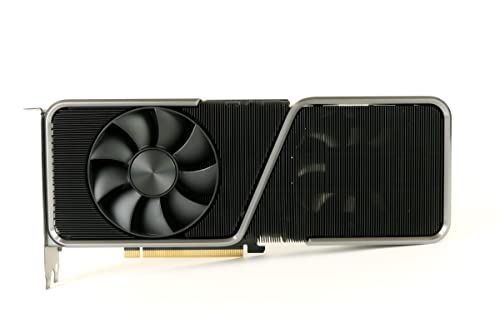

Nvidia RTX 3070 Ti vs 3080 Ti at a Glance
| Attribute | Nvidia RTX 3070 Ti | Nvidia RTX 3080 Ti |
|---|---|---|
| Graphics Coprocessor | NVIDIA GeForce RTX 3070 Ti | NVIDIA GeForce RTX 3080 Ti |
| Video Memory (VRAM) | 8 GB GDDR6X | 12 GB GDDR6X |
| Memory Clock Speed | 1920 MHz | 4000 MHz (19.5 Gbps) |
| Video Output Interfaces | HDMI | DisplayPort 1.4a, HDMI 2.1 |
| Cooling Hardware | Triple-fan thermal configuration | 3 Axial-tech fans, 2.9-slot heatsink |
| Power Architecture & Hardware | Nvidia Dual PCIe 8-pin adapter included | Super Alloy Power II (alloy chokes, solid polymer capacitors) |
| Physical Dimensions | 14.17″L x 6.69″W | 12.53″L x 5.51″W |
| Maximum Display Resolution | 8K (7680 x 4320) | 8K (7680 x 4320) |
| Software Integration | Not listed | GPU Tweak II with AURA Sync RGB |
| Best For | Dedicated 1440p gaming and streamlined builds | Uncompromised 4K gaming, heavy ray tracing, and high-bandwidth workflows |
VRAM Capacity and Memory Throughput
Video memory capacity and data transfer speeds define how comfortably a graphics card handles high-resolution asset streaming, heavy geometry caches, and complex ray tracing pipelines. Modern game engines load massive high-resolution texture packs, detailed shadow maps, and geometric buffers directly into local GPU memory. When a card exhausts its onboard VRAM, it must swap data across the system bus, resulting in noticeable stuttering, pacing drops, and reduced frame consistency during demanding sequences.
The RTX 3070 Ti vs 3080 Ti VRAM difference represents the single most consequential specification divide in this comparison. The RTX 3070 Ti features an 8 GB GDDR6X memory configuration operating at a listed memory clock speed of 1920 MHz. While adequate for moderate texture sizes, an 8 GB allocation leaves very little buffer for overhead when running modern titles with ray tracing and ultra-high-resolution textures active. In contrast, this ASUS ROG Strix iteration of the RTX 3080 Ti provides a substantial 12 GB GDDR6X buffer accompanied by a rapid 4000 MHz memory clock speed and a 19.5 Gbps data throughput rating. Gamers exploring an nvidia rtx 3070 ti vs 3080 upgrade path will find that stepping up to the 12 GB mark on the 3080 Ti changes how easily a graphics processing unit handles memory-intensive modern titles.
For readers weighing an RTX 3070 Ti or 3080 Ti for 4k gaming, that extra 4 GB of GDDR6X buffer on the 3080 Ti prevents texture thrashing at 3840×2160. Running games at 4K demands massive frame buffers, and the 19.5 Gbps memory speed on the 3080 Ti feeds the core GPU with continuous data streams, avoiding pipeline stalls. The RTX 3070 Ti must manage high-resolution assets within an 8 GB footprint, requiring players to tune down shadow buffers or texture fidelity in modern releases to prevent memory saturation.
Edge: Nvidia RTX 3080 Ti, because its 12 GB GDDR6X buffer and 19.5 Gbps memory speed provide vital headroom for high-resolution assets that exceed the 8 GB ceiling on the RTX 3070 Ti.
Ampere Architecture and Core Processing Throughput
A graphics card’s computational framework dictates how effectively it calculates rasterized polygons, ray-traced lighting bounces, and artificial intelligence upscaling algorithms simultaneously. Both cards are built upon NVIDIA RTX 30 Series silicon utilizing the Ampere architecture. This generation introduces upgraded Streaming Multiprocessors that bring 2X FP32 floating-point throughput alongside structural improvements to power delivery and rendering efficiency.
Looking closer at the underlying Silicon execution units reveals why Nvidia RTX 3070 Ti vs 3080 Ti performance diverges so dramatically during computationally dense rendering jobs. The RTX 3080 Ti listing specifies Ampere Streaming Multiprocessors paired with 2nd Generation RT Cores offering 2X the throughput of first-generation designs, alongside concurrent RT and shading capabilities. Additionally, its 3rd Generation Tensor Cores deliver up to 2X the processing throughput with structural sparsity and AI algorithms like DLSS, expanding output compatibility up to 8K resolution. While the RTX 3070 Ti listing confirms Ampere family architecture and parallel 8K display capability, the sheer scaling of compute resources in the 3080 Ti silicon tier provides significantly broader computational bandwidth. Readers who track our nvidia rtx 3070 vs 3080 ti evaluations know that higher-tier Ampere silicon maintains frame rates where smaller chips face compute bottlenecks.
This compute gap matters directly when activating intensive lighting models. Second-generation RT Cores calculate bounding volume hierarchy traversals and ray-triangle intersections in hardware without stalling standard shading pipelines. Because the RTX 3080 Ti features the larger Ampere processor configuration, it renders dynamic reflections, ambient occlusion, and global illumination with minimal frame pacing penalties compared to the RTX 3070 Ti.
Edge: Nvidia RTX 3080 Ti, due to its expanded Ampere Streaming Multiprocessor array and higher compute density for simultaneous shading, ray tracing, and AI calculations.
Cooling Infrastructure and Physical Card Dimensions
Maintaining thermal control across high-power GDDR6X memory modules and dense GPU dies is mandatory for sustained clock frequencies. GDDR6X memory generates significant thermal energy under sustained high-bandwidth rendering loads, meaning robust heatsink surface area and directed airflow patterns determine whether a card throttles or sustains peak performance during long gaming sessions.
The cooling strategies of these two cards show distinct structural approaches. The RTX 3070 Ti listing details a dark platinum and black aesthetic featuring a compact construction and a triple-fan array. Its overall chassis measures 14.17 inches in length and 6.69 inches in width. These elongated horizontal and vertical proportions demand careful clearance checks inside desktop PC enclosures, particularly concerning front-mounted liquid cooling radiators or drive cages. In any comprehensive RTX 3070 Ti review, physical fitment remains a critical preliminary checkpoint for prospective builders.
Conversely, the ASUS ROG Strix RTX 3080 Ti incorporates a dedicated 2.9-slot cooling profile measuring 12.53 inches in length and 5.51 inches in width. While it is shorter and narrower than the RTX 3070 Ti, it expands substantially in thickness. This 2.9-slot design increases overall heatsink fin density and surface area to maximize thermal dissipation headroom. Cooling is managed by an Axial-Tech Fan Design featuring three fans with increased blade counts and a specialized reverse rotational direction on the center fan to minimize airflow turbulence. When evaluating the nvidia rtx 3070 vs 3070 ti thermal category, compact chassis users often have to plan carefully, and the 2.9-slot profile of the 3080 Ti similarly demands three dedicated motherboard expansion brackets.
Edge: Nvidia RTX 3080 Ti, because its 2.9-slot heatsink and reverse-rotation Axial-tech fan design offer superior fin surface area and turbulence reduction compared to standard triple-fan cooling.
Display Connectivity and Multi-Monitor Support
Display interface standards determine the refresh rates, resolutions, and display counts a graphics card can drive simultaneously. For modern gaming setups, connectivity requires sufficient bandwidth to handle high-refresh 1440p or 4K monitors without requiring visual compression, while multi-panel desktop workstations require multiple output standards.
A striking functional contrast emerges when examining the physical output ports listed for each unit. The RTX 3070 Ti product specifications document an HDMI interface for video output. While HDMI delivers high-definition output up to the card’s maximum digital resolution of 7680×4320, the listing does not document accompanying DisplayPort interfaces. This limits direct single-cable connectivity for multi-monitor desktop environments or specialized variable-refresh PC monitors that favor dedicated DisplayPort connections.
The ASUS ROG Strix RTX 3080 Ti provides a comprehensive connectivity layout. Its specifications establish support for both DisplayPort 1.4a and modern HDMI 2.1 video output interfaces, supporting the maximum digital resolution of 7680 x 4320 across varied display configurations. HDMI 2.1 delivers high uncompressed bandwidth for 4K panels running at high refresh rates, while DisplayPort 1.4a accommodates PC gaming monitors with integrated G-Sync modules. In any balanced RTX 3080 Ti review, having both standards natively available on the rear I/O plate provides essential flexibility for complex multi-screen battlestations, a feature absent on cards restricted to a single display interface standard. Desktop builders comparing an nvidia rtx 3070 vs 3080 configuration often note how modern port varieties streamline setup.
Edge: Nvidia RTX 3080 Ti, due to its dual display support including DisplayPort 1.4a and HDMI 2.1 outputs versus the single HDMI port listed for the RTX 3070 Ti.
Power Delivery, Component Quality, and Software Tuning
Stable voltage delivery under sudden transient electrical spikes separates standard graphics cards from premium enthusiast-grade components. Modern GPUs fluctuate power draw rapidly as rendering scenes shift from simple interior environments to complex outdoor vistas loaded with volumetric smoke and geometry, necessitating high-grade chokes and capacitors.
The RTX 3070 Ti Founders Edition ships with a clean dark platinum and black aesthetic, bundled with an official Nvidia Dual PCIe 8-pin adapter to ensure proper electrical connection with standard desktop power supplies. Its internal engineering delivers what the listing highlights as seamless functionality and compact construction, offering reliable factory power delivery right out of the sealed box.
The ASUS ROG Strix RTX 3080 Ti steps up power hardware with its proprietary Super Alloy Power II component suite. This includes premium alloy chokes, solid polymer capacitors, and an array of high-current power stages engineered to smooth electrical ripple and handle aggressive operational demands. For software management, the 3080 Ti integrates ASUS GPU Tweak II, which gives users intuitive thermal controls, clock tweaking, and real-time system monitoring. Furthermore, it incorporates AURA Sync RGB lighting across an aggressive ROG shroud, paired with physical bundled extras like an ROG Ruler, Collection Card, and ROG Velcro Hook & Loop straps. For users upgrading from mid-range platforms like an nvidia rtx 3060 vs 3070 ti configuration, these board-level engineering details on the Strix provide robust durability.
Edge: Nvidia RTX 3080 Ti, because of its Super Alloy Power II high-current stages, integrated GPU Tweak II software utility, and comprehensive hardware accessories.
Pros and Cons
Nvidia RTX 3070 Ti

Pros
- Compact dual-slot build
- Dual PCIe 8-pin adapter included
- Up to 8K digital resolution support
- Triple-fan thermal structure
Cons
- Only 8 GB GDDR6X VRAM
- Limited to single HDMI listing
- Lower 1920 MHz memory clock
View Nvidia RTX 3070 Ti on Amazon
Nvidia RTX 3080 Ti

Pros
- 12 GB GDDR6X frame buffer
- High-speed 19.5 Gbps memory speed
- DisplayPort 1.4a and HDMI 2.1 ports
- 9-slot Axial-tech thermal design
- Super Alloy Power II components
Cons
- Thick 2.9-slot form factor
- Requires three expansion slots
View Nvidia RTX 3080 Ti on Amazon
Who Should Buy Each One
Choose the Nvidia RTX 3070 Ti If
- You focus primarily on 1440p gaming where an 8 GB GDDR6X frame buffer remains suitable for high-fidelity settings.
- Your desktop PC enclosure can accommodate a 14.17-inch length profile but lacks clearance for thick 2.9-slot expansion cards.
- You prefer a clean, dark platinum and black aesthetic without integrated RGB light bars.
- You connect your system to a single primary HDMI display and do not require multi-cable DisplayPort arrangements.
Choose the Nvidia RTX 3080 Ti If
- You target native 4K gaming and require a 12 GB GDDR6X buffer running at 19.5 Gbps to prevent texture throttling.
- You run multi-monitor setups that require DisplayPort 1.4a and HDMI 2.1 video output interfaces.
- Your PC case has three open motherboard expansion slots to support a high-mass 2.9-slot heatsink with Axial-tech fans.
- You want hardware-level overclocking headroom backed by Super Alloy Power II components and GPU Tweak II software controls.
Final Verdict
When reviewing the overall 3080 Ti vs 3070 Ti landscape, the ASUS ROG Strix RTX 3080 Ti clearly wins the performance and capability evaluation. By delivering a 12 GB GDDR6X frame buffer, a 4000 MHz memory clock speed, and 19.5 Gbps bandwidth, it removes the memory restrictions that constrain lower-tier cards. Its advanced 2.9-slot heatsink, reverse-rotational Axial-tech fans, Super Alloy Power II architecture, and dual HDMI 2.1 and DisplayPort 1.4a outputs make it an outstanding choice for demanding high-resolution gaming and heavy creative rendering.
The Nvidia RTX 3070 Ti remains a targeted choice for dedicated 1440p gamers whose system builds prioritize a standard dual-slot profile over extreme board thickness. If your gaming library runs comfortably within an 8 GB VRAM allocation and your display uses a standard HDMI interface, the RTX 3070 Ti delivers seamless functionality and reliable Ampere graphics power without taking up three full expansion slots inside your desktop chassis.
FAQ
Is the RTX 3080 Ti worth it over the RTX 3070 Ti for gaming?
The step up to the RTX 3080 Ti is worthwhile if you run games at 4K resolution or use heavy ray tracing settings. The 12 GB GDDR6X memory buffer and 19.5 Gbps speed prevent the texture choking and stuttering that can occur on an 8 GB card when frame buffers become saturated.
What is the primary RTX 3070 Ti vs 3080 Ti VRAM difference?
The RTX 3070 Ti contains 8 GB of GDDR6X video memory with a listed memory clock speed of 1920 MHz. In contrast, the RTX 3080 Ti provides 12 GB of GDDR6X memory with a 4000 MHz memory clock speed and a 19.5 Gbps throughput rating, offering 50 percent more memory capacity and vastly higher memory bandwidth.
Which card is better in an RTX 3080 Ti vs RTX 3070 Ti 1440p comparison?
Both graphics cards handle 1440p resolution effectively, but the RTX 3080 Ti provides greater longevity for high-refresh-rate monitors due to its larger compute core array and 12 GB memory pool. The RTX 3070 Ti remains fully capable at 1440p, though intense ray tracing titles will consume most of its 8 GB memory buffer.
Can the RTX 3070 Ti support 8K resolution output?
Yes. The RTX 3070 Ti specifications confirm a maximum digital display resolution of 7680×4320 (8K) via its HDMI interface, matching the maximum 7680×4320 resolution capability provided on the RTX 3080 Ti.
What physical case clearance is needed for each card?
The RTX 3070 Ti measures 14.17 inches long by 6.69 inches wide, requiring significant longitudinal clearance in your PC case. The ASUS ROG Strix RTX 3080 Ti measures 12.53 inches long by 5.51 inches wide, but its 2.9-slot thickness requires three full open PCIe expansion brackets inside your desktop enclosure.
What video ports are available on each card?
The RTX 3070 Ti listing specifies an HDMI video output interface. The ASUS ROG Strix RTX 3080 Ti listing specifies both DisplayPort and HDMI outputs, specifically supporting DisplayPort 1.4a and HDMI 2.1 for flexible multi-monitor connectivity.


